Direct Answer
The best travel size hair removal products are not simply smaller versions of full-size SKUs. They are complete, trip-length systems built around controlled application, secure sealing, clear instructions, and realistic use occasions. For most private-label launches, compact depilatory cream tubes, individually sealed wax strips, small aftercare bottles, and leak-resistant roll-on cartridges offer the cleanest user experience. Sugar wax can work, but jar weight, tool requirements, and temperature sensitivity need closer review.
Select fill size by body area and expected applications, then validate the formula inside the final package. A travel pack should survive heat, cold, inversion, and shipment without leaking, drying, separating, or losing wax adhesion. Even when a container is at or below the common 100 mL carry-on ceiling, airport rules can vary. Treat portability as a design goal, not a universal travel guarantee.
Key Takeaways for Private Label Buyers
- Choose the use occasion first: facial touch-up, underarm treatment, leg treatment, waxing maintenance, or post-removal care.
- Test the final formula and package together. A stable bulk sample does not prove that a tube seal, pouch, roller, or cap will perform.
- Size the pack by usable applications, not nominal fill alone. Pump dead volume and product left in corners reduce real yield.
- Review texture and application on camera before approval. Flow, spread, wax pull, residue, and cleanup shape both user satisfaction and short-form content.
- Request heat, cold, inversion, leakage, label, and shipment checks before confirming the commercial run.
- Use a transparent BOM that separates formula, primary pack, secondary pack, applicators, inserts, testing, and freight assumptions.
Buyer Context
Travel formats solve several commercial jobs at once. They can introduce a new removal formula at lower perceived risk, fit creator launch kits, support subscription boxes, and give existing customers a portable alternative. They also expose weaknesses faster. A leaking roll-on, dried wax strip, oversized cream tube, or missing cleanup step can make a small product feel unfinished.
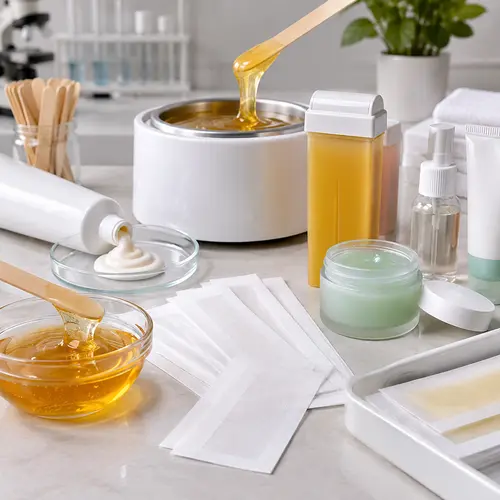
Each format creates a different packaging brief. Depilatory cream needs accurate dispensing, odor containment, clear contact-time directions, and enough product for the stated body area. Wax strips need stable adhesion, clean liner release, sealed pouches, and consistent strip pairing. Roll-on wax requires roller-fit control and warm-condition leakage review. Sugar wax must retain workable texture across storage conditions. Aftercare needs a compact dispenser that does not clog or leak.
Facial positioning needs extra discipline. Keep application boundaries clear and avoid implying suitability near the eyes. The FDA eye-area cosmetic safety guidance is useful when reviewing face-product directions and caution language. Ingredient review for EU-bound cosmetics can reference the European Commission CosIng ingredient database. UK launches should also account for the UK SCPN submission guidance.
Buyers comparing formats can start with broader hair removal product solutions, then narrow the brief through custom hair removal product development. This prevents package selection from getting ahead of the actual use case.

Technical and Packaging Factors
Fill Size Must Match the Treatment Claim
A 20–30 mL cream tube may suit a targeted touch-up but may disappoint if the label visually suggests full-leg use. Four to six wax-strip pairs can work for a compact maintenance pack when strip dimensions and treatment areas are explicit. A 10–15 mL aftercare bottle may support several localized uses, while a 50–75 mL roll-on cartridge or 75–100 g sugar wax jar occupies more luggage space and may require warming or accessories.
Ask the supplier to calculate dose per application during sampling. Record the amount used, application area, spread consistency, contact time, removal method, and remaining product. For cream projects, compare these findings with the available custom depilatory cream formulation options. For strip, bead, and jar formats, review the applicable private label waxing products.
Package Compatibility Is a Formula Test
Depilatory cream can challenge seals, printed surfaces, and dispensing components. Review tube laminate, cap fit, induction seal options, product odor retention, and formula contact with every internal surface. For wax strips, check pouch barrier, liner release, wax migration, and adhesion after aging. For roll-on wax, inspect roller rotation, cap retention, cartridge deformation, and leakage in upright, side, and inverted positions.
A practical screen can include a 24-hour multi-orientation leakage check, storage at 40°C, cold exposure, and three freeze-thaw cycles. These conditions are development screens rather than universal acceptance standards; the final plan should reflect formula type, package material, destination market, and shipment route. The full cosmetic filling and packaging process should identify when compatibility samples, filling trials, and finished-pack checks occur.

Texture Determines Use Experience
Travel products are often used in bathrooms with limited counter space. The formula should dispense predictably, spread without excessive dripping, and clean up with the included method. Cream viscosity must remain within an agreed production range. Wax needs a usable melting or softening profile. Strips should warm by hand, separate cleanly, and maintain pull performance. Sugar wax should not become unworkably hard in cold storage or overly fluid during warm transit.
Review samples under normal room lighting and on camera. Record extrusion shape, spread, removal, residue, and after-feel. This creates a visual approval reference before mass manufacturing. Buyers serving reactive users should also examine mild hair removal formula options and pair the core SKU with soothing gel after hair removal where appropriate.
Safety, Labeling, and Launch Scope
No cosmetic hair-removal product is irritation-proof. The buyer should review intended body areas, exclusions, patch directions, contact time, rinse or cleanup steps, warning language, and ingredient documentation. Face and body variants should not share instructions by default. Claims must reflect the evidence available for the exact commercial formula.
For a founder-led launch, define what the sample round includes: bulk texture, filled package, artwork fit, applicator, aftercare pairing, and shipping carton. A credible plan can target a first physical sample within seven days, but package customization may extend that timing. A 1,000-unit pilot should also use the same approved formula and critical package components intended for scale. Related options include a paired post hair removal serum supplier brief or a broader hair removal OEM manufacturer review.
Decision Framework
| Factor | What to Check | Why It Matters | ODM Buyer Note |
|---|---|---|---|
| Use occasion | Body area, trip duration, and application count | Prevents underfilled packs and unclear positioning | Approve a dose-per-use worksheet |
| Formula texture | Viscosity, spread, wax pull, residue, and cleanup | Controls performance and camera presentation | Keep an approved physical reference sample |
| Primary package | Seal, cap, roller, pouch barrier, and material contact | Reduces leakage, drying, and component damage | Test the commercial package, not a substitute |
| Storage | Heat, cold, freeze-thaw, inversion, and appearance | Simulates warehouse and transit stress | Set acceptance criteria before testing |
| Safety and label | Body-area limits, timing, warnings, and documents | Supports correct use and market readiness | Review destination markets before artwork approval |
| Launch economics | BOM, MOQ, sample scope, cartons, and freight | Shows the real landed-cost structure | Use a written hair removal product RFQ |
ODM Manufacturing Considerations
For travel size hair removal products, sample approval should establish a reproducible commercial standard rather than simply confirm that the buyer likes one laboratory batch. The approved reference should record appearance, odor, color, spreadability, residue, removal performance, and the intended application area. For wax and sugar wax, buyers should also confirm the acceptable melting or softening range. For depilatory cream, the specification should define a measurable viscosity range and application time.
A useful customization brief translates marketing language into attributes the facility can measure. Terms such as ‘thick,’ ‘fast-spreading,’ or ‘low-residue’ should be supported by benchmark samples, application videos, target color references, and defined performance expectations. A supplier with a marketing-oriented account manager should be able to convert a social media concept into a sample brief without expecting the buyer to understand ingredient terminology. Buyers can compare available formats through the hair removal product categories and clarify whether the project requires stock-formula adaptation or full ODM development through the OEM/ODM service scope.
Package selection should follow the approved formula. Wax, cream, fragrance, colorants, seals, labels, and plastic components can interact over time. Ask the supplier to evaluate weight change, seal integrity, print resistance, dispensing behavior, closure fit, and visible pack distortion. Stability review should include ambient and accelerated observations at documented checkpoints, with acceptance criteria for odor, color, viscosity, phase uniformity, wax flexibility, and removal performance.
MOQ must be separated into the formula batch minimum, primary container minimum, decoration minimum, and outer-carton minimum. These quantities may not match. Request an itemized BOM showing formula, components, decoration, assembly, inspection, and expected freight assumptions. This makes it easier to identify whether a custom cap, printed pouch, or specialty label is driving the order quantity or cost.
Before production, confirm the ingredient list, product name, net contents, lot coding method, warnings, directions, responsible-party details, and country-of-origin wording needed for the target market. Shipment planning should document carton loading, pallet requirements, temperature exposure assumptions, stacking limits, and whether cartridges or jars require a preferred orientation. The supplier’s manufacturing process should show where incoming components, filling, coding, assembly, and final release checks occur.

Common Problems or Failure Cases
- Wax becomes brittle: A strip may crack during unfolding or leave fragments on skin when the wax layer, backing material, or storage history is unsuitable. Evaluate flexibility and removal behavior using aged packs, not only fresh samples.
- Strip adhesion declines: Weak seals, unsuitable pouch material, or wax migration can reduce grip. Buyers should compare peel performance at the beginning and end of the proposed shelf life.
- Depilatory cream separates: Oil release, watery discharge, color drift, or uneven dispensing can indicate that the formula or container is not maintaining uniformity. Define acceptable appearance and viscosity limits before production.
- Roll-on cartridges leak: Leakage may originate at the roller housing, neck, cap, or fill interface. Inspect filled cartridges after storage and realistic carton handling, including residue around closures.
- Fragrance causes avoidable complaints: Strong scent can mask the base odor but may be unsuitable for sensitive users. Review fragrance level, allergen declarations where applicable, and the feasibility of a lower-fragrance option.
- Packaging deforms: Jars, tubes, caps, or pouches may soften, warp, delaminate, or lose decoration after extended exposure to the filled product or transportation conditions.
Failure investigations should compare retained bulk, packaged samples, component lots, filling records, and shipment conditions. Replacing the formula without checking the pack, or replacing the pack without checking the filling setup, can leave the original cause unresolved.
Supplier Checklist
- Confirm experience with depilatory cream, wax strips, sugar wax, roll-on cartridges, and aftercare rather than general cosmetics alone.
- Request written sample specifications covering texture, color, odor, viscosity or softening behavior, and removal performance.
- Ask how irritation risk, intended application area, contact time, and warnings are reviewed.
- Verify that filled-package evaluations include closure fit, dispensing, seal quality, decoration durability, and deformation.
- Review the planned stability checkpoints, acceptance limits, retained samples, and response to out-of-specification results.
- Separate formula, component, decoration, and assembly MOQs in the quotation.
- Confirm access to ingredient lists, specifications, test summaries, lot records, label files, and shipment documents.
- Check change-control expectations so materials or processing details are not altered without buyer approval.
- Request capacity information for the expected launch volume and a realistic surge scenario.
- Use a structured project and RFQ brief that identifies market, format, pack, forecast, claims, and launch timing.

FAQ
How can I reduce the risk of a factory copying my idea or formula?
Use a mutual confidentiality agreement, define ownership of custom work in the manufacturing contract, limit file access, and state whether the supplier may reuse the formula or packaging concept. Keep dated briefs and approval records. No document eliminates risk, so also assess the supplier’s customer references, access controls, and history with overseas brands.
Can the sample deliver the dramatic texture and color needed for video?
Usually, but the visual target must be measurable. Provide lighting conditions, color references, application footage, desired spread, stringiness, gloss, or wax pull, and packaging behavior on camera. Approve the final effect using the intended production pack because dispensing can change how the formula appears.
Can quality controls guarantee that nobody will have a bad skin reaction?
No responsible supplier can promise zero reactions. Risk can be reduced through ingredient review, appropriate warnings, controlled production, batch checks, traceability, and clear use directions. Buyers should avoid exaggerated safety claims and establish a complaint, investigation, and product-withdrawal process before launch.
Will communication be difficult if I do not understand cosmetic ingredients?
A capable project manager should convert consumer language into sample criteria and explain tradeoffs in plain English. Ask for one decision log covering formula, pack, artwork, testing, cost, and timing. If discussions remain vague or approvals are not documented, execution risk is high.
What happens if a social media video creates a sudden order spike?
Ask for monthly output by format, material lead times, reserved-line options, and the supplier’s rules for allocating capacity. Maintain a rolling forecast and agree on reorder triggers. Surge planning is more credible when the packaging vendor and filling facility have both confirmed availability.
Which travel format is least likely to fail in transit?
There is no universal winner. Wax strips avoid liquid dispensing issues but depend on pouch integrity and wax flexibility. Cream tubes depend on seals and closure fit, while cartridges depend on the roller assembly. Choose according to the formula, destination climate, parcel handling, and consumer application needs.
References
- European Commission CosIng ingredient database — supports checks of cosmetic ingredient names, functions, and listed restrictions in the European market.
- UK cosmetic product notification guidance — outlines notification information and responsible-person obligations for products placed on the Great Britain market.
- FDA eye-area cosmetic safety information — supports cautious directions and avoidance of unintended eye exposure for facial hair-removal products.