Direct Answer
Cosmetic packaging compatibility testing is the structured review that puts your real formula inside your real pack, under the heat, cold, humidity, and handling it will meet between the filling line and the customer’s bathroom shelf. For a depilatory cream sitting at pH 11.0 to 12.5, or a roll-on wax cartridge held at 55 to 60 C during use, the container is not a neutral vessel. It is a reacting surface, and the closure is the only thing standing between your batch and a soaked shipping carton. Treat compatibility as a gate rather than a formality. Run the trial on the actual formula and the actual component, at pilot batch scale, across at least 12 weeks of accelerated conditions with a real-time reference running alongside. Then hold mass production until weight loss, leakage, texture drift, and label adhesion all stay inside the agreed spec. Skipping this step is the cheapest line on your quote sheet and the most expensive decision you will make after launch.
Key Takeaways for Private Label Buyers
- Test the real formula, not a stand-in. A compatibility report produced on a generic base tells you nothing about how your depilatory cream behaves against an aluminum laminate tube at pH 12.
- Match the pack to the physics. Hot wax needs heat resistance and a clean release; sugar wax needs low moisture-vapor transmission; aftercare gels need a pump that does not clog after three weeks on a bathroom counter.
- Ask for the inspection intervals, not just a pass/fail stamp. Weight loss, color shift, and odor are measured at set points; a single end-of-test photo hides the trend that matters.
- Budget the trial into your timeline. A realistic compatibility window is 4 to 6 weeks for early screening and 12 weeks for a defensible conclusion, which is exactly why an accelerated sampling path matters for a 30-day launch plan.
- Confirm the filing story early. Packaging components carry documentation obligations for MoCRA, CPNP, and market-specific registration; the pack spec and the paperwork should move together.
- Lock the component before the artwork. A late switch from one liner material to another can reopen the whole review and reset your batch schedule.
Buyer Context
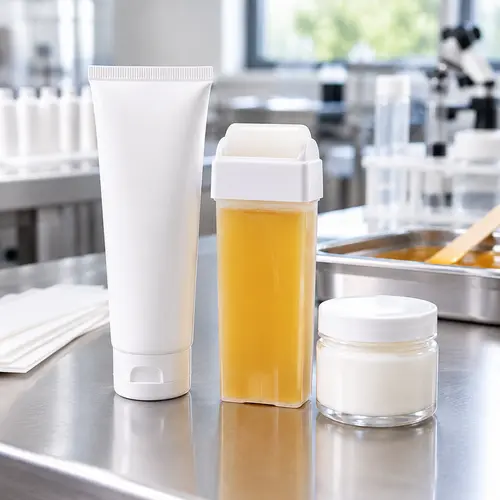
Hair removal is one of the harshest environments in beauty packaging. Depilatory creams are strongly alkaline and aggressively attack adhesives, printed ink, and some metal substrates. Hot wax is filled at temperatures that soften standard cartons and distort thin-wall jars. Roll-on wax cartridges combine a heated reservoir with a rolling applicator, which means two failure paths in one component: the closure seal and the roller housing. Sugar wax is water-based and hygroscopic, so a poorly specified jar can pull moisture from the air and change the product’s texture before the customer reaches the halfway mark. Wax strips add an adhesive aging problem, where strip tack drifts in warm storage until the product stops gripping hair and starts gripping skin.
None of these failures show up in a one-week sample review. They show up in a fulfillment center in July, or in a customer’s car in August, and then on camera. For a founder whose brand equity lives in a single product demo, a leaking cartridge or a separated cream is not a packaging defect. It is a content crisis. That is the real reason this review exists: not to satisfy a checklist, but to protect the launch date you have already announced to your audience.
Technical and Packaging Factors
Formula-to-Pack Contact
The first question is chemical, not visual. What does your formula do to the inner surface over time? Alkaline depilatory creams require an inner liner or coating that resists pH 11.0 to 12.5 without swelling, delaminating, or leaching. Solvent-bearing formulas can soften certain plastics and migrate through low-density closures. Aftercare lotions with high oil content can stress a pump gasket until it swells and seizes. A different model of pack, even at the same nominal volume, behaves differently: an airless bottle, a laminate tube, a PET jar, and a polypropylene cartridge each have their own failure signature, and the review should be run per component, not per product family.
Thermal Exposure and Phase Stability
Define the temperature range before you define the test. A practical envelope for hair removal SKUs is cycling between -10 C and 45 C, with an accelerated hold at 40 C and 75 percent relative humidity, plus a real-time arm at ambient. Hot wax should be checked at and above its working temperature, because that is the condition the consumer creates every time she heats the cartridge. Watch for wax bloom, oil migration, syneresis in sugar paste, and viscosity drift in creams. Texture is a marketing asset here, so a formula that survives chemically but thickens by 15 percent has still failed the review.
Leakage, Closure, and Transit
Leakage is the most common and most preventable failure. A 48-hour inverted leak test at elevated temperature catches most closure geometry errors before they reach a pallet. Pair it with a drop test at 1.2 meters on a packed shipper, because the failure mode in transit is impact, not steady pressure. Roll-on cartridges deserve their own protocol: inverted hold, roller retention pull, and a fill-line check that the ball seats without scoring the housing.
Documentation and Traceability
Component specs, material declarations, and liner composition should be filed with the batch record from day one. When a regulatory reviewer or a retail compliance team asks what the pack is made of, the answer needs to be a document, not an email thread. This is where a manufacturer that ships compliance documents by default saves you weeks, not just hours.

Fill-Line Behavior
Some of the most expensive compatibility problems never reach a customer. Hot fills distort thin walls. High-viscosity waxes bridge the cartridge neck and trap air. Aggressive inks smear under a labeling head. Review the component against the filling and capping process itself, not only against shelf conditions, and confirm the pilot batch runs on the same line that will produce the commercial batch. The cosmetic filling and packaging process should be observed once in person or on video before you sign off.
Decision Framework
| Factor | What to Check | Why It Matters | ODM Buyer Note |
|---|---|---|---|
| Inner contact layer | Liner or coating compatibility at the formula’s pH and solvent load | Swelling, delamination, and leaching start here | Request the liner spec, not just the tube photo |
| Closure geometry | 48-hour inverted leak test at elevated temperature | Leakage destroys cartons and reviews equally | Test the exact cap mold, not a lookalike |
| Thermal range | Cycling -10 C to 45 C plus a 40 C hold at 75 percent RH | Wax bloom, oil migration, and viscosity drift appear under heat | Define the range for your market before testing |
| Weight loss | Gravimetric checks at 4, 8, and 12 weeks | Moisture loss changes sugar wax texture and fill weight | Set a numeric limit, commonly under 2 percent |
| Adhesive aging | Strip tack after warm storage | Tack drift turns a clean pull into a skin pull | Keep a retained sample from each pilot batch |
| Transit and drop | 1.2 meter drop on the packed shipper | Impact failure is invisible in a lab still photo | Test the shipper, not only the primary pack |
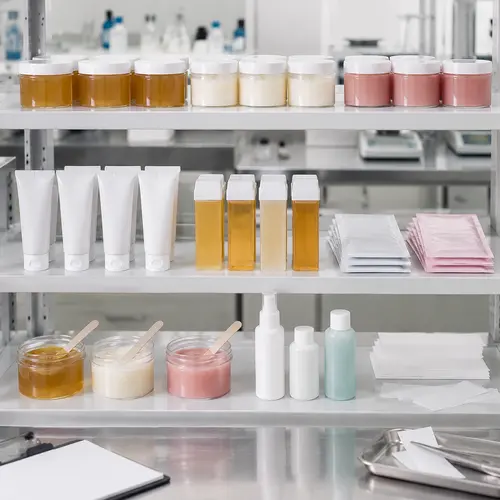
Running this review once, properly, on a 1,000-unit pilot batch is what makes the second batch boring. Boring is the goal. When the components, the conditions, and the documents are settled before the first case ships, your next decision is not about whether the product survives. It is about how fast you can restock. Buyers who want to scope the trial against their own SKU can start with a hair removal product RFQ, and teams comparing formats can review private label hair removal solutions or the depilatory cream OEM and wax strips OEM pages side by side.
ODM Manufacturing Considerations
Cosmetic packaging compatibility testing only earns its cost when the factory can turn a signed-off sample into a repeatable production run. That handoff is where most private label projects either hold together or drift. Below is what a buyer should expect to see and confirm at each stage, from sample sign-off to the first container leaving the plant.
Sample Confirmation and Formula Customization
A hair-removal sample should arrive with more than a good-looking jar. Ask for the sample record: the ingredient declaration with percentages, the raw material batch used, the fill weight, the set or cure time, and the components listed by supplier and article number. Sign off on a retained sample that stays with the factory and a matching one that stays with you. When you request a texture or shade change, ask how the change affects melting behavior, set time, and adhesion, because a softer wax film that looks better on camera may pull less cleanly at the strip edge. Customization should be quoted as a discrete step with its own turnaround in weeks, not folded silently into a general sampling fee.

Compatibility and Stability Review
Compatibility work continues well past the first sample. The ODM should run the chosen formula in the actual retail component, not a lab jar, and record what changes under accelerated conditions. A depilatory cream that behaves in glass may thin or shift color in a colored PET jar with a different headspace. Ask for a written summary of what was observed, what was changed, and what remains open. Tie that review to your content calendar: a component swap made shortly before a launch date rarely has time to be re-checked, and a rushed sign-off is how a real problem reaches a customer.
MOQ, Labeling Documents, and Shipment Conditions
Minimum order quantities should be quoted per SKU and per component, because the bottleneck is often the cap, liner, or carton rather than the bulk wax. Ask for a bill of materials with unit prices, tooling or setup fees, and packing costs shown on separate lines so nothing arrives later as a surprise. Labeling documents, including ingredient declaration, batch coding rules, country-of-origin marking, and any market-specific registration paperwork, must be listed before the purchase order rather than after. On shipment, confirm the pallet pattern, the maximum stack height, and whether cartons are palletized for the destination port. Buyers shipping into the Gulf or the United States should check what each market actually requires, since the Saudi FDA cosmetic registration requirements and the FDA explanation of how cosmetics are regulated both shape artwork and claims. A supplier that can walk you through this without prompting is usually a supplier that has shipped the route before; the sampling workflow on our OEM and ODM services page follows the same sequence.
Common Problems and Failure Cases
Most failures are quiet. They show up as a batch that feels slightly wrong, a carton that leaks on one pallet edge, or a strip that lets go too early. These are the cases that come up most often in hair-removal programs, and what each one usually traces back to.
Wax brittleness and cracking
A film that snaps instead of peeling usually points to a shifted resin-to-oil ratio, an overheated bulk during hold time, or a cooling tunnel running too cold. Brittle wax also sheds fine flakes into the jar, which consumers read as contamination. Confirm the bulk hold temperature and time window in the batch record, and check the finished film on a flexible substrate rather than a rigid one.
Strip adhesion loss
When strips release from the skin before the pull, the cause is often the backing rather than the wax. A backing with a different coating weight or release level changes how the film anchors. Ask the ODM to name the backing supplier and lot, and to hold that lot across the first several runs so you are not chasing a variable you never chose.
Cream separation and phase shift
Depilatory creams can split when the emulsifier system is pushed to save cost, or when fill temperature runs high for too long. A watery ring at the jar shoulder or a grainy feel at the base are early signs. Request photo records of the bulk at fill and of finished units at the end of the run.
Cartridge leakage at the cap thread
Leakage that appears only after days in the retail carton usually traces to cap torque, thread engagement, or a liner compressed once too often during capping. Confirm the torque value in the filling specification and ask how the line verifies it; a manual check each hour is common and reasonable for a small run.
Fragrance sensitivity and color drift
Fragrance is the most frequent source of complaint on a private label launch because it interacts with both the base and the container. A scent that reads correct in bulk can turn sharper after weeks in a reactive jar. Ask for smell and color checks on retained units, and keep an unfragranced control batch so you can separate a base problem from a fragrance problem.
Packaging deformation in the shipper
Bowed jar bases and ovalized tubes are usually a stacking problem, not a molding problem. Top-load compression across a long sea freight, combined with a warm container, will deform thin-wall components that passed every lab check. Confirm the pallet pattern and stack height limit in writing, and ask for a photo of a loaded pallet before the container is sealed.
Supplier Checklist
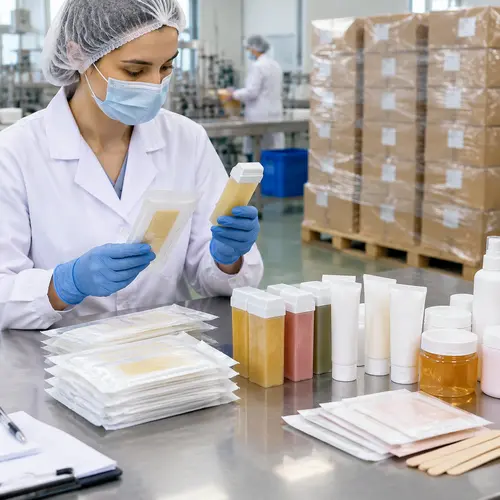
A short list to work through before the purchase order, not after.
- Retained sample and signed specification sheet for every SKU, held by both parties.
- Full ingredient declaration with percentages and the source of any active.
- Named component suppliers with article numbers for jar, cap, liner, roller, and carton.
- Written fill specification: fill weight, torque, temperature at fill, and coding format.
- A compatibility summary stating what was tested, what changed, and what remains open.
- MOQ quoted per SKU and per component, with tooling and setup fees on separate lines.
- Batch record available on request, including bulk hold time and temperature.
- Labeling and registration documents listed by destination market.
- Pallet pattern, stack height limit, and loading photos before container seal.
- A named contact who can speak to both the production schedule and the marketing timeline.
Frequently Asked Questions
How do I protect my formula and my brand concept?
Start with a mutual non-disclosure agreement that names the specific SKUs and covers tooling, artwork, and component sourcing, not only the formula. Then stage what you share: send the brief and a reference sample first, and hold the full percentages until commercial terms are agreed. A factory building a long private label book has limited incentive to resell your concept, because the reputational cost exceeds the margin on one copy. Verify anyway. Ask how exclusivity for a given formula is handled and get the answer in writing.
What happens if a batch triggers irritation complaints?
No factory can promise zero complaints, and a supplier who does is telling you something about honesty rather than quality. What you can require is traceability: a batch record tying every unit to a raw material lot, a retained sample you can re-test, and a documented complaint path with a response window. Keep the first run modest so a problem stays containable, and hold the safety documentation your market expects. Independent labs such as Intertek run the checks most markets ask for, and the American Academy of Ophthalmology guidance on cosmetics near the eye is a useful reference if a brow or facial wax sits close to the lash line.
Can the factory keep up if a video performs better than expected?
Ask for the weekly output ceiling per line and the current booking window in weeks, not the theoretical annual figure. A plant running several large accounts may not be able to slot a surge without displacing someone. The practical answer is a surge clause agreed up front: a stated maximum uplift, the lead time for that uplift, and a priority rule written into the agreement. Some suppliers hold finished bulk and delay filling, which is often the fastest way to absorb a spike.
How do I communicate marketing needs to a technical team?
Bring references instead of adjectives. A short video of the texture you want, a photo of the shade under your shooting light, and a note on how the product will be filmed will do more than a paragraph of description. Ask for a contact who sits between sales and production, and schedule that call at the sample stage rather than after the first batch.
What should the first production batch include?
Beyond the units, ask for retained samples from the start, middle, and end of the run, a copy of the batch record, the component lot numbers, and a set of loading photos. Those are the documents that let you answer a customer complaint in days rather than weeks.
Does a packaging change require a new compatibility review?
Yes, at least a limited one. A new liner, a different resin colorant, or a switch in cap supplier can change how the formula behaves in the container, and even a like-for-like substitution from another molding plant is worth a short check because tooling tolerances differ. The Cosmopacks guide to package compatibility testing outlines the general logic if you need to justify the requirement internally. If you are still shaping the brief, our project contact page is the place to send artwork and component questions together.