Direct Answer
Build your Amazon hair removal product line around one clearly defined use case, an approved production-representative sample, and packaging tested with the actual formula. Before requesting a quote, specify the application area, product format, target customer, destination market, intended claims, and launch budget. These decisions connect development to the instructions, images, and product details your listing will need.
For a creator-led brand, the first deliverable should be a compact product brief that translates the content idea into measurable acceptance criteria: spread, removal performance, appearance on camera, dispensing, and clean handling. Then review samples, safety information, packaging compatibility, and shipping conditions before approving artwork or inventory. PZIK positions its service around fast development and small pilot runs; confirm the applicable formula, sample scope, documentation, and delivery milestones in writing. A launch date should follow those checks, with time reserved for revisions and Amazon review.
Key Takeaways for Private Label Buyers
- Start with one hero format and a defined application area; add variants after performance and customer instructions are settled.
- Approve samples against written criteria, including texture, removal results, odor, dispensing, and appearance under consistent lighting.
- Test the selected formula inside the intended retail package, including storage exposure, leakage, and dispensing after transport.
- Request an itemized quote covering formula, packaging, decoration, testing, assembly, and freight assumptions.
- Build listing inputs from approved evidence: ingredients, directions, warnings, dimensions, and supportable claims.

Buyer Context
An audience can generate immediate demand, but the product still needs to work through storage, delivery, first use, and repeat purchase. A wax strip that looks clean in a demonstration may leave residue after storage. A depilatory cream with a satisfying ribbon may dispense poorly from its final tube. Development must connect the filming sample to the delivered unit.
Choose the First Format Around the Customer
Depilatory cream, wax strips, sugar wax, and roll-on wax create different customer routines. Cream requires precise application and timing instructions. Wax strips depend on handling, adhesion, and removal technique. Heated wax adds preparation and temperature management. Compare hair removal product solutions against your audience’s experience, then define the first SKU before expanding the range.
For example, an at-home body product brief should identify the intended body areas and exclusions. Do not assume a body formula is suitable for the face. When exploring custom depilatory cream formulation, ask what evidence supports the proposed use and which warnings accompany it.
Make the Brief Useful to Both Teams
Give the supplier a short demonstration reference, desired texture, preferred dispensing action, and packaging direction. Translate each visual preference into a reviewable requirement. A dense cream ribbon needs a defined consistency and dispensing check; a clean wax removal sequence needs agreed conditions and realistic expectations. Discuss these deliverables within the scope of custom hair removal product development.
Request a cost breakdown showing included revisions, sample freight, package decoration, assembly, and testing. Separate sample timing from production and delivery timing. A quick prototype can support creative development while the final package and product still undergo review.
Technical or Packaging Factors
Texture, Performance, and Irritation Risk
For cream, agree on viscosity acceptance limits and the measurement method, including temperature and instrument settings. A number without a method is difficult to reproduce. Review spread, odor, removal performance, and wash-off using a consistent procedure. For wax, request the softening or melting range where relevant and separately confirm the instructed application conditions.
Ask for an irritation-risk review covering ingredients, intended exposure, use areas, and foreseeable misuse. Directions should explain the skin test and timing supported by the product assessment. Sensitive positioning needs evidence appropriate to the claim; explore sensitive skin hair removal products without treating that description as a guarantee against reactions.
An aftercare companion also needs a defined role and suitable directions. Review private label aftercare lotion separately for compatibility with the intended routine and evidence supporting soothing claims.
Package Compatibility and Storage
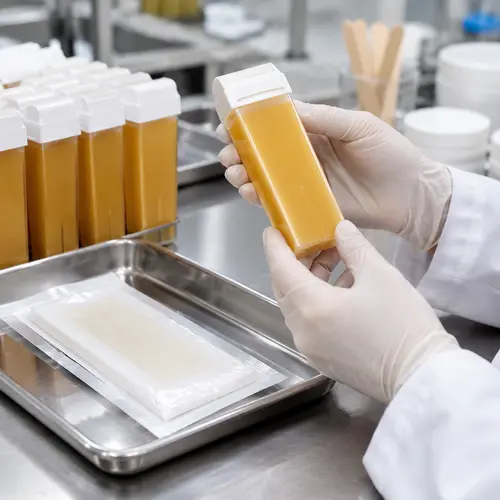
Test the actual formula against the proposed tube, bottle, sachet, closure, liner, and applicator materials. Check for swelling, discoloration, odor changes, seal deterioration, and inconsistent dispensing. For strips, review adhesion, backing release, residue, and pouch integrity after storage. For cartridges, inspect roller movement and leakage after temperature exposure.
Agree on heat and cold conditions that reflect expected storage and freight routes. Ask how samples are inspected after exposure and recovery. Accelerated testing can identify risks, but it does not establish every shelf-life claim by itself. Include transport checks for package damage and leakage, then connect the results to the hair removal product quality control plan.
Turn Approved Samples Into Listing Inputs
Keep an approved reference sample, its specification, and the final artwork together. Capture package dimensions, net contents, ingredients, directions, warnings, batch identification, and substantiated benefits. Review US labeling against FDA cosmetic labeling guidance. Avoid implying that cosmetic registration or listing constitutes product approval.
For Amazon, prepare accurate photographs and instructions that match the shipped unit. The Amazon FBA fulfillment program overview introduces the fulfillment model; verify current product-specific preparation and documentation requirements in Seller Central. If Gulf distribution is planned, identify applicable standards through the Gulf Standardization Organization and confirm destination-specific requirements before printing shared artwork.
Decision Framework Table
| Factor | What to Check | Why It Matters | ODM Buyer Note |
|---|---|---|---|
| Sample scope | Formula version, use area, revisions, and package supplied. | Makes approval specific and repeatable. | Record differences between prototype and production. |
| Texture and performance | Cream consistency; wax handling; strip adhesion and residue. | Connects the demonstration to actual use. | Agree on methods and acceptance limits. |
| Package compatibility | Leakage, seals, material changes, and dispensing after storage. | Reduces delivery failures and returns. | Use the intended retail components. |
| Safety and labeling | Assessment, ingredients, warnings, directions, and claim support. | Supports responsible instructions and listing accuracy. | Assign responsibility for each destination. |
| Commercial readiness | MOQ, itemized cost, production slot, and freight conditions. | Clarifies the cash commitment and schedule. | Confirm component minimums separately. |
Use this table to request a hair removal product quote with a defined sample scope and approval criteria. Ask the supplier to identify open decisions before committing to artwork or a delivery date.

ODM Manufacturing Considerations
An Amazon hair removal product line needs a written agreement connecting customization, order quantities, documentation, and delivery. Before paying a development fee, identify whether the supplier is offering an existing formula, a modified base, or exclusive development. These options carry different ownership terms, development costs, and restrictions on future use.
Define What Sample Confirmation Authorizes
Separate permission to continue development from permission to manufacture. Record which characteristics remain open, who can approve changes, and whether changing fragrance, color, or ingredient sourcing requires another review. A sample acceptance form should identify the formula version, intended use area, package size, and unresolved conditions. Approval of one cream variant should not automatically authorize every fragrance or size.
Translate marketing requests into observable requirements. For example, a sugar wax brief might describe the desired ribbon formation during dispensing and the application method shown in a demonstration. A useful contact can turn that description into questions for development staff without promising exaggerated visual effects or unsupported performance.
Connect Customization to Commercial Commitments
Ask for minimum order quantities by formula, fragrance, fill size, printed component, and finished SKU. A supplier may accept a small filling run while requiring a larger purchase of decorated tubes. Establish who owns unused components, where they will be stored, and what happens if artwork changes.
For packaging compatibility and stability review, require a written disposition for unresolved findings: acceptable, requiring revision, or awaiting more evidence. Identify who can authorize release and what happens if the package supplier changes a resin, liner, or closure. A development schedule should show dependencies and decision dates; a sampling promise alone does not establish readiness to ship.
Request an ingredient declaration, product identification details, batch-code format, intended-use instructions, and the supporting documents required for the destination market. Confirm who prepares, checks, and translates labeling text. For Gulf export plans, consult the Gulf Standardization Organization standards portal to help identify relevant regional standards, then confirm current national requirements with the importer.
Define shipment conditions in the purchase order: pallet configuration, stacking restrictions, storage limitations supported by product evidence, shipping terms, and responsibility for customs documents. The Amazon FBA program overview explains the fulfillment service; sellers must also confirm current preparation and shipment requirements in Seller Central before dispatch.

Common Problems or Failure Cases
Wax brittleness can appear as cracking or crumbling during handling. First establish whether the issue affects one batch, one storage location, or the selected wax format generally. Retain affected units and compare batch records before requesting a formula adjustment. Changing the formula immediately can obscure a filling or handling problem.
Wax strips may lose adhesion after a component substitution or inconsistent coating. Ask the supplier to trace the wax batch, substrate lot, and coating records. A release decision should address the affected inventory and define how the next delivery will demonstrate that the cause was corrected.
Depilatory cream separation requires investigation even when the product looks uniform after shaking. Document the affected batch, storage history, and whether the change occurred before or after opening. Do not add consumer instructions to remix the cream unless the product assessment supports them.
Roll-on cartridge leakage may originate at the housing joint, closure, or roller assembly. Identify the actual leak path before accepting a thicker formula as the solution. Likewise, a deformed container may indicate unsuitable handling conditions or a component problem; a replacement carton alone may leave the cause unresolved.
Fragrance sensitivity presents a different limitation: attractive scent does not establish suitability for every user. Keep fragrance decisions tied to the intended application and product assessment. Avoid implying that a fragrance-free option eliminates reaction risk. Complaints should be traceable to batches and reviewed for recurring patterns.
Supplier Checklist
- Development scope: Identify the base formula, permitted changes, revision allowance, sample charges, and acceptance authority.
- Ownership: Document formula rights, artwork ownership, confidentiality, and any exclusivity boundaries.
- Batch control: Request a redacted example showing ingredient traceability, manufacturing records, release authorization, and retained samples.
- Change control: Require notification before ingredient, component, manufacturing-site, or process substitutions.
- Evidence access: Establish which assessment summaries, specifications, and destination-market documents the buyer receives.
- Order structure: Separate finished-product minimums from component commitments and define excess-stock responsibility.
- Capacity: Ask how repeat orders receive production slots, what limits output, and how delays are escalated.
- Delivery readiness: Assign responsibility for carton markings, shipment preparation, export paperwork, and arrival discrepancies.
Use the same checklist when comparing hair-removal OEM/ODM services. Request evidence against each item so proposals can be evaluated on equivalent scope.

FAQ
How can I protect my product idea and formula?
Put confidentiality, permitted use, formula ownership, and exclusivity in a signed agreement before sharing sensitive details. Distinguish your original materials from the supplier’s existing formula library. Specify whether the manufacturer may offer similar products elsewhere and obtain legal review for commercially important rights.
Can a supplier guarantee that customers will never have a skin reaction?
No. Quality controls reduce preventable failures but cannot eliminate individual sensitivity or misuse. Ask how the supplier evaluates suitability, investigates complaints, traces affected batches, and supports corrective action. Claims about face use require evidence specific to that use.
What happens if a video creates a sudden order surge?
Discuss a replenishment scenario before launch: available components, material lead times, reserved production slots, and the cost of holding inventory. Ask what reservation actually guarantees and what happens when another customer needs the same equipment. Avoid treating total factory capacity as committed capacity for your brand.
Should I customize every part of the first launch?
Only when the difference supports a clear customer need. Multiple fragrances, sizes, and decorations multiply purchasing commitments and approval work. A narrower opening assortment can make demand easier to interpret and replenishment easier to manage.
Which documents should accompany the first shipment?
Agree on the document set before ordering. It commonly includes commercial shipping records, batch identification, agreed release documentation, and destination-specific supporting information. Have the importer and freight provider confirm their requirements; a supplier’s standard export packet may be incomplete for your route.
How should I handle a defective delivery?
Define notification deadlines, evidence requirements, inventory isolation, investigation ownership, and remedies in advance. Preserve affected units and batch details. Agree whether replacement, rework, or credit applies, and require a documented corrective action before accepting another shipment with the same unresolved issue.
References
- Gulf Standardization Organization: regional standards information relevant to identifying Gulf-market requirements.
- Fulfillment by Amazon: overview of Amazon’s fulfillment service; detailed operational requirements should be checked in Seller Central.