Direct Answer
The right private label hair removal products format depends on the removal area, user tolerance, application ritual, shipping conditions, and the proof your brand needs at launch. For fast DTC testing, wax strips and depilatory cream usually offer the simplest consumer experience and the clearest packaging proposition. Sugar wax and soft wax can create a more premium salon-inspired story, but they require tighter control of texture, temperature, and application technique. Roll-on wax cartridges add convenience while increasing leakage and heat-exposure risks. Aftercare products can raise basket value, but they should be developed as a compatible system rather than an unrelated add-on.
For most emerging brands, the practical decision is to select one hero format, define its performance criteria, and validate formula, packaging, labeling, and shipment conditions together. A qualified ODM partner should provide a sample scope, compatibility review, stability plan, and compliance documentation before the first commercial run. This approach reduces rework while preserving room for custom fragrance, texture, claims, and visual identity.
For a category overview, review the private label hair removal products portfolio before narrowing the format.
Key Takeaways for Private Label Buyers
- Choose the format from the intended use case first: home facial use, body use, travel, salon retail, or subscription delivery.
- Define measurable texture requirements, such as cream viscosity, wax spreadability, strip adhesion, cartridge flow, or sugar wax pull behavior.
- Check packaging compatibility under heat, cold, vibration, and storage stress before approving artwork or a large run.
- Request irritation-risk review, ingredient documentation, stability evidence, and market-specific labeling support as part of the development brief.
- Use a pilot run to validate consumer feedback, leakage, application cleanliness, and repeat purchase signals before scaling the SKU.
- Keep the formula and packaging architecture scalable so the approved sample remains representative of later production.
Buyer Context
Format selection affects much more than the product page. It determines how consumers understand the product, how much instruction the label must carry, what claims can be supported, and whether the item survives the journey from a filling line to a customer bathroom. For a founder selling through Shopify, TikTok Shop, or Amazon, a visually recognizable format can improve conversion, but an attractive format that performs inconsistently can create poor reviews quickly.
Depilatory cream is often attractive for first launches because it is familiar, easy to portion, and compatible with tubes or airless-style packaging. However, contact time, odor, skin-feel, and post-use comfort need careful review. Wax strips reduce heating requirements and can work well for travel or subscription boxes, yet strip adhesion depends on wax coating weight, backing material, release liner, and storage history. Sugar wax offers a botanical and reusable-tool narrative, but its moisture balance and application temperature can shift with climate.
Soft wax, hard wax beads, and roll-on cartridges may support a more professional positioning. They also introduce additional variables: melting point, heating instructions, applicator performance, container integrity, and shipment exposure. Aftercare gels or lotions can help complete the routine, particularly when positioned around comfort and skin feel, but the formula should be reviewed alongside the primary removal format. A calming aftercare product cannot compensate for an overly aggressive removal formula or unclear instructions.
This is where a vertically specialized development partner matters. A formulation library can shorten the first screening cycle, while a flexible pilot structure lets a brand test demand without committing to an unsuitable inventory profile. The useful question is not whether a supplier has many formulas. It is whether the selected formula, package, documentation, and later production route remain aligned from sample to shelf.
Buyers should also confirm how regulatory work is handled. Cosmetic status, ingredient restrictions, responsible-person obligations, product information files, and market notifications vary by destination. The FDA overview of cosmetic regulation is a useful starting point for US positioning. For ingredient and safety questions, ask the technical team to connect proposed claims with appropriate evidence, including peer-reviewed research indexed by PubMed/NCBI.
Brands selling into the Gulf region should add destination-specific review early. For example, the MUI World Halal Council mutual-recognition guide and SASO conformity assessment standards may become relevant depending on the product, market, and importer requirements.
For a broader buyer-use-case view, compare the available private label hair removal solutions before finalizing a product brief.
Technical or Packaging Factors
Formula and application behavior
Ask for a written target profile rather than approving a sample based only on appearance. For depilatory cream, review spreadability, odor, rinse-off behavior, skin feel, and the proposed use instructions. The irritation-risk assessment should consider intended body area, exposure time, fragrance, preservatives, and active chemistry. Facial and intimate-area positioning requires especially conservative review and clear usage boundaries.
For wax, request application-temperature guidance, melting behavior, pull strength, stringing, residue, and recovery after repeated heating. Wax strips should be assessed for consistent coating, clean separation, adhesion to hair, and ease of removal from the backing. Sugar wax should be checked for crystallization, water activity where relevant, and changes after temperature cycling. Roll-on cartridges require an evaluation of roller movement, flow consistency, cap sealing, and the risk of formula migration into the package neck.
Packaging and shipment compatibility
Packaging is part of performance. Tubes must be checked for stress cracking, seal integrity, and compatibility with the cream formula. Jars and wax containers need closure torque, liner, and leakage review. Cartridges should undergo upright and inverted storage checks, vibration review, and heat exposure appropriate to the intended shipping route. Wax strips need protection from humidity, compression, and adhesive transfer inside the carton.
Ask for samples filled in the intended commercial package, not only laboratory beakers or generic containers. Compare texture and appearance after heat and cold storage, then inspect for separation, odor change, discoloration, swelling, leakage, and label adhesion. Packaging artwork should leave enough space for ingredients, warnings, directions, batch identification, responsible-party information, and market-specific requirements. A packaging change after formula approval can trigger another compatibility review.
Brands can review the custom depilatory cream formulation page for cream-specific development questions and the custom wax strips and hot wax range for waxing formats. The post-depilation care OEM category is useful when planning a coordinated aftercare item.
Development timing should be explicit. A partner offering an under-30-day formulation pathway may still need additional time for packaging procurement, stability work, artwork approval, and market documentation. Pilot capability from 1,000 units can reduce inventory exposure, but the buyer should confirm whether the pilot uses the same formula, filling route, components, and quality controls intended for later scale. ISO 22716-based procedures, batch records, retained samples, and release testing should be visible in the project plan.
Decision Framework Table
| Factor | What to Check | Why It Matters | ODM Buyer Note |
|---|---|---|---|
| Format fit | Use area, application ritual, consumer skill, and shipping profile | Determines adoption, returns, and instruction burden | Select one hero format before adding a kit or aftercare item |
| Formula behavior | Viscosity, spreadability, melting behavior, residue, odor, and skin feel | Controls perceived quality and irritation risk | Approve against written targets, not visual samples alone |
| Packaging compatibility | Seal, liner, cap, roller, tube, jar, backing, and label adhesion | Reduces leakage, separation, and shipment failures | Test in the intended commercial components |
| Stability and storage | Heat, cold, vibration, humidity, and repeated-use conditions | Reveals problems before customer delivery | Request documented observations and acceptance criteria |
| Compliance file | Ingredients, warnings, claims support, batch records, and market documents | Protects launch continuity and retailer acceptance | Assign document ownership before artwork approval |
| Pilot economics | Sample scope, minimum run, component lead time, and scale route | Protects cash flow without creating a dead-end formula | Confirm that pilot and later production use the same validated route |
Before moving into sampling, prepare a short brief covering target market, intended body area, preferred claims, formula exclusions, packaging format, shipment climate, forecast volume, and acceptance criteria. Then request a development plan that maps formulation, sample review, stability, packaging compatibility, labeling documents, and production release. The hair removal manufacturing process provides a useful checklist for those stages, while the hair removal product RFQ page can be used to organize the initial project information.

ODM Manufacturing Considerations
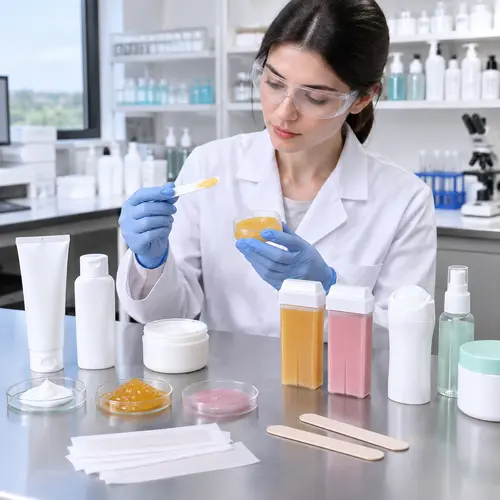
For private label hair removal products, development should move through controlled approval gates rather than a single sample sign-off. Start with a written product brief covering the target hair type, application area, removal method, desired sensory profile, fragrance limits, claims, retail market, package size, and expected selling price. This gives the labs enough commercial context to recommend a suitable formula platform without treating the brief as permission to make unrecorded substitutions.
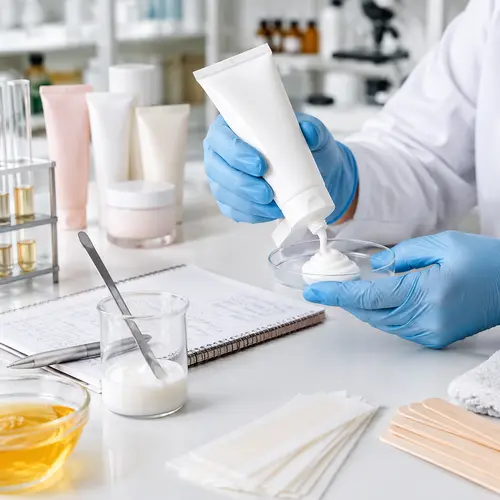
Sample confirmation should document more than appearance. For depilatory cream, founders should record spreadability, removal time, odor, residue, and skin-feel observations under the intended directions. Wax and sugar wax samples should be reviewed for handling consistency across their stated working temperatures. Wax strips require evaluation on representative hair lengths and body areas, while roll-on formats should be assessed for even dispensing and closure cleanliness. Approved samples should receive a code, date, formula version, package reference, and signed acceptance record.
Customization can include fragrance, color, botanical positioning, texture, application time, wax flexibility, aftercare pairing, and imported ingredient sourcing. However, every adjustment may affect cost, claims, lead time, or performance. If a contract manufacturer offers a turnkey base, ask which elements are exclusive, which are shared platforms, and whether your modifications create a controlled brand-specific formula. A distinctive product can come from a meaningful combination of performance targets, sensory choices, application instructions, sourced ingredients, and packaging rather than a superficial fragrance change.
Packaging compatibility must be confirmed with the actual formula and final component set. Artwork should not proceed to a large print commitment until the buyer approves the container, closure, applicator, liners, labels, adhesives, and secondary carton. Review whether wax residue interferes with closure use, whether cream affects decoration or seals, and whether roll-on components remain clean after repeated handling.
A stability review should define test conditions, checkpoints, acceptance criteria, and responsibility for investigating failures. Buyers should request observations for appearance, odor, weight change, package condition, and relevant formula measurements. Keep a retained sample from the approved lot and establish what happens if the commercial result differs materially from the signed sample.
MOQ discussions should separate formula quantity, primary packaging quantity, printed material quantity, and finished-unit quantity. A seemingly manageable finished-product MOQ may still require excess custom tubes, cartridges, cartons, or strip sachets. Ask for a costed breakdown and confirm whether unused components can be stored, transferred to a later run, or must be purchased immediately. When replacing an unreliable supplier during a capacity disruption, accelerated planning and sampling can be valuable, but document which validation steps remain mandatory.
Before shipment, obtain the agreed labeling documents, ingredient declaration, batch identification format, directions, warnings, country-of-origin wording, and market-specific support files. The shipping specification should also state carton configuration, pallet requirements, storage range, transport method, inspection standard, and responsibility for damage or temperature excursions. Buyers entering Saudi Arabia should independently confirm applicable requirements through SASO conformity assessment standards rather than assuming that documentation for another market is transferable. ([saso.gov.sa](https://www.saso.gov.sa/en/Pages/default.aspx))
Common Problems or Failure Cases
Wax becomes brittle or cracks. This may appear after cooling, storage, or removal from a strip. Investigate formula balance, fill conditions, storage history, and whether the approved sample was tested in the final package. Do not accept a corrective explanation without a revised sample and comparative records.
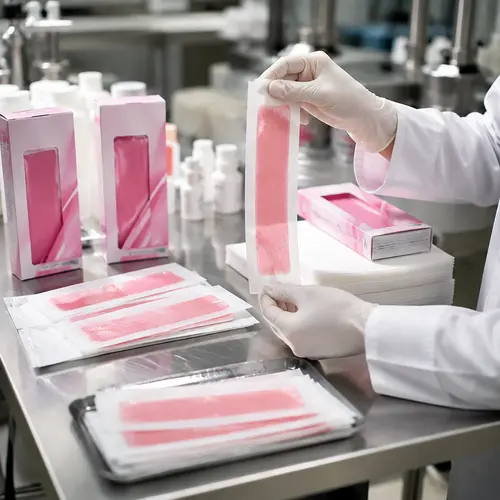
Strip adhesion declines. Strips may grip inconsistently after warm storage, extended shelf time, or contact with incompatible sachet materials. Buyers should compare freshly produced and conditioned samples, inspect wax distribution, and define acceptable removal performance before approving the commercial specification.
Depilatory cream separates. Visible liquid release, graininess, gas formation, or major texture change may indicate formula instability, process variation, or package interaction. Quarantine affected units and request the batch record, retained sample findings, and investigation report rather than trying to solve the problem through revised consumer instructions.
Roll-on cartridges leak or dispense unevenly. Common symptoms include product around the cap, a stuck roller, excessive flow, or dry application. Check component tolerances, filling weight, headspace, sealing, storage orientation, and transit exposure. The corrective action may involve the component, filling process, or formula rather than a single universal fix.
Fragrance causes unexpected sensitivity complaints. A scent accepted by the buying team may still be unsuitable for a product used on recently depilated skin or sensitive face areas. Set a fragrance ceiling, review allergen declarations for the target market, and compare fragranced and fragrance-free samples when sensitivity positioning matters.
Packaging deforms in distribution. Warped jars, softened closures, lifting labels, or crushed cartons can result from material selection, packing density, or shipment conditions. Approval should therefore cover the complete packed configuration, not only an attractive empty component.
Supplier Checklist
- Confirm experience with the specific format: wax, strips, cream, sugar wax, roll-on cartridges, or aftercare.
- Request a sample plan showing versions, quantities, review criteria, fees, and ownership of custom work.
- Define which formula parameters may be customized and which changes require renewed evaluation.
- Verify that the commercial specification is tied to the approved sample code and final packaging set.
- Review component suppliers, traceability records, change-control procedures, and backup sourcing options.
- Separate finished-product MOQ from minimum commitments for printed and custom components.
- Ask for the label document list, ingredient naming format, warnings, and target-market responsibilities.
- Confirm batch records, release criteria, retained samples, complaint handling, and corrective-action procedures.
- Document carton packing, storage limits, shipment orientation, inspection terms, and damage allocation.
- Review confidentiality terms before sharing launch calendars, custom formula targets, or brand strategy.
Relevant capability pages may help buyers compare hair removal product categories, custom manufacturing options, and the manufacturing process before issuing a formal project brief.

FAQ
Can an Asian supplier genuinely follow Western clean beauty and cruelty-free requirements?
Location alone does not prove or disprove compliance. Define your restricted-substance policy, animal-testing position, supplier declaration format, and evidence requirements in the contract. Review ingredient origins, certificates, testing statements, and change-control records. Avoid relying only on website badges or broad verbal assurances.
Will a lower MOQ make the unit cost too high to cover customer acquisition costs?
It can, especially when custom packaging, testing, freight, and printed materials are spread across fewer units. Model landed cost, fulfillment, platform fees, expected returns, promotional allowances, and CAC before approving the format. A simpler component set may protect contribution margin better than reducing formula quality.
Will a turnkey formula make our product identical to competing brands?
Not necessarily, but differentiation must be specified. Ask what is shared, what can be modified, and whether the final formula code is restricted to your brand. Sensory targets, usage experience, sourced ingredients, package function, claims support, and aftercare configuration can create meaningful differentiation when controlled through an approved specification.
Can we require a strict NDA before discussing the product plan?
Yes. Execute confidentiality terms before disclosing proprietary formulas, launch timing, pricing strategy, packaging artwork, or customer information. The agreement should identify permitted recipients, subcontractor obligations, exclusions, document handling, and the treatment of information after the relationship ends.
How can we verify that environmental packaging claims are not greenwashing?
Request material composition, supplier identity, chain-of-custody evidence where applicable, certification scope, recycled-content calculations, and disposal guidance for the destination market. Confirm whether the claim applies to the entire package or only one component. Marketing language should match the evidence actually held.
Does FDA approve depilatory cosmetics before sale in the United States?
FDA explains that cosmetics generally do not require premarket approval, except for applicable color additives. Companies remain responsible for product safety, compliant labeling, and avoiding adulterated or misbranded products, so a supplier should not present an ordinary cosmetic as FDA-approved. ([fda.gov](https://www.fda.gov/cosmetics/cosmetics-laws-regulations/fda-authority-over-cosmetics-how-cosmetics-are-not-fda-approved-are-fda-regulated))
What should we examine when a supplier promises unusually fast samples?
Ask whether the timeline covers a stock base, a custom formula, packaging samples, or only an initial lab prototype. Rapid responsiveness can help during a supplier disruption, but the approval record should still identify the formula version, component set, pending tests, and limitations of the sample.
References
- FDA authority over cosmetics and labeling responsibilities. ([fda.gov](https://www.fda.gov/cosmetics/cosmetics-laws-regulations/fda-authority-over-cosmetics-how-cosmetics-are-not-fda-approved-are-fda-regulated))
- Saudi Standards, Metrology and Quality Organization. ([saso.gov.sa](https://www.saso.gov.sa/en/Pages/default.aspx))
- Peer-reviewed research indexed by PubMed and NCBI.