Direct Answer
Private label brands should define hair removal product claims before formula selection, packaging design, or sampling begins. The claim determines what the product must do, how performance should be assessed, which warnings belong on the label, and whether the positioning remains cosmetic in the target market. A depilatory cream described as fast acting creates different testing needs from a sensitive-skin cream. A wax promoted for low-temperature application requires a controlled melting and application range. An aftercare serum positioned as soothing needs different support from one promising slower regrowth.
The practical starting point is a one-page claim matrix covering product type, target body area, user profile, application method, contact time, expected result, exclusions, and launch markets. Claims such as permanent removal, prevention of hair growth, pain free, or zero irritation should not enter artwork until they receive market-specific review. Early definition keeps the formula, sample, packaging, content brief, and final label aligned.
Key Takeaways for Private Label Buyers
- Freeze the claim hierarchy first. Separate the primary consumer promise from supporting texture, convenience, and aftercare statements.
- Match every claim to a verification method. Define what will be observed, measured, photographed, or documented before approving a sample.
- Specify the complete use condition. Body area, hair type, application amount, contact time, removal method, and warnings affect both performance and irritation risk.
- Test the formula inside the intended pack. Stability in a lab container does not establish compatibility with a tube, jar, sachet, wax strip pouch, or roll-on cartridge.
- Review launch markets separately. Acceptable cosmetic wording can differ across the United States, European Union, United Kingdom, and Gulf markets.
- Do not let content outrun the label. TikTok demonstrations, creator scripts, product pages, and package claims should describe the same realistic result.
Buyer Context
Hair removal is unusually sensitive to claim drift because the result is immediate, visual, and easy for customers to challenge on camera. A creator-led brand may begin with a strong content concept such as a cream that visibly clears dense hair, a sugar wax with a dramatic pull, or a roll-on wax that applies in one clean pass. The manufacturing brief must translate that concept into repeatable use conditions rather than a single ideal demonstration.
Product format changes what can credibly be promised. Depilatory cream buyers should define target areas, maximum contact time, removal method, odor expectations, cream body, and the intended balance between speed and mildness. Teams exploring custom depilatory cream formulation should compare samples using the same hair condition, dose, timing, and removal tool.
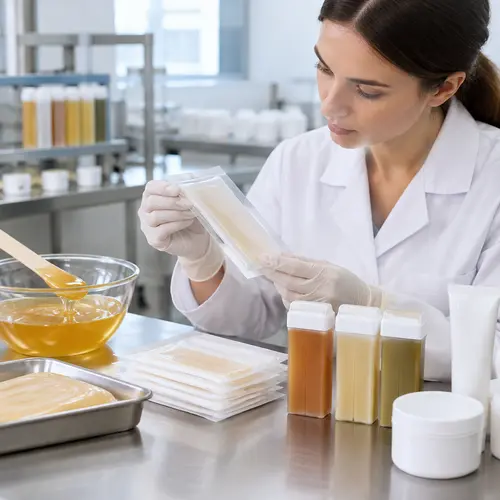
Waxing claims depend on application temperature, hair grip, strip behavior, residue, and technique. Hard wax, sugar wax, pre-coated strips, and roll-on cartridges are not interchangeable experiences. Buyers reviewing custom wax strips and hot wax should approve both the bulk texture and the consumer application sequence.
Aftercare introduces another boundary. Statements such as moisturizes, cools, or helps skin feel comfortable are different from promises to stop ingrown hairs or inhibit future growth. A paired kit may improve the user journey, but each statement still needs its own basis. Relevant options can be reviewed through post-depilation care OEM and sensitive skin hair removal products.
Market language matters as much as formula performance. The FDA information on hair products provides useful category context, while the FDA explanation of cosmetic oversight clarifies why brands should not imply general premarket approval. Brands entering the Gulf region should also check applicable requirements through the UAE MoIAT industrial standards authority.
Technical and Packaging Factors
Formula Performance Must Be Defined as a Range
A useful brief does not ask only whether the product works. It defines the operating window. For a cream, request the target viscosity range, spread pattern, dispensing force, contact-time instructions, rinse or wipe behavior, odor profile, and appearance after heat and cold storage. For wax, request the melting or softening range, recommended application temperature, working time, film flexibility, pull behavior, and residue level. Sugar wax also needs a defined consistency across realistic room temperatures.
Fast performance often creates a tradeoff. Increasing perceived speed can narrow the safe user window or make uneven application more consequential. Sensitive positioning can also conflict with dramatic before-and-after content. The supplier should conduct an irritation-risk review covering intended body areas, foreseeable misuse, patch-test directions, prohibited areas, and maximum exposure. Buyers can use depilatory product development solutions to compare formats before locking the final promise.
The Package Is Part of the Claim
A precision or mess-free claim fails if a tube continues dispensing, a jar lid accumulates wax, a strip pouch allows drying, or a roll-on cartridge leaks during shipment. Compatibility review should include formula contact with the container, closure seal, liner, applicator, label stock, and secondary pack. Evaluate upright, inverted, and side storage where relevant.
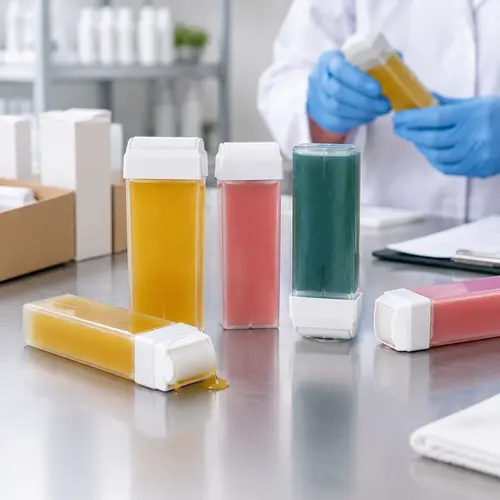
Heat and cold checks should observe separation, thickening, softening, sweating, odor shift, color change, seal movement, panel distortion, and leakage. Wax packaging also needs review at elevated storage conditions because softening can migrate product into seals or strip folds. A roll-on system must dispense evenly after storage without ball seizure or uncontrolled flow.
Sampling should therefore include more than one attractive jar from the lab. Ask for bulk samples, filled-pack samples, packaging components, use instructions, and a written record of sample variables. The OEM hair removal production workflow gives buyers a reference point for connecting sampling, filling, packaging, quality checks, and shipment release.
Claims Must Survive Scale-Up
A camera-ready prototype is valuable only if the approved texture, color, odor, application behavior, and pack output can be repeated in production. Before signing a contract, confirm whether the pilot and scaled batch use the same formula, ingredient specifications, equipment type, packaging components, and acceptance limits. A 1,000-unit pilot can reduce initial exposure, but it does not replace written scale-up controls.
For a launch target under 30 days, claims, artwork, and pack choice must be frozen early enough for parallel review. A seven-day sample target is realistic only when the brand selects an existing base, standard components, and clearly defined modifications. Custom fragrance, color matching, specialty applicators, or new molds can extend the schedule. Buyers comparing hair removal OEM ODM services should request a line-by-line sample scope before paying development fees.
Decision Framework
| Factor | What to Check | Why It Matters | ODM Buyer Note |
|---|---|---|---|
| Primary claim | Exact result, target area, user, and use condition | Directs formula, testing, instructions, and content | Approve one primary claim before visual customization |
| Performance window | Contact time, viscosity, melting range, working time, or strip adhesion | Prevents approval based on one ideal sample | Request supplier-defined acceptance ranges |
| Irritation risk | Body-area limits, patch directions, exposure limit, and warnings | Hair-removal misuse can quickly damage brand trust | Review mildness and speed as a tradeoff |
| Pack compatibility | Leakage, sealing, dispensing, label adhesion, and heat or cold behavior | The consumer experiences formula and package together | Test the final pack orientation and shipment case |
| Market wording | Claims, warnings, ingredient list, responsible party, and language needs | One global artwork file may not fit every market | Create a market-specific label matrix |
| Sample scope | Bulk sample, filled unit, component set, test record, and revision limits | Prevents hidden gaps between sample and mass production | Document what is included in price and timing |
A strong RFQ should attach the claim matrix, reference texture, target pack, launch market list, expected order volume, shipment conditions, and content deadline. Start with a qualified hair removal OEM manufacturer, then use a structured hair removal product RFQ to compare sample scope, customization limits, documentation, MOQ, and production timing on equal terms.
ODM Manufacturing Considerations
Hair removal product claims should be converted into measurable sample, production, packaging, and shipment requirements before a contract is signed. A supplier should understand both the intended market position and the physical product behavior behind each claim.
Confirm a Control Sample and Written Specification
Sample approval should cover more than fragrance and general appearance. Record color, odor, texture, fill weight, application behavior, removal performance, and acceptable variation. For wax, document the working temperature or consistency range. For depilatory creams, define viscosity, spreading behavior, and permitted separation. Photographs and short application videos can supplement the signed control sample, especially when visual content is central to the brand.
Define the Limits of Customization
Clarify whether the project uses an existing base, a modified formulation, or a fully customized formula. Each option affects cost, ownership, testing scope, and production timing. Natural-origin positioning, fragrance changes, color intensity, and aftercare additions may alter texture or irritation risk. The supplier should identify which requested changes are functional and which are mainly for styling or market differentiation.
Match the Formula to the Final Package
The chosen container should be tested with the actual filled product. Buyers should inspect seal integrity, dispensing force, cap fit, label adhesion, pouch durability, and cartridge dimensions. Storage at elevated and low temperatures should reveal deformation, paneling, seepage, drying, or changes in wax and cream behavior. Review the supplier’s relevant manufacturing process rather than approving packaging from an empty component alone.
Clarify MOQ, BOM, and Sample Scope
Ask for separate minimums for formula manufacturing, printed packaging, cartons, and accessories. A transparent BOM should distinguish product bulk, primary package, printed materials, assembly, testing, and freight assumptions. It should also state whether unused custom components must be purchased by the brand. This helps buyers compare quotations without overlooking later charges.
Prepare Labeling and Shipment Documents
Before artwork approval, request the ingredient list, net-content details, directions, cautions, batch-marking format, shelf-life basis, and available test summaries. Claims must match the intended country and product use area, particularly for facial creams or sensitive-skin positioning. Shipment planning should specify carton strength, pallet configuration, orientation, seasonal temperature exposure, and treatment of melt-sensitive wax products. The supplier’s OEM/ODM service scope should identify which documents and freight estimates are included.
Common Problems or Failure Cases
Many failures appear only after the formula, package, and transport route interact. Buyers should investigate the cause instead of treating every defect as a formula problem.
- Wax brittleness: Hard wax cracks during handling or removal because its flexibility range does not match the use temperature or storage history.
- Strip adhesion loss: Wax transfers poorly after pouch seals weaken, backing materials change, or prolonged storage alters tack.
- Cream separation: Liquid pooling or uneven texture develops after temperature stress, extended storage, or a fragrance modification.
- Cartridge leakage: Wax escapes around the roller or cap because of dimensional variation, poor closure fit, or hot shipment conditions.
- Fragrance sensitivity: A strong scent supports social content but increases consumer discomfort or narrows suitability for sensitive areas.
- Package deformation: Tubes, tubs, or cartridges distort in cartons, affecting appearance, seals, and dispensing even when the bulk remains usable.
For each failure, require affected batch numbers, retained-sample findings, component-lot information, corrective action, and a clear replacement or credit policy.
Supplier Checklist
Use the following checks when comparing manufacturers and reviewing relevant hair removal product categories:
- Written specification for color, odor, texture, viscosity or working consistency, and fill weight
- Defined sample versions and a signed production control sample
- Irritation-risk review appropriate to the intended body area
- Filled-package storage results and package-component specifications
- Leakage, seal, dispensing, and carton inspection records where applicable
- MOQ by bulk, package, print item, and accessory
- Itemized BOM with tooling, testing, assembly, and logistics assumptions
- Ingredient list, directions, cautions, batch coding, and shelf-life support
- Quality records, retained samples, raw-material traceability, and complaint handling
- Capacity confirmation for repeat orders and written rules for schedule changes
- Confidentiality, formula ownership, artwork ownership, and exclusivity terms
- Shipment limits for melt-sensitive wax, creams, strips, and roll-on cartridges
FAQ
How do I know the production batch will match the approved sample?
Approve a sealed control sample and an objective specification. The purchase contract should state acceptable ranges for texture, color, fragrance, fill weight, application behavior, and package function. Require batch inspection records and retained samples so differences can be investigated after delivery.
Can a manufacturer reuse my idea or formula for another brand?
Do not rely on a general confidentiality statement alone. Define ownership of custom formulas, modifications, artwork, molds, and testing data. Specify whether exclusivity applies to the exact formula, a market, or a time period. Ask how restricted files and physical samples are accessed internally.
Can the sample deliver a dramatic visual effect on camera?
Yes, but visual targets should be tested rather than described vaguely. Review wax stretch, pull, opacity, color, cream spreading, and residue under the lighting used for content. Confirm that the visually preferred version still performs within its intended application conditions and can be reproduced at scale.
Can quality controls guarantee that no customer will have a reaction?
No responsible supplier can guarantee zero reactions. Risk can be reduced through ingredient review, appropriate warnings, controlled manufacturing, traceability, stability work, and clear patch-test directions where suitable. Products intended for the face require especially precise use-area claims and contact instructions.
What should be included in an OEM/ODM sample quotation?
The quotation should identify base-formula or customization fees, sample quantity, packaging type, decoration, testing, shipping, and revision limits. It should also explain which charges may be credited against production. This makes fast sampling easier to compare without hidden commercial assumptions.
Which documents should be ready before label printing?
At minimum, obtain the ingredient declaration, directions, warnings, net-content format, responsible-party details, batch-code location, shelf-life basis, and available product test summaries. Country-specific language and notification needs should be confirmed before artwork is released.
References
- FDA overview of hair products, including federal information relevant to hair removal cosmetics.
- FDA authority over cosmetics, explaining oversight and the responsibilities companies retain when marketing cosmetic products in the United States.