Direct Answer
Strong hair removal product claims are specific, testable, and matched to the exact formula, use area, package, and application method. A depilatory cream can credibly communicate speed when the brand defines the application window and removal conditions. Wax can communicate smoothness when texture, grip, residue, and post-use feel remain consistent. Comfort and sensitivity claims need tighter control because fragrance, active level, contact time, wax temperature, and user technique can change the experience.
For private-label buyers, the practical rule is simple: do not approve front-label language before reviewing the working sample, packaging compatibility, storage results, and supporting files. Ask the ODM to translate each headline claim into a measurable product attribute. This turns packaging from creative copy into a reliable product promise—and reduces the risk of filming a beautiful launch campaign around performance that mass production cannot repeat.
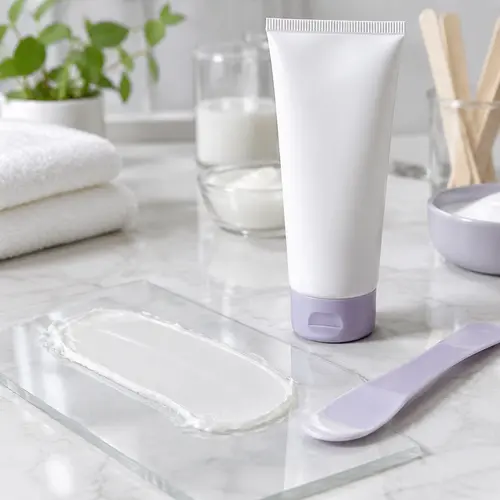
Key Takeaways for Private Label Buyers
- Define speed precisely. Clarify whether the claim refers to application, hair release, wipe-off, rinsing, heating, or the complete routine. Avoid using one timing statement across cream, strips, and wax.
- Treat comfort as a controlled experience. Review pull, residue, odor, spread, removal technique, after-feel, and the recommended use area instead of relying on broad pain-free language.
- Test claims in the final package. A stable bulk formula can still dispense poorly, leak, dry near the opening, lose label adhesion, or change flow after storage and shipment.
- Approve camera-ready samples early. Fast sampling should include texture, color, spread, peel, wipe-off, and package handling under the same lighting and filming style planned for launch content.
- Request a transparent BOM view. Separate formula, primary package, decoration, secondary packaging, testing, freight assumptions, and optional upgrades before approving a custom launch.
- Keep sensitivity language narrow. Match it to the tested formula, instructions, warning panel, patch-test direction, and intended body area—not the entire future product line.
Buyer Context
Hair removal is unusually claim-sensitive because consumers can judge performance immediately. Cream either removes visible hair within the instructed routine or it does not. A wax strip either grips effectively or leaves missed areas and residue. A roll-on cartridge either delivers a controlled layer or creates an uneven, sticky application. These moments are easy to record, compare, and share.
That visibility is valuable for creator-led brands, but it also increases launch risk. Short-form video rewards dramatic contrast, fast removal, clean pulls, and visibly smooth skin. Manufacturing must therefore support both real use and camera presentation. Buyers evaluating hair removal OEM ODM services should ask whether the development team can discuss spread, pull, finish, and packaging in marketing language—not only provide an ingredient list.
Product type changes the claim logic. A private label depilatory cream depends on controlled contact, uniform coverage, odor management, viscosity, and clean removal. Private label waxing products depend on wax distribution, backing strength, grip, separation, temperature response, and residue. Sugar wax requires repeatable softness and handling. Aftercare should complement the routine without turning a cosmetic message into a therapeutic promise; relevant formats can be reviewed through a post-depilation care OEM program.
Market language also matters. The FDA explains that product classification can depend on intended use and claims, while cosmetic companies remain responsible for supporting product safety before marketing. Buyers should review the FDA guidance on personal care product classification before finalizing claim language. For broader positioning signals, Mintel global beauty market reports can help teams distinguish a durable consumer need from a short-lived phrase.
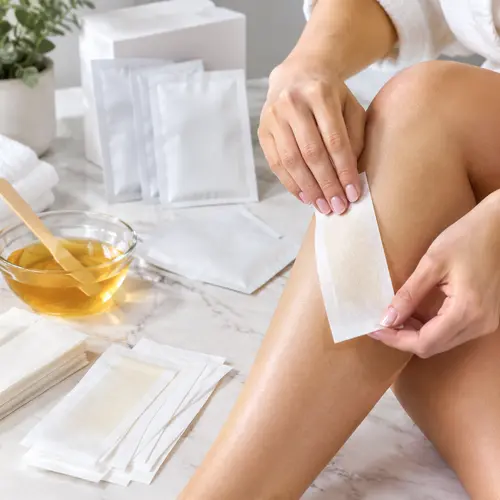
Technical or Packaging Factors
Speed Must Match the Use Method
Speed is not one universal metric. For cream, review spread time, coverage, contact window, removal method, and rinsing. For wax strips, review warming between the hands, strip separation, application, pull, and cleanup. For hot or roll-on wax, heating and flow are part of the routine. A buyer should compare the proposed claim against the complete hair removal manufacturing process, including the sample method used to generate supporting results.
Comfort Begins With Formula Control
Comfort can be affected by active concentration, fragrance, pH, wax tack, removal force, temperature, residue, and instructions. For thioglycolate-based cream systems, buyers can consult the CIR safety assessment on thioglycolate-based depilatories while requesting the supplier’s ingredient review and finished-product safety files. A mild hair removal formula should also be evaluated for odor, sting reports, rinse behavior, target body area, and patch-test wording. Avoid assuming that fragrance-free, gentle, and suitable for sensitive skin mean the same thing.
Smoothness Is More Than Hair Release
A smooth result can be weakened by wax residue, incomplete grip, broken hair, dry after-feel, or uneven cream coverage. Review the skin finish immediately after removal and after the planned aftercare step. If a kit includes serum or lotion, confirm that the textures layer cleanly and do not make the result look greasy on camera. Buyers can use depilatory product development solutions to compare single-SKU concepts with complete routines.
The Package Is Part of Performance
Depilatory cream viscosity must suit the tube, pump, or applicator. Roll-on wax must flow through the selected head without leaking during storage. Wax strip sachets need dependable seals and controlled peel-open behavior. Sugar wax jars require closure compatibility and clean access without excessive stringing around the neck.
Request heat, cold, room-condition, upright, inverted, and side-laid reviews using decorated production-equivalent packaging. Check leakage, panel distortion, cap loosening, label lift, print rub, odor migration, dispensing, and texture recovery. For UAE-bound goods, confirm current entry and labeling expectations through the UAE MoIAT industrial standards portal rather than applying one global artwork file to every market.
Decision Framework
| Factor | What to Check | Why It Matters | ODM Buyer Note |
|---|---|---|---|
| Speed | Complete routine, contact window, removal method, hair type | Prevents a fast claim from describing only one step | Approve exact instructions with the final sample |
| Comfort | Odor, spread, pull, temperature, residue, after-feel | User technique and formula behavior affect perception | Review several applications, not one ideal demonstration |
| Smoothness | Missed hair, breakage, residue, finish, aftercare layering | Visible finish drives reviews and social content | Film the sample under launch lighting |
| Sensitivity | Use area, warning panel, patch test, fragrance, contact control | Broad language creates avoidable consumer expectations | Use claim wording approved for the specific SKU |
| Packaging | Dispensing, seals, leakage, label adhesion, transport orientation | The package can change texture and user results | Test decorated production-equivalent components |
| Launch Readiness | Sample scope, BOM, artwork files, testing status, shipment conditions | Keeps content dates aligned with production reality | Use a written gate before mass manufacturing |
A capable hair removal OEM manufacturer should be able to connect claim wording to samples, package choices, test scope, and mass-production controls. Before final approval, review relevant hair removal product guides, then request a hair removal product quote that clearly identifies sample deliverables, custom options, MOQ, documentation, and estimated shipment conditions.
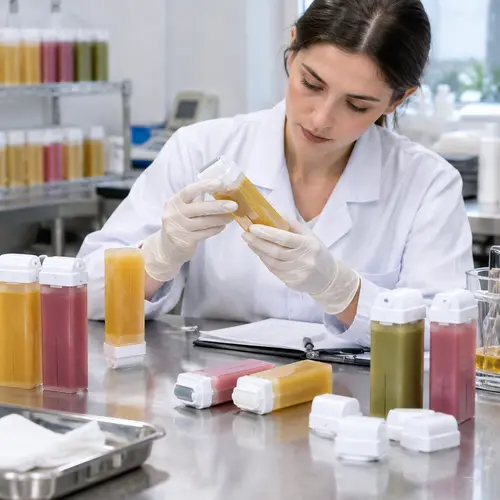
ODM Manufacturing Considerations
ODM development should convert hair removal product claims into measurable sample standards. Before approving a custom cream, wax, strip, sugar wax, roll-on cartridge, or aftercare item, create a written confirmation sheet covering color, odor, viscosity or softness, application amount, working time, removal behavior, residue, and skin feel. For a product designed for social content, review its appearance under the lighting and background normally used by the brand. A dramatic wax pull or dense cream texture may look different under warm studio lights than it does in ordinary factory photos.
A fast sample promise, including a seven-day first sample, usually applies to an available base with limited adjustments. Buyers should ask whether that timing includes custom fragrance, pigment matching, target viscosity, packaging filling, and supporting documents. Keep one approved reference sample under controlled storage and define it as the comparison standard for production. The sample record should also state which attributes may vary slightly between batches and which are fixed acceptance points.
Formula customization must stay connected to use performance. A softer wax may spread easily but become difficult to control in a hot market. A thicker depilatory cream may appear premium yet dispense poorly through a narrow opening. Fragrance changes can influence perceived comfort, while stronger pigment can transfer onto cloth or make residue more visible. Review customization limits with the supplier rather than treating color, scent, texture, and removal speed as independent choices. Buyers can compare available formats through the hair removal product categories and confirm the development sequence through the OEM and ODM services overview.
Packaging compatibility should cover the complete filled unit, not just an empty component. Useful checks include cap torque retention, seal creep, liner swelling, label lifting, stress cracking, cartridge roller movement, tube paneling, and product buildup around the closure. Stability work should document appearance, odor, texture, fill loss, and package function after defined temperature holds and cycling. Shipment simulation should consider carton compression, vibration, orientation, container heat exposure, pallet pattern, and whether an inner bag or divider is needed.
MOQ discussions should separate formula batch size, packaging component MOQ, decoration MOQ, and finished-product MOQ. A supplier may accept a small liquid batch while the printed tube or cartridge requires a much larger order. Request a transparent bill of materials, decoration costs, testing charges, carton configuration, estimated freight volume, and likely reorder lead time. Labeling files should include the ingredient declaration, directions, warnings, batch coding format, net contents, responsible-party details, country of origin when required, and shelf-life support. For UAE-bound goods, MoIAT information identifies conformity documentation and accredited test reporting among relevant entry requirements, so the destination file should be reviewed before artwork is locked. ([moiat.gov.ae](https://moiat.gov.ae/en/services/issue-conformity-certificates-for-regulated-products/?initialSessionID=260-8380200-8399646&ld=SDITSOADirect&utm_source=openai))
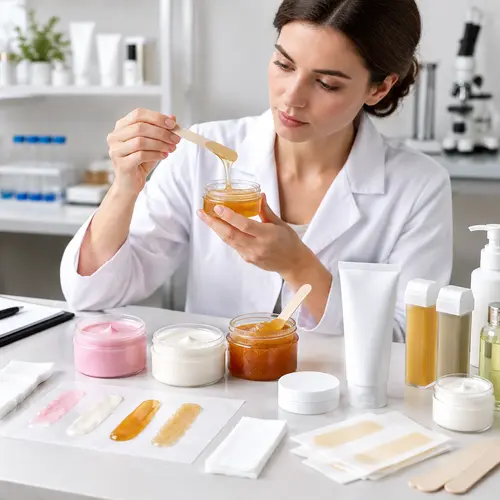
Common Problems or Failure Cases
Wax becomes brittle. Hard wax can crack during spreading or removal when its balance no longer matches the expected use temperature. Compare production material with the approved sample at the same heating condition, application thickness, and cooling time. Shipment exposure and storage history should be reviewed before changing the formula.
Wax strips lose adhesion. Weak pickup can result from inconsistent coating weight, release-liner interaction, contamination, or storage conditions. Inspect several strips from the beginning, middle, and end of a pack. Record hair pickup, residue, strip stretch, and whether performance changes after the opened pack has been stored.
Depilatory cream separates. Visible liquid, graininess, or uneven color can signal that the product has moved outside its intended physical range. Check samples from multiple filling points and compare viscosity, odor, pH specification, and removal performance. Products based on thioglycolate ingredients require careful exposure instructions and irritation-risk controls. The CIR assessment concludes that specified thioglycolate ingredients used in depilatories can be safe when products are made to be nonirritating under recommended use conditions. ([cir-reports.cir-safety.org](https://cir-reports.cir-safety.org/view-attachment/?id=17a63435-8e74-ec11-8943-0022482f06a6&utm_source=openai))
Roll-on cartridges leak. Leakage may appear at the roller, neck, seam, or cap after heating and transport. Possible causes include incorrect fill temperature, excessive headspace pressure, poor component tolerances, or wax collecting beneath the roller. Test complete cartons after vibration and warm storage rather than judging a single upright unit.
Fragrance creates sensitivity complaints. A pleasant scent does not prove broad tolerance. Confirm the fragrance level, allergen disclosure where applicable, intended body area, directions, and warning language. A lower-fragrance or fragrance-free option may be appropriate for a sensitivity-positioned range, but the claim still needs support from the finished product.
Packaging deforms. Tubes may panel, jars may distort, labels may wrinkle, and cartridge caps may loosen when the pack, fill process, and transport conditions are mismatched. The corrective action should identify the root cause instead of adding more tape, thicker cartons, or other temporary fixes.
Supplier Checklist
- Request product specifications with target ranges for appearance, odor, viscosity or wax softness, pH where relevant, fill weight, and use performance.
- Confirm the sample scope, revision limits, sample fee, delivery timing, and method used to approve the final reference sample.
- Ask for filled-pack test results covering closure integrity, leakage, deformation, label condition, and dispensing or roller function.
- Review batch controls, raw-material specifications, production records, retained samples, release criteria, and complaint investigation steps.
- Separate every MOQ: bulk formula, primary pack, printing, cartons, accessories, and final assembly.
- Obtain an itemized bill of materials plus tooling, decoration, document, testing, freight-volume, and storage charges.
- Verify ingredient lists, directions, warnings, batch coding, shelf-life basis, destination documents, and artwork approval responsibilities.
- Ask for normal and surge output, material lead times, peak-season constraints, and the capacity reserved for repeat orders.
- Confirm carton count, pallet dimensions, loading orientation, temperature precautions, and shipment inspection standards.
- Record confidentiality, formula ownership, artwork ownership, sample access, and restrictions on selling an identical custom product in the manufacturing contract.

FAQ
How can I stop a factory from copying my idea or formula?
Use a signed confidentiality and development agreement before sending detailed briefs. Define ownership of the custom formula, artwork, molds, test results, and approved samples. Limit file access, use coded sample names, and include a restriction against offering an identical custom product to another buyer. No document removes all risk, so also assess how the supplier controls records and customer-specific materials.
Can the sample deliver the exaggerated texture or color I want on camera?
Yes, but visual goals must be converted into testable references. Provide lighting conditions, background color, application thickness, movement speed, and example footage. Ask for drawdown photos and short videos before shipment, then confirm the effect using the intended package and use temperature. Do not approve a sample solely from edited images.
Can quality controls guarantee that no customer will have a reaction?
No supplier can guarantee zero reactions. Risk can be reduced through ingredient review, finished-product evaluation, clear directions, defined exposure time, warnings, batch release checks, retained samples, and a documented complaint process. FDA states that cosmetic firms are responsible for supporting product and ingredient safety before marketing, while product claims can affect how an item is categorized. ([fda.gov](https://www.fda.gov/industry/fda-basics-industry/are-all-personal-care-products-regulated-cosmetics))
What does a seven-day sample promise normally include?
It often means a first laboratory sample based on an existing platform, not a fully validated commercial unit. Confirm whether the promise includes fragrance, color, performance adjustments, branded packaging, stability work, and shipping time. Ask how many revisions are included and which changes reset the timeline.
How do I know the factory can handle a sudden viral order?
Request monthly and daily capacity by product type, current line loading, component lead times, labor flexibility, and the minimum notice required for a surge. Confirm whether repeat production receives reserved capacity and whether critical packaging is stocked. Capacity claims should be supported by a realistic production and material plan.
Which labeling documents should be ready before production?
At minimum, confirm the ingredient declaration, product name, net contents, directions, warnings, batch-code format, responsible-party information, intended market language, and shelf-life marking. Destination-specific documents should be identified before printing because late label changes can delay production or make finished packaging unusable.