Direct Answer
A strong hair removal formula brief should define three things before sampling starts: what the product must do, how it should look and feel on camera, and what packaging and market claims it must support. These inputs affect the formula, filling method, compatibility checks, testing plan, label copy, and launch timeline.
For a depilatory cream, wax strip, sugar wax, roll-on cartridge, or aftercare product, a useful brief does not need technical language. It needs precise decisions: target body area, skin positioning, removal experience, texture, scent, pack format, storage conditions, sales market, and acceptable evidence for each claim. The right ODM partner translates those decisions into a sample plan that can move from pilot production to larger manufacturing without re-engineering the product. PZIK can review these inputs alongside custom hair removal product development, packaging selection, and documentation planning.
Claims should be treated as development inputs, not marketing text added at the end. Words such as gentle, sensitive, fast, smooth, or long-lasting may change the required review, testing, or substantiation plan.
Key Takeaways for Private Label Buyers
- Describe the intended removal experience, not only the ingredient concept. The desired texture, working time, residue level, and scent guide the first formula direction.
- Choose packaging with the formula. A jar, tube, sachet, wax cartridge, or strip pouch creates different filling, leakage, sealing, and compatibility requirements.
- Separate appearance claims from performance claims. A visible color, whipped texture, or fast spread may be easy to show, while sensitive-skin or long-lasting claims need a more careful review.
- Request samples that represent the final pack format. A cream in a laboratory beaker does not confirm tube dispensing, and a wax sample in a cup does not confirm cartridge flow.
- Define storage and shipment conditions early. Heat, cold, vibration, and long warehouse hours can affect viscosity, wax melting behavior, seal quality, and consumer experience.
- Ask for a clear sample and pilot scope. A partner offering pilot runs from 1,000 units can help validate a market hypothesis before a larger commitment.
Buyer Context
Hair-removal products are judged in seconds. A creator may show a cream spreading across the leg, a wax strip lifting cleanly, a sugar wax stretching between fingers, or a roll-on cartridge applying a controlled line. The audience sees texture and outcome before it reads the label. That makes the brief unusually important: a product can meet a basic removal requirement and still fail as a social-first product if the application looks messy, the pack leaks, or the visual effect does not match the brand design.
The buyer also has to protect the launch from avoidable disputes. A private-label brand may sell through Shopify, Amazon, TikTok Shop, salons, or subscription boxes. Each channel can expose the product to different transport, storage, and customer-use conditions. A tube that performs well in a controlled room may soften in a hot parcel. Wax strips may lose adhesion after prolonged heat. A jar may be difficult to use with wet hands. Aftercare gel may require a different closure and dispensing experience from the removal product itself.
This is why a brief should connect the formula to the market and the packaging to the use case. PZIK buyers can compare hair removal product solutions by product type, target user, and launch need, then align the concept with a practical hair removal manufacturing process.
Claims also shape the project. If the product is positioned for sensitive skin, the review should address irritation risk, fragrance choices, application instructions, and suitable substantiation. If the claim is fast removal, the proposed working time must be defined and tested consistently. If the product is positioned as gentle, the formula and consumer directions must support that wording. For United States distribution, buyers should review the FDA cosmetics requirements before finalizing label language. Natural or organic positioning may also require review against the expectations of Ecocert organic and natural cosmetic certification.
For regional launches, the same claim may need different supporting documents or label treatment. Buyers considering Gulf distribution should review the Gulf Standardization Organization requirements and relevant SASO conformity assessment standards with their importer or local advisor.
A focused brief protects the founder from having to translate an internet trend into manufacturing language alone. It gives the ODM team enough context to ask better questions and show a first sample that is closer to the intended market moment.
Technical or Packaging Factors
Formula and texture
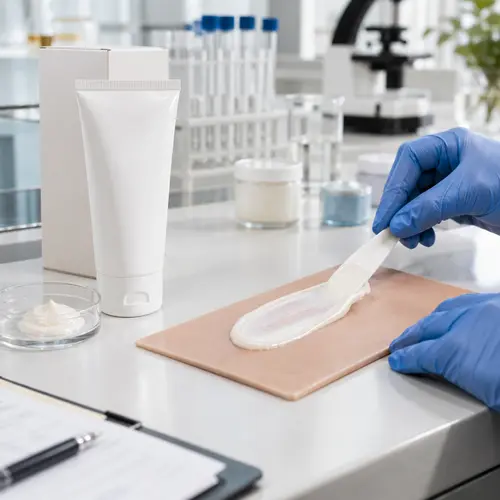
Start with the use experience. For depilatory cream, specify whether the product should be dense, soft, whipped, or easy to spread in a thin layer. Ask how quickly it should spread, whether it should remain stable on vertical skin, how it should rinse, and what residue is acceptable. The formula review should also consider the target body area, hair type, fragrance tolerance, and whether the product is intended for general or sensitive-skin positioning.
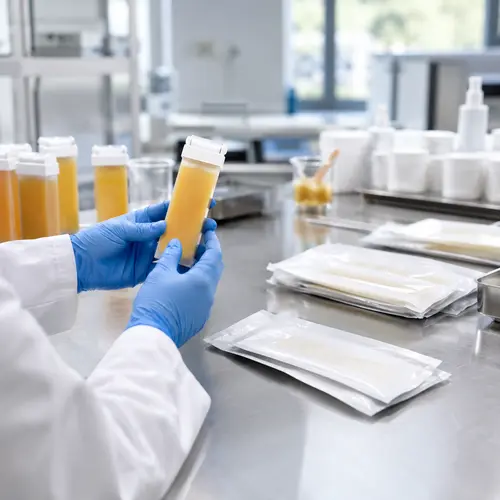
For wax and sugar wax, describe the application method and removal behavior. The ODM team should review flow, pull strength, melting behavior, stringing, cooling time, and whether the product can be removed cleanly without excessive residue. A roll-on wax cartridge needs consistent flow through the roller, secure closure, and a pack that does not deform during storage. Wax strips need consistent coating, reliable adhesion, clean separation from the backing, and pouch sealing that protects the product through shipment.
Packaging compatibility
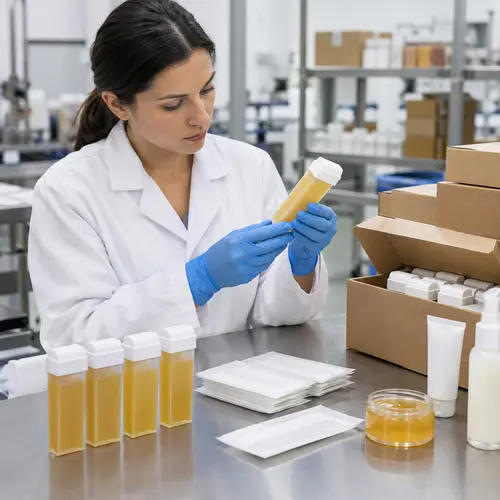
Packaging is part of the formula brief. Confirm the primary container, closure, applicator, fill weight, decoration, and intended opening experience. Request compatibility checks between the formula and the tube, jar, cartridge, pouch, or sachet. Review changes in odor, color, viscosity, wax flow, seal integrity, and dispensing after storage. For a cream, compare the actual production tube with the sample container. For a roll-on product, test upright storage, inverted storage, repeated rolling, and leakage after transport simulation.
Design ambition should be matched with physical performance. A highly customized pack may require a new mold, longer lead time, or higher development cost. A stock component with custom decoration may offer a faster route for a creator-led launch. The decision should be based on the content calendar, forecast, pilot quantity, and risk tolerance rather than appearance alone. Buyers can review custom depilatory cream formulation options and the custom wax strips and hot wax route before locking the pack.
Storage and testing
Ask the supplier to define the storage conditions used for the sample and the planned testing program. Heat and cold exposure can reveal separation, hardening, softening, color change, leakage, or loss of adhesion. Shipment review should include carton protection, orientation, closure security, and the expected route from factory to warehouse. The product should be checked in the final packaging, because a formula can behave differently when exposed to a new plastic, adhesive, metal roller, or seal layer.
Documentation should match the launch market and claim set. Request ingredient information, specifications, batch records, label review support, packaging declarations, testing summaries, and usage warnings as applicable. For aftercare, make sure the brief states whether the product is a soothing gel, lotion, or recovery-focused companion item, and whether it will be sold alone or in a hair-removal kit. Relevant options include soothing gel after hair removal and low irritation hair removal products.
Decision Framework Table
| Factor | What to Check | Why It Matters | ODM Buyer Note |
|---|---|---|---|
| Removal performance | Target body area, hair type, working time, residue, and rinse or peel behavior | Turns a broad promise into a repeatable product experience | Define the success condition before comparing samples |
| Texture and appearance | Spread, flow, stringing, color, scent, and on-camera visibility | Controls usability and short-form content impact | Review samples under normal filming light and real application conditions |
| Packaging compatibility | Tube, jar, pouch, cartridge, adhesive, closure, and seal contact | Reduces leakage, odor transfer, deformation, and dispensing failures | Test the final pack, not only a laboratory container |
| Storage and shipment | Heat, cold, vibration, orientation, carton protection, and warehouse duration | Connects factory performance with actual distribution conditions | Request a shipment-condition review before mass production |
| Claims and documents | Gentle, sensitive, fast, smooth, natural, or other front-label language | Determines review, evidence, warnings, and label work | Lock priority claims before final formula approval |
| Launch scale | Sample quantity, pilot quantity, lead time, and scale-up path | Protects the content calendar and reduces unnecessary inventory risk | Confirm whether the pilot line can support later volume without a formula change |
Use this table as the first review sheet with an ODM partner. The next step is to send a brief that includes the target market, product type, desired visual effect, pack reference, claim priorities, forecast, and launch date. A supplier should then return a practical development scope covering sample options, packaging compatibility, testing, documentation, and pilot production.

For a broader project review, buyers can compare private label hair removal products, request a private label sample, or evaluate a coordinated kit that includes after hair removal serum. The brief is the control point: once the formula, pack, claims, and launch conditions are aligned, sampling becomes a decision process rather than a sequence of disconnected guesses.
ODM Manufacturing Considerations
A workable hair removal formula brief should define how the approved sample becomes the production benchmark. The buyer and supplier should retain signed or coded reference samples and record measurable details such as color, fragrance level, fill weight, application feel, wax melting range, or cream viscosity range. Approval should cover the product in its intended container rather than formula in a generic lab jar.
For formula customization, clarify whether the project uses an adjusted stock base, a substantially modified base, or a buyer-exclusive formula. Record the permitted ingredients, excluded fragrances or allergens, target removal performance, application time, rinse behavior, and intended use area such as face or body. A sensitive-positioned cream or aftercare product also needs a documented irritation-risk assessment and conservative instructions. No manufacturer can promise zero reactions for every consumer.
Packaging decisions should be made early because product behavior can change inside the chosen pack. A depilatory cream tube may soften, discolor, or develop seal stress after prolonged contact. A sugar wax jar must tolerate filling temperature and repeated opening. Roll-on cartridge components need suitable clearances so wax can move when warm without escaping around the roller or cap. Printed wax strip pouches must protect adhesion while remaining easy to open.
Stability work should reflect realistic storage and sales conditions. Agree on observation points for appearance, odor, viscosity, phase integrity, pack distortion, seal performance, and net-weight change. Temperature cycling, elevated storage, ambient retention samples, and transport simulation can reveal different risks. These checks provide useful evidence but do not make quality risk impossible.
MOQ discussions should separate formula MOQ, packaging-component MOQ, printed-material MOQ, and finished-product MOQ. Ask for a transparent BOM showing formula, primary pack, decoration, carton, testing, assembly, and estimated freight assumptions. This prevents a low headline price from hiding tooling, excess packaging inventory, or special handling costs.
Before production, confirm the ingredient list, product name, directions, warnings, batch coding method, responsible-party details, country-of-origin wording, and claim support files. Destination requirements may differ, so the label intended for one market should not automatically be reused elsewhere. Shipment planning should state carton strength, pallet preference, container loading orientation, temperature concerns, and responsibility for damaged or leaking units. Buyers can compare these steps with the supplier’s manufacturing process and OEM and ODM service scope.

Common Problems or Failure Cases
Wax becomes brittle: Hard or strip wax may crack because its flexibility, application thickness, or expected room-temperature range was not defined. Compare retained samples at several temperatures and record the acceptable melting and working range.
Strip adhesion declines: Wax can migrate into backing material, lose tack in warm storage, or transfer unevenly after pouch exposure. Evaluate freshly produced and aged strips for grip, removal, residue, and pouch condition.
Cream separates: Oil release, watery layers, graininess, or viscosity drift can appear after scale-up or temperature stress. Production approval should use measurable viscosity limits and visual acceptance criteria rather than descriptions such as rich or smooth alone.
Cartridges leak: Leakage may result from roller tolerances, cap fit, fill temperature, headspace, or warm transit. Inspect units upright, inverted, and after representative transportation stress.
Fragrance causes complaints: A strong scent may support social content but increase concern among sensitive users. Review fragrance concentration, allergen declarations, unscented options, warning language, and target-use area before approving claims such as gentle.
Packaging deforms: Jars, tubes, caps, or pouches can warp, swell, delaminate, or lose print quality. Require compatibility evidence using the actual formula, decoration, closure, and intended storage period.
Supplier Checklist
- Does the supplier manufacture the relevant hair removal product category at commercial scale?
- Are the approved sample, color, odor, texture, viscosity or melting range, fill weight, and performance criteria documented?
- Is formula ownership, confidentiality, permitted reuse, and ownership of custom packaging stated in the contract?
- Are irritation risks, fragrance allergens, use-area limits, directions, and warnings reviewed?
- Are formula, component, printing, and finished-goods MOQs listed separately?
- Has the actual product-pack combination been assessed for separation, deformation, leakage, adhesion loss, and weight change?
- Can the supplier provide ingredient, batch, test, label, and claim-support documents appropriate to the destination?
- Does the quotation show BOM assumptions, decoration costs, testing, packing, freight basis, and potential surcharges?
- Are production capacity, peak-season scheduling, backup equipment, and response procedures for nonconforming goods explained?
- Are shipment temperature, carton configuration, loading orientation, and inspection terms agreed before dispatch?
FAQ
How can I reduce the risk of a factory reusing my idea or formula?
Use a contract that defines confidential information, formula ownership, allowed use of base formulas, sample retention, access to project files, and restrictions on selling buyer-specific designs. Ask who owns later modifications and custom tooling. Absolute secrecy cannot be assumed, so verify controls and keep a clear approval trail.
Can a sample deliver the dramatic texture and color needed on camera?
Yes, but visual targets must be translated into measurable requirements. Provide reference footage, lighting conditions, application thickness, desired stretch or flow, and acceptable color range. Film the sample on the intended face or body area using the planned pack, while keeping removal performance and user comfort ahead of visual exaggeration.
Can quality controls guarantee that no follower will have a bad reaction?
No supplier can guarantee zero adverse reactions. Risk can be reduced through ingredient screening, controlled manufacturing, irritation-risk review, clear warnings, traceable batches, and complaint procedures. Claims such as gentle or suitable for sensitive skin should be narrowly worded and supported by appropriate evidence.
What if I do not understand technical ingredient language?
A capable account and development team should convert marketing requests into a structured hair removal formula brief. Ask them to restate each request as a specification covering texture, use area, removal time, fragrance, pack, claims, and acceptance limits. Written summaries reduce misunderstandings across languages and teams.
What happens if social content creates a sudden order spike?
Ask for normal and peak monthly capacity, material lead times, reserved-capacity terms, and reorder forecasts. Confirm whether packaging or formula materials are the limiting factor and whether partial shipments are possible. Capacity promises should appear in planning documents rather than informal messages.
Are hair removal cosmetics approved by the FDA before sale?
In the United States, cosmetics generally are not preapproved by the FDA, except for applicable color additives. The responsible business still has duties concerning product safety, labeling, and legal marketing. Destination-specific advice should be obtained before labels are printed.
References
- FDA: Cosmetics and U.S. Law
- FDA authority over cosmetics and premarket approval
- Ecocert organic and natural cosmetic certification for brands considering certified natural or organic claims.
- Gulf Standardization Organization for Gulf market standards and destination considerations.