Direct Answer
Choosing bikini hair removal products private label buyers can launch confidently is less about finding one universally superior format and more about matching formula behavior, packaging, compliance, and use experience to a specific customer. Depilatory cream offers convenient at-home removal but demands careful irritation-risk review and precise use directions. Wax strips are compact and easy to merchandise, while sugar wax, hot wax, and roll-on cartridges require tighter control of temperature response, adhesion, and leakage. Aftercare can improve the perceived completeness of any system.
Before approving a product, request representative samples in the intended retail packaging, review stability and compatibility data, test the full application sequence, and confirm which labeling documents are included. Buyers should also distinguish a genuinely scalable development platform from a supplier that simply offers a catalog formula. A strong private label hair removal products program should preserve formula consistency from a 1,000-unit pilot through later production without forcing a formulation reset.
Key Takeaways for Private Label Buyers
- Start with the use case: Bikini, body, underarm, and face removal require different positioning, exposure-time guidance, and sensitivity reviews.
- Approve the packaged product: Formula samples alone cannot reveal cartridge leakage, cream migration, strip drying, label lifting, or closure failure.
- Define performance objectively: Set review criteria for spreadability, residue, removal efficiency, fragrance, texture, and the number of hours the skin should remain comfortable after use.
- Request evidence by market: Ingredient lists, warnings, claims, and artwork should be reviewed against the requirements of each destination country.
- Plan the system, not only the hero SKU: A removal product paired with after wax care products can support a more coherent routine and higher perceived value.
Buyer Context
Hair-removal products sit at an unusual intersection of cosmetics, chemistry, packaging mechanics, and consumer technique. A body cream may look elegant in a sample jar yet dispense poorly from the selected tube. A natural sugar wax may perform beautifully in a controlled room but become too fluid during warm-weather delivery. Waxing strips can pass an initial hand test and still lose adhesion after aging, while a roll-on cartridge can develop slow leakage around the neck or roller assembly.
These issues matter more for DTC brands because the first production run is also a public product test. Customers may demonstrate texture, pull, residue, or redness under unforgiving social-media light. When performance varies between batches, the problem becomes visible before the brand has time to investigate it privately. This is why the early sourcing brief should define the complete experience: preparation, application, removal, cleanup, and aftercare.
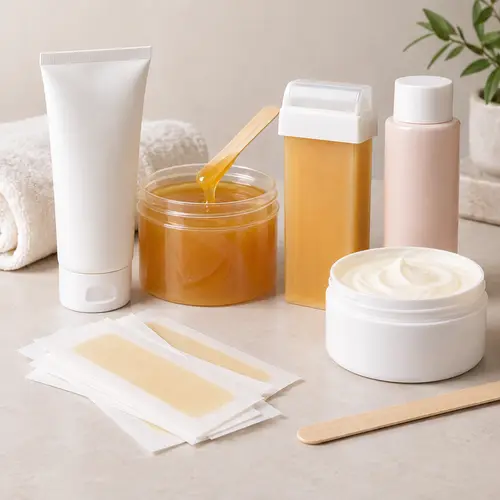
Format selection also shapes the business model. Wax strips are light, compact, and subscription-friendly. Depilatory cream can create a smooth, sensorial ritual but requires detailed compatibility and irritation-risk work. Hot wax and Cosmewax-style strip concepts can support professional positioning, although they add technique dependence. Roll-on wax offers controlled application, but the cartridge, roller fit, heating method, and shipment orientation must work as one system. Buyers comparing these options can use private label hair removal solutions to map product formats to channels and customer routines.
PZIK addresses this risk through a vertically specialized formulation library, ISO 22716 manufacturing controls, and pilot runs from 1,000 units. Its under-30-day development model is most useful when speed does not remove the validation steps that protect the launch. The practical question is not simply how fast a sample arrives, but whether the sample scope, packaging, documentation, and scale-up path are defined from the beginning.

Technical and Packaging Factors
Formula Behavior and User Experience
For private label depilatory cream, review viscosity after filling, spread uniformity, odor control, rinse behavior, and whether the cream remains stable around the closure. The evaluation protocol should document application amount and exposure instructions rather than relying on an informal skin test. Bikini-positioned formulas also deserve a separate sensitive-area review; a body formula should not automatically be extended to more delicate zones. The sensitive skin hair removal products workflow provides a useful framework for reviewing mildness, warnings, and intended-use boundaries.
For wax, ask the ODM to document the approved working window, melting behavior when relevant, pickup, stringing, brittleness, residue, and pull consistency. Sugar wax should be checked for crystallization and temperature-driven flow changes. Pre-coated strips need aging review for adhesive transfer, backing separation, and edge seepage. A custom fragrance or color can change the system, so it should be included before final stability approval rather than added after the base has passed.
Packaging, Storage, and Shipment
Packaging compatibility is a product test, not a purchasing exercise. Tubes should be checked for paneling, seam integrity, cap fit, and product buildup at the orifice. Jars require liner and closure review. Roll-on cartridges need upright and side-position leakage checks, repeated heating cycles, and an assessment of whether the roller continues to distribute wax evenly. The same filled components should be evaluated after heat and cold storage because warehouse and delivery conditions rarely resemble a climate-controlled lab.
For strips, inspect pouch seals, moisture and fragrance retention, backing release, and adhesion after storage. If an eco-conscious structure is proposed, request material specifications and traceability rather than accepting a broad sustainability statement. The goal is not packaging that merely looks minimal; it is packaging that protects the formula, survives fulfillment, and leaves enough printable area for compliant information.
Compliance and Documentation
Artwork should be treated as part of product development. The FDA Cosmetics Labeling Guide addresses matters including product identity, net contents, business information, warnings, ingredient declaration, and the placement and prominence of required information. Imported cosmetics sold in the United States must meet the applicable labeling requirements, so a polished front panel cannot compensate for missing or unreadable information. ([fda.gov](https://www.fda.gov/cosmetics/cosmetics-labeling-regulations/cosmetics-labeling-guide))
For broader market planning, review Health Canada cosmetic safety requirements and the Gulf Standardization Organization framework before freezing claims and artwork. ([canada.ca](https://www.canada.ca/en/health-canada/services/consumer-product-safety/cosmetics.html)) Your ODM should clarify which files it supplies, which actions remain the brand owner’s responsibility, and whether market-specific artwork review is included. The hair removal manufacturing process should connect formula approval, filling, packaging, quality control, and shipment release rather than treating them as separate handoffs.

Decision Framework
| Factor | What to Check | Why It Matters | ODM Buyer Note |
|---|---|---|---|
| Product format | Application method, body area, cleanup, customer skill level | The easiest format to market may not be the easiest for customers to use correctly | Compare cream, strips, sugar wax, hot wax, and roll-on samples under the same scoring method |
| Formula performance | Viscosity, spread, working window, adhesion, residue, odor, and removal consistency | Small texture changes can alter results and customer perception | Ask the hair removal OEM ODM services team to define measurable approval criteria |
| Packaging compatibility | Closure fit, seals, leakage, label adhesion, dispensing, and heat or cold response | A stable formula can still fail inside an unsuitable component | Approve filled retail packaging rather than an unfilled decoration sample |
| Safety positioning | Intended area, directions, warnings, irritation-risk review, and aftercare guidance | Bikini and sensitive positioning raises the cost of vague instructions | Keep body, face, and intimate-area claims within the reviewed use scope |
| Launch readiness | Sample contents, pilot quantity, artwork files, quality records, and shipment conditions | Undefined responsibilities create delays after formula approval | Use a get a private label sample request that lists every component and document required |
| Routine expansion | Soothing care, ingrown-hair positioning, and compatible secondary products | A complete routine can differentiate a familiar removal format | Evaluate options such as a private label hair inhibitor serum only after the core removal SKU is validated |
For waxing-led concepts, a comparison of private label waxing products should include both formula performance and the accessories required for consistent home use. Selection becomes much clearer when each format is judged as a complete consumer system rather than as an isolated formula.
ODM Manufacturing Considerations
For buyers evaluating bikini hair removal products private label options, ODM planning should begin with a written sample standard rather than a general preference such as ‘gentle’ or ‘natural.’ The standard should define the intended removal performance, application area, formula texture, fragrance level, skin-feel target, pack size, and acceptable use time. Depilatory cream samples may require measurable viscosity limits and an agreed removal-time range, while wax and sugar wax samples should have defined application temperature, spreadability, pickup, and residue expectations.
Sample confirmation should follow a controlled sequence. First, approve the base formula’s functional behavior. Second, assess fragrance, color, botanical oils, and soothing additives individually so that performance changes can be traced. Third, confirm the complete formula in the intended retail pack. A supplier should record each sample code, revision date, ingredient change, and evaluation result. Buyers should retain sealed approval samples from the final revision for comparison with the first commercial batch.
Customization does not need to mean rebuilding every formula. Meaningful differentiation can come from a carefully selected removal format, application method, fragrance profile, specialty oil source, after-use sensory target, pack count, or kit configuration. However, each adjustment should be screened for irritation risk and functional impact. Added oils can soften wax, fragrance can increase sensitivity concerns, and changes in water or surfactant balance can destabilize a cream. Claims such as ‘for sensitive bikini areas’ should be supported by an appropriate safety review rather than inferred from ingredient positioning.
Packaging compatibility should be reviewed with filled components from the intended packaging vendor. Useful observations include formula weight loss, discoloration, label lifting, component swelling, dispensing consistency, closure torque, and dimensional change after controlled temperature holds. For strips, buyers should verify backing flexibility, liner release, wax distribution, and peel behavior. For roll-on formats, the ball or roller must continue to rotate evenly without formula buildup or seepage around the fitment.
A stability plan should identify test temperatures, review intervals, acceptance criteria, and responsibility for corrective work. It should cover appearance, odor, texture, pH where applicable, removal performance, and package function. Accelerated observations can reveal risks earlier, but they do not guarantee the full shelf life. The final specification should state which results are provisional and which are supported by completed real-time data.
MOQ discussions should separate formula minimums, printed-component minimums, filling-line constraints, and carton quantities. A low initial run may still be practical if the buyer uses a validated formula and standard components, but highly customized decoration or unusual pack dimensions can create excess inventory. Before confirming economics, compare landed unit cost with expected CAC, fulfillment fees, returns, promotional allowances, and damaged-goods exposure.
Labeling files should include the ingredient declaration, net contents, responsible-party details, directions, warnings, lot identification method, and country-specific language requirements. Buyers can review related capabilities through the OEM and ODM development overview and manufacturing process. Shipment instructions should define carton orientation, pallet pattern, temperature precautions, container loading, batch documents, and inspection evidence required before release.

Common Problems or Failure Cases
Wax becomes brittle or cracks: This can result from an unsuitable resin-to-oil balance, temperature exposure, aging, or an application layer that is too thin. Buyers should compare retained samples across intervals and assess flexibility, pickup, residue, and breakage under the intended use conditions.
Wax strips lose adhesion: Common causes include wax migration, incompatible backing materials, poor liner release balance, or prolonged exposure to unfavorable shipment conditions. A useful investigation compares peel consistency, wax distribution, and hair pickup between fresh samples, retained samples, and transported cartons.
Depilatory cream separates: Separation, water release, or graininess may indicate an emulsion problem, an incompatible fragrance, or uncontrolled filling temperature. The supplier should document mixing order, processing limits, pH, viscosity, and the exact batch stage at which the deviation appeared.
Roll-on cartridges leak: Leakage may originate from the formula, fitment tolerances, roller geometry, closure torque, or deformation during transit. Testing should use filled units from multiple component lots and include upright, inverted, and side-position observations.
Fragrance causes complaints: A fragrance accepted on a blotter may feel much stronger in warm wax or a leave-on aftercare product. Buyers should review fragrance dosage, allergen documentation, unscented alternatives, and feedback from users with sensitive skin.
Packaging deforms: Thin walls, unsuitable resins, excess headspace pressure, or transport temperatures can distort jars, tubes, or cartridges. The corrective action should address both component specifications and shipment conditions rather than treating deformation as a cosmetic defect.

Supplier Checklist
- Request coded samples with revision records, complete ingredient lists, target specifications, and written acceptance criteria.
- Confirm the supplier can explain viscosity, pH, application temperature, melting behavior, removal time, or peel-force targets relevant to each product format.
- Ask for an irritation-risk review covering fragrance, depilatory actives, intended body area, directions, warnings, and foreseeable misuse.
- Require compatibility evidence using the actual formula, decoration, closure, liner, cartridge, pouch, and secondary packaging selected for launch.
- Review stability protocols, observation intervals, retained-sample procedures, deviation handling, and the status of real-time data.
- Separate MOQ by formula, filling run, printed components, cartons, and accessories to identify hidden inventory commitments.
- Verify batch records, raw-material traceability, incoming inspection, in-process controls, finished-product release, and complaint investigation procedures.
- Confirm the labeling document package for each destination, including ingredients, warnings, responsible-party information, language, lot coding, and supporting claim files.
- Ask how approved samples are transferred into production specifications and how unauthorized substitutions are prevented.
- Define shipment release checks, carton strength, palletization, temperature precautions, inspection photos, and required transport documents.
- Review the supplier’s hair removal product categories to determine whether its regular capabilities match the proposed format instead of relying on a one-off development claim.
FAQ
Can an Asian manufacturer genuinely meet Western clean beauty and cruelty-free requirements?
Yes, but location is not evidence of compliance. Provide a written restricted-substance standard, cruelty-free policy, market list, and claim definitions. Then verify ingredient declarations, supplier statements, animal-testing policies, traceability records, and change-control procedures. Because ‘clean beauty’ has no single universal definition, the contract and approved specification should state exactly which substances and practices are excluded.
Will a low MOQ make the unit cost too high to support customer acquisition costs?
It can, particularly when custom printing, uncommon components, or manual kit assembly are involved. Model the landed cost rather than the filling price alone. Include freight, duties, fulfillment, samples, promotions, returns, and CAC. A standard pack with selective formula or fragrance customization often gives a more workable launch cost than a fully unique component set.
Will a turnkey or existing formula make the product indistinguishable from competing brands?
Not necessarily. Buyers can differentiate through removal format, performance specification, fragrance intensity, specialty natural oil sourcing, strip count, application accessories, instructions, aftercare pairing, and packaging presentation. The key is to select changes that consumers can notice without compromising stability or extending development unnecessarily.
How many sample rounds should be expected before approval?
There is no universal number. A straightforward fragrance or color adjustment may require fewer revisions than a sensitive-area cream or a custom sugar wax texture. Approval should depend on documented acceptance criteria, not sample-round count. Each revision should identify what changed and which tests must be repeated.
What documents should be ready before label artwork is finalized?
Obtain the complete ingredient declaration, net-content basis, directions, warnings, responsible-party details, lot-coding plan, shelf-life statement, and substantiation for visible claims. Artwork should also reserve sufficient space for destination-specific language and importer information where required.
What should buyers check when replacing a failed supplier quickly?
Prioritize format capability, component availability, sample comparability, formula ownership, documentation transfer, and realistic scheduling. Send the replacement supplier an approved benchmark, specifications, complaint history, pack drawings, and shipment requirements. A rapid proposal is valuable only if it clearly separates confirmed facts from items still requiring validation.
References
- FDA Cosmetics Labeling Guide for core United States cosmetic label elements and presentation requirements.
- Health Canada’s cosmetic ingredient and compliance resources for products intended for the Canadian market.
- The Gulf Standardization Organization framework for buyers planning distribution within Gulf markets.