Direct Answer
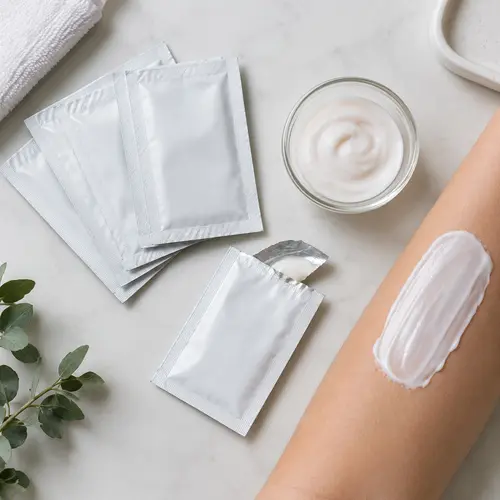
Use single use hair removal sachets when dose control, portability, sampling, or kit assembly matters more than the lowest packaging cost per gram. They work especially well for facial depilatory cream, post-wax soothing gel, trial-size body cream, creator mailers, subscription boxes, and travel kits. Each sealed dose stays untouched until use and gives customers a clear amount for one treatment area.
Do not choose sachets by default. They are usually a poor fit for repeated full-body removal, formulas requiring multiple applications, or wax products that must be heated and stirred. The package must also survive contact with the formula, storage temperatures, fulfillment handling, and expected shipment conditions. Before committing, validate fill weight, tear behavior, seal integrity, product dispensing, odor retention, and label space. A camera-ready packet is valuable only when the consumer can open it cleanly and use the contents as directed.
Key Takeaways for Private Label Buyers
- Match the sachet dose to a defined area such as the face, underarm, or bikini line.
- Test the final formula inside the final laminate, not in a generic sample pouch.
- Review seal leakage, delamination, odor transfer, and cream left inside the packet.
- Reserve enough print area for directions, warnings, net contents, and traceability details.
- Use pilot production to verify filling accuracy and opening experience before a creator launch.
Buyer Context
Sachet packaging solves a specific commercial problem: getting a controlled hair-removal experience into a compact, low-commitment format. For a creator-led brand, this can turn one formula into a trial SKU, launch insert, travel pack, or paired routine without developing a full-size tube immediately. Buyers comparing hair removal OEM ODM services should therefore treat the sachet as part of the product model, not as decoration added after sampling.
The strongest applications are usually pre-measured depilatory creams and aftercare. A facial cream sachet can reduce uncertainty around quantity. A soothing gel packet can sit beside wax strips without adding a bottle. A two-step kit can combine removal and recovery while keeping the components separate. Explore adjacent formats through custom depilatory cream formulation, private label waxing products, and post-depilation care OEM.
Sachets become less attractive when one packet cannot complete the promised area. Customers may open a second unit, creating frustration and an inaccurate cost-per-use impression. For a 5–25 g fill range, the correct dose depends on formula density, spread, required layer thickness, and target body area. Confirm this through controlled application trials rather than copying a competitor’s packet size.
Technical and Packaging Factors
Start With the Use Dose
Define one packet as one face application, one underarm pair, or one after-wax treatment. Then measure actual consumption across several users. The cream should dispense without sudden splatter, excessive stringing, or a large unusable remainder trapped near the seals. If a precise amount is critical, review the supplier’s filling tolerance and recorded net-weight checks within the cosmetic filling and packaging process.
Validate Formula-to-Laminate Compatibility
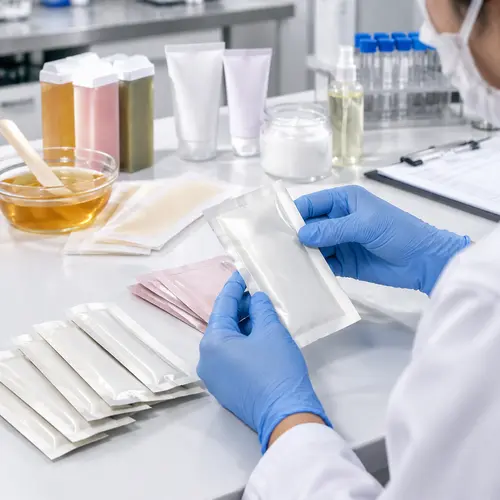
Depilatory ingredients can challenge inks, adhesives, barrier layers, and edge seals. Compatibility review should look for swelling, softening, discoloration, odor transmission, moisture loss, seal creep, and internal layer separation. The sachet also needs enough puncture resistance for parcel shipping. A natural-looking paper finish may support the brand aesthetic, but the product-contact layer still has to protect the formula.
Run the review with the intended cream, fragrance, color, and fill weight. Changing any of these after approval can alter viscosity or package interaction. Buyers developing mild positioning should connect package review with an irritation-risk assessment and the intended directions through mild hair removal formula development.

Screen Storage and Shipment Conditions
A practical early screen may compare samples stored at 4°C, 25°C, and 40°C, plus three freeze-thaw cycles where relevant. The supplier should define duration and acceptance criteria for the specific formula. Check viscosity, color, odor, separation, packet swelling, seal leakage, and dispensing after conditioning. This does not replace the final stability plan; it identifies obvious problems before printed packaging is ordered.
Plan the Label Before Artwork
A small packet creates a large information problem. Directions, warnings, ingredient declaration, net contents, responsible-party information, batch coding, and market-specific text must remain legible. In the United States, buyers should review the Modernization of Cosmetics Regulation Act of 2022 and the FDA explanation of how cosmetics are regulated rather than pre-approved. Added colors should be checked against the FDA color additive permitted-use database. Independent providers such as SGS cosmetic testing services can support selected package, stability, and market reviews.
Decision Framework
| Factor | What to Check | Why It Matters | ODM Buyer Note |
|---|---|---|---|
| Use case | One packet completes the stated area | Prevents under-dosing and repeat opening | Observe real application before fixing fill weight |
| Formula texture | Flow, spread, residue, and separation | Controls dispensing and camera appearance | Approve the mass-production formula in the packet |
| Laminate | Barrier, seals, inks, and odor retention | Protects product quality through shipment | Test the exact printed material |
| Opening | Tear notch and clean dispensing | Shapes the first-use experience | Test with wet and dry hands |
| Storage | Heat, cold, leakage, and packet swelling | Reveals early incompatibility | Set written acceptance criteria |
| Launch scale | MOQ, sample scope, and replenishment lead time | Protects the content calendar | Ask about a 1,000-unit pilot and a sub-30-day path |
Sachets are most defensible when the dose, campaign, and application ritual are clear. Before issuing artwork, compare broader depilatory product development solutions, review the supplier as a hair removal OEM manufacturer, and request a hair removal product quote covering samples, printed-film MOQ, tests, carton configuration, and shipment assumptions.
ODM Manufacturing Considerations
For single use hair removal sachets and other compact formats, sample approval should define more than fragrance and general appearance. Ask the supplier to record the confirmed formula code, color reference, texture target, application weight, removal performance, and acceptable production variation. For waxes, confirm the softening or melting behavior and working texture. For depilatory creams, agree on a measurable viscosity range and how quickly the cream spreads, remains in place, and rinses away.
Formula customization should begin with the product claim and intended body area. A face formula, sensitive-area cream, sugar wax, roll-on wax, and post-removal aftercare product require different ingredient and irritation-risk reviews. If a supplier presents a visually distinctive prototype for social media, evaluate it both on camera and during normal use. Dramatic color, stretch, shine, or texture should not interfere with even application, removal, rinsing, or packaging performance.
Treat packaging as part of the approved sample. Confirm the exact sachet film, wax strip pouch, jar, cartridge, cap, roller head, label stock, and carton rather than approving a generic substitute. The filled product should be reviewed over time for separation, discoloration, fragrance change, seal weakness, panel distortion, ink transfer, and dispensing problems. Buyers can compare available formats through the supplier’s hair-removal product categories before locking the final pack.
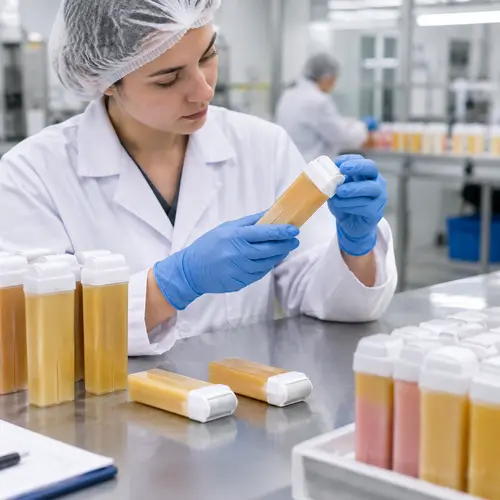
A stability review should use retained samples from the intended formula and final packaging. Record appearance, odor, viscosity or wax consistency, net weight, leakage, and removal performance at planned intervals. Shipment review should also reflect likely warehouse and transit exposure, including hot containers, cold distribution routes, stacking pressure, and vibration. Roll-on cartridges deserve particular attention because small changes in wax flow or roller fit can cause leakage or poor application.
MOQ should be separated into bulk formula, primary packaging, printed film, cartons, and final assembly minimums. A low filling MOQ may still require a much larger printed-packaging order. Request an itemized BOM quotation, tooling or plate charges, sample fees, expected material waste, freight assumptions, and reorder lead time. A supplier offering rapid samples should also explain what can genuinely be customized within that schedule and what requires additional testing. The OEM/ODM service scope and manufacturing process should clarify these boundaries.
Before production, obtain the ingredient list, usage directions, warnings, net-content format, lot-code method, shelf-life basis, country-of-origin statement, and responsible-party details needed for the target market. Keep signed copies of the formula specification, packaging specification, approved artwork, color standard, and finished-sample approval.

Common Problems or Failure Cases
- Wax becomes brittle: Hard wax or sugar wax may crack instead of flexing when its composition, heating history, or storage exposure differs from the approved sample. Confirm the working temperature and test retained units after transport simulation.
- Wax strips lose adhesion: Oil migration, unsuitable backing material, weak pouch protection, or excessive heat can reduce grip. Compare strip performance on the intended hair type and body area after storage, not only immediately after production.
- Depilatory cream separates: Watery discharge, graininess, or uneven active distribution may appear after extended storage. Reject evaluation based only on the freshly made batch; inspect texture at the top, middle, and bottom of retained packs.
- Roll-on cartridges leak: Poor roller tolerances, cap fit, wax flow, or deformation during warm shipment can soil cartons and reduce fill weight. Test cartridges upright, sideways, and inverted within a packed shipping case.
- Fragrance creates sensitivity concerns: A strong fragrance may improve the first impression but increase complaints among users seeking a sensitive formula. Review fragrance level, allergen documentation where applicable, and unscented options.
- Packaging deforms: Sachets may curl, jars may panel, and cartridges may distort when materials are not suited to the formula or shipment environment. Production-equivalent packs are essential for final approval.
Supplier Checklist
- Request supplier experience with the exact format: depilatory cream, wax strips, hard wax, sugar wax, roll-on cartridges, or aftercare.
- Confirm the sample brief includes texture, color, odor, viscosity or wax working range, fill weight, removal result, and acceptable tolerances.
- Ask which elements are custom and which come from an existing product model.
- Review ingredient documentation and an irritation-risk assessment for the intended body area.
- Approve production-equivalent primary packaging and verify seal strength, leakage, dispensing, and deformation performance.
- Request stability records and retained-sample checkpoints covering appearance, odor, texture, weight, and pack condition.
- Separate formula MOQ from printed film, cartridge, pouch, carton, and assembly minimums.
- Obtain a transparent BOM, one-time charges, freight estimate, lead-time assumptions, and reorder plan.
- Verify lot traceability, incoming-material checks, in-process controls, finished-product inspection, and complaint handling.
- Confirm who prepares ingredient lists, warnings, directions, artwork checks, and shipment documents.
- Ask for a capacity plan showing normal output, surge options, packaging-material constraints, and priority rules during peak periods.
- Use written change control so the supplier cannot replace ingredients, fragrance, color, or packaging without approval.
FAQ
How can I reduce the risk of a factory copying my idea or formula?
Use a mutual confidentiality agreement, define ownership of custom work, limit access to final specifications, and prohibit unauthorized production or sales in the manufacturing contract. Also document sample codes and approved revisions. No document removes every risk, so review the supplier’s export history, references, and handling of customer-specific materials.
Can the sample texture and color look dramatic enough on camera?
Yes, but approve it under the same lighting, background, application thickness, and filming distance used for content. Compare visual impact with spreadability, removal, residue, and staining risk. If color additives are used, verify that their intended cosmetic use appears in the FDA color additive permitted-use database.
Can quality control guarantee that no follower will experience irritation?
No supplier can guarantee zero reactions. Risk can be reduced through ingredient review, controlled production, appropriate warnings, batch records, packaging checks, and user patch-test directions where suitable. Avoid claims that imply universal safety, especially for face or sensitive-area depilatory products.
Will communication be difficult if I do not understand ingredients?
Ask for a project contact who can translate marketing goals into measurable specifications. A useful supplier should convert terms such as ‘high-shine wax’ or ‘camera-visible cream’ into color, texture, application, removal, packaging, and tolerance criteria without expecting the buyer to speak like a technician.
What happens if a social media launch suddenly creates a large order?
Before launch, confirm reserved line time, packaging inventory, raw-material lead times, realistic weekly output, and rules for peak-season scheduling. Forecast sharing and staged releases are safer than assuming a successful sample can immediately scale to any volume.
Are hair-removal cosmetics approved by the FDA before sale?
FDA explains that cosmetic products generally are not preapproved before marketing, although color additives have separate requirements. Buyers remain responsible for product safety and lawful labeling. See FDA authority over cosmetics for the agency’s explanation.