Direct Answer
Before sourcing salon hair removal products wholesale, ask the supplier to prove five things: the formula performs consistently, the pack works with the formula, the product remains stable through storage and shipment, the labeling file fits your destination market, and the production plan can absorb a successful launch. Do not evaluate a depilatory cream, wax strip, sugar wax, roll-on cartridge, or aftercare product from a price sheet alone.
Start with a defined sample brief. Specify the treatment area, target user, texture, fragrance, application time, removal behavior, pack format, sales market, and expected first order. Then request production-representative samples, supporting test summaries, a line-item BOM, and written acceptance criteria. A credible hair removal OEM manufacturer should explain tradeoffs clearly, including what can change between a fast prototype and the finished SKU. The goal is simple: know what you are approving, how it will be tested, and what happens when demand moves faster than forecast.
Key Takeaways for Private Label Buyers
- Approve measurable product behavior, not broad descriptions such as gentle, strong, or salon grade.
- Test the final formula in the intended container, closure, liner, strip pouch, jar, or roll-on cartridge.
- Request heat, cold, room-temperature, leakage, and transport checks before approving production.
- Review irritation risk, directions, warnings, claims, and destination-market documents as one launch decision.
- Separate the sample MOQ, first production MOQ, packaging MOQ, tooling cost, and reorder lead time in the quote.
- Confirm how reserved materials and line capacity will support a sudden increase after creator content goes live.
Buyer Context
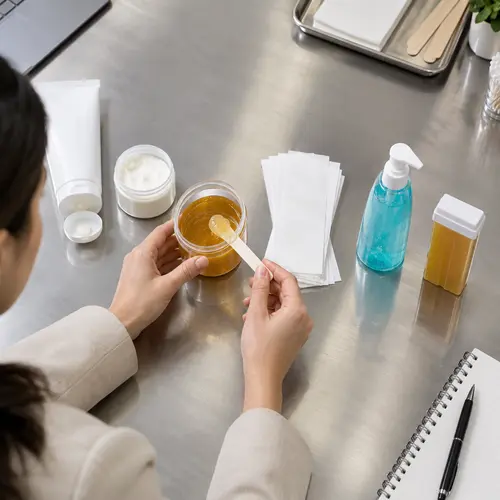
Hair-removal products create unusually visible failures. A cream that dries too quickly may spread unevenly on camera. A wax that becomes brittle in winter may crack during service. A strip with unstable adhesion can leave residue or remove inconsistently. A roll-on wax cartridge may perform in the sample room but leak after warm storage and parcel handling. These are product, packaging, and shipment questions at the same time.
For creator-led brands, the commercial risk is amplified. The first batch may be demonstrated to a large audience within hours of launch. Texture, spread, pull, residue, scent, and cleanup become part of the content. Ask a potential partner to produce a short, unedited application video under agreed conditions and send enough samples for independent salon trials. A structured hair removal OEM ODM service should also document which sample is the approved master and how that standard transfers to filling.
Category choice changes the questions. Buyers comparing custom depilatory cream formulation need to focus on application time, odor, viscosity, rinse behavior, irritation risk, and pack compatibility. Buyers reviewing custom wax strips and hot wax should examine working temperature, adhesion, residue, strip separation, and performance across storage conditions. Aftercare requires its own brief covering spread, absorption, fragrance, and use immediately after removal.
Technical and Packaging Factors
Define Performance Before Sampling
A useful brief converts a visual concept into observable criteria. For cream, define whether the texture must hold on legs without running, dispense cleanly from the selected tube, and rinse without a persistent film. For sugar wax or hot wax, describe the intended salon technique, working temperature, pull behavior, and acceptable residue. For wax strips, state the strip dimensions, backing feel, wax distribution, separation force, and target body area.
Ask whether the supplier can deliver an initial prototype within seven days, but do not confuse speed with final approval. Fast sampling is valuable when it preserves the content calendar. The approved SKU still needs a documented review through the hair removal manufacturing process, including scale-up, filling, packaging, and release checks. Request side-by-side retain samples from the approved prototype and first production batch.
Match Formula to Pack
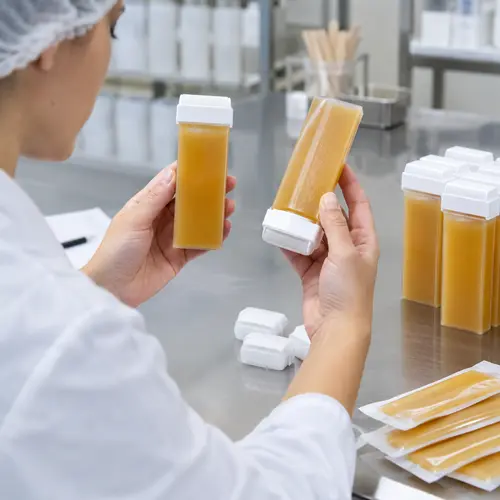
Packaging compatibility should use the final decorated pack whenever possible. Depilatory cream can interact with tubes, seals, closures, or printed surfaces. Warm wax may deform a weak container or create closure leakage. Roll-on systems depend on ball movement, housing fit, cap security, and controlled flow after repeated heating. Wax-strip pouches need reliable seals and barrier performance so the strips do not dry, migrate, or become difficult to separate.
Require checks in upright, inverted, and side positions. Review packs after heat, cold, and temperature cycling, then inspect weight loss, swelling, paneling, discoloration, label lift, seal failure, odor change, and leakage. The supplier should identify shipment limits and carton configuration before the artwork is locked. This is also the point to compare primary-pack MOQ with the formula MOQ; they are rarely the same.
Review Safety, Claims, and Market Fit Together
Ask for the ingredient list, product specification, safety assessment inputs, test summaries, batch records available to the buyer, and draft directions and warnings. In the United States, cosmetics are regulated but generally are not pre-approved by the agency, as explained in the FDA explanation of cosmetics oversight. Your contract should assign responsibility for product listing, adverse-event handling, records, artwork review, and claim approval.
If an aftercare formula contains exfoliating acids, review concentration, use timing, warnings, and irritation potential against relevant ingredient assessments such as the CIR final report on alpha hydroxy acids. Do not assume an ingredient acceptable in a face product is automatically appropriate immediately after hair removal. For halal-positioned ranges, verify the certification route, ingredient evidence, site eligibility, and logo authorization through JAKIM halal certification resources before making pack claims.
Decision Framework
| Factor | What to Check | Why It Matters | ODM Buyer Note |
|---|---|---|---|
| Product brief | Use area, texture, timing, removal, residue, scent | Turns creative direction into approval criteria | Attach reference videos and define test conditions |
| Formula sample | Appearance, viscosity, spread, removal, after-feel | Prevents approval based only on color or fragrance | Request production-representative samples |
| Irritation review | Ingredients, exposure time, warnings, user protocol | Hair removal can leave skin temporarily reactive | Consider a dedicated mild hair removal formula brief |
| Pack compatibility | Seal, closure, liner, print, label, flow, leakage | A stable bulk formula can still fail in its pack | Test final materials and decoration |
| Storage and shipment | Heat, cold, cycling, orientation, carton protection | Transit can change texture or expose weak seals | Record acceptance limits and shipping conditions |
| Commercial scope | Sample fee, MOQ, BOM, tooling, freight, lead time | Exposes costs hidden behind a low unit quote | Use a formal hair removal product RFQ |
| Scale plan | Material reservation, line capacity, reorder timing | Creator launches can produce abrupt demand | Confirm scaling without changing the approved formula |
Use the table as a gate, not a scorecard. A low-cost offer should not pass if the supplier cannot state what is tested, who owns the approved standard, or how a deviation is handled. Ask to see the relevant hair removal product guides and category-specific hair removal product solutions, then compare those materials with the written contract and sample record.
Finally, plan the range as a complete service moment. A wax or cream may need a compatible calming gel or lotion rather than an unrelated add-on. Evaluate the primary remover and after wax care products together for scent, pack hierarchy, directions, and immediate post-use feel. This creates a coherent salon kit while keeping every approval tied to practical performance.
ODM Manufacturing Considerations
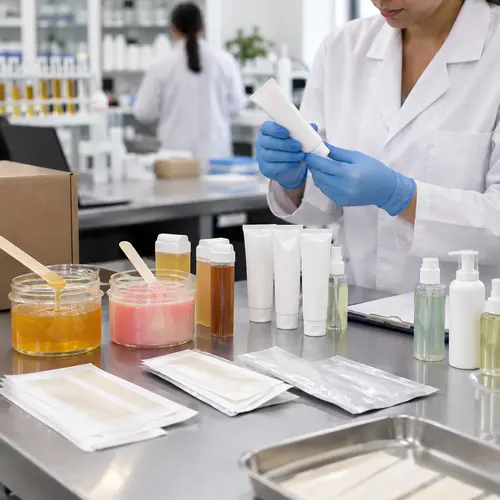
When evaluating salon hair removal products wholesale, treat sample approval as a controlled commercial decision. The supplier should identify the exact sample code, formula version, fragrance, color, fill weight, container, applicator, and operating instructions. Approval should be recorded in writing, supported by dated photos or video where appearance matters. A loose message saying that a sample is acceptable leaves too much room for variation during scale-up.
Formula customization should begin with measurable requirements rather than broad requests such as stronger, gentler, or more luxurious. For wax, define the preferred melting range, spread, pickup, flexibility after cooling, residue level, and removal behavior. For depilatory cream, specify application area, contact-time target, odor expectations, spreadability, and rinse behavior. Facial products may require a different irritation-risk assessment than products intended for legs or the body. Compare these requirements with the supplier’s existing hair-removal product categories before paying for extensive customization.
The confirmed formula must also work with the commercial container and dispensing components. Check fill accuracy, closure torque, seal integrity, label adhesion, and whether the user can dispense a controlled amount. Wax cartridges need consistent roller movement and clean shutoff. Cream tubes or bottles should not collapse, clog, or discharge excessive product. Packaging materials should be reviewed after realistic warehouse exposure and transit simulation, with observations documented by sample code and date.
Ask the supplier’s OEM/ODM team to define the review schedule, acceptance criteria, and responsibility for failed samples. Stability evidence should cover appearance, odor, texture, weight change, container condition, and functional use at planned checkpoints. A passed bulk formula is not enough when the branded package introduces a different seal, liner, pump, tube wall, or cartridge component.
MOQ discussions should separate formula batch minimums, printed packaging minimums, component order quantities, and finished-product minimums. Request an itemized BOM showing product, pack, printing, assembly, testing, cartons, and any setup charges. Labeling files should include an ingredient list in the required naming format, net-content statement, lot coding format, directions, cautions, responsible-party details, and available supporting records. For U.S. cosmetic positioning, avoid describing products as FDA approved; the FDA explains how cosmetics are regulated and the limits of premarket approval. If aftercare contains alpha hydroxy acids, review the relevant CIR assessment when setting directions and warnings. For markets requiring Halal documentation, confirm the exact certification scope against the JAKIM Halal certification framework.
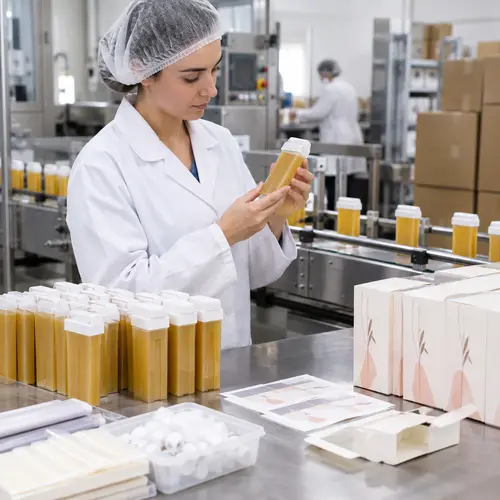
Shipment terms should state carton configuration, pallet requirements, departure port, estimated freight basis, temperature precautions, and responsibility under the selected Incoterm. Ask how the facility handles export packing during hot-season routes, winter lanes, and extended customs holds. The supplier’s manufacturing process should connect batch identification with finished cartons so an issue can be traced without opening every case.

Common Problems or Failure Cases
Wax may become brittle when the flexibility target is wrong for the service temperature, causing cracking during removal. A sample that performs well in an air-conditioned room may behave differently in a warm salon. Record room conditions and preparation instructions during evaluation so supplier comparisons remain meaningful.
Wax strips can lose adhesion when the wax coat, backing material, release sheet, or storage conditions change. Buyers should inspect edge lifting, uneven coating, difficult separation, and residue across several units rather than approving one ideal strip. Depilatory cream may show oiling, watery discharge, graininess, color drift, or odor change before obvious separation appears.
Roll-on cartridges may leak around the neck, cap, or roller after transport vibration or prolonged storage on their side. Other warning signs include stiff roller movement, packaging deformation, smudged coding, and cartons weakened by product seepage. Fragrance can also become a failure point: a strong scent may help mask the base odor but increase complaints among fragrance-sensitive salon clients. The practical response is a documented use test and caution review, not a claim that every user will tolerate the product.
Supplier Checklist
- Confirm legal company name, manufacturing location, product scope, and whether work is performed at the named facility.
- Request coded samples with formula version, batch date, intended pack, fill quantity, and written use instructions.
- Define wax melting behavior, flexibility, residue, strip adhesion, cream consistency, odor, contact time, and aftercare skin-feel targets.
- Review irritation risks, intended body area, cautions, directions, ingredient restrictions, and market-specific label requirements.
- Verify container closure, dispensing performance, seal quality, print durability, lot coding, and carton strength.
- Ask for stability observations, package-function records, batch release criteria, and deviation handling steps.
- Separate formula, component, printing, and finished-goods MOQs in the quotation.
- Require a transparent BOM, tooling or setup fees, sample charges, freight assumptions, and payment milestones.
- Confirm production capacity, reserved scheduling rules, surge options, and the conditions that could change a promised ship date.
- Document ownership, confidentiality, approved subcontractors, change-control expectations, and remedies in the contract.
FAQ
How can I reduce the risk of a factory reusing my idea or formula?
Use a signed confidentiality and development agreement that defines confidential materials, ownership of custom work, permitted use, subcontractor access, and post-project obligations. Mark briefs and sample files clearly, retain dated records, and avoid relying only on chat messages. Ask whether the base formula is exclusive, customized from a shared platform, or fully buyer-owned.
How do I know the wax or cream will look dramatic enough on camera?
Set visual acceptance criteria under the lighting and filming setup used by the brand. Review color, opacity, gloss, stretch, spread, removal footage, and appearance on the intended application area. Request samples from more than one batch when a distinctive visual effect is central to the content plan.
What happens if a video creates a sudden order surge?
Ask for normal monthly capacity, peak capacity, component lead times, batch constraints, and rules for reserving production. Confirm whether printed packs can be staged before launch and whether repeat orders receive protected scheduling. Capacity statements should be tied to quantities and dates in writing.
What should a sample approval document contain?
Include the sample code, formula revision, color, fragrance, pack components, fill weight, directions, acceptance tests, approved reference media, and signatures or written approvals. Also state which features may vary within an agreed tolerance and which changes require a new approval.
Can I place a low MOQ for a highly customized product?
Possibly, but low finished-goods volume does not remove minimum batch or printed-component requirements. A practical option is an existing formula with limited fragrance, color, or label customization. Compare the cost of unused bulk and excess packaging before accepting the quoted MOQ.
Which documents should be ready before shipment?
At minimum, confirm the final ingredient list, label artwork approval, lot-code record, packing list, commercial invoice, carton details, and available batch release documentation. Destination-specific files should be identified before production because missing label text can delay or prevent shipment.