Direct Answer
When sourcing salon hair removal products wholesale, approve the complete commercial system—not just a sample that looks good on camera. Review removal performance, application texture, skin feel, packaging compatibility, storage behavior, labeling files, landed cost, and reorder capacity before confirming production.
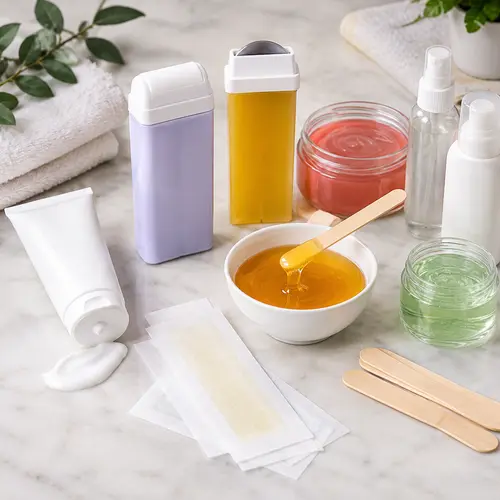
For a creator-led launch, the fastest workable path is a proven base formula with controlled adjustments to fragrance, color, viscosity, format, and pack design. Set a seven-day first-sample target, then lock measurable approval standards. A depilatory cream should spread evenly and remove hair within its labeled use time. Wax must perform at the intended working temperature. Strips need consistent adhesion and clean release. Roll-on cartridges must dispense smoothly without leaking in warm transit.
A capable hair removal OEM manufacturer should connect these sample decisions to production records, testing, shipment conditions, and reorder lead times from the start.
Key Takeaways for Private Label Buyers
- Source by format. Cream, sugar wax, hot wax, wax strips, roll-on cartridges, and aftercare require different equipment, filling controls, and packaging checks.
- Approve measurable attributes. Record color, odor, viscosity, spread, working temperature, removal time, residue, and post-use skin feel.
- Test the final pack. A stable bulk formula can still fail through cartridge leakage, tube distortion, lid loosening, or wax migration into strip sachets.
- Review irritation risk early. Confirm intended body area, contact time, warnings, patch-test directions, and ingredient restrictions for each target market.
- Plan the reorder before launch. Agree on component lead times, reserved capacity, minimum run size, freight assumptions, and the process for scaling after a viral post.
Buyer Context
Hair-removal products create unusually visible failure points. Consumers immediately notice whether a cream removes hair evenly, whether a wax breaks during pull, or whether a strip leaves excessive residue. For an audience-led brand, these moments appear in close-up video and can shape market perception within hours.
The category also combines formula performance with user technique. Hard wax may work well at one temperature but become brittle when overheated or applied too thinly. Sugar wax can change handling behavior with room temperature and humidity. A roll-on system depends on both wax flow and roller geometry. Depilatory cream needs controlled application, removal timing, and clear instructions. Aftercare must feel calming without making unsupported treatment claims.
Start by choosing one hero format and one supporting SKU. For example, pair private label depilatory cream with soothing gel after hair removal, or combine custom wax strips and hot wax in a salon-ready kit. A post-use option such as an after hair removal serum can be evaluated later, once the core removal experience is stable.
Before sampling, submit a short creative brief: target body area, user skill level, desired texture, visual references, pack size, price position, sales countries, and launch date. Ask for a transparent BOM, sample scope, estimated freight, and a distinction between standard, customized, and newly tooled components. This keeps a visually ambitious idea connected to a realistic manufacturing plan.
Technical and Packaging Factors
Formula Performance
Evaluate samples under repeatable conditions. For cream, document dose, coverage, labeled contact time, removal completeness, odor during use, rinse behavior, and residue. For wax, record warm-up time, working range, spread, grip, flexibility, breakage, and cleanup. There is no universal viscosity or melting-point target: the supplier should state an approved range for the selected formula and measure production against it.
For sensitive positioning, avoid relying on terms such as natural or organic as proof of mildness. Review the full ingredient list, fragrance level, directions, and foreseeable misuse. The mild hair removal formula route should include a documented irritation-risk review and suitable patch-test language.
Stability and Storage
Request a written testing plan covering the finished formula in its final packaging. A practical screening program may include storage at 4°C, 25°C, and 40°C, plus three to five freeze-thaw cycles where relevant. Buyers should review color shift, odor, separation, viscosity change, wax cracking, sweating, crystallization, and loss of adhesion. These conditions are screening tools, not automatic shelf-life guarantees.
For US launches, review the FDA cosmetics information portal and the agency explanation of how cosmetics are regulated rather than pre-approved. For EU ingredient screening, consult the European Commission CosIng database. Final classification, claims, and labels still require market-specific review.
Packaging Compatibility
Test the exact production-intent pack, not a generic sample jar. Depilatory cream can interact with tubes, closures, liners, inks, and applicators. Warm wax can soften seals or migrate during storage. Roll-on cartridges require controlled fill weight, roller movement, cap retention, and leakage review. Wax-strip sachets must protect adhesion while opening cleanly.
Run upright, inverted, and side-storage checks. A 24-hour inverted screen can identify obvious closure failures, but it does not replace extended compatibility work or transit simulation. Confirm carton fit, batch-code readability, tamper features, and whether finished units tolerate realistic heat, cold, vibration, and stacking.

Sample-to-Production Control
Your approved sample should become the production reference. Sign off on a retained unit, appearance standard, pack components, artwork version, and measurable formula limits. The hair removal manufacturing process should explain incoming checks, batch release, filling, assembly, and shipment inspection.
For a pilot run from 1,000 units under ISO 22716, confirm that scaling will not require a different formula or facility. If the launch target is under 30 days, packaging availability usually controls the schedule. Stock tubes, jars, cartridges, and cartons move faster than custom molds or specialty closures. Review these choices through the supplier’s hair removal OEM ODM services before approving artwork.
Decision Framework
| Factor | What to Check | Why It Matters | ODM Buyer Note |
|---|---|---|---|
| Removal result | Coverage, timing, grip, breakage, residue, and cleanup | Defines the consumer-visible result | Test on the intended body area and follow the proposed directions |
| Texture | Viscosity, spread, wax flexibility, and camera appearance | Affects use, filming, and perceived quality | Approve a retained sample and written limits |
| Skin-use review | Contact time, warnings, fragrance, patch-test text, and aftercare | Reduces foreseeable misuse and complaint risk | Align claims with the target market before printing |
| Packaging | Leakage, seal integrity, dispensing, migration, and code legibility | Protects the formula through storage and shipping | Test final components from the intended vendor |
| Commercial scope | BOM, sample inclusions, MOQ, tooling, freight, and payment milestones | Prevents hidden cost and launch delay | Use a structured hair removal product RFQ |
| Reorder readiness | Material lead time, reserved line time, forecast window, and backup packs | Determines whether a viral launch can stay in stock | Review capacity at pilot, base, and surge volumes |
Use the table as a sample scorecard, not merely a supplier comparison sheet. More detailed hair removal product guides can support format-specific questions, but the final decision should connect performance, pack reliability, documentation, cost, and reorder readiness in one approval record.

ODM Manufacturing Considerations
After the first sample, the main task is converting a promising concept into an agreed product specification. Ask the supplier to record the approved formula version, color, fragrance level, application feel, removal behavior, container, fill weight, and acceptable visual variation. A sample is not fully confirmed when the buyer simply says it looks good. Confirmation should identify what is fixed and what may change during scale-up.
For formula customization, separate essential requirements from optional preferences. Essential requirements may include a firm hard wax with controlled breakage, a cream that spreads evenly without visible separation, or a sugar wax that remains workable under the expected salon conditions. Optional preferences may include fragrance intensity, color shade, decorative inclusions, or a more dramatic appearance for video content. This helps the ODM team protect performance when a visual request conflicts with skin comfort, filling speed, or storage behavior.
Packaging compatibility should be checked with the actual material and closure planned for production. Review whether depilatory cream softens the tube, whether wax migrates into a seal, whether a strip sachet loses adhesion after storage, and whether a roll-on cartridge flows consistently after transport. Request filled samples in the final packaging, not only laboratory containers. The OEM and ODM services page should be used to define which packaging tests, artwork adjustments, and filling trials are included in the quotation.
Stability review should reflect the intended route to market. Ask for observations on color, odor, texture, separation, wax hardness, cream viscosity, seal condition, and container deformation after controlled temperature exposure. The buyer should receive a written summary and know which findings are acceptance criteria, which are expected variation, and which require corrective action. For ingredient naming and market preparation, compare the proposed ingredient list with the European Commission CosIng ingredient database. For United States sales, review the FDA cosmetics resources with the responsible importer or regulatory adviser.
MOQ should be quoted by product, fragrance, color, package size, and artwork version. A low MOQ for one formula may not apply when the buyer requests several shades or separate retail packs. Ask for sample charges, mold or tooling charges where relevant, artwork setup, carton quantities, spare packaging, and the cost of later revisions. A transparent BOM and freight estimate make it easier to compare suppliers without confusing a low unit price with a low total launch cost.
Labeling documents should include the finalized ingredient list, net contents, batch or lot identification method, usage directions, warnings, storage guidance, manufacturer details, and available product specifications. Hair-removal products need clear instructions about application area, contact time where applicable, patch testing language, removal, and aftercare. Shipment conditions should state carton configuration, pallet or stacking limits, temperature exposure concerns, leak protection, and the inspection process for damaged cartons. The supplier’s manufacturing process information should align with these written commitments.
Request an RFQ with a product brief, target market, expected annual volume, launch date, packaging format, and sample acceptance criteria. This gives the factory enough context to assess capacity instead of making a generic promise.

Common Problems or Failure Cases
Wax brittleness: A hard wax may look attractive in a sample but crack during removal if the balance between flexibility and set time is wrong. Compare a fresh sample with one that has been stored and transported. Record spread behavior, setting time, edge lift, breakage, and residue. A supplier should explain whether the issue comes from formula variation, cooling conditions, fill temperature, or the selected package.
Strip adhesion loss: Wax strips can lose performance when the adhesive surface contacts heat, moisture, dust, or an unsuitable inner film. Check opening force, wax transfer, hair pickup, and residual tack after the package has been handled repeatedly. Ask for a defined storage range and carton protection method rather than accepting a general statement that the strips are shelf stable.
Cream separation: A depilatory cream can develop oiling, watery release, color change, or uneven viscosity. Review samples from different fill times and inspect the product after standing, transport simulation, and opening. If separation appears, the buyer should pause artwork approval and request a documented correction. Do not approve a batch only because the surface can be mixed back together.
Cartridge leakage: Roll-on wax may seep through the roller assembly, cap, neck, or seam. Store filled cartridges upright and on their side, then inspect the roller, cap, label, and carton. Check whether the wax remains usable after the cartridge is warmed for application. Leakage can be caused by closure fit, filling level, wax temperature, or pressure during shipment, so the investigation should cover the complete filled unit.
Fragrance sensitivity: A strong fragrance may support a memorable product identity but can create complaints from salon users or consumers with sensitive skin. Request fragrance details, an unscented or lower-fragrance option, and clear warning language where needed. Evaluate odor before use, during application, and after removal; the most noticeable issue may not appear in a short factory review.
Packaging deformation: Tubes, jars, sachets, and cartridge components can warp, collapse, or lose their seal after exposure to heat or compression. Inspect units from the center and edges of cartons, and photograph any distortion with the lot number visible. A replacement package is not a complete solution until the supplier identifies the cause and confirms that the revised package works with the formula.
Supplier Checklist
- Can the supplier provide a written sample specification covering texture, color, odor, viscosity or wax behavior, package, and fill weight?
- Does the quotation separate formula work, samples, packaging, artwork, testing, tooling, freight, and revision charges?
- Will the supplier provide filled samples in the proposed final package?
- Can the team explain irritation-risk review, fragrance options, usage directions, warnings, and market-specific labeling documents?
- Are leakage, adhesion, deformation, separation, and shipment-temperature checks documented for the selected product?
- Is MOQ stated separately for each formula, fragrance, color, size, and artwork version?
- Can the supplier reserve production capacity or provide a written allocation plan for a sudden reorder?
- Will a named contact translate marketing goals into measurable product requirements?
- Are batch records, retained samples, corrective-action notes, and inspection results available to the buyer?
- Does the shipment plan define carton dimensions, stacking limits, protection against heat and cold, and damage-claim procedures?
FAQ
Can the factory copy my concept or sell my formula to another brand?
Reduce this risk with a written confidentiality and ownership agreement before detailed disclosure. Identify who owns custom formula work, artwork, fragrance direction, tooling, and unused samples. Ask whether the formula is exclusive by market, product type, or sales channel. Keep a dated brief and approval record, and avoid treating a general stock formula as exclusive simply because it has been customized in color or scent.
Can the sample look dramatic enough for social-media content without harming performance?
Yes, but define the visual goal in measurable terms: color intensity, visible texture, spread pattern, foam appearance where relevant, or contrast against skin and packaging. Then test that appearance in the final container and under normal lighting. A dramatic effect should not hide uneven removal, excessive fragrance, brittle wax, or a cream that separates after storage.
Can quality control guarantee that customers will never experience irritation?
No supplier can guarantee that for every user. A responsible supplier can reduce risk through ingredient review, controlled production, consistent batch checks, clear directions, suitable warnings, and complaint investigation. Request the supplier’s documented review process and define what happens when a complaint or out-of-specification result is reported. Your brand also needs appropriate claims and customer guidance for the destination market.
What if I do not understand ingredients or manufacturing terms?
Ask the factory to convert your marketing brief into a short technical specification with plain-language acceptance criteria. For example, replace creamy and luxurious with spreadable within a stated viscosity range, low residual odor, and no visible separation after the agreed review. A capable account manager should confirm the meaning of each requirement before sampling rather than asking you to approve unfamiliar terminology.
What happens if a video causes a sudden reorder?
Ask for capacity by product and package, current booking status, material lead times, and the maximum reorder quantity the factory can absorb. Request a priority policy in writing, including how existing customers and urgent replenishment are handled. A backup package, approved secondary component, or staged material reservation may protect availability, but each option should be costed before launch.
Which shipment details matter most for wax and cream products?
Confirm carton strength, upright or horizontal orientation, maximum stacking, protection against temperature extremes, leak inspection, and the process for damaged cartons. Ask how the supplier records lot numbers and separates approved units from units held for investigation. These details matter especially for roll-on cartridges, filled jars, sachets, and products that soften in transit.
References
FDA cosmetics resources support review of United States cosmetic product responsibilities and labeling considerations.
European Commission CosIng ingredient database supports ingredient-name and market preparation checks for products intended for the European market.