Direct Answer
The right depilatory cream tube packaging must protect an alkaline, reactive formula while dispensing a controlled ribbon without leaking, clogging, swelling, or losing seal strength. For most private-label launches, a compatible coextruded plastic or barrier-laminate tube is the practical starting point. Lacquered aluminum may work, but dents, fold cracks, liner integrity, and formula contact require closer review.
Do not approve a tube from appearance alone. Test the exact bulk formula, tube body, shoulder, cap, decoration, and induction or foil seal as one finished pack. Review compatibility at ambient, elevated, cold, and transport conditions. Confirm extrusion force, cap torque, orifice size, odor retention, panel distortion, and residual product near the closure. A useful supplier decision combines formula screening, filled-pack stability, leakage testing, and a camera-facing dispensing review before production. The objective is simple: the consumer should get a clean, repeatable dose from first use to final squeeze.
Key Takeaways for Private Label Buyers
- Source the package as a system. Tube wall, barrier layer, shoulder, cap, seal, ink, and adhesive must all be evaluated against the finished cream.
- Match dispensing to viscosity. A thick remover may need a 5-8 mm orifice, while a lower-viscosity product needs tighter flow control to prevent stringing and cap mess.
- Test decorated production components. Compatibility results from an undecorated sample tube do not fully qualify printed, labeled, or foil-sealed packaging.
- Define launch evidence early. Request ambient and accelerated storage, freeze-thaw review, inversion leakage, seal inspection, and monitored pack weight.
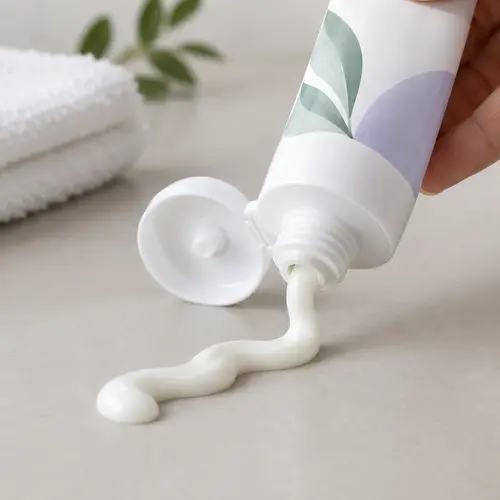
- Review texture on camera. The ribbon should look uniform during a live demonstration without spurting, collapsing, or leaving excessive residue around the nozzle.
- Lock the approved BOM. Pilot and scale production should use the same formula specification and qualified packaging materials.
Buyer Context
Hair-removal products place unusually direct demands on their packs. A depilatory formula commonly combines high alkalinity, reducing agents, fragrance, water, and viscosity modifiers. Small changes in moisture loss, oxygen exposure, or wall interaction can affect odor, color, texture, and dispensing. A tube that performs well with a conventional cosmetic cream may therefore be unsuitable for a hair remover.
This matters most for creator-led launches because the package is part of the demonstration. A clean ribbon supports application content; a watery first squeeze or split-looking cream becomes visible immediately. Fast sampling should include both bench evaluation and short-form content review. Buyers using a custom depilatory cream formulation route should ask for formula and packaging samples together, not as separate approval tracks.
Format also changes the risk profile. Wax strips require adhesion-aging and sachet-seal checks. Sugar wax needs heat-flow and jar-closure review. Roll-on wax cartridges need roller fit, heated leakage, and cap retention tests. Aftercare packaging must preserve the intended cooling gel or lotion texture. The broader depilatory product development solutions should therefore be narrowed to the actual use sequence, storage environment, and sales channel.
Marketplace fulfillment creates another constraint. A tube may sit inverted, experience summer heat, or travel by air before the consumer opens it. Secondary cartons can improve presentation and protect decoration, but they do not correct a weak shoulder seal or incompatible wall. Buyers should map these checks through the cosmetic filling and packaging process and obtain an itemized BOM that identifies tube structure, capacity, decoration method, seal type, cap resin, and packing configuration.

Technical and Packaging Factors
Formula Contact and Barrier Structure
Depilatory creams are often formulated around an alkaline operating range, frequently near pH 11.5-12.5, although the approved specification must come from the individual formula. That environment can expose weaknesses in metal contact surfaces, inks near the shoulder, adhesives, and internal coatings. A coextruded PE tube offers resilience and squeeze recovery. A laminate tube can add barrier performance and a sharper print surface. Lacquered aluminum provides strong barrier properties but needs confirmed internal lacquer coverage and careful shipping protection.
Ask the supplier for the material structure by layer rather than a generic plastic-tube description. The compatibility plan should monitor wall softening, swelling, delamination, discoloration, stress cracking, corrosion, odor transfer, and weight change. For a tinted cream, colorants should also be checked against the FDA color additive permitted-use database for the intended cosmetic use.
Viscosity, Orifice, and Consumer Control
Viscosity should be recorded with the instrument, spindle, speed, temperature, and conditioning time. A single value without the method is not reproducible. The tube then needs to be assessed at the coldest and warmest expected use temperatures because flow and extrusion force can shift materially.
A 5-8 mm trial range is a useful starting point for many thick cream formats, not a universal specification. The final diameter should be selected from filled-pack trials. Check whether the first squeeze releases trapped air, whether the ribbon breaks cleanly, and whether the cap collects residue. An attached applicator can support a distinctive demonstration, but it adds cleaning, fit, and breakage questions. Buyers can scope these options through custom hair removal product development before paying for tooling.
Storage, Leakage, and Stability
A practical screening plan may include ambient storage, 40°C accelerated storage for 8-12 weeks, and 3-5 freeze-thaw cycles. These are development checkpoints, not automatic shelf-life claims. Long-term stability must continue for the intended commercial life. Filled tubes should be stored upright, inverted, and on their sides, then examined for leakage, seal lift, cap distortion, odor change, viscosity drift, phase separation, and package weight loss.
Transport review should use the final carton and shipper configuration. Include drop, vibration, compression, and temperature exposure appropriate to the route. Record acceptance criteria before testing so approval does not become subjective. The hair removal product quality control plan should connect each test to a batch, packaging lot, date, and disposition.
Labels, Claims, and Launch Files
The tube must leave sufficient printable area for identity, net quantity, directions, warnings, ingredient declaration, responsible-party details, and required market information. The FDA Cosmetics Labeling Guide is a practical US starting point. Buyers should also understand the Modernization of Cosmetics Regulation Act of 2022 and the FDA explanation of how cosmetics are regulated rather than pre-approved.
Request artwork dimensions, print tolerances, component specifications, finished-pack test records, lot coding position, and labeling files before mass production. A seven-day first sample can validate texture direction and visual impact, but final approval should follow compatibility evidence. For sensitive-positioned products, connect packaging review with the intended mild hair removal formula and documented irritation-risk assessment. For quotation, provide target fill, markets, forecast, decoration, carton needs, and launch date through a structured hair removal product RFQ.

Decision Framework
| Factor | What to Check | Why It Matters | ODM Buyer Note |
|---|---|---|---|
| Tube structure | Layer materials, barrier, shoulder, internal coating | Controls formula contact, moisture loss, and pack integrity | Approve the named structure and supplier code |
| Dispensing | Viscosity method, extrusion force, 5-8 mm trial orifice | Determines dose control and on-camera ribbon quality | Test at expected use temperatures |
| Closure and seal | Cap fit, torque, foil adhesion, inversion leakage | Reduces transit leaks and first-open failures | Test decorated, filled production components |
| Storage | Ambient, 40°C for 8-12 weeks, 3-5 freeze-thaw cycles | Reveals early texture and packaging changes | Continue long-term monitoring after launch approval |
| Shipment | Drop, vibration, compression, route temperature | Tests the complete tube, carton, and shipper system | Use the actual fulfillment configuration |
| Scale-up | Formula specification, fill weight, coding, BOM revision | Protects consistency between samples and production | Require written change control for substitutions |
ODM Manufacturing Considerations
For depilatory cream tube packaging, sample approval should cover the filled product and the complete dispensing experience, not just a loose formula in a jar. Confirm the cream’s color, odor, spread, removal performance, rinse behavior, and amount dispensed under normal hand pressure. Record the approved sample code, packaging components, fragrance level, and acceptance limits in a signed specification so that the production reference is unambiguous.
Formula customization should begin with a written product brief. Define the intended hair-removal area, target application time, desired texture, fragrance direction, visible color, after-feel, and market claims. Ask the supplier to identify which requests may increase irritation risk or create instability. A dramatic color or dense cream ribbon may be useful for social content, but it still needs consistent removal performance and practical rinsing. Any colorant selected for the US market should be checked against the FDA color additive permitted-use database for the intended cosmetic use.
Packaging approval should match the final formula, tube material, shoulder, closure, decoration, and fill quantity. Buyers should examine changes in odor, color, wall shape, seal strength, cap fit, and dispensing after hot and cold storage. Compatibility work should also include realistic partially used packs because air entry, residue around the opening, and repeated cap handling can expose failures that an unopened sample does not show.
A stability review needs predefined checkpoints and written pass criteria. Useful observations include separation, liquid release, hardening, odor shift, discoloration, fill-weight loss, blocked dispensing, and pack distortion. For wax strips, sugar wax, roll-on wax cartridges, and aftercare products in the same range, approve category-specific checks rather than assuming one test plan fits every product.
MOQ discussions should separate formula batch minimums from packaging-component minimums. A custom printed tube may require a larger order than the cream itself, while a standard tube with a pressure-sensitive label may support a smaller launch. Request an itemized BOM showing bulk product, tube, cap, decoration, carton, inserts, assembly, testing, and freight assumptions. Also clarify the cost and ownership of unused components after production.
The document set should include the approved ingredient declaration, artwork proof, product specification, batch records, test summaries, and market-specific label support. US buyers should review the FDA Cosmetics Labeling Guide and assess applicable responsibilities under the Modernization of Cosmetics Regulation Act of 2022. Shipment terms should state carton count, pallet pattern where applicable, temperature precautions, port, Incoterm, lead-time basis, and responsibility for freight damage.

Common Problems or Failure Cases
Cream separation: A cream may release liquid, become grainy, or develop uneven color after storage. The supplier should compare retained samples with the approved standard and investigate raw-material variation, mixing conditions, filling temperature, and pack interaction before releasing the lot.
Tube deformation or leakage: Panels may collapse, shoulders may soften, or residue may escape around the closure. Common causes include unsuitable component selection, excessive fill, weak seals, cap mismatch, or temperature exposure during freight. Review filled packs from multiple positions in the shipping carton, not only clean samples from the production line.
Inconsistent dispensing: A thick formula can require excessive force, while a thinner cream may surge out and reduce application control. Confirm dispensing with different users, at expected storage temperatures, and after residue has dried around the opening.
Wax brittleness: Hard or sugar wax can crack instead of flexing or spreading as intended. Check production samples at the likely room temperatures of the destination market and define an acceptable texture window.
Strip adhesion loss: Wax strips may lift from their backing, transfer unevenly, or lose grip after warm storage. Buyers should inspect peel behavior, wax distribution, backing integrity, and removal performance near the end of the proposed shelf life.
Cartridge leakage: Roll-on wax may migrate around the roller or cap during storage and shipment. Evaluate upright, horizontal, and inverted packs after temperature exposure, then inspect whether the roller still turns smoothly.
Fragrance sensitivity: A strong masking fragrance can create consumer complaints even when removal performance is acceptable. Keep fragrance changes within the approved brief, review allergen disclosure needs for the destination market, and do not substitute fragrance without written buyer approval.

Supplier Checklist
- Request hair-removal products they have manufactured in comparable formats, including depilatory creams, wax strips, sugar wax, or roll-on cartridges.
- Confirm that the sample specification records formula version, color, fragrance, texture, fill weight, pack code, and closure.
- Ask for written acceptance limits covering appearance, viscosity or melting behavior where relevant, removal performance, odor, leakage, and pack condition.
- Review how irritation-related complaints, deviations, retained samples, batch traceability, and corrective actions are handled.
- Require compatibility and stability plans based on the actual formula and final decorated package.
- Compare formula MOQ, packaging MOQ, setup fees, testing charges, component overrun rules, and estimated logistics costs.
- Verify label-support files, ingredient naming, artwork controls, batch coding, and destination-market document responsibilities.
- Confirm production lead time, monthly available capacity, peak-season booking rules, and the procedure for urgent repeat orders.
- Ask who owns custom formulas, artwork, tooling, and unused packaging, then place the terms in the manufacturing agreement.
- Use the supplier’s OEM and ODM service scope, manufacturing process, and RFQ channel to verify that commercial promises match documented capabilities.
FAQ
How can I reduce the risk of a factory reusing my idea or formula?
Use a mutual confidentiality agreement before sharing detailed briefs, then define formula ownership, permitted use, subcontracting, sample disposal, and post-project confidentiality in the manufacturing contract. Share files through controlled channels and keep dated records of formula versions, artwork, and approvals. No document eliminates all risk, so also assess the supplier’s customer references and information-access controls.
Can the supplier match the exaggerated texture and color needed for video?
Ask for a filmed sample review under agreed lighting plus physical samples for hands-on approval. Evaluate the first squeeze, ribbon shape, spread, color on skin, timing, rinse-off, and appearance after the tube has been opened repeatedly. Marketing impact should not override user instructions, removal performance, or irritation-risk review.
How do I know the factory understands a social-media-led brief?
Provide references with measurable notes rather than subjective phrases. State the desired ribbon height, spread speed, visible contrast, application sequence, pack handling, and shot duration. A capable contact should translate those requirements into sample variables and explain what can be adjusted without making unsupported promises.
Can quality controls guarantee that no consumer will have a bad reaction?
No supplier can guarantee zero reactions. Buyers should require raw-material controls, defined batch checks, retained samples, traceability, clear directions, warnings, and a complaint-response process. Review intended-use limitations and advise consumers to follow label precautions. Avoid absolute safety claims.
What happens if a video creates a sudden order spike?
Before launch, request available monthly capacity, component lead times, reorder MOQ, reserved-capacity terms, and an escalation contact. Consider holding approved tubes or caps when the forecast justifies it. Written allocation rules help clarify whether urgent orders could lose priority to larger customers.
Should I approve a loose formula before selecting the tube?
A loose sample can narrow the texture and performance direction, but final approval should be based on product filled into the intended tube. Dispensing force, residue, odor retention, appearance, and package shape can differ once the formula is stored in its commercial pack.