Direct Answer
Sustainable hair removal packaging is not the package with the greenest-looking label. It is the lowest-impact format that can still protect the formula, survive filling and shipment, deliver the intended dose, and reach the end user without leakage or premature disposal. For private label brands, the practical sequence is simple: choose the product format, confirm formula compatibility, reduce unnecessary material, test the complete pack, and make only disposal claims that can be supported in the target market.
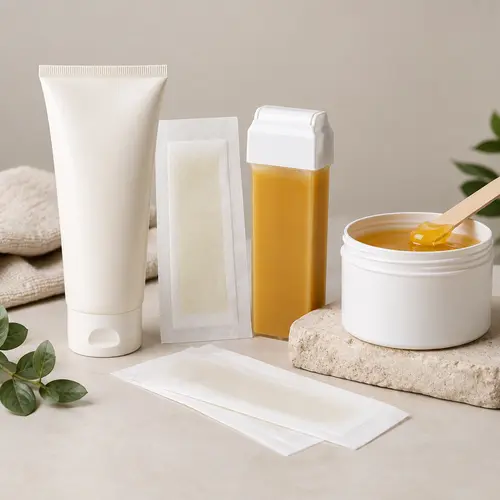
A recyclable mono-material tube may work for a depilatory cream, while a heat-resistant polypropylene jar may be more realistic for hot wax. Wax strips often require barrier films that are difficult to recycle, so material reduction and compact secondary packaging may produce a more credible result than an unsupported recyclability claim. Start with the product-package system, not a preferred material in isolation, and review it through a qualified hair removal OEM manufacturer.
Key Takeaways for Private Label Buyers
- Match packaging to formula behavior. Alkaline depilatory cream, tacky wax, moisture-sensitive sugar wax, and light aftercare gel create different barrier and dispensing requirements.
- Prioritize less material before decorative complexity. Right-sized cartons, lighter components, refill-free simplicity, and fewer mixed materials usually provide clearer gains.
- Test the decorated production pack. Include the bottle, tube, cap, liner, adhesive, ink, label, and formula rather than evaluating empty packaging alone.
- Request a transparent BOM. Separate formula, primary pack, decoration, secondary pack, assembly, testing, and estimated freight so sustainability choices remain commercially visible.
- Align sampling with content production. Ask whether a camera-ready, packaging-compatible sample can be delivered within seven days and whether a 1,000-unit pilot can use the same components planned for scale.
- Use precise claims. State material content and disposal conditions; avoid broad terms such as eco-friendly when local collection and processing cannot be verified.
Buyer Context
Hair-removal products expose packaging weaknesses quickly. A depilatory cream can lose viscosity, discolor, develop odor changes, or affect seals when its alkaline formula is paired with the wrong tube or liner. Hot wax needs a jar that tolerates filling and consumer heating conditions without distortion. Roll-on wax cartridges depend on tight dimensional control around the roller, wiper, cap, and seal. Sugar wax must be protected from moisture changes, while wax strips need stable adhesion and clean separation through storage.
For creator-led brands, packaging also has to work on camera. The cap should open cleanly, the cream ribbon should hold its shape, the wax should show the intended texture, and labels should remain flat under close lighting. These visual requirements should be written into the sample brief alongside leakage, irritation-risk review, and shipment conditions. Buyers comparing custom depilatory cream formulation, private label waxing products, or post-depilation care OEM options should therefore evaluate performance and presentation in the same approval round.
Sustainability decisions also affect launch speed. A custom mold may create a distinctive silhouette but add tooling, minimum-order exposure, and another validation step. A proven stock pack with custom color, restrained decoration, and a well-designed label can reach the market faster and reduce obsolete inventory if demand changes. The best choice supports both the first production run and replenishment after a viral launch.

Technical and Packaging Factors
Formula Compatibility
Ask the ODM to screen the exact formula against every contact surface. For depilatory cream, review tube walls, pump pathways, cap liners, seals, and printed decoration for swelling, softening, corrosion, odor transfer, or color migration. A polyethylene tube may offer a simpler material story, but the final structure still has to preserve viscosity and dispensing. An airless pump can improve dosing and cleanliness, yet its multiple parts may make recovery less practical. This tradeoff should be documented during custom hair removal product development, not decided from a packaging catalog.
For wax and sugar wax, confirm the filling temperature, expected melting or softening range, jar deformation resistance, lid seal, and residue around the closure. Roll-on cartridges require side-storage and inverted leakage checks because a pack that stands correctly in a lab may fail inside a parcel. Wax-strip sachets need enough barrier to preserve adhesion without adding layers that provide no measurable benefit.
Storage, Transit, and Use Testing
A practical screen can include ambient storage plus accelerated storage for 8 to 12 weeks at 40 C and 75% relative humidity, cold storage at 4 C, high-temperature review at 45 C, and three freeze-thaw cycles. These conditions are development tools, not automatic proof of shelf life. Agree on checkpoints for mass change, leakage, seal integrity, odor, color, viscosity, wax separation, strip adhesion, label lift, and decoration rub-off.
Add a one-meter drop check in the intended retail and shipping configuration, then test packs on their side and upside down. Shipment review should reflect the actual channel: hot warehouse exposure, cold last-mile delivery, carton compression, and direct-to-consumer parcel handling. The hair removal manufacturing process should identify who records results, which defects block approval, and whether testing uses hand-filled or line-filled samples.
Claims, Labels, and Market Fit
Material claims should identify the component and percentage clearly, such as a bottle containing a stated percentage of post-consumer recycled plastic. Recyclable claims should be qualified when caps, pumps, labels, or local collection systems limit recovery. The United States Food and Drug Administration explains that cosmetics are regulated but generally are not pre-approved in its guidance on FDA authority over cosmetics. Brands should also review the Modernization of Cosmetics Regulation Act of 2022 and the FDA small-business cosmetics fact sheet when assigning label and company responsibilities.
For sensitive-skin positioning, packaging cannot compensate for an unsuitable formula. Review the ingredient list, use directions, warnings, patch-test language where appropriate, and compatibility results together. The supplier discussion for mild hair removal formula development should include the complete pack and applicator.
Decision Framework
| Factor | What to Check | Why It Matters | ODM Buyer Note |
|---|---|---|---|
| Material structure | Resin type, layers, PCR percentage, component separation | Determines protection and the credibility of disposal claims | Request a component-level specification |
| Formula contact | Tube, liner, seal, roller, adhesive, and ink compatibility | Prevents leakage, swelling, odor transfer, and texture change | Approve filled, decorated samples |
| Use performance | Dose, opening force, strip peel, wax flow, residue | Protects the consumer experience and on-camera result | Test with the intended instructions |
| Storage and transit | Heat, cold, orientation, drop, compression, label adhesion | Reduces damaged stock and customer complaints | Match tests to the sales channel |
| Commercial fit | MOQ, tooling, lead time, unit BOM, freight cube | Controls launch risk and obsolete inventory | Compare stock and custom options |
| Scale readiness | Line-filling fit, component availability, reorder lead time | Avoids pack changes after demand increases | Confirm the pilot can scale without redesign |
Before approval, compare alternatives through a documented depilatory product development solution and request samples, MOQ details, packaging specifications, test scope, and estimated logistics through a formal hair removal product RFQ.
ODM Manufacturing Considerations
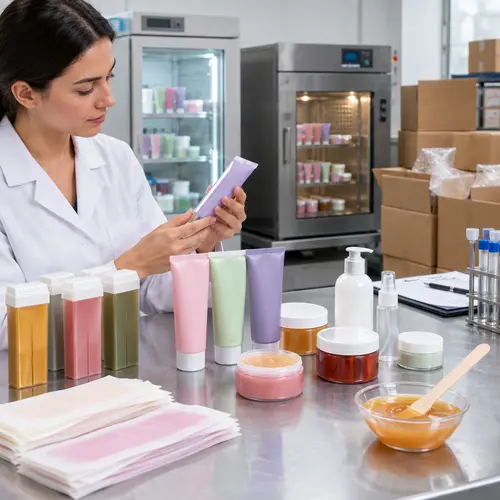
ODM planning should begin with a written sample brief that defines the intended hair-removal format, target user, application area, texture, color, fragrance level, removal performance, and expected retail presentation. A visual reference can help, but it should be translated into measurable acceptance criteria. For wax, buyers may specify the working temperature, melting range, spreadability, set time, and flexibility after cooling. For a depilatory cream, useful criteria include viscosity, application thickness, removal time, odor profile, and appearance after storage.
Sample confirmation should cover more than the formula in a laboratory container. Record the approved sample code, batch date, texture, shade, fragrance, fill weight, and packaging components. Photos and short application videos can document visual behavior, especially when the product will be demonstrated through a social media channel. The final specification should state which characteristics may vary slightly between production batches and which are fixed approval points.
Formula customization can affect performance, irritation risk, filling behavior, and package selection. Increasing fragrance, changing wax color, adding natural-positioned ingredients, or modifying viscosity may require another stability review. Buyers should ask the supplier to explain the functional effect of each requested change in plain commercial language. The supplier should also identify whether the custom formula is exclusive, semi-custom, or based on an existing stock formula available to other brands.
Packaging compatibility should be assessed with the intended formula, closure, decoration, and fill process. Review seal integrity, product contact surfaces, cap fit, label adhesion, print resistance, and ease of dispensing. Stability work should include defined heat and cold storage conditions appropriate to the destination market, with observations for odor, color, viscosity, separation, weight loss, and package distortion. Buyers can review related capabilities through the OEM/ODM services overview and compare available formats in the hair-removal product categories.
MOQ discussions should separate formula MOQ, packaging MOQ, decoration MOQ, and finished-product MOQ. A low finished-product quantity may still require the buyer to purchase excess printed cartons or custom-colored components. Request a written breakdown of unused material ownership, storage fees, expiration limits, and reorder terms.
Before production, confirm the ingredient list, product specification, packaging specification, artwork file, label copy, batch coding format, and available safety or quality documents. For the United States, the responsible brand should understand applicable MoCRA obligations and should not imply that a cosmetic has FDA pre-approval. Shipment planning should identify carton dimensions, gross weight, pallet requirements, temperature exposure concerns, destination documents, and whether the freight quotation includes duties or local delivery.
Common Problems or Failure Cases
Wax becomes brittle. Hard wax that snaps instead of flexing may have an unsuitable working range, excessive heating history, or sensitivity to cooler use conditions. Compare retained samples with the approved reference and document melting, application, cooling, and removal behavior under realistic salon or home-use conditions.
Wax strips lose adhesion. Common contributors include oil migration, unsuitable nonwoven material, poor pouch protection, or prolonged heat exposure. The review should compare peel behavior, residue, and hair pickup at the beginning and end of the stated shelf life.
Depilatory cream separates. Visible liquid release, graininess, thinning, or color drift can indicate that the formula or pack is not robust for expected storage. Do not treat remixing as an acceptable consumer solution. Hold shipment until the supplier investigates the affected batch and compares it with retained controls.
Roll-on cartridges leak. Leakage can result from dimensional variation, roller fit, closure torque, formula flow at elevated temperature, or damage during distribution. Buyers should define an acceptable leakage standard and require traceability for the cartridge, cap, and filled batch.
Fragrance creates avoidable sensitivity complaints. Strong scent may support a content concept but can increase consumer rejection, particularly for face hair-removal products or aftercare. Evaluate an unscented or lower-fragrance option and ensure directions include appropriate precautions and an irritation-risk review.
Packaging deforms. Jars, cartridges, tubes, or closures may soften, panel, crack, or lose seal pressure when component selection and shipment conditions are mismatched. Approval should be based on filled production-intent packs, not empty component samples.

Supplier Checklist
- Does the supplier manufacture the required wax, strip, cream, cartridge, sugar wax, or aftercare format in-house?
- Is the sample brief linked to measurable texture, viscosity or melting-range, color, fragrance, application, and removal criteria?
- Are stock, semi-custom, and exclusive formulas clearly distinguished in writing?
- Can the supplier provide ingredient, specification, label-support, batch, and available safety documents?
- Are formula, component, decoration, and finished-product MOQs quoted separately?
- Will compatibility and stability observations use the selected formula and final production-intent packaging?
- Are leakage, separation, brittleness, adhesion, deformation, and irritation risks included in the approval record?
- Does the quotation identify tooling, artwork, testing, excess materials, storage, freight, duties, and other possible charges?
- Can the supplier explain normal capacity, surge capacity, lead-time constraints, and reorder priority?
- Are shipment temperature concerns, case packing, palletization, batch traceability, and destination documents defined?
- Are confidentiality, formula ownership, artwork ownership, and restrictions on sample display included in the agreement?
- Is there a named technical and commercial contact who can translate social-media goals into manufacturing specifications?
FAQ
How can I reduce the risk that a factory will reuse my idea or formula?
Use a signed confidentiality agreement before sharing detailed briefs, then define ownership in the development and manufacturing agreement. State whether the formula is custom or stock, who owns modifications, whether the supplier may show samples publicly, and what happens to artwork and tooling if the relationship ends. Keep dated briefs and approval records.
How do I confirm that the texture and color will look right on camera?
Evaluate the sample under the lighting, background, application thickness, and filming distance used for planned content. Request an application video and assess spread, stringing, opacity, shine, color shift, set time, and removal. Add the accepted visual traits to the sample approval sheet instead of relying only on reference images.
Can quality controls guarantee that no customer will have a bad skin reaction?
No supplier can guarantee zero reactions. Risk can be reduced through ingredient review, controlled manufacturing, finished-batch checks, suitable directions, warnings, traceability, and a documented complaint process. Brands should avoid absolute safety claims and should provide clear patch-use instructions where appropriate for the product.
What should a buyer approve before paying a production deposit?
Approve the coded formula sample, product and packaging specifications, label copy, artwork, fill quantity, quality limits, MOQ, price breakdown, production timing, shipment terms, and treatment of excess materials. Changes made after deposit should be documented with their cost and timing impact.
How should I prepare for a sudden increase in orders?
Ask for monthly output by product format, realistic reorder lead time, constrained materials, and available surge capacity. Forecast promotional dates and reserve critical printed components where justified. The supplier should explain how production slots are allocated when several customers place urgent orders.
What makes communication with an ODM supplier effective?
Use a single written brief with visual references and measurable acceptance points. A capable contact should convert marketing requests such as dramatic stretch, clean peel, or camera-visible color into testable product characteristics, then record decisions and open issues after each review. The manufacturing process page can help buyers identify which approval stage owns each decision.