Direct Answer
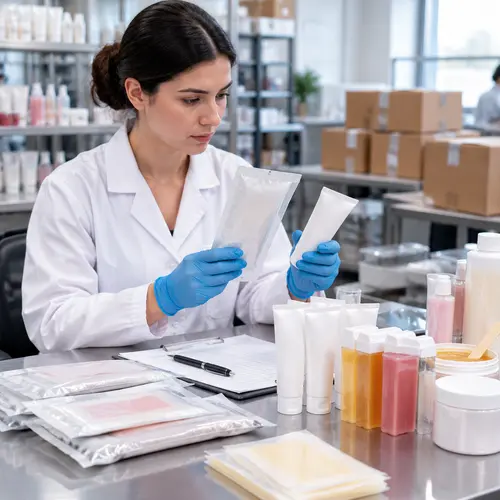
Sustainable hair removal packaging claims should be treated as evidence statements, not design language. A private-label brand should be able to show what the pack is made from, which component is recyclable or reusable, whether local collection systems accept it, and how the package performs during filling, storage, transport, and consumer use. This applies across depilatory cream tubes, wax strip sachets, sugar wax jars, roll-on wax cartridges, and aftercare products.
The practical standard is simple: connect every claim to a material specification, supplier document, test record, or market-specific labeling review. A paper sleeve is not automatically a better choice if the inner pouch cannot be separated or the package leaks when exposed to warm wax. Sustainable packaging must protect formula quality and user safety first, then reduce material impact without creating a new disposal or performance problem.
For founders, the fastest route is to review the formula, pack, and claim together during sampling. PZIK can support this review through its hair removal OEM ODM services, including packaging selection, sample assessment, and launch documentation.
Key Takeaways for Private Label Buyers
- Ask for a component-level material list covering the primary container, closure, label, adhesive, carton, insert, and shipping protection.
- Separate recyclable, recycled-content, refillable, compostable, and reduced-material claims. Each describes a different buyer expectation and requires different evidence.
- Check packaging compatibility with the formula: wax heat, cream viscosity, oils, fragrance, preservatives, and post-depilation ingredients can all affect seals, coatings, and labels.
- Test the finished pack under heat, cold, storage, vibration, drop, leakage, and repeated opening conditions before approving artwork.
- Confirm whether the claimed disposal route exists in the target market. A technically recyclable material may not be accepted by local collection systems.
- Build the claim review into the sample and quotation stage so material changes do not arrive after pricing, filling, or shipment planning.
Buyer Context
Hair-removal products create a specific packaging challenge because the product experience is closely tied to temperature, texture, adhesion, and clean application. A wax strip must maintain a stable bond between the strip and wax layer. A sugar wax jar must tolerate repeated opening while protecting the product from contamination and moisture. A depilatory cream tube must dispense consistently without cracking, swelling, or allowing air ingress. A roll-on wax cartridge must move smoothly through its roller head while maintaining a reliable seal.
These requirements make sustainability claims more complex than choosing a carton with a recycled-paper appearance. A lightweight pouch may reduce material use but complicate sorting. A mono-material tube may simplify disposal but require a different shoulder, cap, or barrier layer. A glass jar may appear reusable yet increase breakage, shipping weight, and product loss. Each decision affects the customer experience and the total environmental story.
For creator-led brands, this matters on camera as much as it does in a warehouse. A leaking cartridge, separated label, cracked jar, or wax residue on the carton can become visible in a product video within hours. Packaging should therefore be reviewed as part of the brand concept, not added after the formula and visual identity are finished. A clear sample brief can include the desired unboxing sequence, refill or reuse intention, target shipping conditions, and the exact market where the product will be sold.
Claims also need market-specific review. The FDA Cosmetics Labeling Guide is a useful starting point for required label information in the United States. For relevant Middle East launches, buyers can review the SABER conformity certification platform and the Dubai Municipality Montaji registration system. These sources do not replace product-specific review, but they help teams identify documentation and labeling questions before artwork approval.
Ingredient and material descriptions should also use consistent naming. The INCI ingredient nomenclature database can help teams check ingredient terminology when preparing a product page or label review, especially where a sustainability message references plant-derived waxes, oils, or other ingredients.
Technical or Packaging Factors
Material claim precision
Start by defining the claim in operational terms. Recycled content should identify the relevant component and, where available, the percentage and source documentation. Recyclable should identify the material and the disposal conditions required. Refillable should explain what the consumer replaces and whether the refill can be purchased separately. Compostable claims require particular care because industrial and home composting conditions are not interchangeable.
Avoid using one broad claim for a multi-component pack. A depilatory cream tube may combine a plastic body, a different plastic cap, an aluminum barrier, a label, and adhesive. If the consumer must remove several parts before disposal, the claim should reflect that reality. The ODM buyer note should record which components are included in the claim and which are excluded.
Formula and pack compatibility
Packaging decisions must follow the formula profile. Depilatory creams can interact with seals, liners, and barrier layers through alkalinity, moisture, fragrance, or active ingredients. Wax products introduce heat and oil exposure. A hot wax jar, sugar wax container, or roll-on cartridge may need a seal that remains stable after filling and during warm storage. Aftercare gels and lotions may require different pumps, tubes, or closures because dispensing behavior changes as viscosity changes.
During sampling, review fill weight, dispensing force, residue, closure torque, label adhesion, and visible separation between components. Ask the supplier to document the proposed material structure and any known limitations. A packaging change should trigger a fresh compatibility review rather than an assumption that the new pack will perform like the original.
Storage and shipment performance
Sustainable packaging still needs to survive the route to the customer. Request heat and cold storage checks, leakage review, vibration or transit simulation, and drop assessment for jars, cartridges, and kits. For wax, record the effect of temperature on melting behavior, surface appearance, and strip adhesion. For creams, check viscosity and dose consistency after storage. For aftercare, review pump priming, cap closure, and leakage around the actuator.
Shipment conditions should be written into the project brief. A carton that performs well in a controlled warehouse may fail in a hot delivery vehicle or during winter transport. Secondary packaging can sometimes be reduced, but only after the primary pack has demonstrated adequate protection. A damaged product creates waste, returns, replacement shipments, and a poor launch experience.
Decision Framework Table
| Factor | What to Check | Why It Matters | ODM Buyer Note |
|---|---|---|---|
| Material claim | Component list, recycled content evidence, disposal instructions, and market acceptance | Prevents broad claims that consumers cannot verify | Approve the claim only after the supplier identifies the exact component covered |
| Formula compatibility | Seal condition, swelling, odor change, label adhesion, dispensing, and residue | Wax, cream, oils, and aftercare formulas can stress different materials | Run the review on the finished formula and final pack, not on empty packaging |
| Thermal performance | Warm and cold storage, wax appearance, cream viscosity, and cartridge movement | Temperature shifts can cause leakage, separation, or application failure | Define expected storage and shipment conditions before selecting the pack |
| Physical protection | Drop, vibration, closure security, carton strength, and kit assembly | Damage creates waste and customer complaints | Test the sellable unit in its actual shipping configuration |
| Launch documentation | Material specification, artwork review, batch records, sample scope, and labeling files | Supports consistent manufacturing and market review | Request a document index with the quotation and sample approval |
Hair removal manufacturing process reviews can help buyers map these checks from sampling through filling, packaging, quality control, and shipment. For product-specific development, compare the requirements for custom depilatory cream formulation, private label waxing products, and post-depilation care OEM. A broader hair removal product solutions review is useful when a launch includes cream, wax, strips, and aftercare in one kit.
Before finalizing a sustainable packaging claim, request a physical sample, a component-level material specification, compatibility observations, storage and shipment test results, and the exact label wording proposed for the target market. The decision should fit the product’s texture, the creator’s visual concept, and the buyer’s real disposal options. For a structured sample and quotation review, use request a hair removal product quote.


ODM Manufacturing Considerations
For a private-label hair-removal launch, sample approval should be treated as a documented decision point rather than an informal exchange of comments. Ask the supplier to identify the approved formula version, fragrance, color, fill weight, container, closure, label artwork, and intended market before production begins. A retained reference sample should remain available for comparison during filling and final inspection.
Formula customization may involve changes to wax hardness, melting behavior, cream viscosity, fragrance level, color intensity, or the skin feel after removal. For wax products, request a defined performance target covering softening behavior, spreadability, stringing, brittleness, and set time. For depilatory cream, review the texture before application, ease of removal, odor, and appearance after storage. For sugar wax and roll-on wax, confirm that the formula performs consistently through the selected applicator and does not become excessively fluid in warm conditions.
Packaging compatibility must be assessed with the actual formula and final component, not only with an empty package. The supplier should confirm contact-material details, closure fit, fill tolerance, liner or seal selection, and resistance to fragrance or active ingredients. Review the finished package after heat and cold exposure, shipment simulation, upright and inverted storage, and repeated opening. A cream tube, wax jar, strip pouch, cartridge, and aftercare bottle each create different leakage and dispensing risks.
Ask for a written stability review that identifies the storage conditions, test duration, inspection points, and acceptance criteria. The review should cover formula separation, color or odor change, viscosity drift, wax cracking, seal performance, cartridge flow, and label condition. This does not replace market-specific product review, but it gives the buyer evidence for setting a reasonable shelf-life position and handling instruction.
MOQ should be discussed together with sample scope and component economics. A low formula MOQ may still require a larger purchase of custom cartons, printed pouches, molded parts, or fragrance materials. Request a line-item BOM quotation showing formula, filling, components, decoration, testing, tooling, inspection, and packing charges. Ask whether unused printed packaging must be purchased in full and whether a pilot run is available before the first large order.
Labeling documents should be prepared before artwork approval. Request the full ingredient declaration using the accepted INCI names, net contents, batch or lot identification method, shelf-life or period-after-opening position where applicable, directions, warnings, storage language, country-of-origin information, and responsible-party details required by the destination market. The INCI ingredient nomenclature database can help buyers cross-check ingredient naming, but the supplier should still provide product-specific documentation.
Shipment conditions deserve the same attention as production. Confirm carton configuration, pallet limits, temperature exposure, protection against crushing, orientation requirements, and whether wax or cream products require seasonal shipping controls. A supplier that can provide a realistic logistics estimate and explain how hot-weather or cold-weather transit may affect the product gives the buyer better control over launch timing.
For export projects, confirm which documents are supplied for the intended market. For example, buyers entering Saudi Arabia should review requirements through the SABER conformity certification platform, while products intended for Dubai may need review through the Dubai Municipality Montaji registration system. The supplier can organize documents, but the brand remains responsible for confirming the claims and market information printed on its packaging.

Common Problems or Failure Cases
Wax brittleness often appears when a hard wax formula is exposed to cold conditions, when the ratio of flexible and rigid materials is not balanced for the intended application, or when the package allows excessive moisture loss. Inspect a retained sample after cold storage and check whether the wax spreads evenly, grips hair, and removes without crumbling.
Strip adhesion can decline when the wax layer is uneven, the backing material is unsuitable, or the pouch seal permits heat or moisture changes. Compare strips from the first, middle, and final production cartons. Check separation force, wax transfer, edge lifting, and performance on the intended body-hair area using an approved internal test method.
Depilatory cream may separate, thin, develop an unusual odor, or show color changes when the formula and tube barrier are poorly matched. Review filled tubes after storage in multiple orientations and inspect the first discharge for liquid release before the main cream. Also check whether the cap threads remain clean and whether the nozzle becomes blocked.
Roll-on wax cartridges can leak around the roller head, cap, shoulder, or bottom seam. Leakage may occur only after vibration, inversion, or warm storage, so a visual inspection of new cartridges is insufficient. Request filled-package testing that includes transport movement, upright and sideways storage, and repeated application. Confirm that the roller turns smoothly without dragging or releasing an uncontrolled amount of wax.
Fragrance sensitivity is another common launch risk. A strong scent can become more noticeable after storage, while fragrance materials may also affect package odor or user acceptance. Ask for an unscented control sample and a lower-fragrance option before finalizing the sensory profile. Product warnings and consumer directions should match the finished formula rather than a preliminary sample.
Packaging deformation can affect presentation and function. Thin jars may distort under heat, tubes may dent during packing, and pouches may crease at the seal. Review filled units after carton compression and shipment simulation, then confirm that the package still opens, closes, dispenses, and displays the label correctly.
Supplier Checklist
- Can the supplier provide a controlled sample record showing formula version, fragrance, color, fill weight, and packaging components?
- Are texture, viscosity, melting behavior, set time, and removal performance defined for the specific wax, cream, sugar wax, or aftercare product?
- Has the finished formula been checked in the actual tube, jar, pouch, cartridge, strip pack, or bottle?
- Does the stability review cover heat, cold, orientation, leakage, separation, odor, color, viscosity, and closure performance?
- Can the supplier explain MOQ by formula, component, decoration, carton, and custom tooling?
- Is the BOM transparent, including inspection, documentation, packing, and estimated freight assumptions?
- Are ingredient declarations, warnings, directions, batch coding, and market documents available before artwork approval?
- Does the sample scope include a retained reference unit and a clear process for handling deviations?
- Can the factory describe capacity allocation, lead times, peak-season planning, and the process for responding to an unexpected order increase?
- Will the communication contact translate marketing goals such as visible texture, color impact, or creator-led demonstrations into measurable product requirements?
FAQ
How can I reduce the risk that a supplier will reuse my formula or product concept?
Use a written confidentiality and ownership agreement before sharing full specifications. Identify who owns the formula, artwork, molds, samples, test records, and unused components. Limit access to the people who need it, keep dated approvals, and ask whether the same formula or package is already supplied to another customer.
Can the finished wax or cream look dramatic enough for social media content?
It can, but the visual target must be defined during sampling. Specify the desired color, opacity, spread pattern, foam-free texture where relevant, gloss, stringing, removal contrast, and application thickness. Review samples under the lighting and camera conditions used by the brand, while confirming that visual impact does not compromise removal performance or skin comfort.
How do I verify that quality control is reliable enough for a public launch?
Request the inspection plan, batch records, retained samples, deviation process, and release criteria. Review checks for appearance, odor, fill weight, seal integrity, viscosity or wax behavior, labeling, and carton condition. No supplier can remove every product risk, so the buyer should also approve a pilot lot and define when a batch must be held for investigation.
What if I do not understand ingredients or manufacturing terminology?
Ask the supplier to convert the creative brief into a plain-language specification with measurable checkpoints. A capable contact should explain why a cream is too thin, why a wax cracks, or why a cartridge leaks without hiding behind technical language. Request side-by-side samples and written change summaries after every revision.
Can a factory keep up if a creator campaign suddenly generates a large order?
Discuss capacity before launch and ask how filling lines, components, labor, and shipping space are allocated during peak periods. Confirm the normal lead time, rush-order limits, component reservation options, and the conditions for adding a second production run. A written forecast and staged purchase plan are more dependable than an informal promise to prioritize the brand.
Which documents should be checked before printing the package?
At minimum, compare the final ingredient declaration, net contents, directions, warnings, batch coding method, storage language, responsible-party information, and destination-market requirements against the approved formula and package. The FDA Cosmetics Labeling Guide and FDA guidance on cosmetic authority and labeling are useful references for brands reviewing U.S.-facing claims and labels.
References
SABER conformity certification platform
Dubai Municipality Montaji registration system