Direct Answer
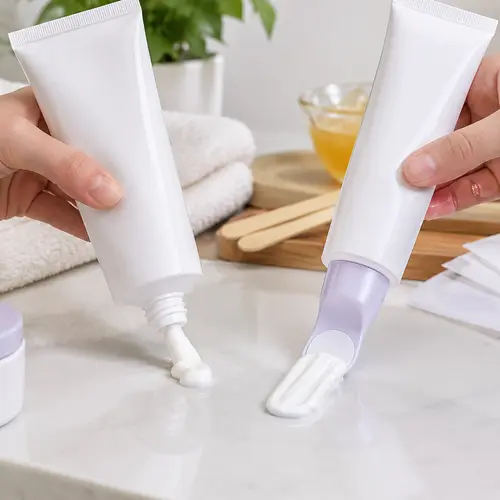
For most private-label depilatory cream launches, a standard squeeze tube is the safer starting point. It is familiar to consumers, easier to source, simpler to label, and usually more forgiving during filling, transport, and storage. An applicator tube becomes the better choice when the product experience depends on controlled placement, cleaner application, or a strong visual difference on camera. Think precise upper-lip use, small facial areas, or a narrow nozzle designed to keep the cream away from unwanted areas.
The right decision in depilatory cream tube packaging is not about choosing the more sophisticated format. It is about matching the tube, closure, or applicator to the formula viscosity, target body area, user technique, filling line, and shipping conditions. A standard tube often wins for a first launch or broad body-hair removal SKU. An applicator tube can earn its extra cost when it reduces mess, supports a premium positioning, or makes the product easier to demonstrate in short-form content.
For founders moving quickly, the best path is to test both formats with the same formula before approving the final pack. A seven-day sample review can reveal more than a packaging presentation: check bead control, cap cleanliness, squeeze force, leakage, and whether the cream stays stable after heat and cold exposure.
Key Takeaways for Private Label Buyers
- Start with the use case. Standard tubes suit legs, arms, and larger areas; applicator tubes are more useful when precision and reduced hand contact matter.
- Match packaging to texture. A thin cream may leak through an oversized opening, while a thick cream may require excessive squeeze force through a narrow applicator.
- Review the complete pack. Tube material, shoulder design, orifice, cap, seal, and decoration can affect stability, leakage, and consumer perception.
- Test before tooling. Ask for filled samples, not empty tubes. Review application, residue, cap fouling, and transport behavior with the actual formula.
- Protect the launch schedule. Standard tubes generally offer broader supplier availability. Custom applicator parts may require additional sampling, tooling, and approval time.
- Keep the first order flexible. A pilot run from 1,000 units can validate demand, packaging performance, and content-market fit before a larger commitment.
Buyer Context
Tube selection affects more than shelf appearance. For a creator-led brand, the package becomes part of the product demonstration: the way the cream exits the tube, spreads across skin, and wipes away can determine whether a video looks controlled or messy. A recognizable standard tube may communicate reliability, while a custom applicator can create a more distinctive visual moment. The packaging must still work for the buyer who uses the product in a bathroom, packs it for travel, or stores it in a warm delivery environment.
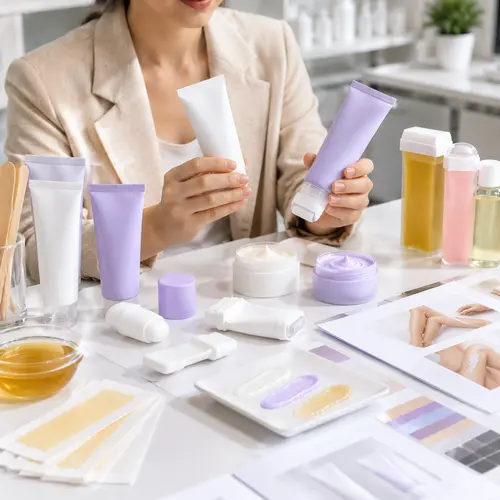
The decision also applies across adjacent hair-removal categories. A standard tube may sit naturally beside wax strips, sugar wax, or post-removal care in a coordinated collection. Roll-on wax cartridges create a different packaging problem because the roller must control product delivery without dripping. Aftercare products may need a soft, clean dispensing experience after hair removal. Each format should be evaluated as part of the full routine, not as an isolated container choice.
For a private-label buyer without an internal packaging team, the supplier should translate marketing goals into measurable pack requirements. Instead of asking for a tube that feels premium, define the desired squeeze force, application width, closure behavior, surface finish, and on-camera appearance. The custom depilatory cream formulation process should be reviewed alongside the package, because a viscosity change can alter dispensing performance.
A focused hair removal OEM ODM services partner can also coordinate the formula, tube, filling, artwork, and shipment documentation as one project. This matters when a creator has a fixed content date and cannot afford repeated sample rounds caused by poor communication between the formula and packaging teams.
Private label hair removal products should be assessed by the complete buyer experience: appearance, hand feel, application control, removal performance, storage tolerance, and repeatability from sample to production. A tube that looks excellent in a photograph but leaks in transit is not a successful launch asset.
Gentle depilatory cream OEM projects require an even more disciplined review. The applicator should not create excessive rubbing, sharp contact points, or unnecessary product waste. Packaging cannot make an aggressive formula suitable for every user, but it can support more controlled application and clearer directions.
For product families, buyers can compare private label hair removal solutions across cream, wax, strips, and aftercare. This helps determine whether one visual language and one supplier process can support a broader launch without forcing every product into the same pack format.
Technical and Packaging Factors
Formula flow and dispensing
Viscosity is the first practical checkpoint. The cream should leave the tube in a consistent ribbon without spurting, separating, or collapsing immediately after application. A standard opening usually provides more tolerance for thicker formulas. An applicator tip gives better placement but can clog if the cream dries around the orifice or contains particles that are not fully compatible with the opening.
Ask the supplier to compare filled samples at the intended production viscosity. Review the first squeeze, the middle of the tube, and the final portion. The user experience can change as internal pressure falls. Record whether the tube requires one hand or two, whether the cap becomes contaminated, and whether the product can be resealed without trapped cream.
Material compatibility and sealing
Depilatory creams can contain ingredients that interact with tube layers, inks, adhesives, or closures. The selected pack should be reviewed for odor transfer, discoloration, swelling, brittleness, and seal integrity. Compare laminate and plastic options based on the actual formula rather than choosing only by appearance or unit price.
Filled samples should undergo packaging compatibility review under heat and cold storage conditions relevant to the intended market. Inspect the shoulder, crimp or tail seal, cap hinge, nozzle, and decoration after storage. A leakage check should include upright, inverted, and side-position storage, followed by simulated transport handling. The supplier should document the sample condition and any changes in cream texture or odor.
Application area and consumer control
Standard tubes work well when the user spreads the cream with a spatula or fingers over a broad area. Applicator tubes can support more direct placement, but precision is useful only when the tip dispenses a controlled amount. Too wide an opening increases waste; too narrow a tip can frustrate users and encourage excessive squeezing.
For facial or sensitive-area positioning, review the complete directions, warning language, and irritation-risk review with the finished pack. The tube should support clear dosage guidance and avoid implying that controlled dispensing eliminates the need for a patch test or time-limit instructions. The supplier should provide labeling documents and market-specific artwork checks before production.
Manufacturing and launch speed
Standard tubes are generally easier to source across multiple suppliers and filling lines. They are useful when a creator needs a reliable first SKU, a travel size, or a rapid market test. Applicator tubes may require a narrower supplier pool, more detailed filling trials, and additional inspection of the nozzle and cap.
During the hair removal manufacturing process, ask when the tube is filled, sealed, coded, packed, and inspected. Confirm whether the same approved pack will be used for the pilot and scale-up order. A supplier promising an under-30-day development cycle should still identify the approval points for the formula, tube, artwork, stability review, and shipment release.
Packaging cost should be evaluated as a total launch cost. Include tube components, printing, tooling if required, filling loss, inspection, cartons, and shipping volume. A standard tube may deliver a lower initial cost, while an applicator may improve perceived value and reduce messy use. The correct choice depends on whether the commercial benefit is measurable for the target area and audience.
Decision Framework
| Factor | What to Check | Why It Matters | ODM Buyer Note |
|---|---|---|---|
| Application area | Broad body areas or small, detail-sensitive zones | Determines whether speed or placement control matters more | Use a standard tube for body coverage; shortlist an applicator for precision-led concepts |
| Formula flow | Ribbon formation, squeeze force, clogging, and final-dose behavior | Controls ease of use and product waste | Test filled samples at production viscosity, not water or a substitute base |
| Compatibility | Odor, color, swelling, brittleness, seal integrity, and closure fit | Reduces leakage and pack failure during storage | Request a documented compatibility and stability review for the selected tube |
| Storage and shipment | Heat, cold, inversion, vibration, carton protection, and transport position | Reveals failures that may not appear on a sample table | Specify destination climate and shipment conditions before final approval |
| Consumer perception | On-camera dispensing, hand feel, decoration, and cap cleanliness | Connects packaging performance with brand trust and content appeal | Record a short usage test with the intended creator or demonstrator |
| Launch economics | MOQ, sample scope, tooling, filling loss, and unit freight volume | Protects cash flow during demand testing | Ask for a transparent BOM and pilot option before approving custom parts |
Before requesting a final hair removal product RFQ, prepare the target application area, formula concept, preferred tube format, launch market, expected order range, artwork status, and content deadline. Ask the supplier to provide one standard tube sample and one applicator sample filled with the same cream. The comparison should cover dispensing, application, cleanup, leakage, storage, labeling, and shipment readiness. A short, structured review gives a founder enough evidence to make the packaging decision without slowing the product launch.

ODM Manufacturing Considerations
For private-label buyers, the most important part of depilatory cream tube packaging development is sample confirmation. The approved sample should define the cream color, fragrance level, texture, spreadability, removal performance, nozzle behavior, tube decoration, cap, and fill weight. Keep a signed or digitally approved reference sample, because small changes in viscosity or scent can affect both consumer experience and how the product appears in social media content.
Formula customization should be handled through a written brief rather than informal messages. Specify the intended application area, target user, preferred removal time, fragrance direction, color range, skin-feel expectations, and ingredients that must be included or excluded. The manufacturer should explain which requests are practical for the chosen cream base and which may affect irritation risk, preservation, color stability, or dispensing. A buyer should also request an ingredient list, technical specification, batch identification method, and the available safety or labeling documents for the destination market.
Packaging compatibility must be confirmed with the actual formula and the final tube construction. A standard tube may be suitable when the cream is stable, easy to spread, and intended for controlled hand application. An applicator tube may be useful when the brand wants a more directed application path, but the shoulder, nozzle, cap, and internal seal must all tolerate the cream. Ask the supplier to verify fill accuracy, seal integrity, cap fit, squeeze force, nozzle blockage, and leakage after storage in different positions. Review both decorated samples and undecorated production materials, since inks, varnishes, adhesives, and tube layers can behave differently under heat, fragrance exposure, or long storage.
The stability review should reflect the product’s real shipping route and consumer environment. Request checks after heat and cold exposure, repeated temperature changes, and extended upright, inverted, or side storage. Inspect separation, watery leakage, color drift, odor change, hardening, nozzle clogging, tube swelling, and cap distortion. For wax strips or roll-on wax cartridges included in the same brand range, review adhesion, brittleness, melting behavior, and cartridge leakage separately rather than assuming one successful product predicts another.
MOQ should be discussed together with sample scope and production timing. Ask whether the minimum applies to one formula, one fragrance, one tube size, one decoration method, or the combined order. Confirm the charge and ownership terms for custom molds, screens, artwork preparation, lab samples, and packaging revisions. An experienced OEM/ODM partner should be able to provide a clear quotation with formula, tube, cap, label, carton, testing, and freight assumptions separated. Buyers comparing OEM and ODM services should also ask how changes after sample approval affect the quotation and schedule.
Labeling documents should match the destination market and the final formula. Request the ingredient declaration, net contents, batch or lot marking format, shelf-life or period-after-opening guidance where applicable, usage directions, warnings, manufacturer details, and carton artwork specifications. The FDA OTC monograph information for depilatories can help buyers identify United States requirements that may apply to the intended product claim, while the European Commission’s CosIng ingredient database is a useful reference for European ingredient naming and product review. These sources do not replace a market-specific label review.
Shipment conditions should be agreed before production begins. Confirm carton configuration, palletization, maximum transit temperature assumptions, protection against crushing, and whether the formula or wax requires seasonal shipping controls. Ask for photographs of packed cartons, the carton dimensions and gross weight, and the handling instructions for the carrier. This information supports a more realistic landed-cost estimate and helps prevent tube deformation, broken caps, wax softening, or cream separation during transit.
Reviewing the manufacturing process with the supplier can clarify where batch checks, filling checks, sealing checks, and finished-goods inspections occur. The objective is not to collect impressive terminology; it is to establish measurable acceptance criteria before the first commercial shipment.

Common Problems or Failure Cases
Wax brittleness: Wax strips can become brittle when the wax layer or backing material is poorly matched to storage conditions. The result is cracking, uneven removal, or strip breakage during use. Check flexibility after cold exposure and after normal storage, then compare adhesion across several production samples.
Strip adhesion loss: Excess heat, dust, insufficient wax coating, or an incompatible release layer can reduce hair pickup. A buyer should review the peel behavior, wax transfer, residue, and performance on the intended body area. Do not approve only a clean-looking package; inspect the actual strip after storage and transport simulation.
Cream separation: A depilatory cream may show oil bleed, watery leakage, graininess, or a sharp odor change when the formula and tube materials are not compatible. Record the appearance, viscosity, odor, and dispensing behavior at each review point. If separation appears only after storage, the supplier should investigate the formula, filling temperature, tube barrier, and seal rather than simply adjusting the artwork.
Cartridge leakage: Roll-on wax cartridges can leak around the roller assembly, cap, or neck when sealing pressure is inconsistent or the wax softens during transit. Inspect the cartridge after upright and inverted storage, then check the outer carton for residue. A clean first sample does not prove that every cartridge will remain leak-free.
Fragrance sensitivity: A strong fragrance can become a consumer complaint even when the removal performance is acceptable. Ask for fragrance disclosure appropriate to the market, an irritation-risk review, and an unscented or lower-fragrance option if the brand serves sensitive users. Avoid presenting a fragrance as a skin benefit unless the supporting documentation and local labeling rules permit that claim.
Packaging deformation: Thin tubes may dent, swell, or lose their shape under heat, compression, or excessive filling pressure. Review tube hardness, shoulder appearance, cap alignment, print rub, and seal width on filled samples. The packaging should remain usable after transport, not only look attractive in a studio photograph.
Supplier Checklist
- Confirm the approved formula sample, color, fragrance, texture, removal time, and application area in writing.
- Request viscosity or consistency targets where relevant, plus acceptable appearance and odor limits.
- Verify tube, nozzle, cap, seal, roller, strip backing, and wax compatibility with the final formula.
- Review heat, cold, temperature-change, position, leakage, separation, and packaging-deformation results.
- Define MOQ by formula, fragrance, size, decoration, and carton configuration.
- Separate charges for sampling, artwork, molds, testing, packaging revisions, and freight.
- Obtain ingredient, label, warning, batch-marking, shelf-life, and shipment documents for the destination market.
- Confirm inspection points, defect classification, retained samples, and the process for handling a failed batch.
- Ask for realistic capacity information, reserved production timing, and the policy for priority orders after a social media spike.
- Evaluate whether the account contact can translate campaign requirements into measurable product and packaging specifications.
FAQ
Can a Chinese OEM/ODM factory reuse my cream concept or formula?
Protection depends on the contract and the supplier’s controls, so do not rely on verbal assurances. Use a confidentiality and ownership agreement that identifies your formula, artwork, fragrance brief, packaging concept, samples, and customer information. Ask whether the formula is exclusive, who owns custom development work, and how access to files and retained samples is controlled. Keep dated approvals and limit the shared information to what the project requires.
Can the sample texture and color create a strong visual effect on camera?
It can, but camera appearance should be treated as a specification rather than a promise. Review samples under the lighting and background used for content, and record the acceptable color, gloss, thickness, spread pattern, and residue appearance. Confirm that the visual effect does not depend on unstable pigment, excessive fragrance, or a texture that reduces safe and consistent use.
How can I reduce the risk of a product causing serious consumer complaints?
No supplier can promise zero adverse reactions. Require an irritation-risk review, clear usage directions, warnings, ingredient documentation, batch records, retained samples, and a complaint-handling process. Define when a batch must be held, rechecked, or rejected. The FDA summary of cosmetic labeling requirements is a useful starting point for United States label responsibilities, but the finished product still needs market-specific review.
What if I do not understand chemical ingredients or manufacturing language?
Ask the supplier to convert the marketing brief into a one-page technical specification with plain-language explanations. It should connect claims such as fast removal, low fragrance, or camera-visible texture to measurable checks. A capable contact should explain tradeoffs without dismissing the brand idea and should flag requests that could affect irritation, stability, or packaging compatibility.
Can the factory handle a sudden social media order spike?
Ask for normal monthly capacity, reserved capacity for existing customers, critical component lead times, and the escalation process for an unexpected order. Confirm whether the supplier can split production into staged shipments and whether packaging materials can be replenished quickly. A written capacity discussion is more useful than a general statement that the factory can scale.
Should I choose an applicator tube for every depilatory cream?
No. Choose it when directed application provides a clear user benefit and the nozzle can dispense the approved formula consistently. A standard tube may offer simpler filling, fewer parts, and easier consumer control. Compare squeeze force, clogging, leakage, cleaning expectations, packaging cost, and the application area before selecting the format.
References
FDA OTC monograph information for depilatories
European Commission CosIng ingredient database
FDA Summary of Cosmetics Labeling Requirements