Direct Answer
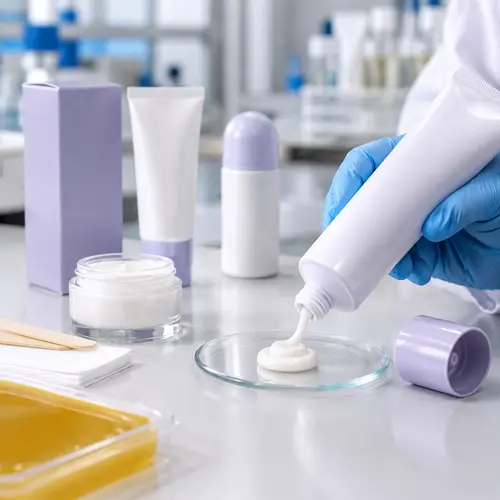
Cosmetic packaging compatibility testing is the fastest way to determine whether a hair-removal formula will remain safe, stable, attractive, and usable inside its final pack. A formula can perform well in a laboratory vessel and still soften a plastic tube, swell a seal, weaken wax-strip adhesion, clog a roll-on cartridge, or leak after temperature changes. Private-label buyers should therefore approve the formula and packaging as one product system, not as separate purchasing decisions.
For depilatory cream, wax, sugar wax, roll-on wax, and aftercare, the decision should combine formula behavior, package material, closure design, storage conditions, transport exposure, and label requirements. Ask the ODM supplier for filled samples, a written test matrix, and clear pass or fail criteria before artwork approval or mass production. This keeps a visual product concept moving quickly without transferring unresolved safety or shipment risk to the brand.
Key Takeaways for Private Label Buyers
- Review the filled product, not an empty component. Texture, viscosity, wax flow, closure fit, and dispensing force can change after contact with the final package.
- Match the pack to the formula. Oils, solvents, alkaline depilatory creams, fragrance, and warm wax can interact differently with plastics, adhesives, liners, valves, and seals.
- Test realistic storage and shipment conditions, including heat, cold, vibration, upright and inverted positions, and repeated opening and closing where relevant.
- Define acceptance criteria before sampling: no leakage, no visible separation, no unacceptable odor shift, no package deformation, stable label adhesion, and consistent consumer use.
- Keep the first run commercially practical. Confirm sample scope, pilot quantity, component lead time, artwork files, documentation, and the path from a 1,000-unit pilot to larger production.
Buyer Context
Hair-removal products have unusually direct contact with both skin and packaging. A depilatory cream may be alkaline and remain in the tube for months. A sugar wax may absorb moisture and change its spread. A hot wax jar may be filled warm, then stored and shipped through changing temperatures. Wax strips depend on a controlled adhesive layer, release liner, and pouch seal. Roll-on wax cartridges add a moving applicator, a narrow outlet, and the risk of leakage during transport. Aftercare gels and lotions may be less aggressive, but their pumps, caps, tubes, and sachets still need review.
This matters especially for creator-led and DTC brands. A package is part of the content asset: it must look clean on camera, open predictably, dispense without mess, and survive fulfillment. A failed cap, separated cream, or oily pouch can become a public product-quality story before the brand has time to correct it. The right buyer question is not simply whether the packaging looks premium. It is whether the filled SKU performs consistently from the first sample through the next production batch.
Use the [hair removal OEM manufacturer](/) page to assess category fit, then compare the supplier response against the [hair removal manufacturing process](/manufacturing-process/) and [hair removal OEM ODM services](/oem-odm-services/). A capable partner should be able to translate a social-media brief into a formula, pack, sample, and documentation plan. For broader positioning, the [hair removal product solutions](/solutions/) page can help align the product format with salons, retail, subscription, or DTC use.
Technical or Packaging Factors
Formula and material contact
Start with the formula profile. Record whether it contains oils, water, waxes, surfactants, fragrance, solvents, alkaline ingredients, botanical materials, or colorants. Then identify every contact surface: bottle or tube wall, jar, cap, liner, valve, roller ball, adhesive, release paper, and inner pouch layer. Ask the ODM team to explain why each material was selected and whether the same material is used in the filled sample and the intended production component.
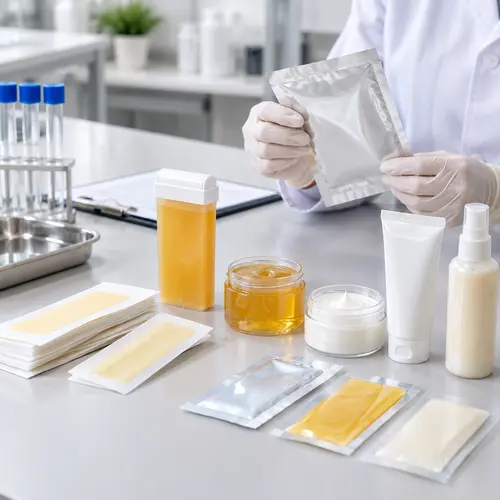
For depilatory cream, observe viscosity, phase stability, dispensing force, and residue around the opening. A tube that works with a thin cream may collapse or retain product when the formula is thicker. For wax and sugar wax, review melting behavior, pourability, spread, stringing, crystallization, and re-solidification. For roll-on wax, check whether the roller starts smoothly, maintains an even layer, and remains leak-resistant after storage in different orientations. For wax strips, inspect adhesive transfer, release performance, pouch seal strength, and strip separation after aging.
Compatibility, stability, and safety checks
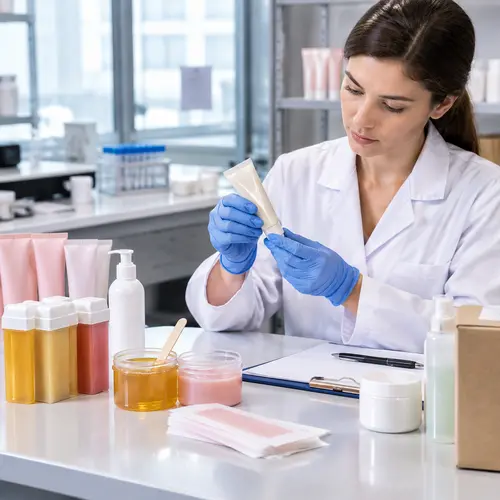
A useful test plan compares the filled product with a control sample kept in a neutral laboratory container. Look for color, odor, viscosity, texture, separation, weight loss, package swelling, cracking, stress whitening, cap distortion, seal failure, and label lifting. Include heat and cold storage, temperature cycling, light exposure when relevant, and a transport simulation that reflects the destination market. The supplier should record dates, conditions, sample identity, observations, and disposition rather than reporting only that the product passed.
Compatibility is not a substitute for a complete safety review. Confirm the intended use area, contact-time instructions, warning language, ingredient list, batch identification, net quantity, responsible-party information, and market-specific label documents. The [depilatory cream OEM](/depilatory-cream-oem-odm/) page is relevant when cream viscosity and pack selection must be developed together. For mild positioning, review [sensitive skin hair removal products](/sensitive-skin-hair-removal/) and ask how irritation risk is screened during sample approval.
ODM execution and launch control
Require one approval sample that represents the production formula, fill weight, closure, decoration, and carton or pouch. A component-only approval is incomplete. Request a BOM with component specifications, approved alternates, expected lead times, and ownership of tooling or artwork. Confirm what happens if a supplier changes resin, adhesive, liner, fragrance, or wax raw material. Any change should trigger a review rather than silently entering the next batch.
The [cosmetic filling and packaging process](/manufacturing-process/) should show how filling, sealing, coding, inspection, and shipment are controlled. For a creator launch, the supplier must also support visual consistency: color under studio lighting, texture on camera, clean opening, and an unambiguous use experience. A fast sample is valuable only when the sample can be reproduced at scale without re-engineering the formula.
For kits, connect the main item to the aftercare offer. A [post-depilation care OEM](/post-depilation-care-oem/) partner page can help buyers evaluate soothing gels or lotions that use compatible tubes, pumps, or sachets. If the concept includes a post-use serum, review the [hair inhibitor serum OEM](/hair-inhibitor-serum-oem/) option separately rather than assuming that one package specification fits every formula.
Decision Framework Table
| Factor | What to Check | Why It Matters | ODM Buyer Note |
|---|---|---|---|
| Formula contact | Ingredients, viscosity, oils, waxes, alkaline materials, fragrance, and all wetted surfaces | Contact can cause swelling, extraction, odor change, or loss of product performance | Approve the filled formula and final component together |
| Dispensing | Tube squeeze, pump prime, roller movement, jar access, strip release, and residue | Consumers judge quality through the first use | Test normal and cold-conditioned samples before locking the pack |
| Temperature and shipment | Heat, cold, cycling, vibration, orientation, seal integrity, and leakage | Storage and transport can expose failures that bench samples do not show | Use destination-specific conditions and retain inspection records |
| Appearance | Color, clarity, label adhesion, print durability, and camera-facing finish | Visual inconsistency can undermine a creator-led launch | Review samples under retail and studio lighting |
| Documentation | Ingredient list, batch coding, test records, artwork data, and change notification | Clear records support market entry and controlled production | Request the document list before placing the production order |
| Scale-up | MOQ, pilot quantity, component availability, tooling, and repeatability | A viral launch can expose capacity or component constraints | Ask how the same formula and pack move from pilot to larger batch |
Before signing off, consolidate the findings into a short product brief: formula format, target texture, package type, fill quantity, use area, storage conditions, test scope, labeling markets, and launch date. Send that brief with the [request a hair removal product quote](/contact-get-a-quote/) so the supplier can return a comparable BOM, sample plan, and production schedule. Buyers evaluating waxing formats can also compare [wax strips OEM](/wax-strips-hot-wax-oem/) capabilities, especially when pouch sealing and adhesive aging are central to the product promise.
ODM Manufacturing Considerations
Sample confirmation should establish a measurable reference for production, not simply record that the buyer liked the first sample. The approval record should identify color, fragrance level, texture, application behavior, removal performance, fill weight, container, closure, label stock, and any acceptable tolerances. Buyers should retain sealed reference samples from the approved lot and confirm which characteristics may vary slightly between batches.
Formula customization also needs a disciplined brief. For depilatory cream, specify the target body area, desired spread, removal time, fragrance direction, and viscosity range. For hard or soft wax, document the expected working temperature, melting behavior, flexibility, residue level, and hair-grip performance. Sugar wax briefs should define firmness at expected room and shipping temperatures. Changes to fragrance, color, botanical ingredients, or processing conditions may affect stability, irritation risk, and pack contact, so customized samples should be reviewed as complete filled products.
Packaging compatibility work should use the intended production components and decorations. Check seals, caps, liners, cartridge joints, printed surfaces, and label adhesives after heat and cold storage. The stability review should also track color shift, odor change, separation, weight loss, texture drift, and container deformation over defined intervals. Accelerated storage can reveal likely weaknesses sooner, but it does not replace real-time shelf monitoring.
MOQ discussions should separate formula MOQ, packaging MOQ, decoration MOQ, and the minimum quantity for each color or fragrance variation. Ask whether unused custom components must be purchased or stored and whether a future reorder requires the same minimum. A transparent BOM-style quotation should identify product fill, primary pack, printed materials, assembly, testing, export cartons, and estimated logistics costs.
Before production, confirm the labeling documents the supplier will provide, including the ingredient list, batch coding format, net-content information, warning language, directions, and available safety records. Market-specific review remains the brand owner’s responsibility. Shipment terms should define carton configuration, pallet use, temperature precautions, leakage inspection, export documents, and responsibility for damage. Buyers can compare these capabilities with the supplier’s OEM and ODM services and documented manufacturing process.

Common Problems or Failure Cases
Wax becomes brittle or cracks. A wax that performs well in a warm sampling room may fracture after cold storage or winter transit. Buyers should evaluate flexibility, breakage, and application behavior across the expected shipment and use temperatures. The corrective action may involve adjusting the formula, fill conditions, or shipment protection.
Wax strips lose adhesion. Heat, pressure, liner selection, or extended storage can reduce grip or cause adhesive migration. Inspection should include strip separation, application to the intended body area, hair pickup, residue, and performance after temperature exposure. The final retail carton should also protect strips from compression and excess heat.
Depilatory cream separates or changes viscosity. Separation, thinning, thickening, or gas formation can affect dosing and consumer confidence. Review filled packs at multiple storage conditions and compare appearance, odor, spread, dispensing force, and net weight over time. A package that admits moisture or allows volatile components to escape can make a stable bulk formula perform differently on the shelf.
Roll-on cartridges leak or stop dispensing evenly. Leakage can originate at the cap, roller fit, neck, or cartridge seam. Uneven rolling may appear only after cooling, reheating, or repeated use. Test upright, inverted, and side storage, then assess flow and closure cleanliness after transport simulation.
Fragrance creates sensitivity complaints. A strong scent can support a distinctive brand concept but may increase irritation concerns, especially when used with active hair-removal products. Buyers should request a fragrance-level review, appropriate ingredient documentation, clear directions, and a patch-test statement where suitable for the market.
Packaging deforms in transit. Jars, cartridges, caps, or cartons may warp under warehouse heat or crushing pressure. Confirm outer-carton strength, case count, internal spacing, and maximum storage conditions before shipment. Do not approve packaging based only on an undamaged presentation sample.
Supplier Checklist
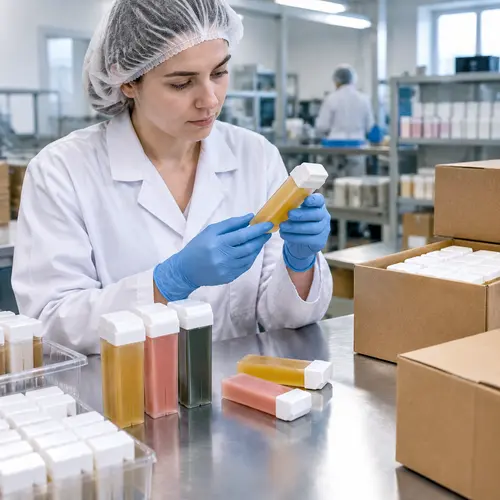
- Request hair-removal-specific samples that match the proposed formula, fill process, and final packaging.
- Define measurable approval criteria for texture, color, fragrance, viscosity or melting range, application, removal, residue, and fill weight.
- Ask for the compatibility and stability plan, storage temperatures, review intervals, acceptance limits, and final report format.
- Confirm irritation-risk review, ingredient documentation, batch records, traceability, and the process for handling complaints or suspected defects.
- Verify formula, component, printing, and variant MOQs separately, including charges for molds, artwork setup, storage, or unused materials.
- Review primary packaging seals, leakage performance, label adhesion, print durability, and deformation after heat, cold, and shipment stress.
- Confirm whether a seven-day sample timeline means an existing base sample or a fully customized and packaged sample.
- Request labeling files and market documents early enough for review before artwork is printed.
- Define shipment conditions, carton specifications, inspection level, loading method, and evidence required before release.
- Ask how approved specifications are transferred to production and how substitutions or deviations are communicated.
A credible evaluation should connect the supplier’s available hair-removal product range with documented capabilities, realistic lead times, and clear commercial assumptions.
FAQ
How can I prevent a factory from using my idea or formula for another brand?
Use a mutual confidentiality agreement, define ownership of custom work in the development contract, and limit access to sensitive files. Ask whether the formula is exclusive, semi-custom, or based on a shared platform. Record who owns test results, artwork, molds, and modifications, and specify what happens when the relationship ends.
How do I know whether the sample will look right on camera?
Give the supplier a visual brief with target color, opacity, shine, stretch, spread, and removal behavior under your actual lighting. Review video as well as still images, then approve a physical sample. Camera appearance should remain secondary to safe use, stable production, and accurate consumer expectations.
Can quality control guarantee that followers will never have a bad reaction?
No supplier can guarantee zero reactions. Risk can be reduced through ingredient review, controlled production, packaging and stability checks, clear warnings, traceable batch records, and appropriate consumer directions. The brand should also maintain a complaint process that can identify the affected batch and support a prompt investigation.
What should I approve before paying a production deposit?
Approve the formula specification, physical sample, packaging components, artwork, MOQ, unit price, testing scope, lead time, shipment terms, and responsibility for rejected goods. Any item still described as subject to availability should be resolved or documented as an approved alternative.
Does an accelerated review prove the full shelf life?
No. It provides early evidence about likely changes under controlled stress. Shelf-life decisions should also consider real-time observations, the product’s intended storage conditions, pack performance, and retained samples from production batches.
What documents should arrive with the finished order?
The agreed file set may include an ingredient declaration, batch identification, finished-product specification, test summary, inspection report, packing list, commercial invoice, carton details, and origin or market-specific documents when applicable. Confirm the list before production because requirements vary by destination.
References
- FDA Summary of Cosmetics Labeling Requirements for general United States cosmetic label elements and warning considerations.
- Health Canada cosmetics guidance, including access to ingredient restrictions and notification information relevant to products sold in Canada.
- The COSMOS organic and natural cosmetics standard for buyers planning supported organic or natural positioning.