Direct Answer
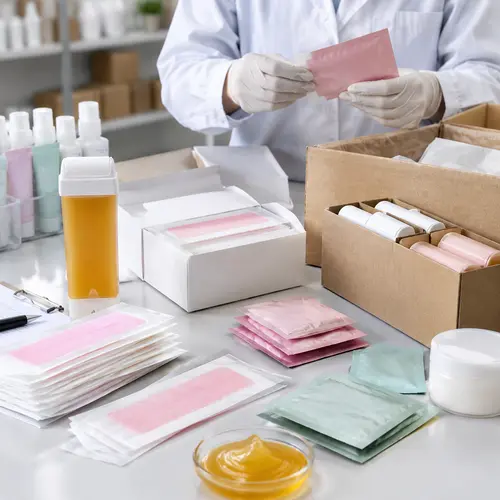
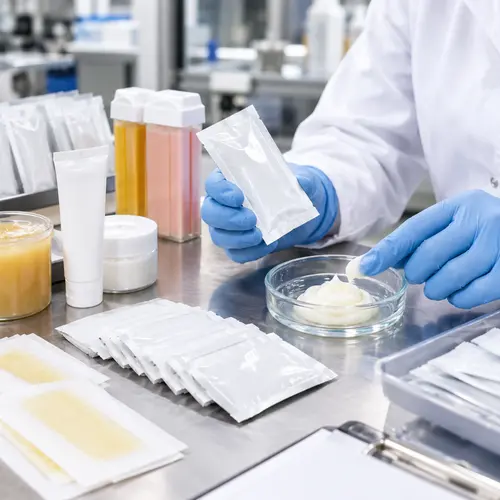
Single use hair removal sachets are most effective when they are treated as a product system, not simply a smaller package. For private-label brands, a sachet can place a measured dose of depilatory cream, post-removal care, or a compatible wax product into a sampling, travel, or starter-kit format with low consumer commitment and strong shelf visibility. The right format depends on the formula, application area, expected use amount, seal performance, and launch market.
For a DTC or creator-led brand, sachets make it easier to test a new removal concept before committing to a larger SKU. They can support influencer seeding, subscription boxes, salon trials, and first-order kits. However, the sample must behave like the future retail product. Texture, fragrance, skin feel, contact time guidance, packaging compatibility, and labeling should be reviewed before production. A sachet that leaks, separates, or delivers too little cream can create a poor first impression even when the underlying formula performs well.
The practical starting point is a controlled sample brief: target formula, use area, dose, sachet material, storage conditions, artwork requirements, and intended sales channel. This gives an ODM partner enough information to evaluate filling, sealing, testing, and future scale together.
Key Takeaways for Private Label Buyers
- Choose the sachet around the formula. A thick depilatory cream, fluid aftercare gel, sugar wax, and roll-on wax require different filling and seal reviews.
- Use one measured dose for one clearly defined use case. Face, underarm, leg, and bikini-area concepts should not share assumptions about quantity or instructions.
- Review the complete packaging system, including film layers, seal width, tear notch, print surface, and resistance to oils, fragrance, water, and active ingredients.
- Request samples filled with the intended formula, not only empty packaging mockups. Texture and leakage decisions are more reliable after filling.
- Check heat, cold, transport, and aging conditions before approving a large run. A sachet that passes on a workbench may fail after shipment.
- Use sampling to validate the launch story: visual texture, ease of opening, application feel, and inclusion in a starter kit should all support the brand positioning.
Buyer Context
Sachets solve a specific commercial problem: how to let a customer experience a removal product without asking for the price, storage space, or commitment of a full-size pack. This is valuable for overseas creator brands that already have audience reach but need a low-friction way to validate demand.
For a depilatory cream, the sachet can introduce a new scent, texture, or sensitive-skin positioning through influencer mailers and first-purchase bundles. For wax strips, a compact pack can serve as a travel add-on or a trial inside a larger waxing kit. Sugar wax and roll-on wax formats may require more careful temperature and handling review, but a small complementary sample can still help demonstrate the overall hair removal routine.
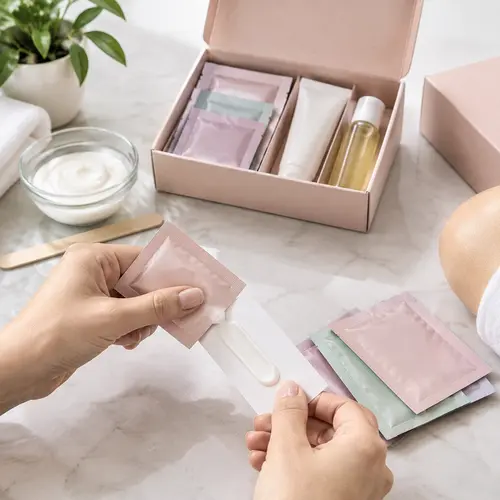
Aftercare is another useful application. A soothing gel or calming lotion sachet can be included after waxing or cream removal, creating a more complete starter kit and giving the customer a reason to continue the routine. This also helps a brand test whether the customer values a single removal product or a two-step system.
The buyer decision is therefore not only about unit cost. It is about trial conversion, perceived quality, content potential, and operational risk. Sachets can support short-form video because the opening, dispensing, spreading, and wipe-off moments are easy to show. The effect should remain natural and credible: the visual result must come from the product texture and use experience, not exaggerated claims.
Brands comparing options can review hair removal product solutions by use case, then compare hair removal OEM ODM services for sampling, packaging, and scale-up support. A clear product brief also makes it easier to request a request for a hair removal product quote with the same specifications sent to each supplier.
For a founder preparing a wider range, the relevant categories may include custom depilatory cream formulation, post-depilation care OEM, and custom wax strips and hot wax. Keeping these options within one development conversation reduces rework between the sample and the future retail assortment.
Market positioning should also be grounded in current beauty demand rather than assumptions. Buyers can monitor Business of Fashion beauty intelligence for category direction, while reviewing the FDA resource on how cosmetics are regulated in the United States when planning claims and market entry.
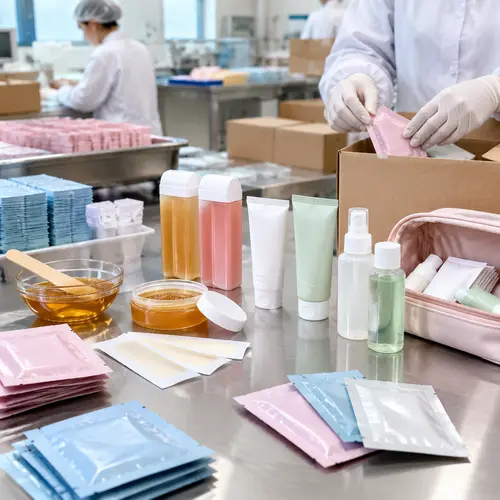
For production planning, the hair removal manufacturing process should show how sample filling, seal inspection, packaging, quality checks, and shipment preparation connect. A credible supplier should be able to explain what remains unchanged when the trial moves toward a larger run.
Technical and Packaging Factors
Formula and dose
The first check is viscosity. A cream that is too thick may not fill consistently through a narrow sachet opening; a thin formula may migrate into the seal area and create weak seals. The target dose should be defined by use area and application method. A leg sample may require more product than a small underarm or upper-lip trial, so one universal sachet size can create either waste or an under-dosed experience.
For depilatory cream, review spreadability, contact-time instructions, fragrance strength, rinse behavior, and the irritation-risk review for the intended area. Do not position a general body formula as a face or sensitive-area product without a separate suitability review. For aftercare, check whether the gel or lotion remains stable and easy to dispense after exposure to heat and cold.
Material and sealing
Sachet film should be selected against the actual ingredients, not only the artwork. Oils, fragrance components, alkaline systems, and water-rich formulas can interact differently with film layers, inks, and seal coatings. Confirm seal strength, pinhole resistance, tear behavior, and whether the notch opens cleanly without spraying product onto the user.
Ask for filled packaging samples. Inspect the sachet after opening, squeezing, folding, and carrying in a pouch. Look for seepage around the seal, ink scuffing, odor transfer, swelling, or formula separation. For a starter kit, also check whether the sachet slides out of the outer pack, whether the print remains legible, and whether multiple sachets increase the chance of friction damage during shipment.
Storage and shipment
Heat and cold can change cream viscosity, wax flow, seal performance, and the customer’s first-use experience. The supplier should define the proposed storage range and review samples after temperature exposure relevant to the destination market. Roll-on wax and sugar wax need particular attention because their flow and dispensing behavior can change during transport.
Shipment conditions matter even for a small pack. Confirm carton configuration, sachet orientation, protection from crushing, and whether the product will travel with heavier items. Record the batch identification, filling date, shelf-life support, ingredient list, usage directions, warnings, and market-specific label files before release.
Decision Framework
| Factor | What to Check | Why It Matters | ODM Buyer Note |
|---|---|---|---|
| Formula texture | Viscosity, spread, dispensing, residue, and rinse behavior | Controls dose consistency and the customer’s first impression | Test filled sachets with the final formula, not a substitute base |
| Use case | Body, face, underarm, bikini area, waxing, or aftercare | Each area has different dose and irritation-review needs | Use separate instructions and positioning where the use case changes |
| Packaging compatibility | Film layers, seal strength, notch, ink, and ingredient contact | Reduces leakage, migration, odor, and opening failures | Request a filled compatibility sample and a seal inspection record |
| Storage and transport | Heat, cold, compression, vibration, and shipment duration | Protects texture, seals, and appearance after distribution | Review samples after destination-relevant handling conditions |
| Launch scope | Sample quantity, artwork, label files, carton format, and replenishment plan | Prevents a successful trial from becoming an operational delay | Ask whether the pilot can scale from 1,000 units without changing the formula or pack |
A disciplined supplier conversation should end with a written sample scope: formula version, sachet dimensions, target fill weight, material proposal, artwork status, tests, label documents, storage guidance, shipment conditions, and next approval point. Buyers can use a hair removal OEM manufacturer as a starting point for category review, then use hair removal product guides to compare cream, wax, and aftercare decisions before finalizing the kit.
For brands that want a mild positioning, review sensitive skin hair removal products separately rather than treating a smaller pack as automatically gentler. A sachet changes the quantity and convenience of use; it does not remove the need to assess the formula, instructions, packaging, and intended skin area.
ODM Manufacturing Considerations
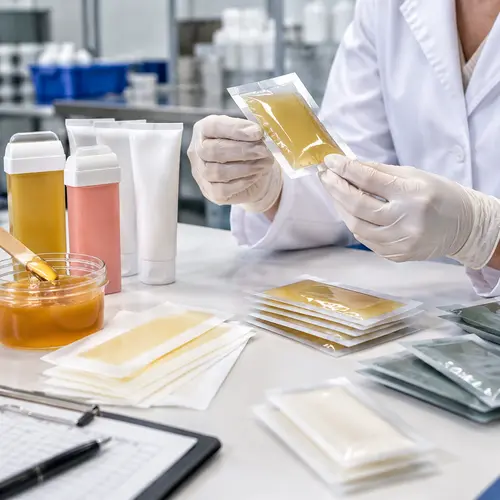
For single use hair removal sachets, the first production decision should be based on an approved sample rather than a concept description alone. Ask the supplier to confirm the exact cream texture, wax spread, strip tack, fragrance level, color, fill weight, and intended use area in a written sample record. A reference sample should remain available for comparison during later production reviews.
Formula customization may involve changing the removal strength, scent profile, color, viscosity, melting behavior, or aftercare feel. Each change can affect packaging performance and consumer experience. For depilatory cream, review separation, odor, skin feel, and removal consistency. For sugar wax or standard wax, review spreadability, brittleness, melting behavior, and clean pickup. A supplier should explain which requested changes are practical, which require additional testing, and which could increase irritation risk.
Packaging compatibility should be checked with the finished formula, not with an empty sample pouch or cartridge. Cream sachets need a film structure that tolerates the formula and seals consistently. Wax strips need packaging that protects adhesion without allowing excessive heat exposure during transport. Roll-on wax cartridges should be checked for cap fit, valve behavior, leakage, and clean dispensing after storage and handling. Include aftercare gel or lotion sachets in the same review when they are part of the starter kit.
A useful stability review compares the product after defined storage conditions and shipment handling. Buyers should request records for appearance, odor, viscosity, adhesion, wax brittleness, separation, leakage, and package deformation. The review should also state the tested batch size, test duration, packaging format, and acceptance criteria. This makes it easier to distinguish a formula problem from a film, seal, closure, or transport problem.
MOQ and sample scope should be separated in the quotation. Confirm whether the supplier can provide formula samples, filled sachet samples, printed packaging samples, assembled starter kits, and shipment-ready cartons. Ask for a clear cost breakdown covering formula development, packaging setup, printing, filling, testing, documentation, and freight. A transparent BOM helps a private-label buyer compare options without confusing development charges with the recurring unit cost.
Labeling documents should match the actual formula and package. Request the ingredient declaration, net contents, batch or lot identification method, use directions, warnings, storage wording, shelf-life support, and country-of-destination requirements. Depilatory products intended for the face, bikini area, or other sensitive zones should have use limitations stated clearly. The FDA guidance on cosmetic authority and labeling responsibilities is a useful reference for brands selling into the United States.
Shipment conditions should be agreed before the purchase order. Define carton dimensions, pallet or parcel handling, protection from excessive temperature, leak inspection, and the process for documenting transit damage. For a campaign-led brand, the supplier should also explain available production windows and how capacity is allocated when an order increases after launch.
Review the supplier’s OEM and ODM service scope alongside its manufacturing process documentation. The goal is to see whether the team can translate a content idea into a repeatable product and package specification.
Common Problems or Failure Cases
Wax brittleness: A strip or sugar wax sample may look acceptable in the factory but crack during use if the wax balance, coating weight, or storage exposure is unsuitable. Check whether the wax bends, lifts hair evenly, and leaves excessive residue after the intended conditioning period.
Loss of strip adhesion: Wax strips can lose tack when the adhesive surface contacts unsuitable inner packaging, absorbs moisture, or experiences excessive temperature exposure. Compare adhesion before and after shipment simulation, and inspect whether the strip separates cleanly without tearing.
Cream separation: A depilatory cream may show liquid release, color change, graininess, or an uneven odor after storage. Do not approve a visual sample only. Ask for filled-package observations and confirm that the dose remains consistent from the first sachet to the last.
Cartridge leakage: Roll-on wax can leak through a loose cap, imperfect valve, weak seal, or distorted body. Test cartridges upright and on their side, then inspect the cap, roller, outer carton, and adjacent units. Leakage after transport should be treated as a package-system failure, not only a filling issue.
Fragrance sensitivity: A strong fragrance may perform well in a social video but become a complaint trigger during real use. Review fragrance intensity on application, after removal, and after rinsing. Ask whether an unscented or lower-fragrance version can be sampled without changing the intended removal performance.
Packaging deformation: Sachets can wrinkle, swell, delaminate, or lose print clarity when the film is poorly matched to the formula or exposed to rough handling. Require a visual inspection standard and photograph-filled samples before approving a larger run.
Supplier Checklist
- Confirm that the supplier has recent experience with depilatory cream, wax strips, sugar wax, roll-on cartridges, or aftercare sachets relevant to your product.
- Approve a retained reference sample covering texture, color, scent, dose, spread, adhesion, and removal result.
- Request formula customization limits and an irritation-risk review for the intended body area.
- Verify packaging compatibility using filled, sealed samples rather than empty packaging.
- Check viscosity or melting behavior where relevant, plus wax flexibility, cartridge dispensing, and cream separation.
- Ask for stability observations, leakage checks, package deformation checks, and shipment-condition assumptions.
- Separate sample charges, setup charges, testing charges, packaging costs, and recurring unit pricing.
- Review ingredient, label, warning, batch, shelf-life, and destination-market documents before artwork approval.
- Confirm MOQ, sample quantities, repeat-order terms, production capacity, and the process for handling sudden demand.
- Assess whether the account manager understands launch timing, creator content, visual requirements, and consumer objections.
FAQ
How can I protect my formula and product idea when working with an overseas ODM supplier?
Use a signed confidentiality and ownership agreement before sharing final formula targets, artwork, or campaign concepts. Define who owns custom formula work, packaging artwork, samples, molds or tooling where relevant, and production records. Ask the supplier to confirm that the same custom specification will not be offered to another brand without written permission. Documentation will not remove every commercial risk, but it creates a clear basis for enforcement and supplier accountability.
Can the sample have the dramatic texture or color needed for social media content?
It can, but visual impact must remain compatible with safe use and repeatable production. Give the supplier a written visual brief covering color, foam or spread appearance, gloss, thickness, and how the product should look on camera. Request both a camera-ready sample and a normal-use sample, then confirm that the appearance remains stable after filling, storage, and transport.
How can I reduce the risk of customers experiencing severe irritation?
Start with conservative use-area instructions, clear warnings, a defined contact time, and a review of fragrance and other potentially irritating ingredients. Require batch records, retained samples, complaint handling, and a documented release inspection. No supplier can promise zero reactions, so the brand should also use appropriate consumer directions and avoid marketing claims that encourage extended contact or use on unsuitable skin.
What if I do not understand chemical ingredients or manufacturing terminology?
Ask the account manager to convert your marketing brief into measurable product requirements: removal time, texture, scent strength, color, target area, package size, and visual result. A capable team should explain tradeoffs in plain English and return a written specification for approval. Communication quality is a supplier qualification factor, especially when the product is designed around creator content.
Can a supplier support a sudden order increase after a video performs well?
Ask for a capacity statement before launch, including available filling lines, packaging lead assumptions, material reservation options, and how urgent replenishment is prioritized. Also request a staged forecast and an approved alternate pack format if the preferred package becomes constrained. The supplier should state what happens when demand exceeds the original estimate instead of offering an open-ended promise.
What should I do if the first sample looks good but the production batch does not?
Compare the batch against the retained reference sample using agreed criteria for texture, color, scent, fill, adhesion, leakage, and package appearance. Photograph the issue, record lot information, and pause release of affected stock while the supplier investigates. Your purchase terms should define correction, replacement, credit, or rework options before production begins.