Direct Answer
A factory-ready hair removal formula brief translates a brand idea into measurable product requirements. It should define the removal format, target user, treatment area, application time, texture, visual behavior, packaging, market, claims, test plan, target cost, order volume, and launch date. Replace subjective requests such as ‘gentle but powerful’ with priorities a factory can sample and compare: easy spreading, complete rinse-off, controlled wax pickup, low residue, or a camera-visible color change.
The brief does not need to prescribe every ingredient. It needs to establish what success looks like and which tradeoffs are acceptable. A useful first version fits on one or two pages, links visual references, and separates non-negotiable requirements from preferences. Send it through a structured hair removal product RFQ, then ask the ODM to return a feasibility review, sample scope, itemized BOM, test plan, documentation list, and production timeline.
Key Takeaways for Private Label Buyers
- Choose the format first. Depilatory cream, wax strips, sugar wax, hot wax, roll-on wax, and aftercare each require different performance checks and filling equipment.
- Define visible proof. Specify spread, stringing, peel, pickup, residue, rinse-off, and camera appearance instead of relying on mood-board language alone.
- Match formula and pack early. A stable bulk formula can still leak, discolor, clog, soften labels, or lose fragrance in the selected package.
- Set a sample decision gate. Request a target such as a seven-calendar-day first sample, but confirm what is included and which tests remain incomplete at that stage.
- Review safety and claims together. Treatment area, contact time, directions, warnings, and market-facing claims must agree before artwork is released.
- Price the complete SKU. Compare formula, primary pack, decoration, carton, testing, documents, freight assumptions, and MOQ rather than the fill price alone.
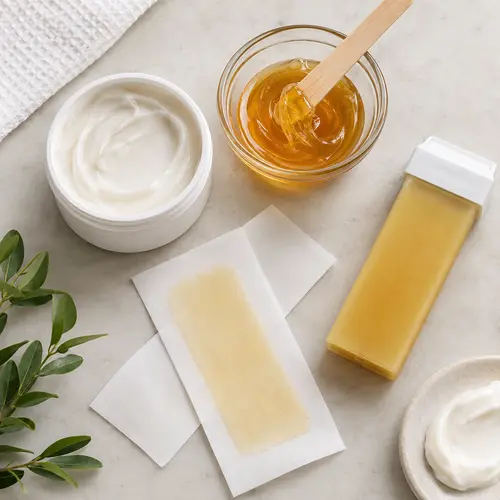
Buyer Context
Creator-led brands often begin with a visual moment: a cream that spreads in one clean pass, a sugar wax with a distinctive pull, or wax strips that look polished in a short demonstration. A factory cannot reliably reproduce that concept from a video reference alone. Lighting, editing, room temperature, application thickness, hair type, and technique can all change what viewers see.
The brief creates a shared acceptance point. For a depilatory cream, it might prioritize even coverage, controlled odor, clean removal within the labeled contact window, and fast rinse-off. For strips, the core questions are adhesive transfer, backing flexibility, grip-tab usability, hair pickup, and performance after warm storage. For roll-on wax, flow at the intended operating temperature matters alongside cartridge fit and cap leakage. Buyers comparing depilatory cream OEM options or private label waxing products should therefore request format-specific evidence.
This discipline also protects the launch calendar. A creator can plan content around an approved texture and pack rather than discovering after artwork that the formula needs a different tube, cartridge, or application method. A capable partner should explain these dependencies in commercial language through its hair removal OEM ODM services, with decisions, owners, and due dates visible.
Technical and Packaging Factors
Define Performance at the Point of Use
State the body area, expected hair profile, application thickness, contact or heating instructions, removal method, and finish after use. A face product should not inherit assumptions from a body cream. A sensitive-positioned product needs an explicit irritation-risk review, conservative directions, and a clear patch-test statement. Use the supplier’s sensitive skin hair removal products experience to discuss feasible positioning without promising zero irritation.
For each sample, record ambient conditions and use the same evaluation method. Score spreadability, drip, stringing, odor, removal completeness, residue, rinse feel, and visible redness. Capture unedited footage under agreed lighting. This turns a subjective texture discussion into comparable sample feedback while preserving the social-media concept.
Set Formula Control Points
Ask the ODM to propose a production control range for pH, viscosity, appearance, odor, and fill weight where relevant. The target must come from the selected formula and pack, not from a generic internet specification. Depilatory cream needs particular attention to active-system performance over time, while wax products need defined softening, melting, application, and pickup behavior. Sugar wax requires repeatable firmness across room-temperature variation.
Aftercare should be briefed as part of the routine rather than as an unrelated add-on. Define whether the desired output is a cooling gel, light lotion, or oil-residue remover, then assess the post-depilation care OEM options against the same target market and kit dimensions.
Qualify the Package With the Formula
List the primary package material, closure, applicator, decoration, net contents, and secondary pack. For tubes, review seal integrity, dispensing force, cap fit, and panel distortion. For wax jars, assess heat exposure, lid seal, and product migration. For roll-on cartridges, check roller movement, housing deformation, cap retention, and leakage in upright, inverted, and side storage.
A practical screening plan may include storage at 5 C, 25 C, and 40 C, three freeze-thaw cycles, and a 12-week accelerated review, followed by real-time monitoring. These are planning examples, not universal release criteria. The ODM should set conditions based on the formula, package, destination climate, and shipment route. Confirm checkpoints for appearance, odor, viscosity, pH where applicable, leakage, label adhesion, and weight loss. The complete hair removal manufacturing process should identify who approves bulk, filling, packed goods, and shipment release.
For US launches, review obligations under the Modernization of Cosmetics Regulation Act (MoCRA) of 2022. The FDA also explains cosmetics under US law and clarifies that cosmetics are generally regulated rather than preapproved in FDA authority over cosmetics. Claims, warnings, ingredient naming, responsible-party details, and supporting records should be reviewed before print approval.

Decision Framework
| Factor | What to Check | Why It Matters | ODM Buyer Note |
|---|---|---|---|
| Product format | Body area, hair profile, application, removal, and after-feel | Determines the formula platform, equipment, directions, and test method | Ask which baseline can be custom-adjusted without restarting development |
| Camera-ready texture | Spread, drip, pull, stringing, color, opacity, and residue | The demonstration must remain credible outside controlled studio conditions | Approve with unedited footage and a physical sample |
| Safety and claims | Contact time, warnings, patch-test language, treatment area, and claim support | Misaligned claims or directions create avoidable consumer and listing risk | Request the market-specific label document set before artwork lock |
| Package compatibility | Seal, closure, dispensing, cartridge flow, leakage, decoration, and label adhesion | Formula-pack interaction can fail after a successful bench sample | Test the intended component, not a temporary sample jar |
| Storage and shipment | Heat, cold, cycling, orientation, packed-case protection, and destination climate | Wax behavior and package integrity can shift in transit | Define shipment conditions and acceptance limits in the contract |
| Commercial fit | Sample rounds, MOQ, itemized BOM, tooling, freight estimate, and reorder lead time | A low fill quote may conceal the true landed cost or launch risk | Compare pilot and scale pricing on the same specification |
Use the table as the approval spine for the brief. Supporting education from hair removal product guides can help founders prepare questions, while a depilatory product development solutions review can map the concept to a viable format. The final output should make sample approval binary: each requirement is accepted, revised, or deferred with a named consequence.
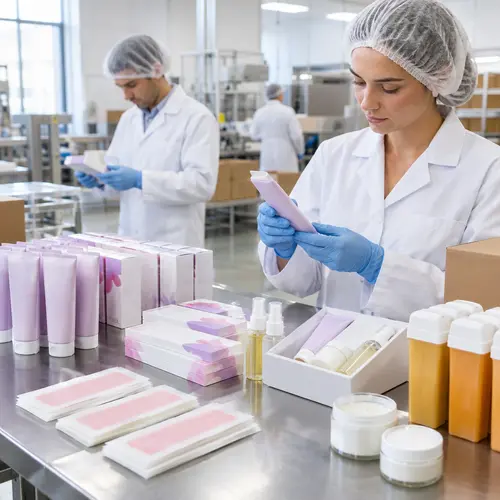
ODM Manufacturing Considerations
At the ODM stage, the hair removal formula brief becomes a controlled record of what the buyer approved and what the factory must reproduce. It should identify the sample code, revision date, intended removal area, application method, target use time, texture, color, fragrance, claims, fill weight, package, and target market. Keep one signed reference sample with the supplier and one with the buyer.
Confirm samples against measurable limits. Approval should include more than general comments such as ‘smooth’ or ‘strong.’ For a depilatory cream, record a viscosity range, application thickness, odor limit, removal time, and rinse feel. For wax or sugar wax, define the acceptable melting point or working-temperature range, firmness, residue level, and usable working time. A custom facial-use formula may require different irritation-risk limits and directions than a body-hair product.
Control customization by revision. Every change to fragrance, pigment, active level, wax blend, or aftercare component should receive a new sample code. Ask the supplier to explain which performance attributes may shift after each change. Review relevant options through the hair-removal product categories and document whether the final item is based on an existing core formula or developed as a more extensive custom formulation.
Confirm the filled package. Evaluate the actual production-intent tube, strip pouch, wax container, or roll-on cartridge rather than approving formula and packaging separately. Check closure fit, wall softening, label lifting, product discoloration near contact surfaces, evaporation, and dose consistency. Decorative finishes should remain legible after exposure to the formula and expected handling.
Set review points before production. Stability work should track appearance, odor, texture, viscosity or hardness, weight change, and package condition under the temperature exposures relevant to the sales market. Define who reviews results, what variation is acceptable, and whether production can begin before every planned time point is complete. This prevents an informal approval from being treated as a final release decision.
MOQ should be separated into formula-batch MOQ, packaging MOQ, decoration MOQ, and finished-goods MOQ. Request a line-item BOM quotation, tooling or setup charges, sample scope, overrun allowance, and estimated freight basis. Labeling files should include the ingredient declaration, net contents, directions, warnings, lot-code format, responsible-party details, and supporting product specifications. For the United States, applicable duties under the Modernization of Cosmetics Regulation Act of 2022 should be assigned clearly. FDA also explains that cosmetics are generally not preapproved before marketing, apart from specific requirements such as those for color additives. Shipment terms should state carton quantity, pallet configuration, temperature sensitivities, dangerous-goods status when relevant, destination conditions, and responsibility for freight damage.

Common Problems or Failure Cases
- Brittle wax: A wax performs acceptably at the factory but cracks in a cooler market. The brief lacked a low-temperature flexibility limit or defined warming instructions.
- Strip adhesion loss: Wax migrates into the backing or releases unevenly after storage. Possible causes include an unsuitable wax coat weight, backing material, pouch barrier, or storage environment.
- Cream separation: Oil release, thinning, or graininess appears later. Common contributors include fragrance changes, raw-material variation, unsuitable viscosity limits, or excessive heat exposure.
- Cartridge leakage: Product escapes around the roller or cap during transit. The fill temperature, headspace, closure tolerance, and wax expansion behavior may not have been aligned.
- Fragrance sensitivity: A strong fragrance supports the brand concept but increases discomfort complaints. Compare fragranced and fragrance-free samples and document the intended application area.
- Package deformation: A tube, jar, or cartridge panel warps or loses print quality. This may result from hot filling, warehouse heat, formula contact, or carton compression.
These failures are easier to resolve when the supplier records root cause, affected lots, corrective action, and the exact formula or packaging revision instead of simply replacing samples.
Supplier Checklist
- Does the supplier have documented experience with the specific cream, wax, strip, cartridge, sugar wax, or aftercare format?
- Can it provide batch records, product specifications, ingredient documentation, lot traceability, and release results?
- Are viscosity, melting point, hardness, color, odor, fill weight, and removal performance defined where relevant?
- Does the sample quotation state included revisions, sample quantities, freight, and ownership of special development work?
- Are formula, packaging, printing, and finished-goods MOQs disclosed separately?
- Can the supplier show how approved samples transfer into routine manufacturing and quality-control steps?
- Are irritation-risk review, directions, warnings, claims support, and target-market labeling responsibilities assigned?
- Does the capacity plan disclose normal output, peak-season constraints, component lead times, and backup scheduling?
- Does the quotation include BOM detail, shipment assumptions, testing charges, and likely logistics costs?
- Can the contact person translate a social-media concept into measurable texture, color, application, and removal criteria?
A structured OEM/ODM service scope should answer these questions before deposit, artwork release, or bulk material purchasing.
FAQ
How can I reduce the risk of a factory reusing my idea or formula?
Use a signed confidentiality agreement, define ownership of custom work in the manufacturing contract, restrict subcontracting, and keep dated formula-brief revisions. Distinguish the supplier’s existing base formula from buyer-funded modifications. Absolute secrecy cannot be guaranteed, but clear ownership, access controls, and enforceable terms reduce ambiguity.
Can a sample deliver the exaggerated texture and color needed on camera?
Possibly, but approve the effect under your actual lighting, application quantity, background, and filming distance. Give the supplier reference footage and measurable color or texture targets. A dramatic visual should not compromise removal performance, skin contact, package function, or realistic consumer use.
Can quality control guarantee that no customer will have a bad reaction?
No responsible supplier can promise zero reactions. Risk can be reduced through raw-material controls, irritation-risk assessment, appropriate use directions, warnings, batch release checks, traceability, and complaint handling. The brand should also avoid unsupported claims and clearly identify unsuitable use areas.
What should be included in an ODM sample approval?
Record the formula code, sample date, appearance, odor, texture, viscosity or melting range, application amount, removal time, residue, package components, and approved artwork direction. Both parties should retain matching approval records.
Why can finished-goods MOQ differ from packaging MOQ?
Formula tanks, printed components, cartons, and filling lines have different minimums. A low finished-goods run may still require purchasing excess cartridges, pouches, or labels. Ask who owns and stores unused materials and when they expire.
What shipment information should be agreed before production?
Confirm Incoterms, carton dimensions, gross weight, pallet requirements, destination climate, storage limits, insurance responsibility, inspection timing, and treatment of damaged or leaking goods. Freight estimates should identify whether duties, destination fees, and special handling are excluded.