Direct Answer
Effective wax jar packaging starts with the wax itself, not the label design. For salon use, the jar must support repeated opening, clean dispensing, heat exposure, and quick identification at the workstation. For retail, it must protect the texture during shipment, prevent leakage, communicate the use case clearly, and create a strong first impression on a shelf or product page.
The best design balances four variables: formula compatibility, filling and sealing performance, channel-specific usability, and visual identity. A sugar wax balm, hot wax, hard wax, and depilatory cream will not place the same demands on the container. Before choosing a jar, an ODM partner should review the texture, softening or melting behavior, viscosity, closure, inner seal, storage conditions, and labeling requirements together. This prevents a common failure: approving a beautiful jar during sampling, then discovering separation, lid contamination, cracking, or leakage after filling.
For a creator-led brand, the practical goal is simple: create a jar that looks distinctive on camera, works reliably in real customer hands, and can move from pilot batch to repeat production without re-engineering.
Key Takeaways for Private Label Buyers
- Choose the container after reviewing the wax texture, filling temperature, melting behavior, and viscosity—not from a catalog image alone.
- Use salon and retail requirements as separate briefs: salons prioritize speed and repeat access, while retail prioritizes tamper evidence, portability, and shelf communication.
- Test the jar, liner, lid, label adhesive, and formula as one packaging system through heat, cold, transport, and leakage checks.
- Ask for a clear BOM covering jar material, closure, seal, decoration, filling, cartons, sampling, and tooling where applicable.
- Approve a production-equivalent sample before launch so color, texture, fill level, and label placement match the final batch.
Buyer Context
Wax jar packaging matters because hair-removal products are handled differently from many other beauty products. A salon may open the same jar throughout a working day, use a spatula repeatedly, and store the product near a wax warmer. A retail customer may receive the jar in a parcel, leave it in a bathroom, and judge the product within seconds of opening the carton.
The product range also changes the packaging decision. Sugar wax and soft wax often need a wide mouth for easy scooping. Hard wax beads may be filled into a jar that must tolerate controlled warming before use. Depilatory cream generally requires a clean, stable seal and a closure that limits accidental contact with the formula. Roll-on wax cartridges need a different package format, while wax strips depend on pouch protection and adhesive aging rather than a jar. Aftercare gels and lotions can be added to a kit, but their closures and compatibility checks should remain separate from the wax review.
This is why an experienced hair removal OEM ODM services partner should begin with the intended channel, use instructions, target market, and content concept. A creator may want a translucent jar that shows a honey-colored texture on video. A salon distributor may prefer an opaque, stackable container with a large working label. Both can be valid, but they lead to different choices in material, decoration, and cost.
For a broader product roadmap, review hair removal product solutions and compare the jar with wax strips, hot wax, and post-depilation formats. This avoids designing one package in isolation from the future range.
Technical or Packaging Factors
1. Match the jar to the formula
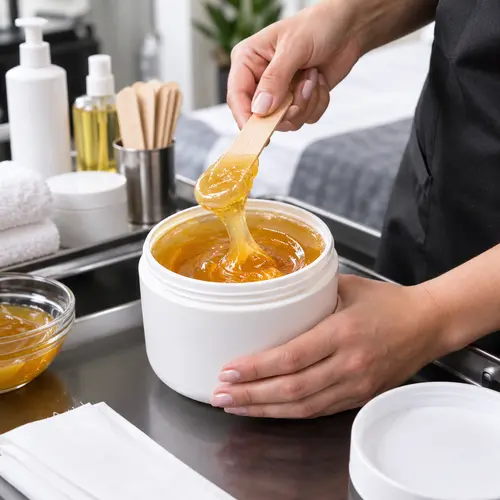
Start by documenting the formula’s texture at filling and at intended use. A firm wax balm may need a wide opening and a rigid wall. A softer sugar wax may require a stronger seal because movement and heat can increase the risk of seepage. A cream can interact with certain plastics, adhesives, or elastomer liners over time. The supplier should confirm the selected material through a packaging compatibility review rather than relying on general industry assumptions.
Ask for a sample filled with the actual formula. Check whether the product leaves an oily film on the lid, pulls the liner away during opening, stains the jar wall, or changes texture near the shoulder. For a social-first launch, review the product under natural light and video lighting. Color consistency, visible inclusions, and scoop behavior may become part of the product’s marketing value.
2. Design for salon handling
A salon jar should be easy to identify and open with gloves or wet hands. A broad shoulder, stable base, and readable top label can improve workflow. The closure should provide enough torque resistance to prevent accidental opening without becoming difficult to remove between appointments. If the product is warmed, the supplier should assess the jar, lid, liner, and decoration after exposure to the intended operating conditions.
Do not assume that a larger jar is automatically better for salons. A wide opening can improve access but also increases the exposed surface area during use. The final design should balance dispensing speed, contamination control, fill weight, and storage efficiency.
3. Design for retail and shipping
Retail packaging must survive carton movement, parcel handling, and temperature variation. Check the jar for sidewall deformation, lid loosening, label lifting, and product migration under heat and cold storage. Test the filled unit in its final carton, not as an empty container. A tamper-evident seal or inner membrane may help communicate product integrity, but it must be compatible with the formula and easy for the customer to remove.
For international launch planning, label artwork should be reviewed against the destination market before mass printing. The FDA Cosmetics Labeling Guide is a useful starting point for United States labeling questions. For Saudi distribution, confirm current requirements with the relevant SASO conformity assessment standards resources and your local importer.
4. Control decoration and cost
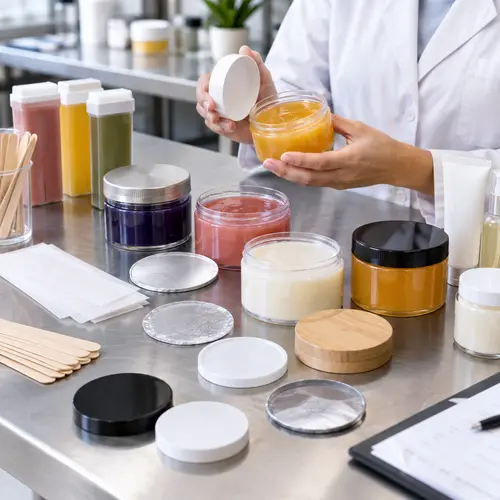
Visual impact does not require a complex jar. A distinctive lid color, controlled transparency, strong typography, or a small tactile detail can create a recognizable shelf block while keeping production manageable. Decoration should be selected with the formula and storage conditions in mind. Labels can lift on oily surfaces; metallic effects can show scratches; direct printing can require additional approval samples.
Ask the ODM team to separate one-time tooling from recurring unit cost. Also request the cost impact of multiple lid colors, special finishes, inner seals, cartons, and low-volume pilot production. PZIK supports pilot runs from 1,000 units and can use a production-equivalent route for sample review, which helps a founder evaluate the real package before committing to a larger launch.
Decision Framework Table
| Factor | What to Check | Why It Matters | ODM Buyer Note |
|---|---|---|---|
| Formula texture | Softness, scoop behavior, viscosity, filling temperature, and melting or softening behavior | Determines opening size, wall strength, filling method, and leakage risk | Approve a filled sample using the intended batch, not a substitute texture |
| Material compatibility | Jar, lid, liner, seal, adhesive, and formula contact surfaces | Reduces staining, odor transfer, separation, swelling, and seal failure | Request documented compatibility and storage observations |
| Salon usability | Grip, opening force, label visibility, stackability, and access with a spatula | Supports fast daily handling and reduces workstation mess | Test with the people who will use the product repeatedly |
| Retail protection | Inner seal, closure retention, carton fit, transport movement, and heat or cold exposure | Protects the customer experience from factory to delivery | Test the finished unit in its final shipment configuration |
| Brand expression | Color, transparency, lid finish, label layout, and on-camera texture visibility | Turns packaging into a recognizable launch asset | Review still images and short video under realistic lighting |
| Production readiness | MOQ, sample scope, fill tolerance, component availability, and repeatability | Prevents a pilot package from becoming impossible to replenish | Confirm the same approved components can be used for scale production |
For technical review, the hair removal manufacturing process should show how sampling, filling, packaging, quality checks, and shipment are connected. Buyers comparing formats can also review private label waxing products and the depilatory cream OEM workflow.
Next Step for an ODM Brief
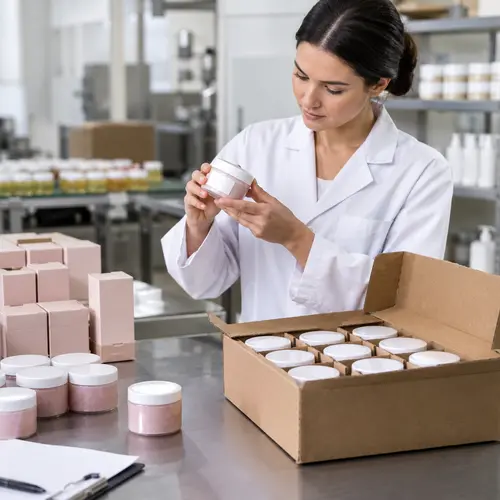
Send the supplier four inputs: target channel, formula type, desired visual effect, and expected launch volume. Add the target market, storage conditions, filling size, label language, and whether the product will be sold alone or in a waxing kit. Then request a sample plan covering formula texture, filled jar compatibility, seal performance, transport testing, artwork approval, and production timing. A focused brief makes it easier to compare suppliers and gives the development team a clear path from idea to shelf.
When the package is ready for commercial review, use the request a hair removal product quote page to align samples, pricing, MOQ, and shipment conditions. For related aftercare planning, see post-depilation care OEM and sensitive skin hair removal products.
ODM Manufacturing Considerations
Effective wax jar packaging development depends on confirming the filled product, not just approving an empty jar. The ODM brief should connect formula behavior, pack dimensions, decoration, labeling, production quantities, and shipment conditions. Buyers can review relevant formats through the hair-removal product categories and document responsibilities through the supplier’s OEM/ODM services.
Sample Confirmation and Formula Customization
Define what each sample round must prove. For wax, record texture at room temperature, target melting or softening range, spreadability, hair pickup, residue, fragrance strength, and color under both normal lighting and the lighting used for content creation. For depilatory cream, specify the target viscosity range, dispensing behavior, application time, removal performance, and appearance after storage. A request for a seven-day first sample can support a tight content schedule, but buyers should confirm whether that timing covers an existing base, a color or fragrance adjustment, or a fully customized formulation.
Approval should use a filled sample made with the intended formula and representative packaging components. Maintain a signed specification for color, odor, net weight, texture, pack code, and acceptable variation. Reference photos or videos are useful, but measurable limits reduce disagreements when production moves from a small lab batch to commercial equipment.
Packaging Compatibility and Stability Review
Jar resin, liners, seals, inks, and closure materials can interact differently with sugar wax, soft wax, hard wax, or aftercare balm. Ask the supplier to condition filled packs at the declared low, ambient, and elevated storage temperatures, then inspect odor change, sweating, separation, staining, panel distortion, lid fit, and net-weight loss. Inverted and vibration exposure can reveal seepage around threads or liners before freight is booked.
For roll-on wax cartridges, evaluate roller rotation, cap security, seam integrity, and flow after warming. Wax strips require barrier performance that prevents the wax layer from drying, migrating, or bonding unevenly to the inner wrapper. The stability plan should identify test duration, inspection intervals, acceptance limits, and who authorizes exceptions.
MOQ, Documents, and Shipment Conditions
Request separate minimums for formula production, jar molding or stock packs, decoration, labels, cartons, and fragrance. A transparent BOM should distinguish one-time tooling or plate charges from recurring unit costs and show expected wastage. Sample scope should state the number of variants, revisions, filled units, and freight charges.
Before artwork release, obtain the ingredient list, product identity, net contents, responsible business details, batch coding format, warnings, directions, and market-specific language files. Shipping instructions should state carton count, unit orientation, pallet pattern, temperature precautions, and whether mixed-SKU cartons are allowed. Compare these controls with the supplier’s documented manufacturing process.

Common Problems or Failure Cases
- Wax becomes brittle: Hard wax that fractures instead of flexing may have an unsuitable working-temperature window, excessive cooling, or formulation drift. Confirm melting behavior and application thickness across batches.
- Strip adhesion declines: Wax strips may lose grip after warm storage or develop uneven wax distribution. Review wrapper barrier properties, coating weight, and carton conditions.
- Depilatory cream separates: Visible liquid release, graininess, or viscosity loss can result from storage stress or pack interaction. Do not approve solely from a fresh sample.
- Cartridges leak: Product can escape around the roller, cap, or seam when warmed or shipped on its side. Test filled cartridges in realistic orientations.
- Fragrance causes sensitivity concerns: Strong fragrance may improve shelf appeal but increase user complaints. Require an irritation-risk review, accurate ingredient disclosure, and clear use directions.
- Jars deform: Thin walls or an unsuitable resin can warp during filling, warehousing, or freight exposure. Deformation can weaken lid engagement even when no crack is visible.
Supplier Checklist
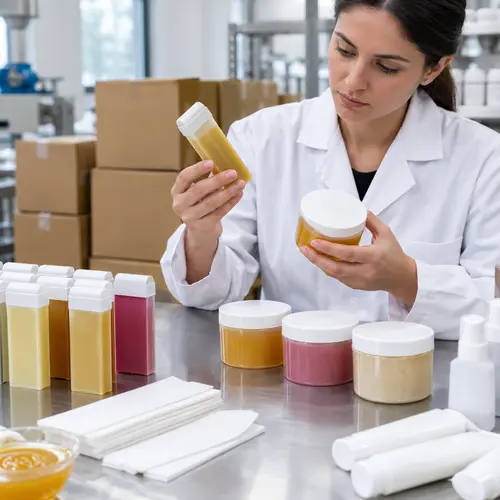
Use the following points to compare hair-removal OEM/ODM suppliers on evidence rather than presentation quality:
- Defined experience with depilatory wax, strips, creams, cartridges, and aftercare products.
- Written sample plan covering texture, color, fragrance, viscosity or melting range, and packaging.
- Filled-pack stability schedule with temperatures, duration, checkpoints, and acceptance criteria.
- Material specifications for jars, liners, closures, cartridges, wrappers, labels, and cartons.
- Batch records and retained samples that support investigation and traceability.
- Documented irritation-risk review and clear escalation process for unexpected user feedback.
- MOQ breakdown by formula, packaging component, decoration method, and SKU.
- Itemized BOM quotation with tooling, testing, packing, freight assumptions, and revision fees.
- Artwork control showing version approval, coding area, and required labeling documents.
- Shipment plan covering carton strength, pack orientation, pallets, climate exposure, and delivery handoff.
FAQ
How can I reduce the risk of a factory copying my concept or formula?
Use a mutual confidentiality agreement, define ownership of custom formulas and artwork, and restrict subcontracting without written approval. Ask how digital files, samples, and batch documents are access-controlled. Contract language is stronger when it identifies confidential materials, prohibited uses, ownership, and remedies rather than relying on a general promise.
Can a sample deliver the dramatic texture and color needed on camera?
Yes, but visual targets must become an approval standard. Provide lighting conditions, background color, application thickness, warming conditions, and reference footage. Review the filled sample on camera and in person because saturation, gloss, stringiness, and opacity can appear different through a phone sensor.
Can quality controls guarantee that no customer will experience irritation?
No supplier can guarantee zero reactions. Buyers should require ingredient screening, irritation-risk assessment, controlled batch production, traceable raw materials, retained samples, clear warnings, patch-use directions where appropriate, and a complaint investigation process. Avoid exaggerated safety claims, especially for depilatory cream or fragranced aftercare used on sensitive areas.
What should be included in an OEM sample fee?
The quotation should identify the number of formulas, colors, fragrances, packaging options, revisions, filled samples, evaluation work, and courier cost. It should also clarify whether the fee is credited against a future production order.
Which labeling documents should the supplier provide?
At minimum, request an ingredient declaration, product identity, net-quantity details, directions, warnings, batch-code format, shelf-life basis, and responsible-party information. Final requirements depend on the destination market and the claims printed on the pack.
What shipment details should be agreed before production?
Confirm case quantity, dividers, unit orientation, palletization, maximum storage temperature, container-loading method, destination labeling, and inspection responsibility. For warmed wax formats, account for seasonal routes and extended port dwell time when estimating deformation or leakage risk.
References
- FDA Cosmetics Labeling Guide — U.S. guidance on cosmetic identity, ingredient declarations, net quantity, and business information.
- SASO conformity assessment standards — official reference for buyers evaluating requirements applicable to products entering Saudi Arabia.