Direct Answer
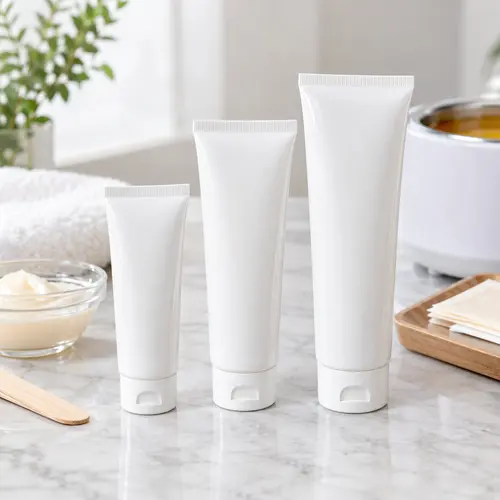
Choose depilatory cream tube packaging around three variables: treatment area, expected dose, and application precision. For targeted areas, a 50–75 mL tube with a narrow nozzle gives users better control. For legs, arms, or other larger body areas, 100–150 mL is usually more practical. A 150–200 mL tube supports value positioning but becomes harder to handle, ship, and evacuate cleanly.
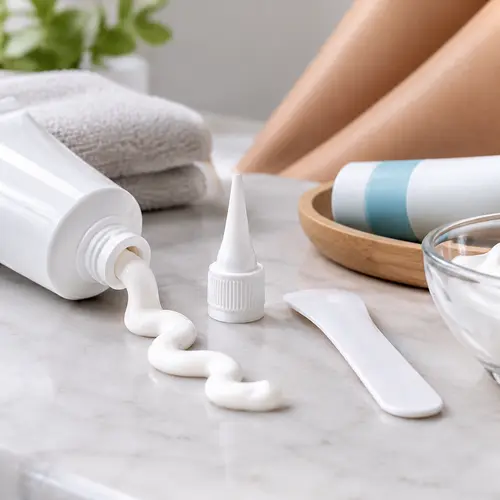
For the applicator, a standard nozzle is the safest default for broad-market body cream. A precision tip fits smaller treatment zones. A separate spatula can improve spreading and removal while keeping the formula isolated inside the tube. Integrated sponge or brush heads create stronger video content, but they require more compatibility, hygiene, flow, and leakage testing.
Do not select the package from appearance alone. Match the tube laminate, cap, orifice, and applicator to the cream viscosity, fill weight, use instructions, target market, and shipment conditions. Confirm the complete pack through the depilatory cream OEM sampling process before approving printed inventory.
Key Takeaways for Private Label Buyers
- Start with use area. Precision tubes suit targeted removal; larger tubes suit legs, arms, and repeat body use.
- Test the actual formula. Water or substitute cream cannot reveal real flow, seal, odor migration, or package interaction.
- Treat the applicator as a system. Review the tube, shoulder, orifice, cap, seal, and any spatula or sponge together.
- Validate camera performance. The cream should dispense in a clean ribbon and spread evenly without sputtering, dripping, or leaving messy residue around the opening.
- Approve stability before bulk decoration. Check storage, leakage, panel distortion, cap fit, and print durability using production-intent components.
- Lock the BOM early. Ask for separate costs for tube construction, decoration, applicator, secondary carton, insert, filling, testing, and shipment preparation.
Buyer Context
Packaging is part of product performance in hair removal. A depilatory cream must be distributed evenly enough to support the stated application method, then removed according to clear timing instructions. If the opening is too large, users may dispense more than expected. If it is too small, a viscous formula may require excessive force or emerge unevenly. Either problem can undermine the intended user experience.
This decision is especially important for creator-led brands. The tube must work on camera, survive fulfillment, and remain intuitive for customers who may encounter the product through a short demonstration rather than a detailed tutorial. A neat cream ribbon, controlled spread, and clean cap can communicate quality within seconds. A seven-day prototype target is useful only if the sample uses a realistic viscosity and representative packaging.
The packaging logic also differs across the category. Wax strips need adhesion-aging review, sugar wax may require temperature-sensitive handling, roll-on wax cartridges need leakage and roller-flow checks, and aftercare products require their own dispensing assessment. Buyers building a coordinated range can review these formats through broader hair removal product solutions and post-depilation care OEM options. For cream specifically, use a supplier experienced in hair removal OEM ODM services, not a packaging vendor evaluating an empty tube in isolation.
Technical and Packaging Factors
1. Tube Size Must Match the Use Pattern
A 50–75 mL format supports travel, trials, targeted use, and subscription-box placement. A 100–150 mL format is a stronger default for full-size body positioning. Tubes from 150–200 mL can support repeat use or value messaging, but the brand should assess hand feel, shelf footprint, shipping weight, and whether users can remove the final portion without damaging the pack.
Fill volume should be based on realistic dose testing rather than competitor dimensions. During sampling, record how much cream is needed for the intended area, how many uses the pack should provide, and whether the usage directions remain accurate. A 1,000-unit pilot can then test customer response without forcing an oversized first commitment.
2. Applicator Style Controls Flow and Content Quality
A standard circular nozzle is economical, familiar, and easy to seal. It suits medium-to-thick body cream when the opening is matched to viscosity. A narrow precision nozzle gives greater placement control but can clog if the formula dries near the tip. A separate spatula supports even spreading and physical removal without exposing the remaining contents.
Integrated sponge and brush heads offer a distinctive social-media demonstration, including visible spreading in one motion. Their tradeoffs are higher component cost, retained product in the head, cleaning difficulty, and more complex compatibility testing. Ask for a filled prototype and record dispensing after first opening, repeated use, horizontal storage, and cap replacement. The cosmetic filling and packaging process should define how applicators are assembled, inspected, and protected from contamination.
3. Formula and Tube Must Be Tested Together
Depilatory ingredients can create a demanding package environment. The ODM should review tube-layer construction, shoulder and seal integrity, cap material, decoration, and odor transmission with the final formula. Monitor swelling, softening, discoloration, delamination, panel collapse, blocked openings, and seal failure under room, elevated, cold, and temperature-cycling storage.
Texture matters equally. Measure whether the cream holds on the intended body area, spreads without running, and exits consistently as the tube empties. For sensitive-positioned products, include an irritation-risk review and ensure instructions clearly address application area, exposure time, patch testing, and discontinuation. Related positioning options are available through gentle depilatory cream OEM development.
4. Label Space Is a Design Constraint
Small tubes can restrict space for identity, net contents, directions, warnings, ingredients, responsible-party details, and market-specific text. Review the FDA summary of cosmetics labeling requirements for US planning and the EU cosmetics rules for European launches. Product and advertising claims should also be reviewed against FTC advertising substantiation guidance.
A carton can provide additional communication space, but it adds cost, weight, and another artwork file to control. Before print approval, request the dieline, readable-area review, barcode placement, batch-coding zone, and final copy check. A transparent quote should separate these items rather than hiding them in a single unit price.

Decision Framework
| Factor | What to Check | Why It Matters | ODM Buyer Note |
|---|---|---|---|
| Use area | Targeted zone or larger body area | Determines dose, control, and pack size | Test application with the stated directions |
| Tube volume | 50–75 mL, 100–150 mL, or 150–200 mL | Affects perceived value, uses, shipping, and handling | Confirm fill weight and usable evacuation |
| Orifice | Flow rate, ribbon shape, clogging, and mess | Controls application precision | Evaluate with final viscosity |
| Applicator | Nozzle, precision tip, spatula, sponge, or brush | Changes usability, content potential, and cost | Test repeated use and cleaning behavior |
| Compatibility | Seal, cap, tube layers, print, odor, and distortion | Reduces leakage and appearance failures | Use production-intent components |
| Storage and shipment | Upright, horizontal, elevated, cold, and cycling conditions | Reveals failures before fulfillment | Document case pack and shipment orientation |
| Launch scope | Sample rounds, pilot MOQ, BOM, and artwork files | Protects timeline and budget | Use a hair removal product RFQ with target market and launch date |
For final supplier comparison, connect packaging decisions to the complete hair removal OEM manufacturer scope: formula sample, filled-pack sample, storage review, artwork control, pilot production, and scale-up plan.
ODM Manufacturing Considerations
Sample approval should be treated as a controlled business decision, not just a visual sign-off. Ask the supplier to record the approved cream color, fragrance level, texture, dispensing behavior, removal time range, and packaging configuration in a sample confirmation sheet. For wax products, record hardness, flexibility, melting behavior, set time, strip grip, and residue after removal. A retained reference sample is useful because it gives both sides a physical comparison point when later batches are reviewed.
Formula customization should match the intended use and claims. A face-area cream, body cream, sugar wax, and roll-on wax cartridge require different texture and handling targets. Discuss the target user, body area, hair coarseness, fragrance sensitivity, climate, and expected storage conditions before changing ingredients. The manufacturer should explain which changes affect color, scent, viscosity, removal performance, or irritation risk. Ask for an ingredient list, allergen information where applicable, usage directions, warning language, and documents needed for the destination market.
Packaging compatibility is central to depilatory cream tube packaging. The supplier should verify that the tube material, shoulder, cap, seal, and orifice remain suitable for the formula during storage and transport. Review whether the cream can be dispensed without excessive squeezing, whether the cap stays clean, and whether the package softens, swells, cracks, or changes shape after exposure to heat and cold. For wax, review the cartridge body, roller fit, closure, and leakage resistance under the expected shipping orientation.
Stability review should cover formula appearance, odor, color, viscosity, separation, microbial protection, and package condition at planned storage temperatures. Ask for a written schedule showing what is checked, when it is checked, and what constitutes a failure. This is especially important for products containing fragrance, botanical extracts, pigments, or conditioning ingredients that may change during storage. A buyer should also request an irritation-risk review based on the target application area and clear directions for patch testing, contact time, and rinsing.
MOQ should be separated into sample, pilot, and production quantities. Confirm whether a custom tube, printed carton, cap, spatula, strip, or cartridge requires a separate minimum order. Request a line-item BOM quote that identifies formula, filling, components, artwork setup, testing, cartons, and freight estimates. This helps reveal costs that may otherwise appear only after approval. You can compare the proposal with the supplier’s OEM/ODM services and manufacturing scope before committing to custom tooling or printed packaging.
Shipment conditions deserve the same attention as production. Confirm the approved temperature range, carton configuration, pallet or parcel protection, transport orientation, lot identification, and documentation supplied with the shipment. For cream and wax, ask what happens if the shipment experiences prolonged heat or cold. A written receiving checklist should cover damaged cartons, leakage, separation, broken seals, incorrect labels, and quantity variance. The product specification and shipping plan should be approved before the first commercial order.

Common Problems or Failure Cases
Wax brittleness often appears when the formula is too hard for the intended climate, when the application layer is too thin, or when the product has aged beyond the expected storage period. It can cause cracking during removal and leave uneven patches of hair. The buyer should request a climate-specific handling review and test both room-temperature and warm-condition samples before approving the final wax texture.
Strip adhesion loss may result from a change in wax surface, strip material, coating, or storage humidity. A strip that looks acceptable in a factory sample can perform poorly after extended storage if the adhesive or wax migrates. Check pull strength, clean release, residue, and package protection after transport simulation. Do not approve a strip solely because it adheres well during the first demonstration.
Cream separation can present as oil on the surface, a watery layer, graininess, or inconsistent color between tubes. Possible contributors include formula imbalance, incompatible packaging contact, temperature stress, or extended storage. The supplier should compare retained samples from different production points and document whether the issue is reversible after mixing. If separation affects removal performance or skin comfort, the batch should be held for investigation.
Cartridge leakage is commonly linked to a poor roller fit, an incomplete seal, excessive filling, cap damage, or storage on the wrong side. Inspect individual cartridges after shipping, then check outer cartons for residue and odor. The supplier should identify the leakage threshold used for release and explain how defective units are segregated. For retail products, even a small amount of wax leakage can damage labels, cartons, and adjacent units.
Fragrance sensitivity is another avoidable failure. A strong scent may impress during a short demonstration but become unpleasant during use, especially on smaller application areas. Ask for a low-fragrance option or an unscented sample, and review the ingredient declaration and warning text for the destination market. Keep marketing claims aligned with what the formula and label documents support; the FTC’s advertising substantiation guidelines are a useful reference for claim review.
Packaging deformation can occur when tubes, caps, cartons, or cartridges are exposed to heat, compression, or unsuitable stacking. Test filled units rather than empty components, because formula weight and internal pressure affect the result. If the product is sold through social media, include a realistic unboxing inspection: look for dents, split seals, leaking caps, unreadable lot marks, and labels lifting from the package.
Supplier Checklist
- Request a signed sample specification covering color, odor, texture, viscosity or hardness, removal behavior, and application area.
- Confirm which formula changes are possible and which changes may alter performance, irritation risk, shelf life, or label declarations.
- Review tube, cap, seal, nozzle, strip, roller, or cartridge compatibility using filled samples.
- Ask for stability records that cover appearance, odor, separation, viscosity, package condition, and storage temperature.
- Request ingredient, allergen, safety, usage, warning, lot, and batch documents required for each sales market.
- Separate sample, pilot, custom component, and production MOQs in the quotation.
- Require a transparent BOM with artwork, tooling, filling, packaging, testing, cartons, and freight shown separately.
- Confirm inspection points, defect categories, retained samples, release approval, and handling of rejected units.
- Define shipment conditions, carton protection, temperature exposure limits, orientation, and receiving inspection steps.
- Ask for capacity planning information, backup production arrangements, and the process for handling a sudden demand increase.
- Evaluate communication quality by sending a consumer-facing brief and checking whether the team converts it into measurable product requirements.
- Review the supplier’s manufacturing process and request direct answers to unresolved formula or packaging questions.
FAQ
How can I protect my concept and formula from being reused for another brand?
Use a written confidentiality and ownership agreement before sharing complete artwork, formula targets, customer data, or launch plans. Identify which materials belong to your brand, who owns custom development, and whether the factory may show samples publicly. Keep version-controlled specifications and approve production only against the agreed reference sample. Confidentiality language cannot replace supplier due diligence, so review the factory’s history, access controls, and record-keeping practices.
Can the sample have the dramatic texture and color needed for social media content?
Usually, the visual effect can be developed, but it must remain compatible with removal performance, user comfort, packaging, and label claims. Give the supplier a visual brief that defines the desired pink tone, cream body, spread pattern, foam-like appearance if relevant to the permitted formula, and on-camera lighting conditions. Ask for several controlled variations and approve the one that performs well in real use, not only the one that looks striking in a short video.
How do I reduce the risk of a product causing serious skin discomfort?
Require an irritation-risk review for the intended body area, clear contact-time limits, patch-test directions, ingredient documentation, and batch release records. Test the approved product on appropriate internal panels according to the supplier’s procedures, and do not let marketing pressure shorten the review. No quality system can guarantee zero individual reactions, so accurate warnings, conservative directions, complaint handling, and traceable lots are essential.
What if I do not understand ingredients or manufacturing terms?
Ask the supplier to translate every technical choice into a buyer outcome: thicker or thinner spread, faster or slower removal, stronger or softer wax, greater fragrance intensity, or better heat resistance. Send a plain-language brand brief describing the audience, content format, price position, and expected use. A capable ODM team should return measurable specifications, samples, timelines, and document requirements rather than vague assurances.
Can a factory support a sudden increase after a video goes viral?
Ask for a written capacity plan before launch. It should identify filling lines, component availability, production priorities, lead-time assumptions, and the escalation process for an urgent reorder. Confirm whether your approved formula and packaging can be produced on more than one suitable line. A supplier should also explain how it allocates capacity when larger customers place unexpected orders.
Which authority sources should support label and marketing decisions?
Market-specific requirements should be checked before artwork approval. For European sales, review the EU Cosmetics Regulation framework. For United States sales, review the FDA’s Summary of Cosmetics Labeling Requirements and confirm that product claims, directions, warnings, and ingredient declarations match the actual product.
References
European Commission: Cosmetics
Federal Trade Commission: Advertising FAQs and Guides
U.S. Food and Drug Administration: Summary of Cosmetics Labeling Requirements