Direct Answer
Building a credible sensitive skin hair removal claims framework starts with separating what the product does from what the evidence can support. A depilatory cream, wax strip, sugar wax, roll-on cartridge, or aftercare product should be assessed across three layers: formula performance, irritation-risk review, and claim wording. The strongest positioning is specific and controlled: describe the intended skin area, application conditions, removal result, and user experience without implying that every consumer will have the same outcome. For private-label buyers, this means reviewing the formula, packaging, stability data, usage instructions, and label copy as one launch system. An ODM partner should provide a clear sample path, documented checks, and a claims review before artwork is finalized. This approach gives founders a sharper market message while reducing avoidable complaints, leakage, texture changes, and unsupported promises.
Key Takeaways for Private Label Buyers
- Define the claim before selecting the product format. Sensitive-skin positioning for a cream is not interchangeable with positioning for hot wax or strips.
- Ask for a controlled irritation-risk review, ingredient rationale, usage limits, and a clear patch-test instruction set.
- Check formula and pack compatibility together. A stable cream can still create tube stress, seal failure, or pump blockage.
- Review texture, adhesion, melting behavior, viscosity, and removal performance using retained samples from the intended production process.
- Require storage, shipment, labeling, and batch documentation early enough to prevent launch delays.
- Use a pilot run to test consumer-facing claims, visual content, and packaging handling before scaling production.
Buyer Context
Sensitive skin positioning matters because hair removal is a high-contact use case. Consumers may apply a product to the legs, underarms, bikini area, or other body zones where discomfort can quickly become a public product review. For a creator-led brand, one poor reaction can spread faster than a successful product demonstration. The claim therefore needs to support both conversion and expectation control.
The format changes the risk profile. Depilatory cream requires attention to contact time, spreadability, rinse-off behavior, odor, and container compatibility. Wax strips depend on adhesive consistency, strip flexibility, residue, and performance after storage. Sugar wax and hot wax require controlled melting behavior, workable texture, and clear temperature instructions. Roll-on wax needs dependable flow through the cartridge and a package that does not leak during shipment. Aftercare products must complement the removal routine without making unsupported recovery promises.
For buyers, this is not only a label exercise. It is a product development decision that affects sampling, content production, packaging selection, production scheduling, and customer support. A useful starting point is the sensitive skin hair removal products category, followed by a format-specific review through custom depilatory cream formulation or the relevant hair removal OEM ODM services.
Founders should also confirm which statements are cosmetic product claims in each destination market. The Modernization of Cosmetics Regulation Act of 2022 is a useful United States reference point, while Health Canada’s cosmetic ingredient hotlist helps buyers review ingredient restrictions and labeling expectations for Canada. These sources do not replace market-specific review, but they help establish the questions an ODM partner should answer.
When a product is intended for a creator launch, the visual story should be tested alongside the claim. A cream that spreads evenly on camera, a strip that removes cleanly, or a roll-on that dispenses without dripping can make the product easier to demonstrate accurately. PZIK’s hair removal manufacturing process should be assessed against the same standards as the formula itself: sample repeatability, filling accuracy, packaging checks, and shipment readiness.
Technical or Packaging Factors
Formula and texture
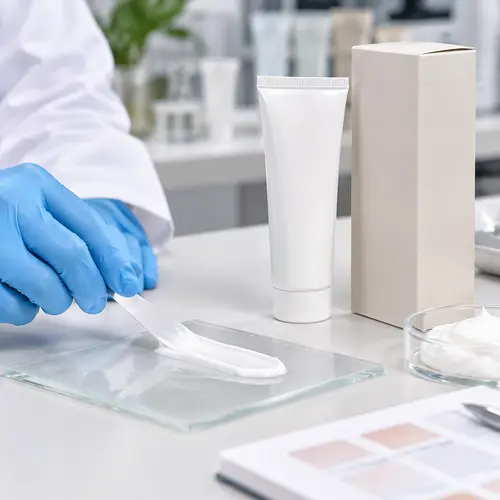
For depilatory cream, review spreadability, viscosity consistency, odor, rinse-off behavior, and the time required to achieve the intended removal result. The sample should be assessed on the actual packaging format, because air exposure, dispensing force, and closure design can change the user experience. Ask whether the formula has been reviewed after heat and cold storage, and whether its color, odor, texture, and separation profile remain acceptable.
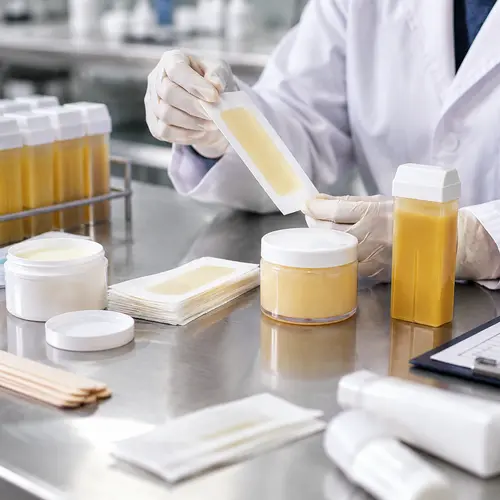
For wax products, focus on melting behavior, working texture, adhesion, residue, and set time. A wax that performs well in a warm development room may become too firm during transport or too fluid in a hot warehouse. Wax strips should be checked for adhesion aging, backing separation, edge lifting, and residue after storage. Roll-on cartridges require a practical flow test, cap inspection, and leakage review in both upright and horizontal shipment positions.
Packaging compatibility
Packaging is part of the claim experience. A sensitive-skin cream should not be paired with a tube that cracks under normal squeezing or a closure that allows repeated contamination. Wax jars need a secure seal and enough headspace control to reduce leakage risk. Cartridge components should be compatible with the wax texture and should maintain a predictable application line from first use to final use.
Request packaging samples early. Review the filled sample for seal integrity, label adhesion, cap torque, squeeze force, dispensing control, and visible changes after storage. For a subscription or DTC launch, include parcel handling and temperature exposure in the review. The objective is not to promise zero risk; it is to identify predictable failure points before the first public shipment.
Evidence and claim wording
Claims should map to a defined test or review. Terms such as gentle, suitable for sensitive skin, low irritation, or fragrance-free each require a clear product basis and careful wording. A buyer should ask what population, application area, usage instructions, and evaluation method support the proposed language. Avoid broad promises such as no irritation or safe for everyone. Pair the front-of-pack message with practical instructions, including a patch test, contact-time limit where relevant, rinse-off guidance, and conditions that require discontinuation.
For adjacent products, consider a coordinated offer through soothing gel after hair removal or post hair removal serum supplier services. The claim architecture should remain distinct: aftercare can support a comfort-oriented routine, but it should not inherit the removal performance claims of the primary product.
Decision Framework Table
| Factor | What to Check | Why It Matters | ODM Buyer Note |
|---|---|---|---|
| Skin-positioning claim | Intended area, user instructions, ingredient review, and wording boundaries | Reduces overstatement and aligns the message with actual use | Approve claim language before label artwork and creator scripts |
| Formula texture | Viscosity, spreadability, odor, rinse-off, adhesion, or melting behavior | Determines performance and the filmed product experience | Compare retained samples from pilot and scaled production |
| Packaging compatibility | Seal, closure, tube stress, cartridge flow, leakage, and label adhesion | Prevents avoidable complaints and shipment losses | Test filled packs, not empty components only |
| Storage stability | Heat and cold exposure, separation, color, odor, texture, and package condition | Shows whether the product remains usable through distribution | Request documented observations and acceptance criteria |
| Launch readiness | Sample scope, MOQ, batch records, labeling documents, and shipment conditions | Connects product approval to a realistic launch schedule | Confirm whether the same line can scale from 1,000 units to larger volumes |
ODM Manufacturing Considerations
A practical ODM workflow should move claims, samples, packaging, and documentation in parallel. Start with a short product brief covering format, target body area, fragrance direction, texture, visual content requirements, market, and planned claim language. Then request a sample set that includes the base formula, the intended pack, and any proposed sensitive-skin variant.
PZIK’s operating model is designed around pilot production from 1,000 units and scale-up beyond 500,000 units per SKU without changing the core product direction. For a founder testing a social launch, the useful question is whether the sample, pilot batch, and scaled production use the same approved specification. Ask for the expected development schedule, whether a sample can be delivered within 7 days, and how stability, labeling, and shipment reviews are coordinated within a target cycle under 30 days.
Use the hair removal OEM manufacturer page to compare category capability, then request a specific request a hair removal product quote with the product format, packaging requirements, target market, MOQ, and claim direction. For wax-based launches, review custom wax strips and hot wax options and confirm melting, adhesion, filling, and shipment checks before approving the final sample.

Supplier Checklist
- Can the supplier explain which evidence supports each sensitive-skin claim?
- Will the filled package be reviewed for leakage, seal integrity, dispensing, and label performance?
- Are heat, cold, storage, and shipment conditions defined for the selected format?
- Can the supplier provide sample, pilot, and production specifications that remain consistent?
- Are ingredient, label, batch, and market documents available before launch approval?
- Does the supplier have a clear process for handling a texture, odor, irritation, or packaging complaint?
ODM Manufacturing Considerations
A reliable sensitive skin hair removal claims program depends on documented decisions at every stage, from the first sample to final shipment. Private-label buyers should treat sample confirmation as a controlled approval step rather than a general impression of whether the cream, wax, or strip feels acceptable.
Begin with a written sample brief covering the product type, application area, target hair-removal performance, fragrance direction, color, texture, removal time, rinse-off behavior, and intended market. For depilatory cream, record spreadability, odor, skin feel, visible residue, and whether the formula remains uniform after storage. For wax, record melting behavior, working temperature, flexibility, pull strength, and brittleness. Sugar wax and roll-on wax cartridges need additional notes on flow, pickup, and ease of application.
Formula customization should be handled through controlled revisions. Ask the supplier to identify which changes are standard adjustments and which require a new formula review. A sensitive-skin positioning does not mean the product can promise universal tolerance. Instead, the supplier should review fragrance level, colorants, alkaline ingredients where relevant, residue, and known irritation risks for the intended use area. Request a written ingredient list and market-specific labeling documents before approving the final version.
Packaging compatibility is equally important. Confirm that the selected tube, jar, pouch, strip wrapper, cartridge, cap, and adhesive materials remain suitable for the formula throughout storage and shipment. A cream can soften a closure liner, wax can deform a pouch seal, and a roll-on cartridge can leak if its valve or cap does not tolerate temperature changes. Ask for filled-pack samples, closure checks, seal inspection, and visual review after heat and cold exposure.
Stability review should reflect actual distribution conditions. The supplier should explain the storage conditions used to review separation, color change, odor change, viscosity drift, wax brittleness, strip adhesion, cartridge leakage, and packaging deformation. Buyers should receive dated records, sample identification, and the acceptance criteria used. These records do not replace market-specific legal review, but they provide practical evidence for release decisions.
MOQ should be discussed together with sample scope, packaging availability, and production scheduling. Request a clear quotation that separates formula charges, tooling or artwork charges, packaging components, testing, filling, cartons, and freight estimates. This helps a brand compare suppliers without relying on an attractive unit price that excludes important production items. The supplier should also explain how reserved capacity is handled when demand rises after a content launch.
Labeling documents must match the destination market and the actual formula. For the United States, buyers should understand the responsibilities introduced by the Modernization of Cosmetics Regulation Act of 2022. For Canada, review the applicable requirements and Health Canada cosmetic ingredient hotlist. Ask for ingredient nomenclature, batch coding information, net contents, usage directions, warnings, and responsible-party documentation where applicable.
Shipment conditions should be agreed before production. Define acceptable temperature exposure, carton protection, pallet or parcel configuration, orientation, and handling limits. Wax products may need protection from excessive heat, while cream and aftercare products need secure closures and leak-resistant secondary packing. Confirm what happens when goods arrive damaged, separated, leaked, or visibly deformed.
Common Problems or Failure Cases
Wax brittleness is a frequent problem when a formula performs well in a warm sample room but becomes hard and cracks during cooler storage. The buyer should compare application and removal behavior at the intended use temperature and after controlled temperature exposure. A wax that snaps instead of lifting cleanly can create poor customer reviews and inconsistent removal results.
Strip adhesion loss can occur when the wax layer is uneven, the wrapper allows excessive heat exposure, or the adhesive surface ages poorly. Review strip pickup, pull consistency, residue, and adhesion after storage. Do not approve packaging based only on appearance; open and use retained samples from different production points.
Depilatory cream separation may appear as oil release, watery edges, clumps, color variation, or a changed odor. Check samples from the beginning, middle, and end of filling where possible. A cream that separates inside the tube can create an uneven application and undermine any sensitive skin positioning.
Roll-on cartridge leakage may come from valve fit, cap pressure, cartridge deformation, or improper orientation during transport. Inspect cartridges after storage, vibration, and shipment simulation. Check both slow seepage around the cap and visible flow from the roller head, since minor leakage can still damage cartons and labels.
Fragrance sensitivity is another avoidable risk. A strong scent may be attractive in a factory sample but unpleasant when used on the face or other delicate areas. Request fragrance disclosure suitable for the intended market, compare unscented or lower-scent versions, and review the final product with the actual directions and contact time.
Packaging deformation can make a good formula appear defective. Tubes may swell, pouches may wrinkle near the seal, and wax containers may lose shape under heat. Keep a retained sample in the same package used for shipment and photograph changes against a dated inspection record. These checks help separate a formula problem from a package problem.
Supplier Checklist
- Can the supplier provide a written sample brief covering texture, color, odor, application time, removal performance, and target use area?
- Are formula revisions tracked by sample number, date, ingredient list, and approval status?
- Can the supplier explain irritation-risk review for fragrance, colorants, alkaline ingredients, residue, and intended contact time?
- Has the filled package been reviewed for leakage, seal integrity, valve fit, closure compatibility, and deformation?
- Are wax melting behavior, viscosity or flow where relevant, strip adhesion, cream uniformity, and cartridge performance checked after heat and cold storage?
- Will the supplier provide ingredient, labeling, batch coding, warning, and destination-market documents before release?
- Does the quotation separate formula work, packaging, artwork, testing, filling, cartons, and shipment estimates?
- Are MOQ, sample scope, retained samples, production timing, and capacity allocation stated in writing?
- Can the business contact translate a social media brief into measurable product requirements such as visible texture, color payoff, application speed, and camera presentation?
- Is there a documented process for handling rejected samples, damaged cartons, leakage, separation, or off-specification production?

FAQ
How can I protect my concept and formula from being reused for another brand?
Use a written confidentiality and ownership agreement before sharing final formula details, artwork, customer data, or launch plans. Define who owns custom development work, whether the formula is exclusive by market or category, and what information the supplier may show in its portfolio. Keep approval records and versioned specifications so your product identity is documented.
Can the sample texture and color look dramatic enough on camera?
Yes, but visual performance should be specified as a product requirement. Ask for controlled samples showing color, gloss, spread, thickness, wax pull, or cream coverage under consistent lighting. Review the actual filled package, because a texture that looks striking in a beaker may not present the same way through a tube, strip, or cartridge.
Can quality control guarantee that customers will never experience irritation?
No supplier can guarantee universal skin tolerance. A stronger process combines ingredient review, clear directions, appropriate warnings, batch checks, retained samples, and documented release criteria. The brand should avoid absolute claims and provide a patch-test recommendation where appropriate. Investigate every complaint by batch, package, usage time, and storage condition.
What if I do not understand technical ingredients or manufacturing terms?
Ask the supplier to convert your marketing brief into a plain-language product specification. For example, replace a request for a dramatic cream with requirements for visible color, spread distance, rinse-off behavior, odor level, and target application time. A capable contact should explain tradeoffs without making you approve undocumented changes.
What happens if a social media launch creates an unexpected order surge?
Discuss capacity before launch and ask how production slots are assigned when several customers need goods at the same time. Confirm available packaging components, replenishment timing, reserve-material options, and the supplier response for a revised forecast. A written escalation plan is more useful than a general promise of fast production.
Which documents should I receive before approving shipment?
Request the final ingredient list, approved artwork or label copy, batch information, packaging inspection records, applicable review records, carton details, shipment conditions, and any agreed release or test summary. The exact document set depends on the destination market, product type, and contract terms.
References
FDA guidance on labeling cosmetics containing alpha hydroxy acids provides relevant context for ingredient-related cosmetic labeling decisions.
FDA information on cosmetic oversight and product claims explains that cosmetics are regulated products and are not generally approved by FDA before marketing.