Direct Answer
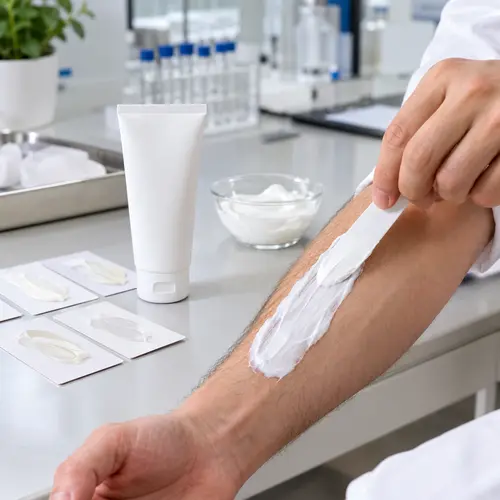
For founders evaluating men’s hair removal products private label, the strongest launch plan is a compact routine built around a clear use case: a dependable depilatory cream or wax format for the main body area, a precision option for smaller zones, and an aftercare product that closes the experience. Choose by hair density, application time, skin sensitivity, and intended market, not by gender labeling alone. A cream makes at-home removal easy to explain; wax strips, sugar wax, or a roll-on cartridge creates a tactile grooming ritual. For face use, require a formula and label intended for that area. Never approve a jar sample in isolation. Review texture on skin, removal performance, odor, residue, packaging compatibility, heat and cold behavior, leakage risk, and label documents together. The right OEM partner turns this brief into repeatable samples, defined manufacturing specifications, and a production pack that stays consistent from first test to launch.
Key Takeaways for Private Label Buyers
- Define the routine by body area, hair density, contact time, and sensitivity before selecting a formula.
- Ask for camera-ready texture samples and a written sample scope. A 7-day sample target and 1,000-unit pilot can keep a creator-led launch aligned with its content calendar.
- Test the formula with the final tube, jar, strip pouch, or roll-on cartridge; dispensing and seal integrity are part of performance.
- Request heat, cold, and room-temperature checks, an irritation-risk review, and clear patch-test language.
- Lock ingredient, label, batch, and market documents before artwork approval, then confirm shipment conditions.
Buyer Context
Men’s grooming buyers are usually building a routine, not a single SKU. A creator may start with chest or back removal, then add legs, underarms, facial touch-up, or aftercare after audience testing. Each zone changes the brief. Coarse hair may need stronger grip or more controlled cream spread, while a face product needs tighter review of use instructions and irritation risk. Broad-use positioning without clear boundaries can produce inconsistent results and weak social proof.
That makes sourcing a product-system decision. Use the hair removal product solutions page to map body area, format, and pack format, then compare private label hair removal products against the content concept. A contract manufacturing brief should describe the on-camera action as clearly as the ingredient direction: even cream coverage, visible strip release, a clean roll-on pass, or an aftercare finish. The styling should read on screen under phone light and neutral room light.
If tactile removal is the story, wax strips, sugar wax, or roll-on wax provides a visible action, but needs close work on adhesion, set time, and clean release. Sampling should follow the publishing plan: initial texture prototype, revised sample, and production-intent sample. A 7-day target helps when a trend window is short, but speed should not bypass stability or irritation-risk review. The supplier’s hair removal OEM ODM services should cover formula adjustment, packaging selection, labeling files, and bulk-production handoff.
Technical or Packaging Factors
Formula and Removal Behavior
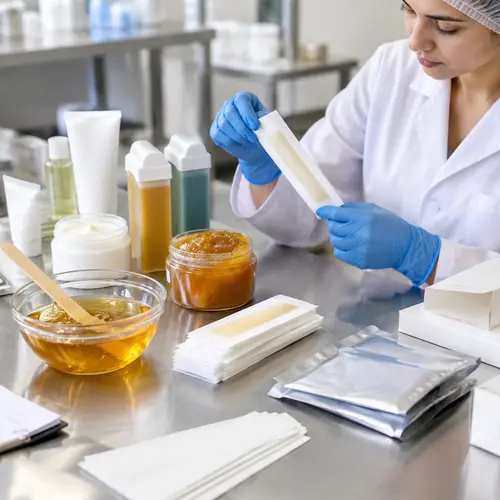
Ask the supplier to define target viscosity for a cream, along with pH band, odor, color, fragrance level, coverage, contact time, removal result, and residue. The film should spread evenly rather than pool or dry at the edges. For wax, record softening or melting range, working temperature, set time, stringing, strip release, and residue. Sugar wax should remain workable across expected storage and use temperatures. For roll-on wax, check roller flow and layer consistency. A cosmewax reference can describe a familiar handling profile, but it is only a benchmark; the approved formulation needs its own specifications.
Do not let visual styling hide weak user guidance. Review patch-test instructions, body-area limits, contact time, rinse or wipe process, and aftercare language. For sensitive-skin positioning, use the sensitive skin hair removal products page as a starting point and request an irritation-risk review tied to the exact ingredients and pack. Face use needs a separate label review; a body formula should not be assumed suitable for the face.
Packaging Compatibility and Shipping
Packaging is a performance variable. A cream can separate in a jar, swell a tube, soften a cap liner, or leave residue around the opening. Request filled-pack, inversion, and leakage checks after warm and cool storage. For wax strips, inspect adhesive transfer, strip separation, pouch seal, and aging. For a roll-on cartridge, check roller movement, cap fit, and leakage after warm and cool exposure. For a hot wax jar, confirm headspace, seal, and label adhesion after temperature changes. For aftercare, check pump or tube dispensing and compatibility with residual wax.
Request heat, cold, and room-temperature observations, plus light exposure where needed. Record carton orientation, outer protection, warehouse assumptions, and route temperatures before shipment. Compare pack dimensions and temperature assumptions with the Amazon FBA fulfillment program guidelines. For market documents, review FDA cosmetics information and the FDA Cosmetics Labeling Guide. The final label should match the formula, intended use, warnings, net contents, and responsible party details. Ask for ingredient list, batch-coding approach, stability summary, and packaging specifications.
ODM Handoff
An ODM handoff is clean when sample, formula, pack, and production specification stay in the same project. Use the hair removal manufacturing process page to map sampling, filling, packaging, inspection, and shipment checkpoints. Compare sample fill with production fill; check color, odor, and viscosity batch to batch; and record how deviations are handled. For a launch kit, pair the core removal item with post-depilation care OEM. Evaluate hair inhibitor serum OEM only when the intended claim and market documents support it. For wax-led launches, use wax strips OEM to compare strip, hot wax, and roll-on formats. For a cream-led concept, depilatory cream OEM can frame formulation, sample, and pack questions. When ready, use request a hair removal product quote to send body area, target texture, pack format, sample scope, pilot quantity, and destination.
Decision Framework Table
| Factor | What to Check | Why It Matters | ODM Buyer Note |
|---|---|---|---|
| Use case | Body area, hair density, face or body positioning, contact time | Sets removal expectations and label boundaries | Write separate face, body, and sensitive-zone briefs |
| Formula texture | Cream viscosity and pH band; wax melt range, set time, residue | Controls spread, grip, release, and cleanup | Record target specifications in sample approval |
| Irritation risk | Ingredient review, fragrance, patch-test wording, contact-time instruction | Reduces misuse and complaint risk | Review the exact formula and label together |
| Pack compatibility | Tube, jar, pouch, or cartridge; filled-pack seal and leakage checks | Heat and movement can change dispensing and pack integrity | Test with final materials, closure, and fill |
| Stability and shipment | Warm, cool, room-temperature, light, carton orientation, route conditions | Protects texture, seal, and appearance in transit | Set storage assumptions before the production quote |
| Samples and MOQ | Revision scope, production-intent sample, pilot quantity, lead time | Prevents a fast sample from becoming a slow launch | Align the 7-day target and 1,000-unit pilot with the content calendar |
| Documents | Ingredient list, batch coding, stability summary, label file, safety information | Supports listing, review, and market entry | Require editable files before artwork lock |
ODM Manufacturing Considerations
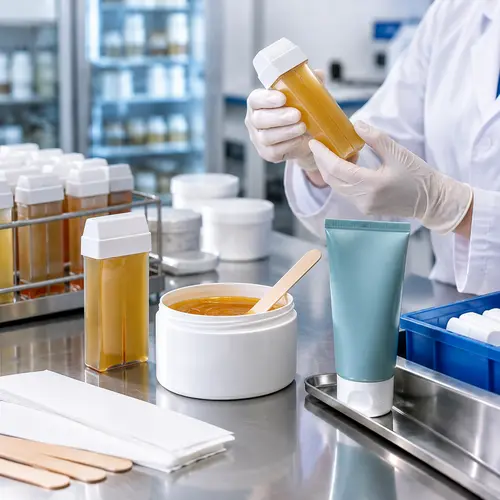
An ODM handoff should turn a grooming concept into a finished-SKU approval record that manufacturing can repeat. Start with a brief covering the hair-removal format, intended body area, pack size, target market, directions, and desired visual result. A contract manufacturer or ODM partner should return the sample scope, formula summary, packaging proposal, revision assumptions, and production route. Compare its OEM/ODM services with its hair-removal product categories to confirm that the request fits an established capability.
Sample confirmation should record more than a color name or a general statement that the cream feels good. Approve texture, color uniformity, scent level, spread profile, removal feel, and aftercare feel for each SKU. For sugar wax, wax strips, cosmewax products, or roll-on cartridges, approve the substrate, liner, cartridge, cap, and label as a matched set. Keep a signed physical reference with formula and pack codes; screen images may support review but should not replace the retained sample.
Formula customization should separate stock variables from exclusive work. A scent or color adjustment may be simple, while changing wax flexibility, cream spread, sugar-wax pickup, or cartridge behavior can affect the finished pack. Ask which ingredients, fragrance, and base are standard, which are custom, and which can be reserved for your brand. For a social-first launch, request a comparable visual prototype, such as a distinctive wax color or a cream with a clean, consistent application pattern, and evaluate it under the light used for content.
Packaging compatibility needs a SKU-specific review. Match the formula to the tube, jar, sachet, strip pouch, or cartridge material; then confirm closure, liner, nozzle, fill weight, label stock, and carton protection. Ask for contact-compatibility notes and inspect whether fragrance, colorants, or wax oils affect plastic, adhesive, or print. Review a filled pack after planned heat and cold storage rather than approving an empty component alone.
Stability review should reflect the actual warehouse and shipment route. Hold representative filled units at the planned temperature ranges and inspect for phase separation, graininess, color drift, odor shift, crystallization, cap distortion, paneling, and label lift. The supplier should document the observation period, storage conditions, acceptance criteria, and corrective action. Recheck relevant points when the formula, fragrance, pack material, or fill quantity changes.
Before the first production order, request MOQ by formula and packaging SKU, sample quantities, revision fees, artwork or tooling costs, an itemized BOM, and a logistics estimate showing carton count, dimensions, weight, shipment mode, destination assumptions, temperature limits, and responsibility for loss or damage. The labeling file should cover ingredient names, net contents, directions, warnings, responsible-party details, lot coding, and market-specific documents. The FDA Cosmetics Labeling Guide is useful for U.S.-bound label review. Define how wax will be protected from heat, how cream will be protected from freezing, and how strips will be kept flat in transit. Use the supplier’s manufacturing process information to align approvals with filling, packing, and dispatch stages.

Common Problems or Failure Cases
Most launch failures occur when the formula, package, and shipment conditions are approved separately. Ask the supplier to identify the likely failure mode for each SKU and the evidence used to release it.
- Wax brittleness: A wax that looked workable in a warm sample room may crack after cold storage, making spreading uneven and removal uncomfortable. Confirm flexibility across planned storage conditions and keep the approved base, color, and fragrance consistent between sample and production.
- Strip adhesion loss: A backing or liner change can reduce pickup, cause patchy removal, or leave unwanted adhesive. Lock the strip construction and artwork version, and compare production samples with the approved physical reference before shipment.
- Cream separation: Phase separation, graininess, or a sharp odor change can appear after temperature stress. Treat these as release failures, not cosmetic variations; identify whether the cause is the formula, fill temperature, closure, or storage route.
- Cartridge leakage: Leakage may come from a poor valve fit, cap mismatch, softened wax, or excessive fill. Confirm the cartridge supplier, seal design, fill limit, and shipping orientation as one specification.
- Fragrance sensitivity: A strong scent can narrow the market and trigger complaints even when removal performance is acceptable. Offer a low-fragrance or fragrance-free option where practical, disclose the fragrance choice, and make directions and warnings easy to read.
- Packaging deformation: Heat can distort tubes, sachets, liners, or strip pouches, while carton compression can bend the product or shift labels. Set carton protection and temperature limits before the freight quote is accepted.
Supplier Checklist
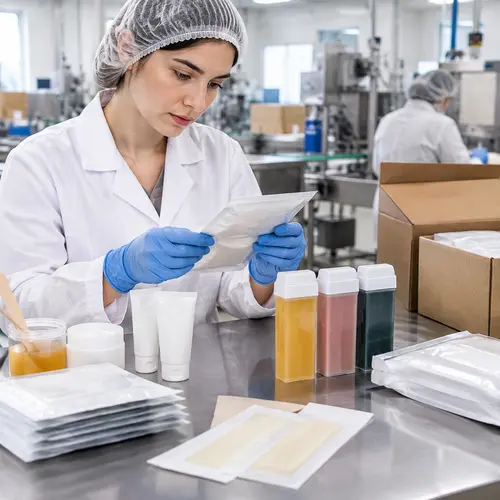
Use this checklist when comparing a contract manufacturer or ODM partner:
- Can it produce the required cream, cosmewax, sugar wax, strip, roll-on, and aftercare formats at the proposed scale?
- Does the sample file state the formula version, pack version, approved appearance, removal behavior, and revision history?
- Are MOQ, sample scope, revision charges, BOM lines, and logistics assumptions itemized?
- Can the supplier explain formula-to-pack compatibility and planned heat, cold, storage, and shipment reviews?
- Will it provide ingredient, label, lot-code, warning, and shipment documents for the target market?
- Does it retain reference samples, record deviations, and define what stops a lot from shipping?
- Can it state available capacity, lead times, and an escalation plan if demand rises after launch?
- Does the account contact answer technical questions clearly and record approved changes in writing?
Send the completed brief through the RFQ contact page only after the supplier has answered these points in writing.
FAQ
How can I stop a supplier from reusing my concept or formula?
Use a written confidentiality and ownership agreement before detailed disclosure, identify which formula and artwork belong to your brand, and state whether the supplier may sell the same base to another customer. Ask whether each ingredient, scent, and pack component is stock or exclusive. Have the commercial terms reviewed for the markets where you will sell.
Can a sample deliver the exaggerated visual effect I want on camera?
It can, but only when the visual target is defined and repeatable. Approve a physical sample under the intended studio light and screen setup, record acceptable color and texture limits, and keep the same formula and pack specification through production. Do not approve a dramatic image alone; inspect how the product spreads and removes in real use.
How do I reduce the risk of a batch that causes skin complaints?
No supplier can promise zero reactions. Review fragrance and ingredient disclosures, directions, warnings, intended-use limits, and an appropriate irritation-risk review before launch. Require lot release criteria, retained samples, deviation records, and a stop-ship process so an unusual texture, odor, or appearance is investigated before distribution.
What must be confirmed before I approve the first production order?
Sign off on the formula version, physical sample, pack components, label copy, fill quantity, carton configuration, MOQ, price assumptions, and shipment conditions. Record every approved change in one product file so a verbal revision does not become an untracked production difference.
How should I compare MOQ, labels, and shipment quotes between suppliers?
Compare MOQ by finished SKU, not only by formula. Separate sample and revision charges from production cost, request an itemized BOM, and check carton, freight, storage, temperature, ingredient, warning, and lot-code assumptions. A lower unit quote is not meaningful if the required pack, documents, or shipping protection are excluded.
References
- FDA Cosmetics Labeling Guide for U.S. cosmetic label elements and presentation.
- FDA Cosmetics for general FDA information relevant to cosmetic products and labeling.