Direct Answer
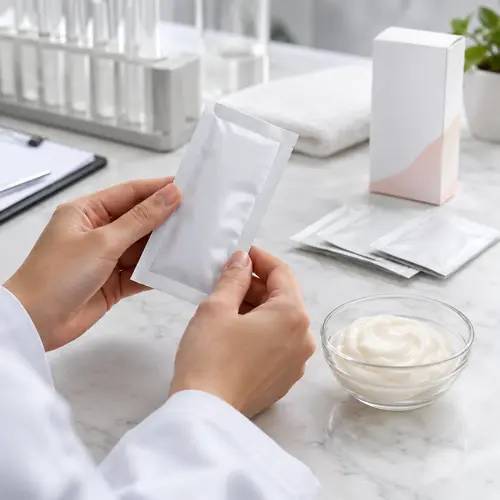
Single use hair removal sachets are retail-ready only when the formula, dose, instructions, warning language, and package barrier have been validated as one system. A sachet that looks premium but leaks, dries out, or leaves consumers unsure how long to leave the cream on can create returns, poor reviews, and avoidable safety complaints. For private-label buyers, the correct development brief should define the target body area, fill weight, application method, skin-contact warning, storage conditions, and intended sales channel before artwork is finalized.
The strongest format is compact, visually clear, and operationally simple: one measured removal cream dose, a readable direction panel, a traceable lot code, and packaging that protects the formula through filling, warehousing, and shipment. The same logic applies to wax strips, sugar wax portions, roll-on wax cartridges, and aftercare sachets. The objective is not merely a smaller pack. It is a controlled trial, travel, subscription, or promotional SKU that can perform consistently from first use to final delivery.
For a brand evaluating a hair removal OEM manufacturer, the practical question is whether the supplier can connect formula selection, sampling, packaging, documentation, and production without changing the product between approval and scale-up.
Key Takeaways for Private Label Buyers
- Write directions around the actual use case: body area, application thickness, timing range, removal method, and rinse-off requirements.
- Review the formula in the final sachet, not only in a laboratory jar. Viscosity, odor, color, spread, and dose perception can change after filling.
- Choose a laminate and seal structure that matches the formula, storage temperature, transport route, and expected shelf period.
- Require irritation-risk review, packaging compatibility checks, stability observations, and leakage testing before approving retail artwork.
- Keep the first production brief aligned with the approved sample. A different cream base or filling line can change consumer experience.
- Ask for a clear sample scope, minimum order quantity, labeling document list, shipment condition, and scale-up timeline before placing a launch order.
Buyer Context
Sachets matter because hair removal is a high-friction category. Consumers are applying a product to skin, often at home, with limited tolerance for mess, odor, discomfort, or unclear timing. A single-use format can lower the trial barrier for a creator-led brand, fit a subscription box, support salon sampling, or offer a travel-friendly extension to a full-size SKU. It can also reveal weaknesses quickly. A cream that looks smooth in a bottle may separate or become difficult to spread in a thin sachet. A wax portion that holds well in a jar may become brittle after repeated heat exposure. A roll-on cartridge can appear convenient while still creating leakage risk during fulfillment.
Retail readiness therefore involves more than attractive packaging. The buyer must decide what the consumer should receive, understand, and do within seconds. A depilatory cream sachet may need a pre-use skin test instruction, a maximum contact time, a warning for broken or irritated skin, and a clear rinse direction. Wax strips need readable separation instructions and a practical reminder about skin condition after removal. Aftercare products need compatible claims and a package that prevents contamination during use.
This is especially important for overseas creator brands. A short video may generate immediate demand, but the product must survive reviews, repeat purchase, marketplace inspection, and international fulfillment. A hair removal OEM ODM services partner should translate the brand concept into a controlled formula, a usable pack, and documents that support the selected market.
Technical or Packaging Factors
Directions must match the formula
Instructions should be written after the approved formula and use test are established. For depilatory cream, confirm the recommended application thickness, starting contact time, maximum contact time, removal technique, and rinse requirement. Do not publish a timing promise based only on a competitor package or a bench sample. Hair type, body area, and application amount influence performance. The final direction panel should be tested with the actual sachet dose so the consumer can understand whether one pack covers one area or one application.
For wax strips and sugar wax, directions should clarify whether the strip is ready to use, whether warming is needed, how the strip should be pressed, and how it should be removed. For roll-on wax, the buyer should review cartridge flow, roller alignment, cap fit, and residue control. For aftercare, confirm whether the product is intended immediately after removal and whether fragrance, alcohol, or other components create an avoidable irritation concern for freshly treated skin.
Packaging compatibility and seal performance
Sachet packaging must protect the formula from moisture loss, oxygen exposure, light, and handling damage. The supplier should identify the proposed film structure, seal width, seal temperature window, and filling conditions. The buyer does not need to specify every material layer, but should request a compatibility review showing that the formula does not weaken the laminate, migrate into the seal area, or cause pinhole leakage.
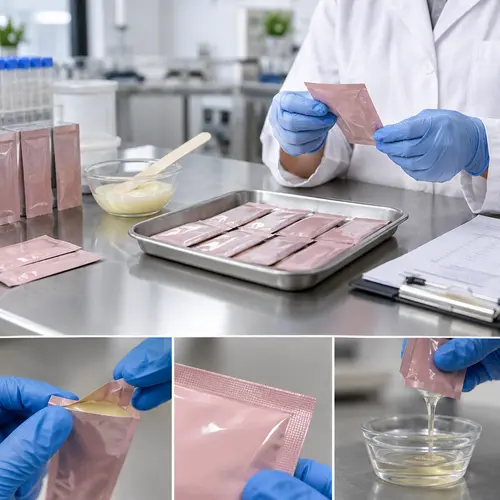
Ask for filled-pack checks rather than empty-film samples alone. Inspect seal integrity, burst or squeeze behavior, corner durability, print rub, and opening force. A package that is too difficult to open frustrates users; one that opens unpredictably can spill onto clothing or travel kits. For wax products, heat exposure during storage and transport can soften the product, distort the pack, or increase migration risk. For cream, cold conditions may change viscosity and make the dose harder to dispense.
Storage, testing, and documentation
Define expected storage and shipment conditions by market. Include hot-container or warm-warehouse exposure where relevant, cold exposure during winter delivery, vibration, compression, and repeated handling. A focused stability review should compare appearance, odor, viscosity or spread, phase behavior, seal condition, and package leakage over the planned observation period. The buyer should receive a record of the tested pack format, not a result from an unrelated container.
Labeling should be reviewed before mass production. Confirm ingredient naming, net contents, responsible-party information where required, lot identification, directions, warnings, country-specific language, and claim support. For the United States, review the FDA guidance on how cosmetics are regulated and check whether any colorants require permitted use under the FDA color additive permitted-use database. For UAE distribution, review the Dubai Municipality Montaji registration system; for Saudi Arabia, confirm applicable requirements through the SABER conformity certification platform. These checks do not replace market-specific review, but they help prevent artwork and document delays.
Decision Framework Table
| Factor | What to Check | Why It Matters | ODM Buyer Note |
|---|---|---|---|
| Formula dose | Fill weight, spread, odor, color, and coverage in the final sachet | Determines whether one pack delivers a predictable consumer experience | Approve a filled sample, not only a jar sample |
| Directions and warnings | Timing, skin-test instruction, prohibited use areas, rinse method, and lot code | Reduces misuse and supports marketplace review | Localize language before print approval |
| Film and seal | Barrier, seal integrity, opening force, leakage, and print durability | Protects product quality through handling and shipment | Test the formula and final artwork together |
| Storage and shipment | Warm and cold exposure, compression, vibration, and carton protection | Reveals failures that may not appear in a room-temperature sample | Match tests to the destination route |
| Scale-up control | Same formula, filling method, packaging specification, and inspection plan | Prevents a successful sample from becoming a different retail product | Document approval gates before production |
For a structured review of sampling, filling, inspection, packaging, and shipment, see the hair removal manufacturing process. Buyers comparing product formats can also review depilatory cream OEM, wax strips OEM, and post-depilation care OEM options. The final RFQ should state the target market, sachet dimensions, formula concept, sample quantity, artwork status, expected order volume, and shipment destination. That gives the supplier enough information to recommend a realistic package and production route instead of quoting an attractive but incomplete unit price.

ODM Manufacturing Considerations
For single use hair removal sachets and related wax products, sample approval should be treated as a controlled buyer decision rather than a quick visual sign-off. The approved sample should include the formula version, fragrance, color, fill weight, package material, artwork version, and intended use instructions. A retained reference sample gives both parties a practical standard when later production is compared.
Formula customization can involve texture, scent strength, color, spreadability, set time, removal feel, melting behavior, or viscosity. For depilatory cream, ask the supplier to document the target texture and acceptable appearance range, then review separation, odor change, and skin-feel variation after storage. For sugar wax or hard wax, confirm the usable melting range and whether the product becomes brittle, stringy, or excessively soft under expected salon or home-use conditions. Wax strips require an adhesion review that matches the selected wax and backing material.
Packaging compatibility should be checked with the actual formula and final fill process. A sachet may look acceptable during a short sample review but still show swelling, ink transfer, pinholes, seal weakness, or fragrance loss after heat exposure. For roll-on wax cartridges, review cap fit, roller movement, residual leakage, and package deformation after shipment simulation. Ask for the package material specification, seal temperature range, seal-width target, and a clear procedure for investigating failed seals.
Stability review should reflect the markets and shipment routes where the product will be sold. Request observations from warm, ambient, and cold conditions, including appearance, odor, viscosity, adhesion, melting behavior, and package integrity. This does not replace market-specific testing, but it helps identify obvious risks before a private-label launch. A supplier should also explain the sample scope, MOQ by formula and package format, repeat-order quantity, lead-time assumptions, and the cost of changing artwork or filling equipment.
Labeling documents should be requested before artwork is finalized. Depending on the product and destination, the file may include an ingredient declaration, usage directions, warnings, batch coding method, net contents, shelf-life or period-after-opening guidance, package specifications, safety data where applicable, and supporting color documentation. If a product uses a visible color effect, compare the selected colorants with the FDA color additive permitted-use database for the intended market. For Gulf distribution, confirm whether registration or conformity steps apply through the SABER conformity certification platform or the Dubai Municipality Montaji registration system.
Shipment conditions belong in the manufacturing brief. State whether cartons will travel by air, sea, courier, or mixed routes; identify the expected temperature range; and define how the factory will protect sachets, wax strips, cartridges, and aftercare units from crushing, freezing, overheating, or leakage. The best commercial quote is the one that makes these assumptions visible, including packaging costs, testing charges, pallet requirements, and freight estimates.

Common Problems or Failure Cases
Wax brittleness: Hard wax or sugar wax can crack during application or removal when the formula, cooling time, or package dose is not balanced. Compare several production samples at the intended use temperature and record whether the wax forms a flexible film, pulls unevenly, or leaves excessive residue.
Strip adhesion loss: Wax strips may lose pickup strength when the wax coating is too thin, the backing absorbs oil, or storage heat changes the surface. Test strips from different carton locations after warm and cold exposure. Check adhesion, clean removal, residue, and tear resistance rather than judging only by appearance.
Cream separation: A depilatory cream sachet can develop oiling, watery leakage, graininess, or color variation. Review filled samples, not only bulk formula. Check the sachet seal, headspace, fill weight, odor, and consistency before and after storage. Directions should match the confirmed use time and removal method.
Cartridge leakage: Roll-on wax cartridges may leak around the roller, cap, neck, or body seam during transport. Inspect units after vibration, compression, and temperature changes. A supplier should be able to identify whether the issue comes from the closure, fill level, wax flow, or package deformation and then document the corrective sample.
Fragrance sensitivity: A strong fragrance can become a customer complaint even when the removal performance is acceptable. Ask for an unscented or lower-fragrance option, review the ingredient declaration, and include fragrance acceptance in the approval record. Do not let a pleasing sample-room scent override the needs of the target market.
Packaging deformation: Thin sachets, plastic caps, and laminated pouches may wrinkle, swell, or lose their shape under warehouse heat. Confirm carton stacking limits, storage instructions, and shipment protection. A retail-ready package must remain legible, sealed, and presentable after realistic handling.
Supplier Checklist
- Confirm the formula version, intended use, texture, color, scent, dose, viscosity or melting behavior, and accepted variation range.
- Approve a retained sample with matching sachet, strip, cartridge, aftercare package, artwork, fill weight, and batch-code position.
- Request compatibility evidence for the actual packaging material, seal method, closure, adhesive, ink, and formula.
- Review warm, ambient, and cold storage observations for separation, leakage, brittleness, adhesion, odor, and package deformation.
- Ask for the MOQ, sample quantity, customization fee, artwork-change fee, lead-time assumptions, and repeat-order terms in writing.
- Verify labeling documents, ingredient declaration, warnings, directions, net contents, shelf-life information, and destination-market requirements.
- Define shipment mode, temperature exposure, carton protection, palletization, and responsibility for transit damage.
- Check the supplier contract for ownership of custom artwork, formula modifications, samples, tooling, and confidential brand information.
- Ask how production capacity is allocated during demand spikes and whether a confirmed forecast protects the agreed schedule.
- Require a pre-shipment review covering appearance, fill weight, seal or closure condition, package count, coding, and carton condition.
FAQ
Can a Chinese OEM/ODM supplier copy my formula or concept?
No contract can eliminate every business risk, but you can reduce it with a clear confidentiality and ownership agreement before sharing complete files. Define who owns custom formula changes, artwork, packaging specifications, test samples, and brand assets. Limit access to commercially necessary information, keep dated approval records, and ask whether the supplier already sells a similar base formula. A distinct scent, texture, package, and positioning can also make unauthorized duplication easier to identify.
Can the texture and color look dramatic enough for social media content?
They can, but camera appeal should be evaluated against real product performance. Ask for several controlled samples covering color intensity, gloss, spread, stringiness, foam-like appearance where relevant, and residue after removal. Review the sample under the lighting used for live selling or short-form video, then confirm that the visual effect does not compromise stability, directions, or irritation-risk review. The approved appearance range should be written into the sample record.
How can I reduce the risk of customers reporting severe irritation?
Ask for a documented ingredient review, clear warnings, use-time limits, patch-test language where appropriate, and a defined complaint process. Review the formula for fragrance and other known sensitivity concerns, and make sure the directions match the actual product. Quality checks cannot guarantee that every user will tolerate a depilatory product, so responsible labeling, traceable batches, retained samples, and prompt complaint investigation are essential.
Will the factory understand social media marketing requirements if I am not a chemist?
A capable supplier should translate marketing goals into measurable product requirements. Describe the intended video scene, use location, removal speed, texture, color, scent, package size, and customer experience. Ask the project manager to restate these needs in a written brief covering formula, packaging, content, and approval milestones. This reduces confusion between a visual promise in a live video and a specification that production can repeat.
What happens if a video goes viral and demand suddenly increases?
Ask about available filling lines, labor coverage, material reservation, maximum monthly output, and how confirmed orders are prioritized. A written forecast and rolling purchase plan can help protect capacity, but the supplier should state what is guaranteed and what depends on packaging or raw-material availability. Also ask whether the same formula and package can be produced at a second approved site or through an alternate filling schedule.
What shipment details should be approved before production?
Approve the shipping mode, carton dimensions, stacking limits, temperature assumptions, protection for sachets and cartridges, delivery terms, and inspection point. For wax products, specify how melting or freezing during transit will be handled. For creams and aftercare sachets, define acceptable leakage, swelling, separation, and odor changes at receipt.

References
- FDA Authority Over Cosmetics, for the distinction between cosmetic regulation and FDA approval claims.
- FDA color additive permitted-use database, for checking permitted color applications in the United States.
- SABER conformity certification platform, for Saudi product conformity and registration information.
- Dubai Municipality Montaji registration system, for Dubai product registration information.