Direct Answer
Effective cosmetic production lead time planning for hair-removal products requires artwork, packaging qualification, and claim review to begin in parallel after the formula and market brief are provisionally locked. They should not, however, reach final approval independently. Packaging must remain compatible with the confirmed bulk; artwork must reflect the final ingredient list and pack dimensions; and claims must match the available substantiation and each destination market’s classification rules.
For a qualified baseline formula with stock packaging, a production pathway of under 30 days may be feasible. That timeline becomes materially less reliable when the project includes custom molds, unqualified applicators, multiple regulatory markets, or claims such as reduced regrowth, sensitive-skin suitability, or prolonged smoothness. Procurement teams should therefore manage three approval gates: formula and claims lock, package-system release, and print-ready artwork approval. No filling or printed-material commitment should pass these gates based solely on an indicative sample.
Key Takeaways for Private Label Buyers
- Freeze the commercial brief early: Confirm product format, destination markets, pack size, application method, claim hierarchy, and forecast before final sampling.
- Qualify the complete pack system: The bottle, tube, cap, liner, cartridge, label, adhesive, and coding surface should be tested with the actual formula rather than reviewed as separate components.
- Separate visual approval from technical approval: A cream, wax, or aftercare sample may look acceptable while still failing viscosity, odor, leakage, adhesion, or storage checks.
- Do not print against a provisional ingredient list: Formula adjustments can change INCI order, warnings, directions, and market-specific artwork requirements.
- Treat claims as a critical-path input: Unsupported efficacy or sensitive-skin language can trigger artwork rework, legal escalation, or a different regulatory classification.
- Define launch risk explicitly: A short pilot run can support market entry, but it does not replace agreed stability, compatibility, and ongoing batch-control requirements.

Buyer Context
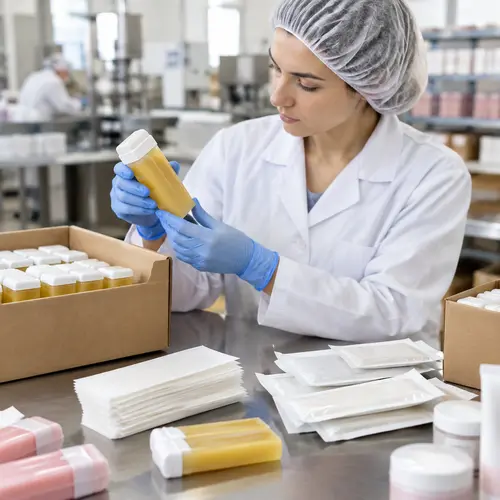
Hair-removal products combine unusually interdependent formula, pack, and user-safety variables. Depilatory creams may contain reactive reducing systems and require controlled viscosity, odor management, reliable closure performance, and clear exposure-time instructions. Hot wax and roll-on wax cartridges must remain stable during storage yet deliver predictable flow when heated. Sugar wax can lose water or change handling behavior if the closure has inadequate barrier performance. Wax strips depend on adhesive distribution, backing compatibility, peel behavior, and aging performance. Aftercare products add pumpability, soothing-claim, and kit-configuration considerations.
These dependencies explain why a procurement calendar based only on filling capacity is incomplete. A nominal production slot has limited value if printed tubes arrive before the formula is locked, if a roll-on cartridge leaks during elevated-temperature storage, or if legal review rejects the principal front-panel claim. The relevant sequence is documented in the hair removal manufacturing process, while project ownership and sample boundaries should be clarified under formal hair removal OEM ODM services.
The issue becomes more consequential when a group is qualifying alternative capacity after supplier disruption, responding to an adverse social-compliance audit, or coordinating one launch across several markets. In those situations, compressed timing should come from parallel workstreams and prequalified materials, not from bypassing release controls. A pilot scope starting from 1,000 units can reduce inventory exposure, but strategic qualification still requires evidence that the same formula, raw-material controls, equipment route, and quality plan can support later scale.
Product-specific briefs should distinguish among custom depilatory cream formulation, custom wax strips and hot wax, and post-depilation care OEM. Combining them into a single generic cosmetic brief obscures the package and testing risks that determine the real timeline.
Technical and Packaging Factors
Formula and Texture Lock
Final artwork should follow confirmation of the production-intent formula, not an early fragrance or texture sample. For depilatory cream, the buyer should review viscosity behavior, application uniformity, removal performance, odor evolution, and irritation-risk controls at the intended use time. Sensitive positioning requires a documented review pathway rather than softer wording alone; the development considerations for mild hair removal formula illustrate why claim language and test scope must be agreed together.
For wax, the technical brief should specify the usable heating range, flow or spread behavior, residue, hair pickup, and removal characteristics. Roll-on systems need particular attention to cartridge fit, roller rotation, wiper geometry, cap retention, and leakage after heat exposure. Wax strips require aging checks for adhesive migration, liner release, strip separation, and performance across intended storage conditions.
Packaging Compatibility and Storage
A packaging approval should cover direct-contact material, closure integrity, dispensing, label adhesion, code readability, and secondary-pack fit. Practical screening commonly includes upright and inverted storage, heat and cold exposure, repeated dispensing, leakage review, label rub resistance, and shipment simulation. The exact protocol should be risk-based and agreed before testing.
Stock packaging can shorten sourcing time, but stock status does not prove formula compatibility. Custom decoration can also introduce risk: ink, coating, hot stamping, label adhesive, or print position may behave differently after the filled pack is exposed to heat, oil, wax residue, or repeated handling. Buyers should request filled, decorated samples whenever the visual standard is commercially material.

Claim and Artwork Control
Allow approximately 2–5 business days for an initial technical and regulatory review after a complete brief is available, with additional cycles for legal or multi-market approval. The artwork file should reserve space for the final ingredient declaration, net contents, responsible-party information, directions, warnings, batch coding, and any market-specific language. Requirements vary by jurisdiction and product presentation.
Claims must remain within the evidence and intended cosmetic use. Buyers can benchmark wording against the FDA cosmetics guidance documents and review classification boundaries through Australia’s TGA cosmetic-therapeutic boundary guidance. Published research in the Journal of Cosmetic Dermatology may inform evidence planning, but a paper on a similar ingredient is not automatically substantiation for the finished formula. Shipment classification should also be checked where relevant against Amazon’s Hazmat classification rules for cosmetics.
As a planning allowance, stock packaging samples may require 5–10 business days, while custom components or decoration can require 15–30 business days before qualification starts. Initial filled-pack compatibility screening may require 2–4 weeks depending on formula risk and protocol. These periods can overlap, but a sub-30-day launch is credible only where the formula, component family, test matrix, and documentation route are already qualified.

Decision Framework
The following control matrix helps procurement, R&D, QA, regulatory, and legal teams distinguish parallel activity from irreversible commitment. It should be incorporated into the project guide and supplier responsibility matrix before purchase-order release.
| Factor | What to Check | Why It Matters | ODM Buyer Note |
|---|---|---|---|
| Formula status | Final INCI, texture, odor, use time, and production-intent sample | Changes can invalidate claims, artwork, and compatibility work | Record who can authorize formula changes |
| Primary packaging | Contact material, closure, dispenser, seal, fill level, and coding area | Prevents leakage, dispensing failure, and unreadable traceability | Approve the complete filled system |
| Wax performance | Heating behavior, spread, pickup, residue, and removal | Links storage stability to actual salon or consumer use | Define heating and handling instructions |
| Claims | Exact wording, evidence owner, market classification, and translation | Late rejection can force full artwork rework | Maintain a claim-to-evidence matrix |
| Artwork | Dieline, mandatory text, INCI, warnings, barcode, and batch-code clearance | Incorrect files can strand printed material | Use controlled version approval |
| Launch timing | Sample scope, component lead time, test status, MOQ, and shipment conditions | Separates an achievable date from an unsupported target | Link release gates to the depilatory product development solutions brief and formal hair removal product RFQ |
ODM Manufacturing Considerations
Within cosmetic production lead time planning, sample approval should mean more than accepting appearance and fragrance. The signed sample should identify the formula revision, color, odor profile, texture, target fill weight, application behavior, packaging components, and permitted production tolerances. For wax, buyers should record an acceptable melting or softening range and check brittleness after conditioning. For depilatory cream, the specification should define a measurable viscosity range, pH target, removal performance, and skin-tolerance review requirements.
Formula customization can affect several workstreams at once. A fragrance change may alter perceived irritation, cream structure, wax consistency, or regulatory documentation. Changes to wax resin, sugar concentration, emollients, or active depilatory ingredients may require renewed stability work and updated ingredient declarations. Buyers should therefore freeze a master sample and signed specification before approving commercial materials. The supplier’s OEM/ODM service process should explain who can authorize later revisions.
Packaging compatibility must be evaluated with the intended formula and production pack, not an empty component alone. Check seal integrity, cap retention, label adhesion, dimensional change, staining, product migration, and dispensing consistency after exposure to expected storage extremes. Roll-on cartridges also need consistent roller movement and seal performance, while wax strips require pouch protection against moisture and unintended contact with the wax layer.
Stability review should cover physical appearance, odor, texture, weight change, separation, crystallization, and pack function at defined checkpoints. MOQ should be clarified separately for formula production, printed packaging, decorated components, and finished goods because these quantities may not match. Required labeling documents commonly include the ingredient list, product specification, safety data where applicable, batch coding format, country-of-origin statement, warnings, directions, and claim support records.
Shipment planning should specify carton strength, pallet pattern, container loading limits, seasonal temperature exposure, orientation, and whether wax products require protective handling. Buyers can compare these controls with the supplier’s documented manufacturing process rather than relying only on a showroom sample.

Common Problems or Failure Cases
Wax becomes brittle or develops surface cracks: This can result from an unsuitable resin-to-oil balance, excessive cooling, moisture loss, or storage below the intended range. The supplier should compare the failed batch with the approved sample and raw-material records.
Wax strips lose adhesion: Weak bonding may appear after warm storage, pouch seal failure, liner interaction, or wax migration. Evaluate removal performance on representative hair and skin conditions, not only peel force immediately after manufacture.
Depilatory cream separates: Oil release, watery edges, graininess, or viscosity drift can indicate emulsification stress, ingredient variation, filling temperature problems, or pack interaction. Re-mixing a retained sample does not establish that the batch remains acceptable.
Roll-on cartridges leak: Leakage can arise from neck dimensions, roller tolerances, seal compression, filling temperature, or pressure changes during transport. Inspection should include units from different mold cavities and positions within the shipper carton.
Fragrance causes sensitivity complaints: A fragrance accepted for odor masking can still increase discomfort for some users. Review allergen declarations, usage level, regional labeling requirements, complaint patterns, and whether an unscented option is technically feasible.
Packaging deforms: Jars, pouches, or cartridges may distort because of formula contact, elevated storage temperature, stacking pressure, or insufficient wall thickness. A packaging change should trigger a focused confirmation rather than an automatic production release.
Supplier Checklist
- Confirm that each sample has a unique formula, packaging, and artwork revision code.
- Request measurable acceptance limits for viscosity, pH, melting or softening behavior, fill weight, color, odor, and application performance where relevant.
- Verify that irritation-risk decisions and fragrance restrictions are documented for every intended sales market.
- Review compatibility and stability protocols, test conditions, checkpoints, retained samples, deviations, and final approval authority.
- Separate MOQs for bulk formula, primary packs, printed materials, and finished hair-removal products.
- Check ingredient declarations, warnings, directions, batch coding, traceability records, and substantiation for visible claims.
- Audit incoming-material controls, supplier-change notification rules, and contingency plans for critical wax, resin, fragrance, and cream ingredients.
- Confirm carton configuration, pallet limits, transport orientation, temperature assumptions, and responsibility for transit damage investigations.
- Review complaint escalation, recall readiness, product-liability insurance, and access to batch and distribution records.
- If replacing a supplier after a quality incident, capacity interruption, or failed social-compliance audit, require independent verification rather than transferring the previous specification unchanged.
FAQ
Can a factory guarantee that our core formula will never be leaked?
No responsible supplier can promise absolute immunity from every breach. Buyers should verify role-based system access, segmented formula files, physical access restrictions, download and print logs, confidentiality agreements, employee exit controls, and incident-response procedures. Sensitive formulas can also be divided into controlled premixes so fewer personnel can access the complete composition.
How can a strategic buyer obtain priority during global raw-material shortages?
Priority should be defined contractually and supported operationally. Review rolling forecasts, reserved capacity, buyer-owned safety stock, allocation rules, approved alternate sources, and notification deadlines. Ask for evidence that substitute materials cannot be introduced without written approval. No supplier can eliminate shortage risk, but transparent allocation and dual qualification reduce disruption.
Can environmental, carbon, and worker-welfare records be independently traced?
They should be. Request permits, wastewater and emissions records, energy and carbon calculation boundaries, waste-transfer documents, payroll samples, working-hour records, age verification, grievance channels, and corrective-action history. The audit scope should permit confidential worker interviews and transaction-level sampling rather than relying solely on certificates supplied by management.
What insurance should cover a major quality complaint?
Ask for the policy certificate, insurer, insured entity, annual and per-event limits, covered sales territories, product exclusions, deductible, recall provisions, and claim-notification procedure. Confirm that the legal manufacturer and relevant hair-removal product types are included. Insurance does not replace batch traceability or a documented investigation and corrective-action process.
Can artwork printing begin before stability work is complete?
Prepress preparation can proceed at risk, but final printing should wait until the formula, ingredient declaration, warnings, directions, net contents, and claims are controlled. If schedule pressure requires parallel work, document who bears the cost of obsolete packaging and keep variable coding areas available.
How should buyers review hair-removal claims for different markets?
Classify each claim by market before artwork approval. Statements implying treatment, permanent effects, altered hair growth, or physiological action may change the regulatory category. Use market-specific legal review and retain evidence supporting performance and tolerance claims. Marketplace acceptance does not by itself establish regulatory compliance.
References
- FDA Cosmetics Guidance Documents provides current federal guidance relevant to cosmetic labeling and compliance responsibilities.
- Australia’s TGA cosmetic-therapeutic boundary guidance explains how ingredients and product claims can affect classification.
- The Journal of Cosmetic Dermatology publishes peer-reviewed research that may provide background for skin-tolerance and cosmetic performance assessments, although product-specific evidence is still required.