Direct Answer
A complete hair removal product line should be built as a focused system, not a catalog of unrelated formulas. Start with one visually distinctive hero product that fits your audience and content style, then add a dependable core format, a compatible kit or size option, and a simple aftercare product. For many private-label brands, that means choosing among depilatory cream, wax strips, hot or sugar wax, and roll-on wax before expanding into adjacent formats. The right mix depends on where customers use the product, how they apply it, and what they will reorder. Before launch, review texture and performance in the actual package, irritation risks and directions, storage conditions, and the documents required for each market. A defined sample scope, transparent BOM, and agreed production path help creators test the concept on camera without committing to a sprawling range before demand is clear.
Key Takeaways for Private Label Buyers
- Choose a hero format around a real use case and an on-camera moment, such as a visible wax pull or an easy-to-spread cream.
- Build a small core range first; use kits and sizes to test basket-building before adding more formulas.
- Approve texture and dispensing from production-representative packaging, not from a sample jar alone.
- Ask for a written test plan covering stability, packaging compatibility, leakage, and irritation-risk review.
- Confirm MOQ, sample scope, BOM inclusions, labeling documents, and shipment conditions before locking a launch date.
Buyer Context
A creator-led brand already has what many new beauty labels must first build: an audience and a point of view. The challenge is turning that attention into a product customers can understand, use correctly, and buy again. A line that launches with too many near-identical creams or waxes can split demand and make content less clear. A line built around a single format may be easier to explain, but it can leave customers without a logical next purchase.
Map the range to customer tasks. Depilatory cream may suit a quick, at-home removal routine; wax strips can support a portable kit; hot wax, sugar wax, or roll-on wax may serve customers who prefer a wax-based application. Post-removal care can complete the routine, but it should be positioned with realistic, supportable language. Compare hair removal product solutions by use case before deciding which formats belong together. For cream-led concepts, review custom depilatory cream formulation; for wax-led ranges, compare custom wax strips and hot wax.
For a first launch, a hero product plus a complementary format or aftercare item is often a clearer test than a broad assortment. Ask the ODM to show sample options that match the brief’s visual cues, then evaluate them under the lighting and application conditions used in your content. A sample review should capture the texture, color, spread, removal behavior, scent, and package in a repeatable way. That makes feedback actionable for the manufacturer and reduces the chance that a camera-ready sample differs from the approved production version.

Technical or Packaging Factors
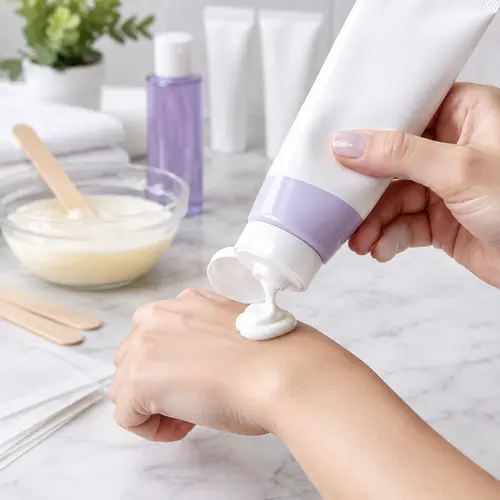
Product performance is a combination of formula, application, package, and instructions. For cream, agree on the target viscosity range and how the product should dispense through the selected tube or closure. Review odor, spread, rinse-off, and residue against the intended use, then confirm the same feel in packaged samples. If the concept is for sensitive users, build in an irritation-risk review and careful directions rather than promising that a formula will suit everyone. A mild hair removal formula still needs appropriate use instructions and market-specific label review.
Wax needs a different set of checks. Review softening or working behavior at the intended application temperature, spread, grip, and removal. For strips, assess coating uniformity and adhesion after storage; for roll-on cartridges, check flow and leakage after storage in more than one orientation. Sugar wax also needs a repeatable spread and removal profile. These checks should use the actual primary package, because a change in opening, applicator, or closure can alter how a customer handles the product.
Plan stability and shipping checks around realistic conditions for the target market. Ask how samples and finished goods will be assessed after heat and cold exposure, whether the formula changes in color, odor, separation, viscosity, or adhesion, and whether packs leak, deform, or become difficult to open. Agree on the storage range, shipment conditions, and acceptance criteria before approval. A sample that performs well at room temperature is not, by itself, proof that the packaged product will tolerate a hot delivery route.
Market-ready labeling is part of the product brief. Confirm the ingredient list, directions, warnings, net contents, responsible business details, and language requirements with qualified market support. Ingredient restrictions can differ by destination: review Health Canada’s cosmetic ingredient hotlist for Canadian plans and the Saudi FDA cosmetic registration framework for Saudi Arabia. Independent testing support may also help define the evidence needed; see Intertek’s regulatory testing and certification services. Build this review into the schedule rather than treating it as a final packaging task.

Decision Framework Table
Use this table to compare candidate SKUs and record what the sample, package, and launch plan must prove. The strongest concept is the one that fits the audience and passes practical review, not simply the one with the most dramatic first impression.
| Factor | What to Check | Why It Matters | ODM Buyer Note |
|---|---|---|---|
| Hero use case | Area of use, application steps, content demonstration, and removal method | Customers need to understand the product quickly and use it as directed | Share draft video concepts and request samples that reflect the real demonstration |
| Formula feel | Cream viscosity and spread; wax softening, grip, and removal; strip adhesion | Texture affects ease of use, perceived quality, and repeat purchase | Record approved sample characteristics and compare them with the production sample |
| Package fit | Dispensing, closure, opening, applicator fit, and leakage in likely storage positions | A formula can perform differently when dispensed from its final pack | Test the intended package with the formula, not an unrelated stock pack |
| Stability and shipment | Heat and cold exposure; changes in odor, color, separation, viscosity, adhesion, or pack condition | Transit and storage can change both product usability and presentation | Agree on conditions, observations, and acceptance criteria before shipment |
| Use and irritation risks | Intended use, directions, warnings, and review of potential irritation concerns | Clear use guidance supports a more responsible customer experience | Review claims and label language for each market with qualified support |
| Commercial readiness | MOQ, sample scope, BOM inclusions, label documents, production timing, and shipping terms | Unclear scope can create budget changes and missed launch windows | Request a written quote and define what must be approved before production |
For a complete view of sampling, filling, packaging, quality checks, and shipment, review the hair removal manufacturing process. A broader hair removal OEM ODM services discussion can help align formula, packaging, and private-label requirements. When the product brief is ready, use a hair removal product RFQ to request sample scope, pricing, MOQ, and shipment assumptions in one conversation.
ODM Manufacturing Considerations
A complete private-label range should be approved as controlled decisions, not one attractive sample. For each SKU, define use area, hair type, texture, color, fragrance level, application time, pack size, destination market, and content requirements. Map it to the supplier’s hair-removal product categories, then send the brief through its OEM/ODM service team and review the documented manufacturing process.
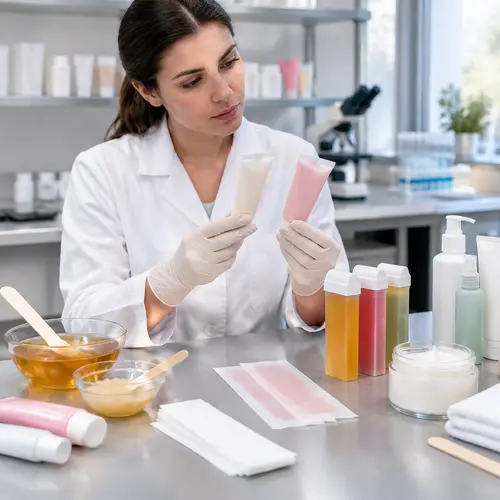
Sample confirmation. Give every sample a code, date, formula version, packaging version, and written acceptance points. Record appearance under defined light, odor intensity, texture, set time, net fill, and acceptable variation. A cream can dispense differently from a jar sample, while sugar wax or a roll-on cartridge can change in its final pack. Keep a retained approved sample. If a seven-day sample is promised, confirm whether it includes custom work, decoration, filling, and dispatch.
Formula customization. Ask for target ranges for cream viscosity, wax softening or melting point, sugar wax consistency, color, fragrance, residue, and aftercare format. Clarify whether the offer uses a standard base or a custom formula, who owns the resulting work, and what extra sampling or MOQ applies. For a visual product, use written targets and a physical reference because light and fill level affect camera appearance.
Packaging compatibility. Approve the formula with the actual tube, jar, sachet, strip liner, or cartridge. Check dispensing, seal, cap torque, liner fit, odor transfer, discoloration, wall swelling, and print adhesion. For roll-on wax, specify orientation and closure requirements during transit; for strips, confirm that the pouch and liner protect the coating. A short filled-pack run is more useful than an empty component approval.
Stability and shipment conditions. Use the intended pack and pilot-batch samples. Set storage intervals and temperature limits that reflect warehousing and transit, then define pass limits for appearance, odor, pH, viscosity, wax set, seal integrity, and net fill. Request the records and retest date. Shipment instructions should state carton orientation, pallet protection, maximum exposure, and the action for units held outside the agreed range.
MOQ, documents, and commercial scope. Separate minimums for formula, filling, printed components, cartons, and each color or fragrance option. A transparent BOM should show samples, testing, artwork setup, tooling if any, inner and outer packs, and estimated freight. Confirm first and repeat lead times and the cost of changing an approved sample. Request ingredient declaration, lot coding, net contents, directions, warnings, fragrance allergen information where required, shelf-life or PAO support, and COA or SDS documents when applicable. Send final artwork to the supplier’s RFQ contact for a written gap check before printing.
Common Problems or Failure Cases
Failures usually appear when the approved sample, final pack, and shipping route are treated as separate decisions. Require a lot code and retained sample for every pilot and commercial batch.
- Wax brittleness. Cracking or flaking after transit can mean the product is outside the agreed softening range or was stored below its working condition. Compare the shipment with the retained sample and set one test method plus clear conditioning instructions.
- Strip adhesion loss. Edge lift, uneven coverage, or weak hair pickup may come from coating-weight drift, liner mismatch, pouch damage, or excessive transit exposure. Request lot traceability, coating tolerance, liner specification, and damaged-unit inspection.
- Cream separation. Liquid bleed, lumps, or split layers point to a formula or pack issue. Check pH, viscosity, fill weight, tube material, and closure before releasing the lot.
- Cartridge leakage. Wax around the cap or stained cartons can result from ball fit, closure stress, expansion, or poor orientation. Test filled cartridges in the shipping position and retain transit samples.
- Fragrance sensitivity. Sharp odor, stinging, or redness complaints call for a lower-fragrance or unscented option, a documented ingredient declaration, and clear use warnings. Set a complaint threshold before launch.
- Packaging deformation. Tube paneling, warped pouches, or softened caps suggest a material mismatch or unsuitable storage. Compare empty and filled components and check cartons after transit.
For any failure, request the affected lot, containment decision, likely cause, corrective action, and replacement or rework plan. Replacing units without recording the pattern invites repeat defects.

Supplier Checklist
Use this list during the RFQ, sample approval, and first production review:
- Numbered master sample with formula, pack, color, fragrance, and tolerance control.
- Target viscosity or wax softening range with the test method.
- Compatibility evidence for the exact tube, pouch, strip liner, closure, or cartridge.
- Stability records, storage limits, shipment instructions, and retained samples.
- MOQ split by formula, fill, print, carton, color, and fragrance.
- Clear BOM, sample fees, lead times, change costs, and freight assumptions.
- Ingredient, label, lot, COA, SDS, and market-document support.
- Batch traceability, complaint handling, surge capacity, and written IP terms.
FAQ
How can I stop a factory from reusing my concept or formula?
Sign an NDA before sharing the full brief and define ownership, permitted use, and third-party restrictions in the contract. Separate your custom work from the supplier’s pre-existing base formulas, and keep formula codes, sample versions, and artwork access documented. An NDA alone does not transfer ownership of an older base.
Can the sample deliver the strong color and texture my video needs?
It can, if the brief defines color, opacity, gloss, texture, and fill level rather than saying only dramatic. Request a camera check under the same lighting and approve the physical sample, not a retouched image. Set an acceptable color range for production.
What protects my audience if a batch causes a skin reaction?
No manufacturer can promise zero reactions. Use a conservative fragrance brief, ingredient and warning checks, appropriate patch-test directions, lot traceability, retained samples, and a complaint hold or withdrawal plan. Agree in writing who investigates, who contacts distributors, and when the affected batch stops shipping.
How do I communicate when I do not understand ingredients?
Describe the consumer result, use area, texture, scent, visual effect, and content deadline in plain language. A capable account manager should translate that brief into measurable formula and pack requirements, explain tradeoffs, and flag claims that cannot be supported. Request the final specification in writing.
Can production keep up if a video creates a sudden order spike?
Ask for current line capacity, component lead times, reserved production windows, minimum forecast, and a surge plan before launch. A past overseas creator case is useful only when it shows volume, lead time, and release controls. Agree how priority changes affect your schedule and cost.
What should I request before entering a new market?
Request the ingredient declaration, label draft, warnings, batch coding, shelf-life support, and any market-specific certificates or test records. Compare the file with destination requirements, including Canada’s cosmetic ingredient hotlist or Saudi registration information, before printing. The supplier can prepare documents, but the brand owner remains responsible for final approval.