Direct Answer
Choosing among facial hair removal products private label formats starts with the use occasion, not the trendiest texture. Depilatory cream offers a familiar, accessible routine but requires careful control of active chemistry, dwell time, odor, and facial-skin tolerance. Wax strips are portable and easy to demonstrate, yet their performance depends on adhesive balance, backing material, storage temperature, and hair length. Sugar wax and hot wax can support a more ritual-led position, although technique and temperature management add user variability. Roll-on wax cartridges are efficient for professional or experienced users but need rigorous leakage and heating compatibility checks. Aftercare can strengthen any format by addressing the post-removal experience.
For most emerging DTC brands, the practical path is to shortlist two formats, test them with the intended packaging, and compare irritation risk, consumer instructions, shipping resilience, and repeat-purchase potential before committing to a launch SKU.
Key Takeaways for Private Label Buyers
- Select the format around the target user’s skill level, treatment area, and tolerance for preparation or cleanup.
- Review the complete formula specification, including texture, active system, application time, removal behavior, odor, and post-use skin feel.
- Test the formula and packaging together. A stable cream in a lab jar may behave differently in a tube, pump, sachet, or roll-on cartridge.
- Define heat, cold, leakage, transport, and aging checks before approving artwork or placing packaging commitments.
- Keep claims aligned with cosmetic regulations and available evidence; avoid language that turns a cosmetic removal product into an implied therapeutic product.
- Use pilot quantities and controlled sampling to validate demand without changing the approved formulation between the test run and later scale-up.
Buyer Context
Facial hair removal is a compact category with unusually little room for a poor first impression. Consumers apply the product near the upper lip, chin, jawline, or brows, where odor, redness, residue, pulling sensation, and packaging mess are immediately visible. Social content can generate interest within hours, but the same visibility can amplify complaints when instructions are unclear or batches feel inconsistent.
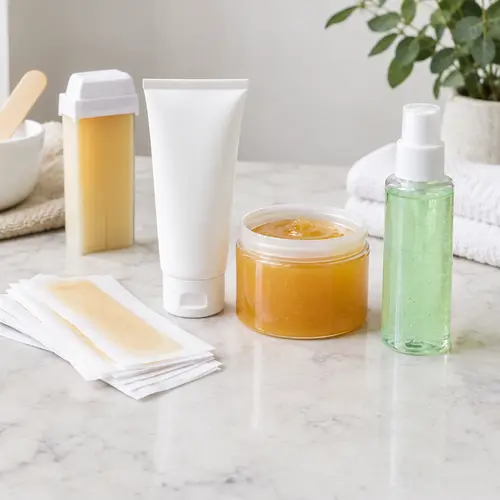
The commercial decision therefore extends beyond choosing between cream and wax. A brand must decide whether it is selling convenience, precision, salon-like ritual, sensitive-skin reassurance, or a complete removal-and-recovery routine. A depilatory cream may suit users who want a fast, tool-free application. Pre-coated strips can simplify travel and first-time use. Sugar wax can support an ingredient-led story, while hot wax and roll-on formats may fit buyers comfortable with preparation. A paired calming gel or lotion can make the experience feel more complete; the relevant development options are outlined in post-depilation care OEM.
Operationally, format also determines the sampling plan and launch risk. Cream projects require close review of active compatibility, pH specification, viscosity, odor control, and facial-use directions. Wax formats add adhesion, softening behavior, strip release, heating, and residue considerations. Buyers comparing a broader format portfolio can use depilatory product development solutions and private label hair removal products to map product concepts before requesting samples.
Regulatory classification and labeling must be reviewed market by market. In the United States, the FDA Cosmetics Labeling Guide provides a useful starting point for label structure. Brands entering Great Britain should account for the UK SCPN cosmetic notification protocol. Canadian projects should check Health Canada’s cosmetic ingredient requirements, while claims for Australia should be screened against Australia’s TGA cosmetic-therapeutic boundary guidance.
Technical and Packaging Factors
Formula Performance and Facial-Skin Fit
For a depilatory cream, request the target and release ranges for pH and viscosity rather than accepting a single development-sample reading. Ask how the active system is controlled through filling and storage, whether odor changes during aging, and how the stated application time was established. The review should include removal completeness, residue, rinse behavior, and visible skin response under the intended directions. A supplier’s custom depilatory cream formulation workflow should make these checkpoints available before packaging is finalized.
A facial claim does not automatically mean a formula is appropriate for every skin profile. Build an irritation-risk review covering intended area, maximum contact time, warnings, patch-test language, and foreseeable misuse. For positioning centered on gentleness, compare the evidence and sensory tradeoffs behind mild hair removal formula options instead of relying on a softer fragrance or a sensitive label alone.
Wax Behavior and User Technique
Wax must be assessed as a temperature-dependent material. For hot wax or sugar wax, define the acceptable application texture, heating method, softening or melting range, working time, pickup, breakage, and residue. For strips, inspect adhesive transfer, peel consistency, backing flexibility, and performance after warm and cool storage. Facial hair can be fine, short, and directionally uneven, so a strong pull is not by itself proof of good performance. The goal is reliable hair pickup without unnecessary skin drag.
Roll-on cartridges need a separate compatibility review. Check roller rotation before and after conditioning, cap security, seam integrity, product flow at the specified operating temperature, and leakage in upright, inverted, and side storage. Comparable wax formats and component options can be reviewed through custom wax strips and hot wax.

Packaging, Stability, and Shipment
Primary packaging is part of the formula system. Depilatory cream can interact with tube laminates, seals, pumps, liners, and printed surfaces. Wax can creep around closures, distort components when warm, or become too firm in cold transit. Ask for compatibility observations covering odor, color, weight loss, seal condition, dispensing, label adhesion, and pack appearance. An initial protocol may include storage at 4 C, 25 C, and 40 C, three freeze-thaw cycles, and an 8- to 12-week accelerated review, but the final conditions should reflect the formula, component, route, and destination market.
Sampling should include the intended commercial component whenever possible. A 3- to 5-day texture sample can help narrow the formula direction, but it cannot replace filled-pack stability, compatibility, or shipment testing. Confirm which evaluations are included in the initial sample scope, what requires final packaging, and which documents accompany approval. The hair removal manufacturing process should connect sample sign-off, filling controls, packaging inspection, and final quality release without silently changing the approved formula.
Decision Framework
| Factor | What to Check | Why It Matters | ODM Buyer Note |
|---|---|---|---|
| User routine | Preparation, application time, removal steps, cleanup, and skill level | Routine complexity affects conversion, reviews, and repeat use | Test instructions with first-time users, not only trained evaluators |
| Formula specification | Texture, pH or softening range, viscosity where relevant, odor, and residue | Release ranges support consistent batches and defensible approvals | Approve measurable limits alongside the sensory benchmark |
| Facial-use safety | Contact time, target area, warnings, irritation review, and patch-test language | Facial application increases the impact of misuse and visible reactions | Match claims and directions to the completed assessment |
| Packaging compatibility | Seal integrity, dispensing, leakage, label adhesion, and component interaction | Formula stability alone does not prove pack performance | Repeat checks in the final decorated component |
| Storage and shipment | Heat, cold, cycling, orientation, vibration, and destination climate | Wax flow and cream viscosity can shift during cross-border transport | Agree acceptance criteria before shipment validation begins |
| Launch architecture | Sample scope, 1,000-unit pilot feasibility, documentation, and replenishment timing | A controlled first run protects cash while preserving a scalable specification | Use custom hair removal product development to define responsibilities, then get a private label sample against a written brief |
ODM Manufacturing Considerations
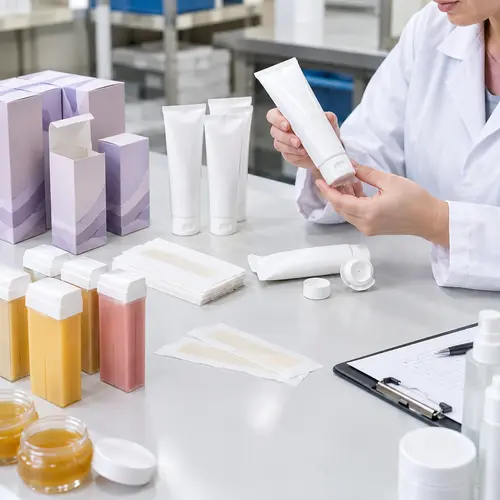
For a facial hair removal products private label project, sample approval should be treated as a controlled specification decision, not a simple preference test. The buyer should receive samples in the intended product format and evaluate application, removal efficiency, residue, scent, skin feel, and cleanup. For wax formats, record the target melting or use-temperature range, spread behavior, set time, flexibility, and break pattern. For depilatory cream, document appearance, dispensing behavior, viscosity range, contact-time instructions, and removal performance on the intended facial-hair profile. Approval records should identify the sample code and revision so the confirmed version can be matched to later production.
Formula customization should begin with a written product brief covering target users, excluded ingredients, fragrance direction, claims, color, after-feel, and regional market. A stock formula can still be differentiated through a meaningful combination of fragrance, wax flexibility, application format, aftercare pairing, pack size, and sourced specialty ingredients. When a brand story depends on a particular botanical oil or wax component, request supplier identity, country of origin, specification, and lot-level traceability. Any modification can affect use performance, so revised samples should be evaluated against the approved benchmark rather than accepted only because the ingredient list looks different.
Packaging should be assessed using production-intent components. Fill the selected tube, jar, sachet, strip pouch, or roll-on cartridge with the actual formula and monitor closure integrity, dispensing, staining, odor transfer, panel warping, label lifting, and formula loss. Wax strip buyers should also verify pouch seal consistency and whether storage pressure causes unwanted transfer between strip layers. For cartridges, inspect the roller fit, cap retention, and seepage after upright, inverted, and side storage.
Stability review should follow a written protocol with acceptance criteria for appearance, odor, viscosity or wax behavior, net weight, pack dimensions, and functional performance. Samples exposed to elevated, ambient, chilled, and repeated transport-like conditions should be compared with retained controls. A change may be acceptable only when it does not compromise safety, instructions, removal performance, or packaging function. The final report should identify the tested formula revision, component codes, observations, and disposition.
MOQ discussions should separate formula batch minimums from packaging minimums. Printed pouches, decorated tubes, custom cartons, and molded parts may each have different thresholds. Buyers should request a cost model showing sample charges, component setup costs, testing, artwork preparation, production quantity, and overage policy. This makes it possible to compare the unit economics with expected customer acquisition cost without assuming that a low initial quantity will carry the same unit price as a mature reorder.
Before artwork approval, obtain the ingredient declaration, product identity, net-content format, warning language, directions, responsible-party details, batch coding plan, and available substantiation for proposed claims. Market-specific responsibilities should be documented. For example, the United States has detailed cosmetic label presentation requirements, while Great Britain requires notification through the SCPN process. Shipment planning should define carton strength, inner protection, pallet pattern where applicable, acceptable transit temperature exposure, lot identification, and the inspection process for leakage or deformation on arrival.

Common Problems or Failure Cases
Wax becomes brittle or cracks during removal. This can result from a mismatch between formula flexibility, application thickness, room conditions, and removal timing. Compare retained samples from the approved lot and affected lot, then review raw-material records and measured use behavior before changing instructions or formulation.
Wax strips lose adhesion. Common contributors include wax migration, pouch seal defects, prolonged compression, unsuitable storage, or variation in coating weight. Buyers should inspect unopened packs from multiple cartons and compare peel feel, coating distribution, and removal performance across the lot.
Depilatory cream separates or dispenses unevenly. Separation, liquid weeping, graininess, or a sharp change in flow can indicate formula instability or pack interaction. The investigation should cover batch records, component lots, storage history, and results from retained units. A visually remixed sample should not be treated as proof that the product remains acceptable.
Roll-on cartridges leak. Leakage may originate at the roller housing, cap, or cartridge seam and can worsen during temperature or pressure changes. Use orientation-specific inspection records and weigh suspect units against controls to distinguish formula loss from cosmetic surface residue.
Fragrance causes unexpected sensitivity complaints. Facial use requires conservative fragrance decisions and clear review of fragrance documentation, allergens, and intended market rules. Complaint patterns should be examined by lot, use duration, and application area. Claims such as fragrance-free or suitable for sensitive skin need evidence appropriate to the wording.
Packaging deforms in distribution. Panels may collapse, caps may loosen, or pouches may wrinkle when component strength and transport exposure are poorly matched. Shipping trials should use the final case configuration and realistic fill weights, not empty display samples.

Supplier Checklist
- Confirm experience with the exact format: facial wax, wax strips, sugar wax, depilatory cream, roll-on cartridges, or aftercare.
- Request a sample brief, revision code, acceptance form, and retained-sample policy.
- Define measurable formula criteria, including viscosity or melting range where relevant, application behavior, removal result, residue, odor, and skin-feel expectations.
- Review ingredient specifications, fragrance documents, restricted-substance controls, and traceability for story-critical materials.
- Evaluate the actual formula in the intended pack for dispensing, sealing, migration, staining, deformation, and leakage.
- Ask for the stability protocol, acceptance limits, observation schedule, and final disposition process.
- Separate formula, filling, decoration, and component minimums when comparing MOQ and unit cost.
- Confirm artwork controls, ingredient-list responsibility, warnings, directions, batch coding, and documents supplied for each destination market.
- Review carton configuration, transport exposure assumptions, arrival inspection, defect handling, and lot-recall traceability.
- For an urgent replacement project, verify available capacity, component lead times, sample turnaround, and whether the supplier can reproduce a documented benchmark without bypassing validation.
FAQ
Can an Asian manufacturing partner verifiably meet Western clean beauty and cruelty-free expectations?
Location alone does not establish compliance. Define the exact restricted-ingredient standard and cruelty-free program in the contract, then request current policies, raw-material declarations, supplier attestations, audit evidence, and certification scope where applicable. The term clean beauty has no single universal legal definition, so the buyer must convert it into an auditable specification.
Will a low MOQ make the unit cost impossible to support against CAC?
It can, particularly when decorated packaging has high setup costs. Compare contribution margin at the pilot quantity and at realistic reorder tiers. Separate one-time artwork, testing, and tooling charges from recurring product cost, and consider standard components with custom labels or cartons during market validation.
Will a turnkey base formula make the product indistinguishable from competing brands?
Not necessarily. Differentiation can come from documented adjustments to use behavior, fragrance, format, pack configuration, instructions, aftercare, and traceable specialty ingredients. Ask which formula elements are fixed, which can be changed, whether exclusivity is available, and how the revised version will be identified and controlled.
What should be approved before the first production run?
Approve the coded formula sample, physical specifications, production-intent packaging, artwork, label copy, test plan, quality limits, defect examples, case pack, and shipment terms. Each approval should have a date, revision, and named decision owner.
Which labeling documents should a supplier provide?
At minimum, request the ingredient declaration, formula identifier, relevant safety documentation, product specifications, batch-coding format, directions and warnings support, and available claim substantiation. Regulatory notification and responsible-person duties should be assigned by market rather than assumed to belong automatically to one party.
How should buyers assess an urgent replacement supplier?
Provide a controlled benchmark, current pack dimensions, required documents, forecast, and failure history. Evaluate response speed, but do not waive sample comparison, component-fit checks, lot traceability, or shipment qualification. A transparent compliance workflow is more useful than an unsupported promise of immediate equivalence.