Direct Answer
For a DTC hair removal product line, packaging should do three jobs at once: earn attention in a crowded feed or retail shelf, protect the formula through shipment and storage, and make every required label statement easy to verify. The strongest launch system is usually not the most decorative one. It is a coordinated choice of formula texture, primary container, closure, secondary pack, shipping protection, and market-specific labeling.
Start with the product format and use case. A depilatory cream needs chemical compatibility, controlled dispensing, and clear dwell-time instructions. Wax strips need reliable adhesion and protection from heat. Roll-on wax needs cartridge sealing and leakage testing. Aftercare needs a container that supports clean, repeated use. Before artwork is finalized, request filled samples, storage-condition checks, label-document review, and a shipment simulation from an ODM partner. The goal is shelf appeal that survives the journey from social-media discovery to the customer bathroom.
Key Takeaways for Private Label Buyers
- Choose packaging with the formula, application area, viscosity, melting behavior, and expected shipping climate in mind.
- Review the front panel for fast recognition, then verify the back panel for ingredients, directions, warnings, net contents, responsible-party details, and market-specific requirements.
- Use filled packaging samples for compatibility testing; an empty component review cannot reveal swelling, stress cracking, pump failure, adhesive migration, or leakage.
- Test heat, cold, vibration, compression, and drop exposure before approving a launch quantity, especially for wax and cream formats.
- Ask for a documented sample scope, pilot quantity, stability plan, and quality release criteria so the approved sample matches the production batch.
- Keep sustainability claims specific and traceable. State the material and disposal guidance only when supporting documentation is available.
Buyer Context
Packaging decisions matter more in hair removal than many buyers initially expect because the product may move through several physical states. Depilatory cream can soften, separate, or become harder to dispense when exposed to heat or cold. Sugar wax and hot wax depend on texture and melting behavior. Wax strips require a stable bond between the strip substrate and wax layer, while roll-on cartridges must remain sealed during storage, parcel handling, and consumer use. Aftercare products need a clean dispensing experience because they are often applied immediately after hair removal, when the skin may feel sensitive.
For a Shopify, Amazon, or TikTok Shop launch, packaging is also part of the conversion system. The thumbnail must communicate product type quickly. The physical pack must look intentional when unboxed on camera. The label must give customers enough information to use the product correctly without forcing them to search through a product page. A visually minimal design can work well, but minimal does not mean incomplete. Claims such as vegan, cruelty-free, fragrance-free, or suitable for sensitive skin need an evidence and documentation pathway before they appear on artwork.
This is where a coordinated hair removal product solutions review is useful. The buyer should evaluate the cream, wax, strip, or aftercare SKU together with its component selection, label copy, shipment route, and intended market. A packaging choice that performs well for a salon carton may be inefficient for a direct-to-consumer parcel. Conversely, a premium-looking jar may create unnecessary leakage or contamination risk for a cream sold in warm regions.
Compliance should be treated as a design input, not a final artwork check. For United States launches, consult the FDA’s regulatory framework for cosmetics and confirm the responsible-party, ingredient, warning, and facility documentation pathway. For launches in Dubai, review the Dubai Municipality Montaji registration system. An ODM partner should provide a document checklist early enough for label review, not after cartons are printed.
Technical and Packaging Factors
Formula and container compatibility
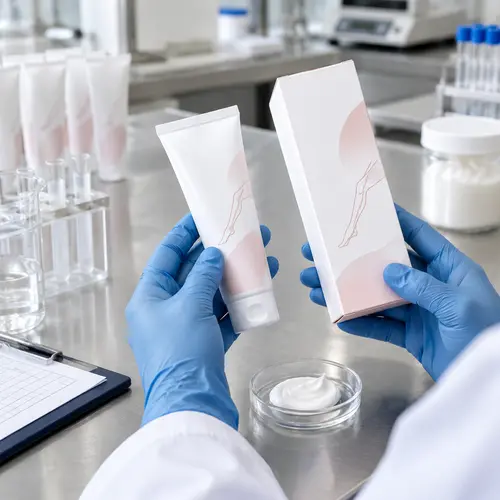
Compatibility testing should use the intended formula, fill level, closure, label stock, and decoration method. For depilatory cream, check whether the formula changes the container wall, liner, pump, or nozzle after storage. Observe color, odor, viscosity, dispensing force, and seal condition. A tube may provide better dose control than a jar, while a wide-mouth pack may be easier for a body product but less attractive for a travel-focused launch.
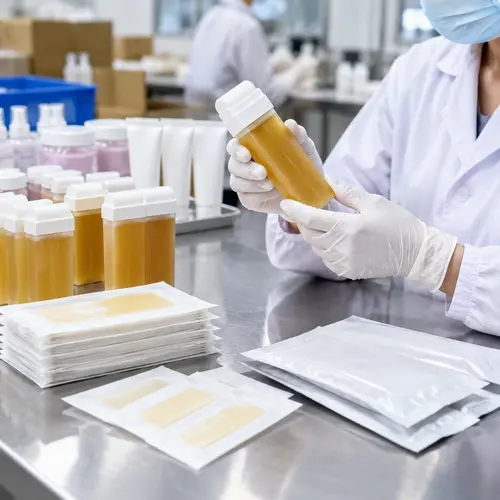
For wax, document the expected texture and softening behavior at the relevant storage conditions. A roll-on cartridge should be checked for cap security, roller movement, wiper performance, and leakage after orientation changes. Wax strips need adhesion aging checks, release-paper performance, edge sealing, and resistance to wax transfer onto the pouch. If a product requires heating before use, the instructions and pack material must be reviewed together so the consumer is not encouraged to apply an unsuitable container to heat.
Shipping and storage
Packaging approval should include a shipment simulation that reflects the actual route. Evaluate hot and cold exposure, vibration, compression, drop impact, and prolonged orientation changes. Inspect the primary pack and outer carton for leakage, denting, label scuffing, adhesive lift, and closure failure. The test plan should distinguish between cosmetic damage and a functional failure that could create a customer complaint.
Secondary packaging should protect the product without making the parcel unnecessarily large. For wax and cream products, headspace, closure torque, inner seals, and carton fit can affect leakage performance. For subscription or influencer seeding, an insert may improve the unboxing experience, but it should not cover mandatory information or create a loose component that damages the product in transit. Ask the supplier to document the approved component specification so a later substitution does not quietly change performance.
Label clarity and visual hierarchy
A useful label answers four questions quickly: what is the product, where is it used, how is it used, and what should the customer avoid? Product name, format, net contents, directions, warnings, ingredients, batch identification, and responsible-party information should remain legible at the smallest planned pack size. Do not let decorative typography reduce contrast or force critical copy into an unreadable panel.
Before print approval, compare the label against the filled sample rather than a flat artwork file. Curved tubes, small cartridges, and flexible pouches can distort text and make seams interfere with information. Ask for a final proof showing the actual print area, barcode position, label overlap, and lot-code location. Documentation should support every regulated or marketing statement. Packaging sustainability claims should identify the material and disposal conditions instead of relying on broad language that may be difficult to substantiate.
Decision Framework Table
| Factor | What to Check | Why It Matters | ODM Buyer Note |
|---|---|---|---|
| Formula texture | Viscosity, spread, dispensing force, wax softening, and residue | Controls application experience and repeat purchase confidence | Approve filled samples using the final formula and container |
| Material compatibility | Swelling, cracking, odor transfer, label lift, and seal condition | Prevents leakage, contamination, and visible quality defects | Request compatibility observations by component and storage condition |
| Shipping durability | Heat, cold, vibration, compression, drop, and orientation changes | Connects laboratory approval with real parcel performance | Use the intended carton, closure, and shipment configuration |
| Label clarity | Ingredients, directions, warnings, net contents, batch code, and responsible party | Supports safe use and market-specific compliance review | Review a proof on the actual pack, not artwork alone |
| Launch flexibility | Sample scope, pilot quantity, scale-up controls, and component availability | Reduces delay when a DTC test needs to become a repeat order | Confirm the same formula and specification can continue into larger runs |
For a deeper review, compare the documented hair removal manufacturing process, including sampling, filling, packaging, quality control, and shipment release. Buyers evaluating cream formats can also review custom depilatory cream formulation, while wax-focused teams may need custom wax strips and hot wax. Sensitive-skin positioning should be supported by an irritation-risk review through mild hair removal formula development, not by packaging language alone.
Packaging should also fit the broader product architecture. A launch kit may combine a depilatory format with soothing gel after hair removal or an after hair removal serum, provided each component has its own compatibility, labeling, and shipment review. For buyers ready to compare samples and specifications, the hair removal OEM ODM services page outlines the development scope, and a hair removal product RFQ can include packaging, pilot quantity, documentation, and shipping conditions from the beginning.

ODM Manufacturing Considerations
For a DTC hair removal product line, the manufacturing decision should be managed as a sequence of documented approvals rather than a single sample review. The buyer needs to confirm the formula, package, label, shipment conditions, and commercial scope before production planning begins. This is especially important for depilatory cream, wax strips, sugar wax, hot wax, and roll-on wax cartridges because temperature, viscosity, adhesion, and closure performance can change the customer experience.
Sample confirmation and formula customization
Start with a defined sample brief. Record the intended use area, target consumer, fragrance preference, application thickness, removal time, residue level, and aftercare expectation. For cream, review spreadability, rinse behavior, odor, and the irritation-risk profile of the finished formula. For wax, confirm melting behavior, working temperature, stringiness, flexibility after cooling, and whether the texture suits home users or salon professionals.
A standard formula base may shorten development, but it should not determine the entire product identity. Ask which parameters can be adjusted, such as fragrance level, color, wax hardness, cream viscosity, strip substrate, or aftercare format. Require a retained sample and written approval record for each revision so the final batch can be compared against the approved reference.
Packaging compatibility and stability review
Packaging should be selected alongside the formula. A cream may interact with a tube liner, cap, or air exposure over time. Wax can soften in a warm warehouse, become brittle in cold transport, or migrate into a cartridge seam. Strip packaging must protect adhesion without allowing heat, humidity, or pressure to change the strip surface. Request compatibility observations for the actual container and closure combination, including appearance, odor, viscosity, leakage, adhesion, and dispensing performance.
The stability plan should reflect the markets and shipping routes being considered. Ask for clear storage conditions, sample quantities, observation intervals, and acceptance criteria. The review should include warm and cool conditions, expected warehouse exposure, and transit duration. A useful report identifies whether any change is cosmetic, functional, or a potential consumer-safety concern.
MOQ, labeling documents, and shipment conditions
MOQ should be evaluated with the full launch budget, not unit price alone. Ask for separate quantities for development samples, pilot packaging, first commercial production, and later repeat runs. A lower initial quantity may carry higher setup and packaging costs, while a larger run can create storage risk if the product has a limited practical shelf life or an uncertain market response. Request a cost structure that distinguishes formula, container, printed components, testing, and fulfillment preparation.
Labeling documents should be available before artwork is finalized. Depending on the destination, the file may need a complete ingredient declaration, net contents, batch coding method, shelf-life or period-after-opening guidance, warnings, directions, responsible-party information, and supporting product specifications. Buyers should independently confirm market obligations. The FDA’s regulatory framework for cosmetics is a useful reference for U.S. cosmetic labeling and compliance considerations. For Dubai-bound products, review the Dubai Municipality Montaji registration system and confirm which documents and product information are required for the selected category.
Shipment conditions should be written into the approval record. Specify temperature limits, pallet or carton configuration, orientation requirements, protection from crushing, and whether the product can tolerate ordinary parcel handling. For wax and cream, the buyer should know what appearance or texture changes may occur after exposure to heat or cold and what action is required before sale.

Common Problems or Failure Cases
Hair removal products often fail at the boundary between formula performance and real distribution conditions. Identifying those boundaries during development helps prevent refunds, poor reviews, and expensive relabeling.
- Wax brittleness: A sugar wax or hard wax may crack, crumble, or lose workable flexibility after cold storage. Confirm the melting or softening range and test application behavior after the product returns to normal room conditions.
- Strip adhesion loss: Wax strips may lose pickup strength when exposed to humidity, heat, or an unsuitable release layer. Compare adhesion before and after storage and confirm that the strip removes hair without leaving excessive residue or requiring repeated passes.
- Cream separation: A depilatory cream can develop oiling, water release, graininess, or an uneven color profile. Check the product at different temperatures and after simulated handling, then compare odor and application texture with the approved sample.
- Cartridge leakage: Roll-on wax cartridges can leak around the applicator, cap, or body when pressure and temperature change during shipment. Inspect upright and horizontal samples, review the filling level, and test the cartridge after transit simulation.
- Fragrance sensitivity: A strong fragrance may cover the characteristic odor of a depilatory cream but increase consumer complaints. Review fragrance concentration, allergen declarations where applicable, and the intended use area. A face product requires especially conservative irritation-risk review.
- Packaging deformation: Tubes, pouches, cartons, or plastic trays may warp, collapse, discolor, or become difficult to open after heat exposure. Evaluate both the primary package and retail presentation under the planned storage conditions.
Each failure should be linked to a corrective action and a revised approval sample. Do not accept a general statement that the item is stable; ask what was observed, under which conditions, and what limits define a pass.
Supplier Checklist
Before approving a hair removal manufacturing partner, verify the following points:
- Can the supplier provide controlled samples for depilatory cream, wax, strips, sugar wax, or cartridges that match the proposed use case?
- Are formula changes documented with version numbers, retained samples, and buyer approval records?
- Does the packaging review use the actual filled container, applicator, strip material, or cartridge format?
- Are texture, viscosity, melting behavior, adhesion, odor, residue, and irritation-risk considerations defined as measurable or reviewable criteria?
- Does the stability file state storage conditions, review intervals, sample identity, and acceptance limits?
- Are MOQ and setup charges separated from formula, packaging, testing, labeling, and shipping costs?
- Can the supplier provide an ingredient declaration, product specification, safety information, batch coding approach, and destination-market label support?
- Are shipment conditions documented for heat, cold, humidity, carton compression, and orientation?
- Can the buyer inspect relevant quality-system credentials, audit records, and social-compliance documentation rather than relying on logo images?
- Is there a written NDA and a clear ownership statement covering the custom formula, artwork, packaging files, and product brief?
For a new launch, request a small sample set that includes the approved reference, a retained production sample, and packaging samples from the intended supply route. This gives the buyer a practical basis for comparing formula drift and transit damage.

FAQ
Can an Asian manufacturing partner meet European or U.S. Clean Beauty and cruelty-free expectations?
Geographic location does not prove compliance. Ask for the ingredient policy, restricted-substance controls, animal-testing position, supplier declarations, and supporting documentation for the finished formula. The buyer should also define what Clean Beauty means for the brand, because the term has no single universal legal standard. Claims must match the evidence and the destination-market rules.
Will a low MOQ make the unit cost too high for a DTC launch?
It can, particularly when custom printed packaging, special wax textures, or multiple fragrance options create setup charges. Request a launch model showing one formula, one package, and one or two manageable variants. Compare total landed cost, expected sell-through, and storage exposure instead of judging the formula price alone.
Will a turnkey or existing formula make my product look identical to competing brands?
It may if the formula, fragrance, package, claims, and user experience remain unchanged. Differentiation can come from texture, application format, target use area, aftercare pairing, package ergonomics, and documented performance criteria. Require a customization matrix that states which attributes can be changed and which are fixed.
Can I sign a strict NDA before sharing my product concept?
That should be addressed before sending confidential artwork, formula targets, customer research, or launch timing. The NDA should identify confidential information, permitted access, non-use obligations, exclusions, duration, return or destruction requirements, and ownership of custom work. It should also be consistent with the commercial agreement and the supplier’s internal access controls.
How can I verify that environmental packaging claims are not greenwashing?
Ask for the material specification, recycled or renewable content percentage, chain-of-custody evidence where relevant, disposal instructions, and any applicable third-party certification. Do not use broad terms such as eco-friendly without defining the claim. Confirm that the package can actually be processed in the markets where customers will dispose of it.
What should be approved before the first commercial shipment?
Approve the final formula sample, filled package, artwork proof, ingredient and warning information, carton configuration, shipment conditions, batch coding, and inspection criteria. Keep signed or dated records so a later production sample can be compared against the commercial standard.
References
FDA cosmetics regulatory framework
Dubai Municipality Montaji registration system
Related planning resources: hair removal product categories, custom manufacturing and ODM planning, and the manufacturing process overview.