Direct Answer
A successful DTC hair removal brand launch depends on treating formula, packaging, claims, and product-page education as one connected system. The product must remove hair consistently under realistic use conditions; the pack must remain compatible through storage and shipment; and every claim must be supportable without implying a therapeutic benefit the evidence cannot carry.
For most emerging brands, the practical route is to select a validated product platform, define two or three meaningful points of differentiation, and test the finished formula in the exact sales pack before approving artwork. Depilatory cream, sugar wax, wax strips, roll-on wax cartridges, and aftercare each create different risks, so a generic cosmetics checklist is not enough. Buyers should lock the target texture, use instructions, warning language, packaging components, stability protocol, and claim evidence before launch content is produced. A capable ODM should make those dependencies visible during sampling, not after inventory reaches the fulfillment center.
Key Takeaways for Private Label Buyers
- Choose the product format around customer behavior, application area, climate, and fulfillment channel before discussing fragrance or visual styling.
- Approve formula and packaging together. A stable bulk cream can still discolor a tube, weaken a seal, block a pump, or leak during parcel shipment.
- Separate cosmetic appearance claims from therapeutic, permanent, or hair-growth claims. Evidence and regulatory classification may change when the wording changes.
- Test instructions as part of product performance. Application thickness, processing time, removal method, and patch-test language can materially affect results and irritation risk.
- Request batch specifications, packaging compatibility results, stability status, ingredient documentation, label review inputs, and shipment conditions before issuing a purchase order.
- Use the pilot run to validate conversion, complaints, and repeat purchase without changing the formula or pack architecture needed for later scale.
Buyer Context
Hair removal products have unusually visible failure modes. A wax strip that lifts at the edge, a sugar wax that becomes too fluid in summer, or a depilatory cream that removes hair unevenly can become social content within hours. For a Shopify or TikTok Shop operator, this is not only a quality issue. It affects demonstrations, reviews, refunds, customer support, and paid-channel economics at the same time.
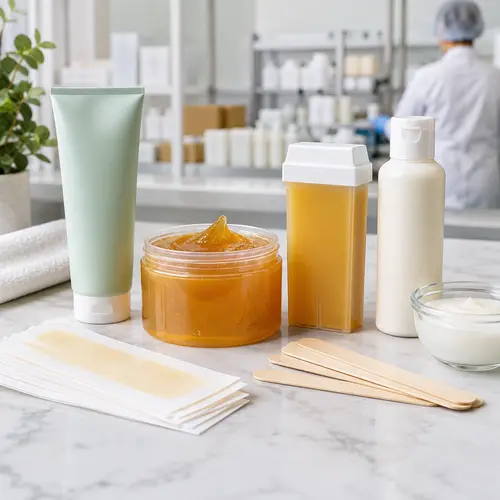
The first sourcing decision is therefore the format. Depilatory cream offers a simple at-home ritual, but requires careful control of alkalinity, odor, contact time, and skin-feel. Wax strips are portable and easy to bundle, yet adhesion must survive aging and temperature variation. Hot wax and sugar wax depend on rheology and working temperature, while roll-on cartridges add roller movement, cap fit, and leakage variables. Aftercare can improve the routine, but its calming or exfoliating claims need their own substantiation.
Founders evaluating hair removal product solutions should build a brief around the use case rather than a trend label. Define the body area, consumer experience level, desired application time, hair type, scent tolerance, removal method, and intended retail markets. A face product, for example, should not inherit directions or claim language from a body formula without a specific irritation-risk review.
Regulatory category also follows presentation and claims. Australia’s TGA cosmetic-therapeutic boundary guidance illustrates why wording can change how a product is assessed. Brands entering Saudi Arabia should confirm applicable requirements through SASO conformity assessment standards rather than assuming that an EU label can be reused unchanged. In the United States, MoCRA obligations do not mean that cosmetics are FDA approved. In the EU, CPNP notification is only one part of the responsible-person and product-information-file workflow.
Timing matters because claims, artwork, and testing are interdependent. An ODM using pre-validated formula modules may support a sample cycle of three to five days and a formulation-to-shelf plan under 30 days, but only when the brief, component availability, testing scope, and revision limits are settled early. Pilot runs from 1,000 units can reduce inventory exposure, provided the same manufacturing controls and approved components will remain available when demand scales.

Technical and Packaging Factors
Formula Performance and Skin Contact
For depilatory cream, buyers should evaluate spreadability, coverage, odor during use, removal efficiency across the stated time window, rinse behavior, and skin feel after removal. Ask the formulator to define a controlled viscosity and pH specification for batch release rather than accepting a visual comparison alone. Review thioglycolate system documentation, fragrance allergens, restricted substances, and the rationale for every natural or clean-positioned claim. The custom depilatory cream formulation process should include testing in the final tube or bottle.
Sensitive-positioned products require more than adding soothing ingredients. The buyer should review intended contact time, body-area restrictions, patch-test directions, foreseeable misuse, and available irritation data. These questions should also guide selection of mild hair removal formula options. For an aftercare product containing alpha hydroxy acids, consult the FDA consumer advisory on alpha hydroxy acids and consider sun-sensitivity language where relevant.
Wax Texture and Temperature Behavior
Wax performance should be judged at realistic room, storage, and application temperatures. For hot wax, confirm melting range, pickup, spread, set time, flexibility, residue, and pull strength. Sugar wax needs a defined consistency window so it does not become unworkably firm in cold conditions or overly fluid in heat. For private label waxing products, aging work should examine adhesive migration, strip separation, liner release, and removal performance after storage.
Primary Pack Compatibility
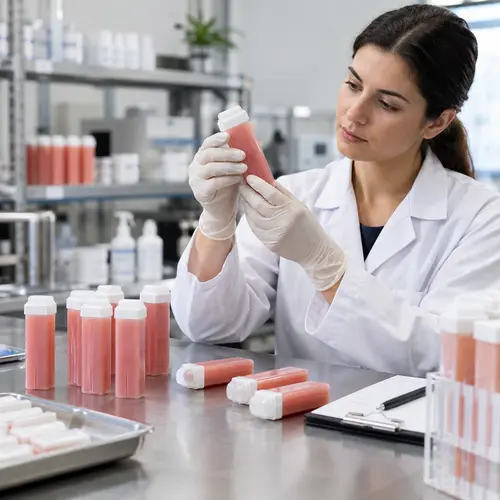
Compatibility testing should use production-intent components, not visually similar samples. Depilatory cream may interact with tube layers, closures, liners, printing, or metallic decoration. Roll-on wax requires checks for roller rotation, controlled output, neck fit, cap retention, and leakage in upright, inverted, and side orientations. Wax jars need heat resistance and closure integrity appropriate to the stated heating instructions.
Ask whether decoration and adhesives remain intact after heat, cold, humidity, handling, and formula contact. Secondary packaging should protect the product without making unsupported environmental claims. Terms such as recyclable, biodegradable, or compostable need market-specific evidence and should account for the complete component, local collection systems, and any mixed-material construction.
Stability, Transit, and Batch Controls
A useful stability plan covers ambient, elevated-temperature, cold, and cycling conditions, with scheduled observations for appearance, odor, color, weight loss, separation, viscosity, pH where relevant, seal condition, and functional performance. Three freeze-thaw cycles can be a useful screening point, while storage at 40°C is commonly used for accelerated observation; neither alone proves shelf life. Real-time data, formula history, packaging compatibility, and microbiological controls must be considered together.
The hair removal manufacturing process should connect approved samples to raw-material controls, in-process checks, filling parameters, coding, finished-product inspection, and retained samples. Shipment review should reflect the actual route and season, including carton compression, vibration exposure, temperature excursions, and parcel handling. This is particularly important for waxes and roll-on cartridges.
Claims and Product Page Education
Build a claim matrix before artwork. For each package or product-page statement, record the exact wording, evidence source, applicable market, required qualification, and owner approval. Demonstrations should reproduce the labeled directions, including application thickness and timing. Avoid permanent-removal language unless the product classification and evidence clearly support it. Hair inhibitor positioning requires especially careful review; buyers exploring an after hair removal serum should distinguish cosmetic appearance benefits from biological growth claims.
Product-page education should answer the questions that prevent misuse: where the product can be used, where it must not be used, how to patch test, how much to apply, the maximum contact time, how to remove residue, and what aftercare is compatible. Linking the routine to soothing gel after hair removal can be helpful when the formulas and directions have been reviewed as a system.
Decision Framework
| Factor | What to Check | Why It Matters | ODM Buyer Note |
|---|---|---|---|
| Product format | Body area, user skill, climate, channel, and removal ritual | Determines formula, pack, instructions, and complaint risk | Compare samples under the same use protocol |
| Formula specification | Texture, viscosity, pH where relevant, odor, contact time, and batch limits | Turns subjective approval into measurable production control | Request the finished-product specification before artwork approval |
| Packaging compatibility | Formula contact, seals, closure fit, decoration, dispensing, and leakage | Prevents failures that bulk stability alone cannot reveal | Test production-intent components and all shipment orientations |
| Stability plan | Ambient, heat, cold, cycling, microbiology, and real-time observations | Supports shelf-life decisions and identifies climate sensitivity | Confirm protocol, checkpoints, acceptance criteria, and open studies |
| Claims | Exact wording, evidence, jurisdiction, qualification, and classification | Reduces listing, customs, and consumer-trust risk | Review package and digital claims from one controlled matrix |
| Pilot scope | MOQ, component availability, sample revisions, QC records, and scale path | Protects launch speed without creating a later reformulation | Align through custom hair removal product development and submit a hair removal product RFQ with target markets and pack details |
ODM Manufacturing Considerations
For a DTC hair removal brand launch, sample approval should be treated as a controlled purchasing milestone rather than a subjective preference check. Define the approved sample by batch code, formula version, color, fragrance, texture, application method, removal performance, and primary packaging. For hot or sugar wax, record the workable temperature window and consistency. For depilatory cream, document spreadability, dwell-time instructions, removal behavior, and the agreed viscosity range. Retain sealed approval samples so later production batches can be compared against a physical reference.
Formula customization should begin with a written brief that separates essential requirements from optional features. Essential requirements may include target hair type, use on the face or body, fragrance restrictions, desired residue level, and prohibited ingredients. Optional changes may include color, scent, botanical oils, or aftercare pairings. Buyers using a ready-developed formula should ask which elements can be changed without materially affecting stability or performance. Meaningful differentiation can also come from the application format, pack size, accessory selection, instructions, and channel-specific kit configuration.
Packaging evaluation should use production-intent components, including the container, closure, liner, applicator, label stock, and any secondary carton. Check for softening, staining, seal failure, label lifting, and changes caused by prolonged contact with oils, fragrance, or wax. A roll-on cartridge should dispense evenly without seepage around the roller assembly. A cream tube or bottle should remain easy to dispense while protecting the formula from contamination and water loss.
Before approving production, request a stability review plan covering expected storage duration, hot and cold exposure, light where relevant, and observation intervals. Acceptance criteria should address appearance, odor, texture, phase integrity, package condition, and functional performance. The commercial agreement should also define MOQ by formula and packaging component, sample charges, artwork revisions, overrun or underrun tolerance, and ownership of custom tooling or decorated inventory.
Labeling documents should include the ingredient declaration, product identity, net contents, responsible-party details, lot coding approach, warnings, directions, and supporting records for market-specific claims. Shipment terms should specify carton configuration, pallet requirements, warehouse conditions, and handling limits. Brands replacing an unreliable supplier should prioritize document transfer, component availability, and batch comparability before committing to an accelerated production date.
Common Problems or Failure Cases
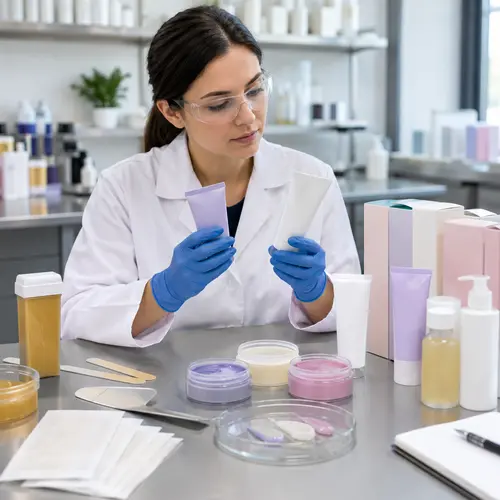
Many launch failures appear only after the approved sample has been exposed to storage, transport, or repeated consumer use. Buyers should investigate the cause rather than treating a cosmetic defect as an isolated complaint.
- Wax becomes brittle: Wax that cracks during removal may have an unsuitable resin-to-oil balance, excessive heating exposure, or storage outside its intended range. Compare retained samples and review whether the breakage occurs at room temperature or only after reheating.
- Strips lose grip: Pre-coated strips can show weaker removal when the coating migrates, the pouch seal is compromised, or the backing material changes. Verify peel behavior after storage and confirm that the consumer instructions match the strip activation method.
- Cream separates: Oil release, watery pooling, or uneven texture can indicate an emulsion problem or interaction with the container. Quarantine affected lots and compare fill position, storage history, odor, and batch records before deciding whether the issue is formula- or pack-related.
- Cartridges leak: Leakage can originate at the roller fit, cap, fill level, or seal. Inspect units upright, inverted, and after realistic distribution handling. Residue around the neck should not be dismissed when it could soil labels or shipping cartons.
- Fragrance causes complaints: A scent accepted by an internal team may still be unsuitable for a sensitive-use product. Review fragrance level, allergen disclosures, patch-test directions, and whether an unscented option is needed for the target market.
- Packaging deforms: Panels, caps, or pouches may warp when exposed to heat or formula contact. Confirm resin or laminate specifications and test decorated components, because inks, adhesives, and coatings can fail even when the base container remains intact.
Supplier Checklist
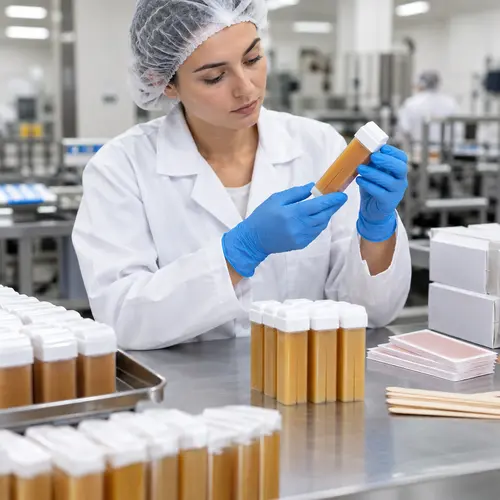
Use the following checks to compare a hair removal contract manufacturing partner on evidence, scope, and commercial fit:
- Request current ISO 22716 or relevant cosmetics GMP certification and verify the issuing body, site address, and scope.
- Review sample specifications for texture, color, odor, functional performance, and measurable ranges such as viscosity or melting behavior.
- Confirm how irritation risk, fragrance allergens, warnings, and intended application areas are assessed and documented.
- Ask for stability protocols, observation records, package-contact findings, and corrective-action procedures.
- Test actual tubes, jars, pouches, strips, cartridges, closures, labels, and cartons before final approval.
- Clarify MOQ separately for formula filling, printed components, stock components, and customized accessories.
- Review the ingredient list, specifications, safety data where applicable, certificates of analysis, batch records, and labeling support.
- For natural or imported oils used in the brand story, request supplier identity, origin records, specifications, and lot-level traceability.
- Define shipment conditions, carton strength, pallet pattern, acceptable leakage rate, and responsibility for transit damage.
- Confirm confidentiality terms, formula ownership, change-control rules, and restrictions on substituting ingredients or packaging.
FAQ
Can an Asian manufacturing site meet U.S. and European clean beauty and cruelty-free expectations?
Location alone does not establish compliance. Ask for ingredient-screening criteria, animal-testing policy, supplier declarations, audit records, and evidence supporting every logo or statement. Because clean beauty has no single universal legal definition, place your restricted-substance standard in the contract and verify it against the finished formula.
Will a low MOQ make the unit cost incompatible with customer acquisition cost?
It can, especially when custom printing, multiple scents, or complex kits divide purchasing volume. Model landed cost by SKU, including testing, components, freight, duties, fulfillment, leakage allowance, and promotional units. A stock component or fewer launch variants may protect margin without lowering the product standard.
Will a turnkey base formula make the brand indistinguishable from competitors?
Not necessarily, but changing only fragrance or color offers limited differentiation. Ask what is exclusive, what is shared, and which performance attributes can be adjusted. Distinction may come from wax handling, residue profile, application format, pack count, aftercare pairing, ingredient provenance, and clearer product-page education.
Which documents should be ready before artwork approval?
Obtain the final ingredient declaration, directions, warnings, net-content format, responsible-party information, lot-code location, shelf-life basis, and substantiation for visible claims. Artwork should not be released while the formula name, pack size, or mandatory caution language remains unsettled.
How should AHA aftercare claims and directions be handled?
Keep claims cosmetic and provide clear use directions, particularly where recently treated skin may be more reactive. The FDA notes that alpha hydroxy acid products may increase sun sensitivity for some users. Review concentration, exposure, warnings, and market-specific language before combining aftercare with a removal kit.
Do Australia and Saudi Arabia use the same classification and market-entry rules?
No. Classification can depend on intended purpose, claims, ingredients, and presentation. Review Australia’s cosmetic and therapeutic boundary before finalizing claims, and check applicable SASO conformity requirements for Saudi distribution. Complete this assessment before printing market-specific packaging.