Direct Answer
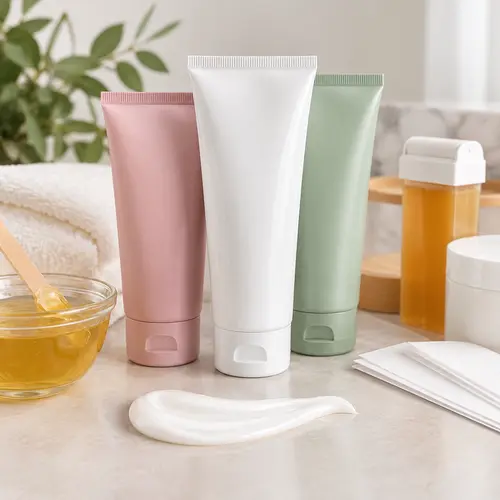
Effective depilatory cream tube packaging starts with a matched system, not an isolated tube purchase. The cream, tube body, shoulder, cap, seal, decoration, filling process, storage profile, and shipping carton must be tested together before a production order is approved. For most private-label launches, the practical route is a PE or multilayer barrier tube paired with a compatible PP closure, followed by filled-pack compatibility, leakage, storage, decoration-rub, and consumer-use checks.
Your component brief should define target fill weight, formula family, dispensing experience, retail markets, visual direction, shipment conditions, and acceptable unit cost. The ODM can then screen stock components, prepare camera-ready samples, and run a small filling trial. Do not approve packaging from an empty sample alone. Depilatory formulas can expose stress cracking, odor transfer, seal weakness, discoloration, or paneling only after contact and storage. Final approval should be based on filled tubes from the intended production line.
Key Takeaways for Private Label Buyers
- Source as a system. Evaluate the tube, cap, seal, printing, carton, filling settings, and cream together.
- Lock the formula family early. A stock component approved for one remover may not suit another formula with different alkalinity, fragrance, viscosity, or active system.
- Review texture on camera. Confirm ribbon shape, dispensing force, color, surface gloss, and clean cap behavior under the lighting used for launch content.
- Test filled packs. Include upright, inverted, heat, cold, leakage, and repeated-use checks before approving mass manufacturing.
- Separate stock and custom decisions. Stock tubes support speed and lower pilot quantities; custom molds, shoulders, caps, and decoration add lead time and tooling exposure.
- Approve the production trial, not only the hand sample. Filling temperature, sealing conditions, and line handling can change the finished result.
Buyer Context
Hair-removal products place unusual demands on packaging. Depilatory creams often have strong odor profiles, high alkalinity, and carefully controlled viscosity. The tube must protect the formula while still delivering a smooth, visible ribbon that works in tutorials. A cap that collects residue or a tube that becomes difficult to squeeze can turn a strong launch concept into negative social content.
The commercial decision is equally important. A creator-led brand may need 1,000 pilot units for an audience test, then substantially more inventory if a video converts. Selecting a component available only through a high custom minimum can block that scale-up. A stock tube with premium decoration may create a better first launch than a fully custom pack that misses the trend window. Buyers can compare broader hair removal product solutions before deciding whether the first assortment should pair cream with wax strips, sugar wax, or post-depilation care OEM products.
Market claims also affect the brief. US labeling should be checked against the FDA summary of cosmetics labeling requirements. Founders should also understand the FDA explanation that cosmetics are regulated rather than pre-approved. Decorative inks and formula colorants require separate review against the FDA color additive permitted-use database. If Halal positioning is planned for Malaysia or related markets, confirm the product, facility, and documentation route against JAKIM Halal certification requirements before artwork is finalized.

Technical and Packaging Factors
Tube Structure and Barrier
Common starting points include mono-material PE tubes, coextruded PE structures, and barrier laminate tubes. PE can offer a familiar soft squeeze and support recyclability positioning where local collection systems accept it. Multilayer structures can improve odor and oxygen barrier performance, but they require a more detailed material declaration and end-market review. A metallic barrier should never be assumed compatible simply because it looks premium. The cream must remain isolated from vulnerable layers at the shoulder, cut edge, and seal interface.
Ask the supplier for the full component specification: body resin structure, shoulder material, closure resin, color masterbatch, decoration process, orifice diameter, nominal capacity, overflow capacity, and lot traceability. A qualified hair removal OEM manufacturer should connect these details to the selected formula rather than offer a generic catalog recommendation.
Dispensing and Texture
Viscosity must be evaluated through the actual orifice. A smaller opening can create a neat ribbon but increase squeeze force, especially after cold storage. A larger opening improves flow but may release too much cream and soil the closure. Review one-handed opening, cap retention, first-use seal removal, dose control, product cutoff, and evacuation near the end of use.
For sensitive-skin positioning, packaging does not make the product mild. The ingredients, exposure directions, warning copy, and irritation-risk review remain central. Use the same filled pack during evaluation because formula residence near the nozzle can change odor, color, or crusting. The gentle depilatory cream OEM pathway provides a relevant starting point for claim and sample discussions.
Compatibility and Storage Trial
A practical pilot screen can place filled tubes upright and inverted at 4°C, 25°C, and 40°C, with observations recorded at defined intervals. Add three freeze-thaw cycles when the distribution route may face winter exposure. These conditions are development screens, not universal pass criteria. The ODM should define the duration and acceptance limits for the actual formula, component, market, and expected shelf life.
Inspect net weight, appearance, odor, viscosity trend, tube swelling or collapse, shoulder separation, cap cracking, leakage, seal lift, print transfer, and dispensing behavior. A 24-hour inverted leakage check is useful for early screening, but it does not replace longer filled-pack storage. The documented cosmetic filling and packaging process should show where incoming inspection, line clearance, fill-weight checks, seal review, and finished-goods release occur.
Artwork, Label Space, and Shipment
Build artwork around mandatory information before enlarging decorative elements. Confirm the principal display panel, net contents, ingredient list, responsible party details, warnings, directions, batch coding area, and local language needs. Allow for distortion near the shoulder and crimp. Fine type may become unreadable on highly reflective finishes or curved surfaces.
Shipment testing should reflect the sales route. E-commerce parcels need cap security, rub resistance, and secondary containment. Subscription kits need predictable dimensions and carton strength. Ask for a transparent BOM covering tube, closure, seal, decoration, carton, insert, filling, testing, and export packing. The hair removal OEM ODM services scope should state which items are included, while a hair removal product RFQ should capture sample quantity, target order, destination, launch date, and shipment method.
Decision Framework
| Factor | What to Check | Why It Matters | ODM Buyer Note |
|---|---|---|---|
| Formula match | Alkalinity, viscosity, fragrance load, color, and active system | These variables can affect odor barrier, flow, staining, and material compatibility | Freeze the baseline formula before final tube approval |
| Tube structure | Resin layers, shoulder construction, barrier level, and declaration documents | The structure controls squeeze feel, protection, decoration options, and market positioning | Request named materials rather than descriptions such as premium plastic |
| Closure system | Cap resin, hinge performance, thread fit, orifice, liner, and first-use seal | Closure defects create leakage, residue buildup, and poor consumer control | Test repeated opening with cream present around the nozzle |
| Filled-pack trial | Upright, inverted, 4°C, 25°C, 40°C, and three freeze-thaw cycles | Contact and storage can reveal failures absent from empty samples | Agree on observations, timing, and pass limits in writing |
| Decoration | Color standard, ink adhesion, foil quality, barcode readability, and rub resistance | The pack must remain camera-ready through filling and shipment | Approve a filled decorated sample under launch lighting |
| Scale path | Stock availability, reorder lead time, tooling ownership, and backup components | A viral sales spike can exhaust specialized packaging before formula capacity | Keep an approved fallback tube for the same fill specification |
For further specification planning, review hair removal product guides alongside the chosen ODM brief. The goal is simple: one approved formula, one verified component set, and one repeatable production result from pilot to scale.
ODM Manufacturing Considerations
Moving depilatory cream tube packaging from a component brief to an approved production specification requires more than selecting a tube size and sending artwork. The buyer and manufacturer should agree on what constitutes an acceptable sample, which formula characteristics may change, and which packaging details remain fixed before commercial manufacturing begins.
Sample Confirmation
Ask the supplier to define each sampling round in writing. A useful sample record identifies the formula version, fragrance level, cream color, target fill weight, tube specification, closure type, decoration method, and batch date. Evaluate removal performance, spreading, odor, rinse-off behavior, skin feel, and the appearance of the dispensed cream. If content creation is important, review the sample under the lighting, background, and close-up conditions used for social media production.
Do not approve a sample based only on a jar or laboratory container when the final product will be sold in tubes. The filled package can affect dispensing force, ribbon shape, odor retention, and the buyer’s perception of consistency. Approval should apply to both the formula and its intended package.
Formula Customization and Risk Boundaries
Customization may include fragrance, color, removal time, spreadability, target body area, and after-use skin feel. Each request should be translated into a measurable specification. For example, ‘more dramatic on camera’ could mean a brighter permitted color, a denser cream ribbon, or a slower-flowing texture rather than an undefined request for stronger visual impact.
Changes to active ingredients, fragrance concentration, or intended face use deserve a separate irritation-risk review. A supplier should explain what can reasonably be customized without compromising removal performance or increasing foreseeable misuse. Claims and directions should match the approved version rather than an earlier prototype.
Package Compatibility and Stability Review
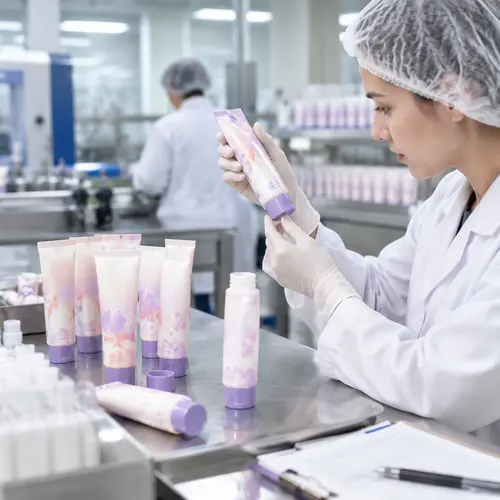
Confirm the tube body, shoulder, seal area, cap, ink, coating, and any inner seal as one package system. Review filled samples for swelling, panel distortion, discoloration, odor migration, cap cracking, weak seals, and unexpected changes in dispensing force. Stability observations should record cream separation, thinning, thickening, gas formation, color shift, fragrance change, and removal performance over the agreed review period.
The plan should reflect likely shipment and storage conditions. A parcel moving through a hot distribution hub faces different stress than cartons held in a climate-controlled salon warehouse. The supplier should state the acceptable storage range, carton orientation, stacking limits, and whether protective dividers or additional secondary packaging are needed.

MOQ, Documents, and Shipment Terms
Separate the minimum order quantity for the formula, printed tube, closure, carton, and finished product. These quantities may not be identical. Ask how unused printed components, production overage, and under-delivery are handled. A transparent quotation should itemize the formula, primary package, decoration, carton, testing, assembly, freight assumptions, and optional work rather than hiding them in one unit price.
The labeling file should be supported by an ingredient list, net-content information, batch coding format, directions, warnings, responsible-party details, country-of-origin treatment, and available product records for the destination market. Buyers can also review related OEM and ODM service scope and the supplier’s documented manufacturing process before locking the order.
Common Problems or Failure Cases
Cream separation: A depilatory cream may release liquid, develop an uneven surface, or dispense inconsistently after storage. The investigation should compare the retained bulk sample with filled tubes and review mixing, filling temperature, package interaction, and transport exposure.
Tube or closure deformation: Distortion can prevent a cap from seating correctly or make the package look underfilled. Common contributors include unsuitable component materials, excessive carton compression, or prolonged heat exposure during freight.
Cartridge leakage: Roll-on wax cartridges can leak around the roller assembly or cap when the wax viscosity, headspace, and package tolerances do not align. A successful empty-component inspection does not establish performance with hot or cooled wax inside.
Wax brittleness: Hard wax or sugar wax may crack, crumble, or lose workable flexibility when its composition and expected use temperature are mismatched. Confirm the intended melting and application range and assess performance after realistic distribution exposure.
Strip adhesion loss: Wax strips may lift poorly if the wax coat migrates, the release liner changes, or storage conditions reduce tack. Buyers should compare peel behavior, residue, hair pickup, and pouch integrity across aged samples.
Fragrance sensitivity: A stronger fragrance may improve first impressions but increase discomfort for some users or mask changes in the base odor. Fragrance level, allergen disclosure where applicable, warnings, and patch-test directions should be reviewed together.
Artwork failure: Fine text can become unreadable on a curved tube, while dark ink or metallic decoration may differ from an on-screen proof. Approve physical color standards and verify that mandatory information remains legible after filling and handling.
Supplier Checklist
- Request sample records that identify formula and packaging versions.
- Define target texture, viscosity range, color, odor, removal time, and intended body area.
- Confirm the complete tube, cap, seal, decoration, and carton specification.
- Review separation, deformation, leakage, dispensing, and performance acceptance criteria.
- Ask for an irritation-risk assessment and substantiation appropriate to the intended claims.
- Verify ingredient, warning, direction, batch-code, and destination-labeling documents.
- Compare MOQ by formula, decorated component, and finished unit.
- Obtain an itemized BOM quotation with tooling, testing, packing, and estimated logistics costs.
- Document carton dimensions, unit orientation, pallet method, storage range, and freight assumptions.
- Check production capacity, material lead times, surge-order rules, and reserved scheduling options.
- Clarify ownership of artwork, custom samples, specifications, and confidential formula information.
- Use an approved reference sample and written change-control process for manufacturing release.
For category comparison, buyers can review the supplier’s hair-removal product range to determine whether creams, wax strips, roll-on wax, and aftercare products are handled through relevant production lines rather than sourced without clear oversight.

FAQ
How can I reduce the risk of a factory copying my idea or formula?
Use a confidentiality agreement that defines protected files, permitted recipients, ownership, and post-project handling. Share information in stages, watermark specifications, keep version records, and identify which formula elements are supplier background knowledge versus buyer-owned development. No document removes all risk, so review the supplier’s history, access controls, and willingness to document ownership.
Can a depilatory cream sample create the exaggerated visual effect I want on camera?
Possibly, but visual goals must become measurable sample criteria. Provide reference footage and define ribbon thickness, color intensity, spread, shine, and how long the cream should hold its shape. Approve the filled-tube output under your actual filming setup without allowing appearance to override safe use or removal performance.
Can quality controls guarantee that no customer will experience irritation?
No responsible supplier can guarantee zero reactions. Risk can be reduced through ingredient review, controlled manufacturing, suitable warnings, patch-test directions, traceable batches, and documented release checks. Face products require especially clear use zones, and depilatories should not be positioned for the eyelids or immediate eye area.
Will communication be difficult if I do not understand technical ingredients?
A capable account team should convert marketing language into specifications and explain tradeoffs in plain English. Test this during sampling: ask the team to summarize your desired user experience, content schedule, claims, package, and acceptance criteria in one written brief.
What happens if a video creates a sudden surge in orders?
Ask for monthly capacity by line, component reorder times, minimum forecast commitments, and the rules for reserving production slots. Discuss staged releases, safety stock for undecorated components, and alternative freight plans before launch. Capacity claims are more useful when supported by a written scenario and dates.
What should be approved before paying the main production deposit?
Approve the final sample, formula code, packaging specification, artwork, BOM, quantity tolerance, inspection criteria, production timing, shipment terms, labeling documents, and responsibility for rejected goods. Any open item should appear on a signed exception list.
References
- FDA Summary of Cosmetics Labeling Requirements supports review of identity, net quantity, ingredient, and business information on cosmetics labels.
- FDA Color Additive Permitted-Use Database provides destination-specific information for evaluating color use in cosmetic products.
- American Academy of Ophthalmology guidance on cosmetics around the eyes provides context for cautious directions when a face remover could be misused near the eye area.