Direct Answer
Cosmetic packaging compatibility testing is the process of confirming that a hair-removal formula remains stable, safe, usable, and visually consistent inside its chosen pack throughout storage and shipment. For buyers, it is not a final inspection added after production. It should begin when the formula, closure, applicator, and shipping format are selected.
Depilatory cream can soften or discolor unsuitable plastic. Roll-on wax can leak when heat changes viscosity. Sugar wax may crystallize or pull against a closure. Aftercare gels can lose texture or separate after repeated temperature changes. A successful compatibility review checks the filled product, not only an empty component or a laboratory sample.
The practical decision is simple: approve a formula and package as one system. Ask the ODM to provide filled samples, storage observations, leakage results, closure performance, label adhesion checks, and shipment recommendations before you commit to a launch batch. This creates a clearer path from a creator brief to a reliable shelf-ready SKU.
Key Takeaways for Private Label Buyers
- Choose the package with the actual formula, fragrance, colorant, propellant-free dispensing method, and intended use already defined.
- Review texture and performance after heat, cold, upright, inverted, and transport-oriented storage conditions.
- Check whether the formula changes the pack: swelling, cracking, softening, discoloration, odor transfer, label lifting, or closure distortion.
- Request a written testing scope covering filled samples, sample quantity, observation points, acceptance criteria, and responsibility for any redesign.
- Keep sample approval separate from mass production approval. A visually impressive sample is not enough if the same pack leaks or becomes difficult to dispense.
Hair removal OEM manufacturer selection should therefore include both product capability and packaging evidence. A supplier that can show the real filled item under review gives a brand more useful information than a component catalog alone.
Buyer Context
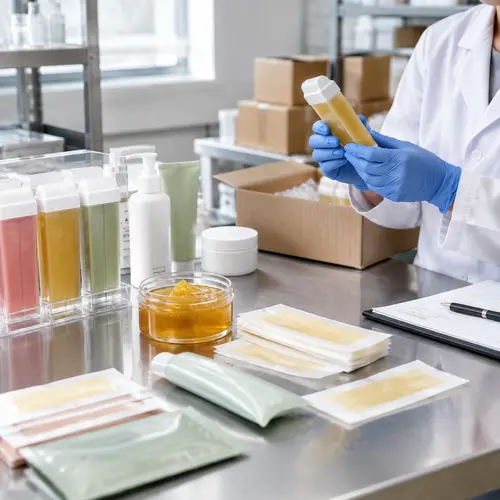
Hair-removal products place unusual demands on packaging because their formulas and use environments vary widely. Depilatory creams may contain alkaline systems and active ingredients that require careful contact review with tubes, pumps, caps, and seals. Wax strips combine a coated substrate, release liner, adhesive behavior, pouch film, and printed surface. Hot wax and sugar wax must remain workable while resisting leakage, crystallization, or unwanted adhesion to the container.
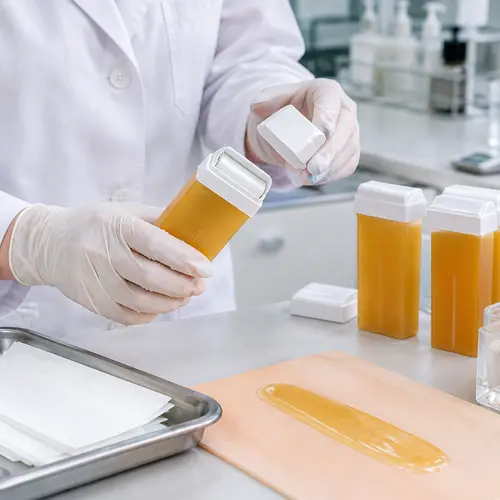
Roll-on wax adds another variable: the cartridge must dispense a consistent layer without allowing product to migrate into the roller housing or cap. The buyer must consider storage orientation, warehouse temperature, courier handling, and how a customer will use the pack in a bathroom or salon. Aftercare products have different risks, but they still need checks for pump priming, gel consistency, seal integrity, and label durability.
These details matter more for creator-led brands because the package is part of the content. A clean, high-contrast cartridge or cream tube may appear in demonstrations, unboxing videos, and customer reviews within days of launch. A leaking cap, separated cream, or damaged label can become a public product story before the brand has enough sales data to diagnose the cause.
That is why a buyer should connect the packaging review to the complete hair removal manufacturing process. Sampling, filling, sealing, inspection, and shipment conditions can each change the result. The same formula may perform well in a small jar but poorly in a narrow-neck tube or a roll-on cartridge with a different seal design.
For brands entering the United States, product and label decisions should also be checked against FDA cosmetics requirements. For European launches, the product information and notification path should be aligned with the intended formula and packaging. Packaging compatibility does not replace label review, ingredient review, or market-specific documentation. It supports those decisions by confirming that the product reaching the buyer matches the product described on the shelf.
Buyers evaluating a hair removal OEM ODM service should ask for a single owner of the sample record. This avoids a common gap in which the formula team approves the texture, the packaging vendor approves the component, and nobody approves the filled product after sealing.
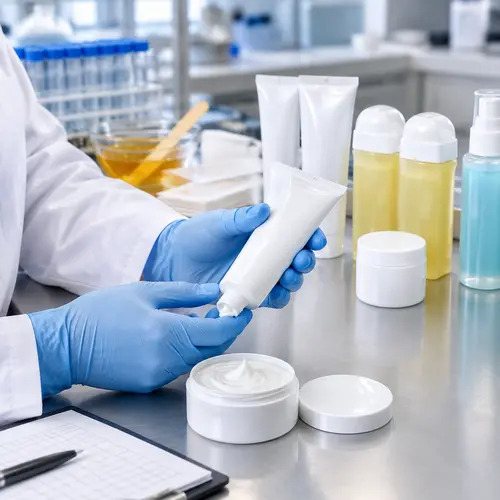
Depilatory cream OEM projects usually need particular attention to tube material, cap fit, orifice size, and the contact area around the shoulder. For a sensitive-skin positioning, connect the compatibility review with the supplier’s sensitive skin hair removal products process and irritation-risk review. The package cannot make an unsuitable formula suitable, but a poor package can increase exposure, mess, or inconsistent dosing.
Wax projects require a different review. A wax strips OEM partner should be able to discuss pouch sealing, release liner behavior, wax adhesion, and storage conditions. A buyer considering an aftercare bundle should also review post-depilation care OEM options as a coordinated set, especially when several packs share a carton or shipment.
Technical or Packaging Factors
Formula and material contact. Ask which package materials touch the product directly and which only contact the headspace, seal, or closure. Evaluate odor transfer, color change, swelling, stress cracking, softening, and surface tack. For cream, compare viscosity and dispensing behavior before and after storage. For wax, review melting behavior, flow, roller pickup, and the ability to close the pack without residue. For sugar wax, inspect crystallization and container release.
Closure and leakage. A package can pass a visual inspection while failing during shipment. Review the cap, liner, weld, pump, roller housing, and tamper feature as a complete set. Test upright and inverted storage where the customer or courier may place the item in those positions. Record whether product reaches the threads, seal, roller, or outer label.
Heat and cold exposure. Request a defined storage matrix from the ODM rather than a general statement that the product is stable. The record should identify the filled sample, condition, duration, inspection points, and observations. Look for separation, viscosity drift, wax migration, crystallization, pressure changes, cap distortion, and label lifting. The goal is not to promise every possible warehouse condition. It is to understand the product’s operating limits and shipment controls.
Use experience. Compatibility also includes the customer workflow. Can the consumer open the cap without pulling the seal into the formula? Does the tube deliver a controlled ribbon? Does the roll-on apply an even film? Does the wax strip remain easy to separate without tearing? Does the aftercare pump prime consistently? These are performance questions, but they also reveal whether the package is suitable for the formula.
Documentation and launch control. Ask for component specifications, filled sample photos, batch identification, label artwork dimensions, storage guidance, and a summary of observed changes. Keep an approval sample with the final formula and final package. When the package changes, repeat the relevant review. A new cap, liner, film, fragrance, or supplier can change the result.
A practical request for a hair removal product quote should therefore include the product format, target market, package concept, shipment route, expected order range, sample quantity, and intended launch date. That brief lets the ODM identify packaging risks before the project reaches filling.
Decision Framework Table
| Factor | What to Check | Why It Matters | ODM Buyer Note |
|---|---|---|---|
| Formula contact | Material, seal, closure, odor, color, swelling, and surface changes | Some depilatory systems can affect plastics, liners, or printed surfaces | Approve the filled pack, not the empty component |
| Texture and dispensing | Viscosity, flow, roller pickup, ribbon shape, crystallization, and residue | Texture affects dosing, application quality, and customer perception | Compare the initial sample with stored samples |
| Leakage control | Cap fit, weld, pump, roller housing, inversion, and transport handling | A small leak can damage labels, cartons, and customer trust | Request photos and observations after shipment-oriented checks |
| Storage conditions | Heat, cold, light exposure, orientation, and warehouse limits | Temperature shifts can change wax flow, cream texture, or seal performance | Define practical storage and shipment instructions before launch |
| Launch documentation | Component specification, filled sample, batch record, label dimensions, and approval owner | Clear records reduce confusion when a component or supplier changes | Include testing scope and redesign responsibility in the project brief |
For a first launch, the strongest decision is usually the package that delivers repeatable use, clear evidence, and manageable shipment conditions. Visual impact still matters, especially for social-first brands, but it should be evaluated together with safety, filling performance, shelf presentation, and production continuity. A focused OEM/ODM partner can turn that review into a short, auditable path from sample approval to the first batch.
ODM Manufacturing Considerations
A reliable ODM review starts with a controlled sample-confirmation process. The approved sample should record the formula version, color, fragrance level, texture, application feel, removal performance, container, closure, fill weight, and storage conditions. For depilatory cream, buyers should confirm spreadability, odor, contact-time instructions, and post-use skin feel. For wax, record hardness, pull behavior, melting point range, and whether the product remains workable after repeated heating. A signed sample record prevents a factory from treating a verbal preference as the final production standard.
Formula customization should be linked to the intended market and content brief. A buyer may need a softer sugar wax for salon use, a firmer wax for warm climates, or a cream texture that appears smooth and consistent on camera. These goals can conflict with shelf life, fragrance tolerance, packaging cost, and production speed. Ask the supplier to identify which changes are cosmetic, which affect performance, and which require another sample round. Keep the approved formula and all revisions private through a written confidentiality and ownership agreement.
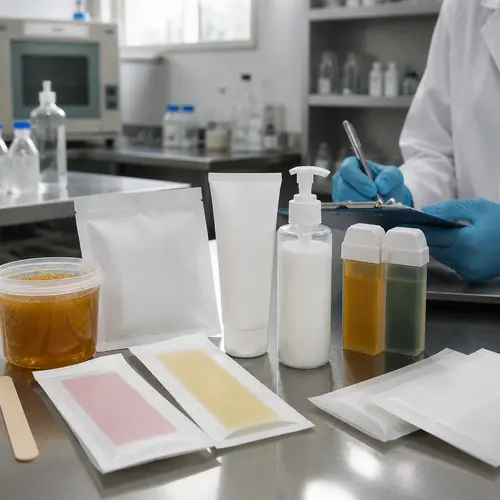
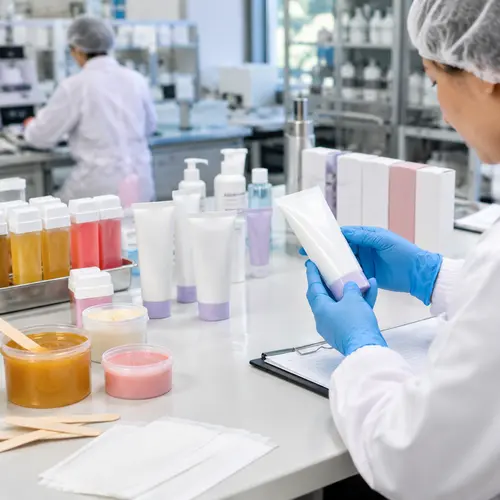
Packaging compatibility should be reviewed with the actual formula and final pack. Check whether the container, liner, valve, roller, tube, pouch, or closure changes the product smell, color, viscosity, or release behavior. Request filled samples rather than relying only on empty packaging. For wax cartridges, inspect roller movement and liquid seepage after storage in different orientations. For cream tubes and aftercare pumps, check dispensing force, priming, cap fit, and residue around the opening. A visually attractive pack is not acceptable if it creates inconsistent dosing or leakage.
The stability review should reflect the buyer’s real distribution route. Ask for documented observations from accelerated and room-temperature storage, including appearance, odor, texture, separation, container condition, and label adhesion. Heat and cold exposure matter differently for wax, cream, and post-treatment products. Shipment conditions should include carton configuration, pallet limits where relevant, transport temperature assumptions, drop or vibration handling, and protection against compression. The buyer should receive a clear statement of what the supplier tested and what remains unverified.
MOQ and sample scope should be agreed before artwork or tooling begins. Confirm the minimum quantity for formula production, filling, printed packaging, fragrance, and each color or size. Ask whether pilot quantities can use neutral packaging or stock components. A supplier that explains the BOM, sample charges, revision limits, lead times, and freight assumptions gives the buyer a more realistic launch budget. Labeling documents should cover the ingredient list, net contents, batch identification, usage directions, warnings, storage instructions, and other market-specific files. For the United States, review the FDA’s summary of cosmetics labeling requirements with the responsible importer or label specialist. For Dubai distribution, confirm whether the product and documents fit the Dubai Municipality Montaji registration system.
For related production planning, buyers can compare the supplier’s OEM/ODM services, manufacturing process, and relevant hair-removal product range before requesting an RFQ.
Common Problems or Failure Cases
Wax brittleness: A wax may look acceptable in a warm sample room but crack, crumble, or lose grip after cool storage. The buyer should test the same batch at the expected use temperature and record how it spreads, sets, and removes hair. A change in wax hardness may also affect the required heating time and customer instructions.
Strip adhesion loss: Wax strips can lose pickup when the coating weight, release layer, or pouch seal is inconsistent. Inspect several units from the beginning, middle, and end of a packing run. Test adhesion after normal storage and after heat exposure, then compare unused and opened packs. A strong fragrance or oily surface can also reduce user confidence even when removal remains technically possible.
Cream separation: A cream may develop liquid at the surface, uneven color, graininess, or a changed odor during storage. Review samples from multiple fill lots and check whether separation is reversible or permanent. Buyers should not approve a product based only on a fresh jar or tube. Any change in contact-time performance or irritation-risk profile requires escalation before release.
Cartridge leakage: Roll-on wax can seep around the roller, cap, or cartridge seam when the pack is stored on its side, exposed to heat, or compressed in transit. Check filled cartridges after inversion, warm storage, and carton handling. Look for small leaks that do not immediately create a large visible spill but can contaminate labels and secondary packaging.
Fragrance sensitivity: A strong scent may help a product stand out in a video but can create negative feedback for users who prefer low-fragrance depilatories. Request fragrance disclosure appropriate to the market, agree on an intensity range, and test the finished formula rather than evaluating fragrance concentrate alone. The label and warnings must match the final product.
Packaging deformation: Tubes, pouches, caps, and pump components can warp, dent, or lose seal strength during hot transport. Compare empty-pack inspection with filled-pack inspection, and review carton compression and temperature assumptions. A supplier should explain whether a failure comes from material selection, filling temperature, closure torque, or shipment handling.
Supplier Checklist
- Confirm the approved formula version, target texture, color, odor, viscosity or melting point range, and acceptable variation.
- Request filled samples in the final container, closure, roller, liner, pouch, or pump configuration.
- Review sample records, revision limits, pilot MOQ, production MOQ, lead time, and available capacity during peak periods.
- Ask for stability observations covering heat, cold, room temperature, appearance, odor, texture, separation, and packaging condition.
- Verify leakage, inversion, carton compression, label adhesion, and shipment-temperature assumptions.
- Obtain the ingredient list, net-content details, batch coding method, directions, warnings, storage language, and market-specific labeling documents.
- Put confidentiality, formula ownership, artwork ownership, approval authority, and use of samples in writing.
- Evaluate whether the account manager can translate a social-media brief into measurable product and packaging requirements.
- Ask how the factory prioritizes repeat orders when a product receives an unexpected demand spike.
- Request a transparent BOM and logistics estimate that separates development, packaging, production, testing, and freight costs.
FAQ
How can I reduce the risk that a factory will reuse my concept or formula?
Use a written confidentiality and ownership agreement before sharing complete formula details, artwork, or launch plans. Define who owns custom formula work, samples, test records, packaging artwork, and unused tooling. Also ask whether the supplier has access controls for customer files and whether production is separated by customer batch.
Can the texture and color look dramatic enough for social-media video?
Usually, but the visual target must be converted into a measurable sample brief. Specify opacity, gloss, color range, foam or stringing behavior where relevant, application thickness, and how the product should appear under your planned lighting. Approve finished samples on camera as well as in normal use, while keeping removal performance and skin comfort as release conditions.
Can a supplier guarantee that no customer will experience a bad skin reaction?
No supplier can honestly guarantee zero reactions. A responsible process includes ingredient review, controlled batch records, appropriate warnings, consistent fill conditions, and clear use instructions. Ask how complaints are logged, how retained samples are handled, and how a suspected quality issue is traced to a batch before launch.
What if I do not understand technical ingredients or packaging terms?
Ask the supplier to explain each decision in buyer language and connect it to texture, removal performance, shelf behavior, or user instructions. A good brief can begin with marketing goals such as low odor, quick application, or a camera-friendly appearance, then be translated into formula and packaging specifications for approval.
Can the factory handle a sudden viral order?
Ask for normal and peak monthly capacity, current production commitments, material lead times, backup component options, and the process for reserving capacity. Confirm whether a repeat order uses the same formula and pack without another development round. A written forecast and staged purchase plan are more useful than a general promise of fast delivery.
What should I do when the first sample passes but the production batch looks different?
Compare the batch against the approved sample record and retain units from the affected lot. Check color, odor, texture, fill weight, packaging condition, and storage history before deciding on release. Do not approve by photograph alone when the difference could affect application, removal, leakage, or irritation risk.
References
For visible label and ingredient information requirements, consult the FDA cosmetics resources and its published labeling guidance. For Dubai market registration questions, consult the official Dubai Municipality resources.