Direct Answer
An Amazon hair removal product line needs one controlled information system across the physical pack, listing images, instructions, and claims. Start with the product’s verified performance and limitations, then translate that evidence into a short claim library. Use only approved statements across the front panel, back panel, image stack, A+ content, and creator briefs. For depilatory cream, wax strips, sugar wax, roll-on wax, and aftercare, the customer must be able to identify the intended body area, application time or temperature, patch-test direction, removal method, warnings, storage conditions, and responsible company without resolving contradictions between the listing and the package.
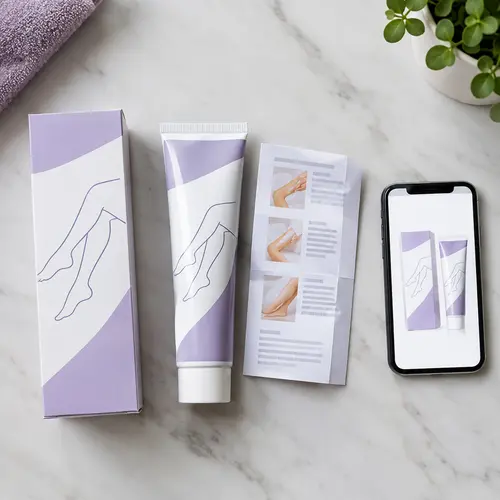
Treat listing images as product information, not unrestricted advertising. Every visible result, texture shot, timing statement, and comparison should match the final production formula and validated packaging. The FTC’s advertising substantiation guidance is a practical baseline: objective claims require support before publication, including claims delivered through images or creator content.
Key Takeaways for Private Label Buyers
- Approve a single claim matrix before artwork begins. Record each claim, its evidence, permitted channels, required qualifier, owner, and approval date.
- Evaluate the actual production sample in the final container. Texture, dispensing, seal integrity, label adhesion, and printed instructions can change the customer experience.
- Make directions specific to the format. A cream needs application and removal timing; sugar wax needs handling temperature and technique; wax strips need warming, pull direction, and residue removal guidance.
- Review every image against the physical label. Ingredient, net-content, warning, use-area, and performance statements must not conflict across surfaces.
- Run heat, cold, transit, leakage, and aging checks before inventory reaches Amazon fulfillment. Packaging that passes at room temperature may fail in a hot parcel network.
- Freeze the listing only after the pilot batch is approved. A camera-ready sample should represent the same color, viscosity, scent, and packaging components as mass production.
Buyer Context
Hair-removal products have unusually compressed customer journeys. A shopper sees a result image, checks whether the product is suitable for the face or body, scans the application time, and makes a risk judgment in seconds. Packaging has to carry that decision after the product leaves Amazon. If the listing promises a fast result but the carton introduces a longer contact window or different use area, returns and negative reviews become predictable.
The risks vary by format. Depilatory cream combines strong performance expectations with irritation concerns. Wax strips depend on adhesion, backing flexibility, storage temperature, and technique. Sugar wax can become too firm in cold storage or too fluid after heat exposure. Roll-on cartridges can leak around the roller or cap during shipment. Aftercare products must not imply that they prevent conditions or permanently change hair growth unless the exact statement is adequately supported.
Creator-led launches add another pressure: packaging has to read clearly on camera. That does not justify oversized promises. Build a visual hierarchy around product identity, format, use area, net contents, and one defensible benefit. Put operational details in a legible instruction panel and a listing image that shows the real sequence of use. For adjacent formats and kit planning, review established hair removal product solutions before locking the assortment.
A fast launch still needs controlled handoffs. The buyer should approve a physical sample, artwork proof, claim matrix, listing image set, and packed shipping unit. A supplier offering hair removal OEM ODM services should define what is included in sampling, packaging sourcing, label review, testing, and production release. Ask for an itemized BOM and sample scope so custom finishes or inserts do not appear as late costs.
Technical or Packaging Factors
Formula and Container Must Be Reviewed Together
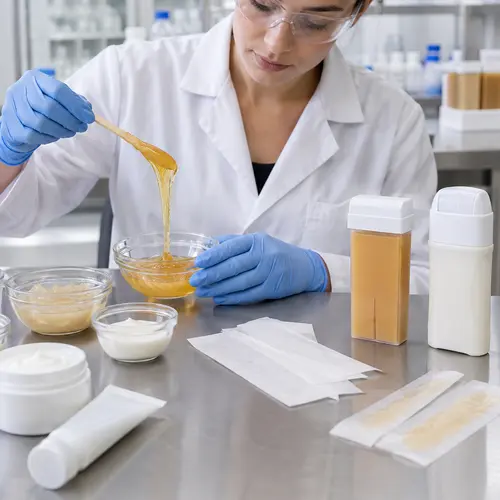
Compatibility begins with the product-contact surfaces. Depilatory cream may interact differently with a laminated tube, bottle, pump, cap liner, or foil seal. Wax can soften plastics, migrate into label adhesive, or leave residue around closures. A roll-on system must deliver an even layer without roller seizure or uncontrolled flow. Review the custom depilatory cream formulation and chosen pack as one commercial unit, not as separate purchases.
Request viscosity or melting-range targets when relevant, along with an acceptable appearance standard. Record color, odor, spread, pickup, stringing, and removal behavior under consistent conditions. For wax strips, inspect adhesion after aging and confirm that strip separation does not tear the backing or transfer excess wax. For aftercare, verify pump output and leakage through the applicable post-depilation care OEM workflow.
Instructions Are Part of Risk Control
Directions should answer six questions without inference: where to use the product, where not to use it, how to prepare the area, how much to apply, how long or how warm, and how to remove residue. Include patch-test timing, repeat-use limits, storage, and actions for discomfort where appropriate. Sensitive-area positioning requires an irritation-risk review and clear boundaries; compare the intended claims with documented sensitive skin hair removal products.
Post-removal marks should not be reframed as guaranteed treatment outcomes. The American Academy of Dermatology’s guidance on hyperpigmentation provides useful context for why irritation and sun exposure matter, but it does not validate a product claim. Keep cosmetic aftercare language tied to observable benefits such as soothing feel, moisturization, or reduced appearance of temporary redness when supported.
Storage and Shipment Must Match Amazon Reality
Ask the manufacturer to test the filled commercial package at room temperature, elevated heat, cold storage, and through repeated temperature changes. A practical plan may include 40 C accelerated storage and three to five freeze-thaw cycles, but the supplier should justify conditions for the selected formula, market, and package. Inspect separation, odor, color, viscosity, seal lift, panel distortion, label movement, and net-weight loss at scheduled checkpoints.
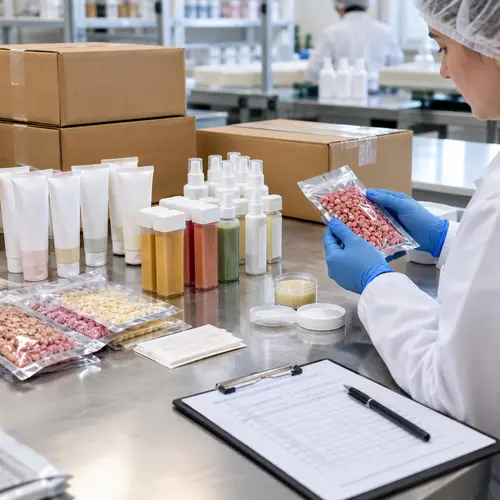
Then test packed units for orientation changes, vibration, compression, and drops using the intended carton and protective components. Review the documented cosmetic filling and packaging process, including fill-weight controls and seal checks. For cartridges and jars, photograph leakage inspection results after heat exposure. For strips, confirm pouch seals and wax placement after transit conditioning.
Halal language must also be market-specific and documented. If the target market requires it, evaluate ingredients, production controls, and logo permissions against the JAKIM Halal certification requirements. Do not place a certification mark on artwork because an ingredient vendor supplied a general declaration.
Claim and Image Release
Create an image-by-image approval sheet. Identify the source sample, visible texture, model use area, claim text, qualifier, and supporting file. Avoid simulated hair-removal results, unrealistic retouching, unsupported permanence language, and timing claims derived from a different formula. Include the actual pack from the approved pilot whenever possible. The supplier’s hair removal OEM manufacturer brief should connect formula version, artwork version, component codes, and listing assets under one release record.
Decision Framework
| Factor | What to Check | Why It Matters | ODM Buyer Note |
|---|---|---|---|
| Claim control | Evidence, qualifier, channel, and approved wording | Prevents package, listing, and creator conflicts | Request one signed claim matrix before artwork release |
| Use instructions | Area, preparation, dose, time, removal, and warnings | Reduces misuse and avoidable complaints | Test comprehension with the printed-size proof |
| Formula-pack fit | Contact materials, seals, dispensing, and label adhesion | Controls leakage, blockage, migration, and appearance changes | Approve the final pack through the custom wax strips and hot wax sample path |
| Storage | Heat, cold, cycling, and aging observations | Shows whether texture and packaging remain saleable | Define checkpoints and acceptance criteria before production |
| Amazon images | Real pack, readable details, accurate texture, and bounded claims | Aligns conversion content with delivered product | Archive final image approvals with the batch release |
| Launch readiness | MOQ, sample scope, BOM, artwork, tests, and shipment conditions | Exposes cost or timing gaps before inventory commitment | Use a structured hair removal product RFQ |
ODM Manufacturing Considerations
Building an Amazon hair removal product line requires a controlled path from concept sample to saleable production. Start by defining the sample acceptance standard before requesting customization. For wax, record appearance, fragrance, working temperature, spread, pickup, residue, and brittleness after cooling. For depilatory cream, confirm color, odor, viscosity range, application thickness, removal time, and rinse behavior. A supplier should provide a written sample specification and identify which characteristics may vary slightly between laboratory batches and full production.
Formula customization should begin with the intended user, body area, climate, and content strategy. A visually distinctive color or texture may help social content, but it cannot compromise application, removal performance, or irritation-risk review. Ask the manufacturer to separate essential performance requirements from adjustable features such as fragrance level, color intensity, wax firmness, or cream viscosity. Confirm the final approved sample with a signed specification, retained reference units, and a unique version code. Buyers can review related capabilities through the OEM and ODM services and hair removal product categories pages.
Packaging compatibility must be assessed with the actual formula and production-grade components. Review closure fit, seal integrity, wall softening, label lifting, fragrance migration, discoloration, and dispensing consistency. For roll-on formats, confirm that the cartridge remains sealed in intended storage positions and that the roller applies a controlled layer without sticking. For wax strips, verify that the pouch material protects the product throughout the stated shelf life. Decorative finishes, custom colors, and logo placement should be approved on physical packaging rather than screen renderings alone.
Stability review should reflect the formula, container, sales region, warehouse exposure, and expected shelf life. Request documented observations from hot, cold, ambient, and light-exposure conditions where relevant. The review should track odor, color, viscosity, separation, crystallization, seal condition, and net-content loss. It should also define what constitutes an acceptable change. No test program can remove every risk, so buyers should require production controls, retained samples, complaint traceability, and an agreed response process.
MOQ discussions should distinguish among formula MOQ, packaging MOQ, print MOQ, and finished-product MOQ. A low filling quantity may still require purchasing excess custom tubes, pouches, cartridges, or cartons. Ask for a transparent bill of materials showing product, components, decoration, testing, assembly, export cartons, and expected logistics costs. Confirm whether unused branded materials will be stored, charged, or destroyed.
Before production, collect the ingredient list, product specification, batch record format, safety documentation, label copy support, lot-coding plan, shelf-life basis, and available market-specific documents. Shipment terms should define carton count, unit orientation, temperature limitations, pallet requirements, freight assumptions, and responsibility for damaged or leaking goods. The supplier should also explain how production timing changes when custom packaging or peak-season capacity is involved.

Common Problems or Failure Cases
Wax can become brittle when its firmness is optimized for a controlled sample room but not for colder customer conditions. The result may be cracking, poor grip, or fragments left on the skin. Buyers should approve a usable temperature range and compare samples after realistic storage before locking the formula.
Wax strips may lose effective adhesion because of material aging, uneven wax loading, pouch seal weakness, or prolonged heat exposure. A strip that looks acceptable may still separate poorly or leave excessive residue. Inspection should include wax distribution, strip pairing, peel behavior, and performance near the end of the proposed shelf life.
Depilatory cream separation can appear as liquid release, graininess, uneven color, or a change in application thickness. Causes may include unsuitable storage, scale-up differences, fragrance changes, or interaction with the container. Production approval should therefore compare bulk and filled-product observations against the signed reference sample.
Cartridge leakage often results from closure tolerances, roller fit, filling temperature, trapped product around sealing surfaces, or deformation during warm storage. Test units from production tooling, not only hand-assembled prototypes. Packaging deformation may also affect cartons, pouches, tubes, or plastic components when warehouse and freight temperatures differ from the conditions used during sample approval.
Fragrance sensitivity is another frequent source of complaints. A strong scent that performs well in short-form video may be unsuitable for face-oriented or sensitive-use positioning. Establish a maximum fragrance level, review unscented options, and ensure that marketing language does not imply that pleasant odor proves gentleness. The American Academy of Dermatology notes that skin inflammation can contribute to dark spots, making clear directions and cautious irritation messaging relevant for hair removal products used on the skin.
Supplier Checklist
- Define the exact product type, intended body area, user profile, target markets, and Amazon fulfillment route.
- Request sample specifications covering texture, color, odor, viscosity or wax working range, application, removal, residue, and acceptable variation.
- Confirm sample timing, revision limits, sample fees, freight charges, and whether the approved version will be retained by both parties.
- Require written ownership and confidentiality terms for custom formulas, artwork, molds, and branded packaging files.
- Review irritation-risk controls, raw-material approval, batch traceability, in-process checks, release criteria, retained samples, and complaint handling.
- Evaluate the final formula in production-grade primary packaging, closures, labels, pouches, and cartons.
- Obtain stability results relevant to heat, cold, ambient storage, light exposure, leakage, separation, discoloration, and packaging deformation.
- Separate formula, component, decoration, and finished-product MOQs in the quotation.
- Request an itemized bill of materials and estimated freight assumptions, including likely cost changes at higher volumes.
- Verify ingredient, labeling, lot-code, shelf-life, safety, and export documents for each destination market.
- Ask for current monthly capacity, reserved production policy, peak-season lead times, and the process for handling a sudden demand increase.
- Review the supplier’s manufacturing process and use a detailed RFQ submission to keep technical and commercial requirements aligned.

FAQ
How can I reduce the risk that a factory will reuse my idea or formula?
Use a signed confidentiality and ownership agreement that identifies the formula version, artwork, molds, packaging files, and permitted subcontractors. Limit access to final files, keep dated development records, and specify whether the formula is exclusive, buyer-owned, or based on the supplier’s existing base. Contract terms cannot eliminate misconduct, but clear ownership, controlled disclosure, and enforceable remedies materially improve your position.
Can a sample deliver the dramatic texture and color needed for social media?
Usually, but camera appearance must be evaluated alongside normal use. Ask for several controlled variations in color intensity, viscosity, wax pull, or cream spread, then film them under your actual lighting and application method. Approve the visually preferred option only after confirming removal performance, packaging behavior, and acceptable skin-use positioning.
Can a quality system guarantee that no customer will have a bad reaction?
No responsible supplier can guarantee zero reactions. Risk can be reduced through ingredient review, controlled manufacturing, appropriate use directions, lot traceability, retained samples, and investigation procedures. Avoid absolute safety claims, define excluded body areas, and give customers clear instructions to stop use if irritation occurs.
How do I communicate marketing goals if I am not a technical expert?
Provide reference videos, target texture, application area, desired demonstration time, fragrance preference, packaging format, and claims you want to explore. A capable project contact should translate those goals into measurable sample criteria and identify where a marketing request conflicts with product performance or responsible labeling.
What happens if an influencer video creates a sudden order spike?
Ask the supplier for normal and peak monthly capacity, material lead times, minimum reorder quantities, and rules for reserving production. Build a forecast with base, high, and viral-demand scenarios. Confirm which packaging materials create the longest delay and whether neutral components can be held before final decoration.
Which documents should be ready before an Amazon launch?
At minimum, organize the final ingredient list, product specification, safety documentation, label artwork, lot-code format, shelf-life support, packaging specifications, invoices, and destination-specific records. Claims shown on packaging, listing images, and video should remain consistent and supported by available evidence.
References
- FTC advertising substantiation guidance for evidence expectations behind objective advertising claims.
- American Academy of Dermatology guidance on hyperpigmentation for the relationship between skin inflammation and dark spots.
- JAKIM Halal certification resources for buyers assessing documentation needs for relevant markets.