Direct Answer
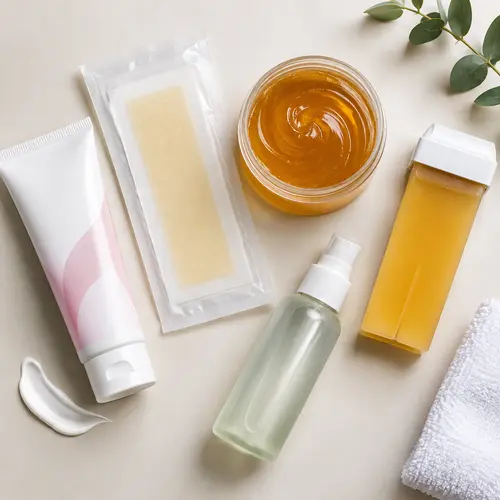
The strongest products for an Amazon hair removal product line are depilatory cream, ready-to-use wax strips, sugar wax, roll-on wax cartridges, and post-removal aftercare. They are compact, easy to demonstrate on video, compatible with repeat purchasing, and flexible enough for custom positioning. For most private-label sellers, the practical launch is one hero removal SKU plus one companion aftercare product—not a broad catalog.
Choose the hero product around operational risk. Wax strips offer simple consumer use and fewer leakage concerns, while cream creates stronger differentiation through texture, scent, body-area positioning, and packaging. Sugar wax and roll-on wax are highly visual but require tighter heat, flow, and shipment controls. A qualified hair removal OEM manufacturer should help compare formula performance, packaging compatibility, test scope, labeling files, MOQ, and landed-cost assumptions before artwork is finalized.
The winning product is not merely the most novel. It is the concept that remains stable, usable, and visually consistent from sample footage to Amazon delivery.
Key Takeaways for Private Label Buyers
- Start narrow. Launch one core SKU and one aftercare companion. This reduces inventory exposure while preserving bundle and subscription options.
- Separate face and body concepts. Contact time, fragrance, viscosity, application area, and irritation-risk review should match the intended use rather than relying on one universal cream.
- Approve performance and camera appearance. Review spread, removal visibility, residue, color, scent direction, and post-use skin feel under the lighting used for creator content.
- Test the final pack. Tubes, jars, sachets, strip pouches, and roll-on cartridges must be assessed with the actual formula under heat, cold, inversion, and shipping conditions.
- Request a complete launch file. Confirm ingredient naming, warnings, directions, batch records, stability evidence, packaging specifications, and market-specific label support.
- Plan for replenishment before virality. Verify whether a 1,000-unit pilot can scale without changing formula, raw materials, pack format, or approved appearance.
Buyer Context
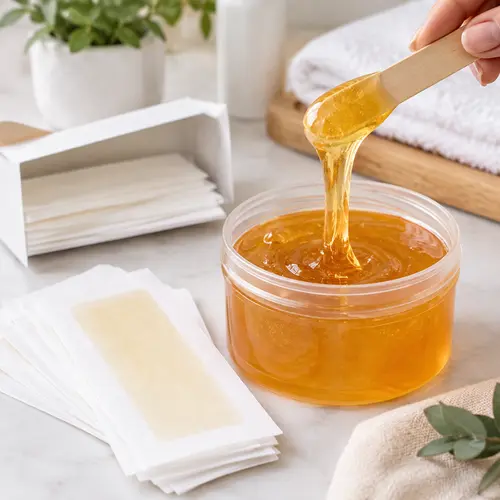
Amazon buyers compare products in seconds. The main image, use case, review profile, price, and delivery date often matter before the customer reads the full ingredient list. For creator-led brands, this makes the product demonstration part of the product itself. A smooth cream ribbon, a clean wax-strip pull, or a glossy sugar wax pour can communicate use and value faster than long copy.
That visibility also exposes inconsistency. If the mass-production cream is thinner than the approved sample, the application shot changes. If wax strips become difficult to separate after warm storage, negative reviews can appear before the supplier diagnoses adhesive migration. If a roll-on cartridge leaks into its carton, Amazon fulfillment readiness becomes a packaging problem rather than a marketing problem.
Each format carries a different operating profile. Depilatory cream is easy to bundle and customize, but demands controlled viscosity, odor management, clear contact-time directions, and suitable tube or pump materials. Buyers evaluating custom depilatory cream formulation should compare intended body areas and rinse behavior, not just ingredient decks. Wax strips simplify application, yet strip adhesion and pouch sealing can change during aging. Sugar wax offers a strong visual ritual but is temperature-sensitive. Roll-on wax needs reliable cartridge flow and cap sealing. Aftercare can increase order value with less application complexity when sourced through a focused post-depilation care OEM.
Trend data from Mintel global beauty market reports can help frame positioning, but trend language should never replace sample testing. The buyer still needs to verify what arrives, what the camera shows, and what the customer experiences.
Technical and Packaging Factors
Formula behavior comes first
For cream, assess viscosity at filling and after storage, application uniformity, odor, rinse-off, residue, and actual use time. A formula intended for the face should not be assumed suitable merely because a body version performs well. Ask the supplier to document the irritation-risk review and explain how directions and warnings differ. A dedicated mild hair removal formula still requires cautious claims and substantiated label language.
For hot wax and sugar wax, request the target melting or softening range, recommended working temperature, spread thickness, set time, pull behavior, residue, and performance after repeated heating where relevant. For wax strips, inspect separation force, hair pickup, strip integrity, adhesive transfer, and pouch condition after aging. Buyers can compare these formats through private label waxing products rather than treating all wax systems as interchangeable.
The pack is part of the formula
A custom logo does not make packaging production-ready. Depilatory cream may interact with tube layers, closures, liners, pumps, or printed decoration. Sugar wax can stress jar seals during warm transit. Roll-on wax cartridges must dispense evenly without shoulder or cap leakage. Wax-strip pouches need seals that resist lifting and limit odor transfer.
Ask for compatibility work using the final formula, pack material, decoration, fill weight, and closure. A practical screen can include 40°C accelerated storage, 4°C cold storage, three freeze-thaw cycles, and a 24-hour inverted leakage check. These are useful screening conditions, not universal pass criteria; the ODM should define the duration, acceptance limits, and rationale for the product. The full hair removal manufacturing process should connect sample approval, bulk production, filling, inspection, packing, and shipment release.
Safety and market readiness
Request ingredient lists, directions, warnings, responsible-party details, batch identification, shelf-life support, and documents required for the target marketplace. Manufacturing controls should align with the ISO 22716 cosmetic GMP standard. If an aftercare concept contains exfoliating acids, review concentration, use timing, and sun-sensitivity language in light of the FDA consumer advisory on alpha hydroxy acids.
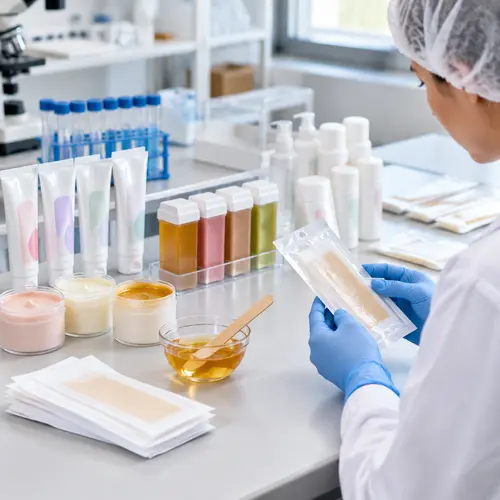
A seven-day first-sample target can be useful for a content calendar, but the brief should define what that sample proves. Color, scent, viscosity, removal behavior, and packaging fit may require separate approval gates. Review the broader hair removal OEM ODM services scope and record every assumption in the BOM: formula, fill volume, primary pack, printed components, testing, cartons, freight basis, and sample charges.
Decision Framework
| Factor | What to Check | Why It Matters | ODM Buyer Note |
|---|---|---|---|
| Product format | Cream, strips, sugar wax, roll-on wax, or aftercare | Determines use complexity, content potential, and shipment risk | Choose one hero format through defined hair removal product solutions |
| Texture and performance | Spread, flow, pickup, pull, residue, rinse, and skin feel | Drives demonstration quality and customer expectations | Approve under normal lighting and creator lighting |
| Packaging fit | Leakage, seal integrity, dispensing, decoration, and formula contact | Prevents damaged inventory and fulfillment complaints | Test the final decorated pack, not a generic container |
| Storage and transit | Heat, cold, freeze-thaw, inversion, and carton condition | Amazon inventory may encounter extended or variable storage | Agree on pass criteria and shipment conditions in writing |
| MOQ and scaling | Pilot quantity, reorder lead time, component availability, and line capacity | Controls launch exposure and post-viral replenishment | Confirm that scale-up does not require formula rework |
| Launch file | Label copy, ingredient list, warnings, batch details, and test records | Supports listing review and market readiness | Use a structured hair removal product RFQ to compare suppliers consistently |
ODM Manufacturing Considerations
For an Amazon hair removal product line, approve a production-ready sample rather than an attractive laboratory sample alone. Assign each sample a code and formula revision, and retain matching master samples with the buyer and manufacturer. The approval sheet should define color, odor, spread, set time, removal effectiveness, residue, net fill, and acceptable variation. Any later adjustment should create a new revision for written approval.
Clarify whether the project uses a stock base, semi-custom formula, or fully custom development. Convert marketing language into measurable targets such as color under agreed lighting, fragrance ceiling, pour and spread character, wax softening window, cream flow range, removal time, and claim boundaries. Formula ownership, exclusivity, and the supplier’s right to reuse core elements should be stated in the development agreement. Sources such as Mintel global beauty market reports can help shape format and positioning, but market trends should not replace product specifications.
Evaluate the formula with the exact commercial components, including printed logo parts and secondary cartons. Confirm fill accuracy, closure torque, crimp quality where applicable, liner behavior, product-contact materials, print rub resistance, label lifting, and carton strength. The stability plan should reflect intended shelf life and distribution conditions, with defined checkpoints for appearance, odor, pH where relevant, mass change, dispensing behavior, and hair removal performance. Pass and fail limits belong in the specification before a purchase order is issued.
Separate the MOQ for the formula batch, printed packaging, fragrance options, and individual SKUs. Ask who owns unused custom components if production does not consume the full packaging quantity. The document set should include ingredient names, batch certificates, applicable safety assessments, fragrance or allergen statements, artwork text, warnings, lot coding, shelf-life support, and freight documents. For AHA-containing aftercare, account for FDA consumer information about irritation and increased sun sensitivity. Require an itemized BOM quotation and logistics estimate stating freight assumptions, carton count, pallet details, shipment route, seasonal handling, and the agreed trade term. Related capabilities can be compared through the supplier’s hair-removal product categories and OEM/ODM service scope.

Common Problems or Failure Cases
Most failures result from a mismatch among the formula, commercial pack, production settings, and real distribution environment.
- Wax brittleness: A narrow softening range, excessive cooling, or inconsistent coating weight can make wax crack during handling. Define flexibility, pull, residue, and removal criteria at expected storage and use conditions.
- Strip adhesion loss: Changes in backing, coating weight, release material, or storage time may reduce hair pickup. Compare fresh and retained production strips for peel behavior, removal performance, and residue.
- Cream separation: Processing variation, unsuitable filling conditions, contamination, or pack interaction may produce an oil ring or watery layer. Set visual rejection limits and confirm that the dispenser still delivers a uniform dose.
- Cartridge leakage: Neck dimensions, cap torque, wax expansion, or transit vibration can cause seepage. Inspect roll-on units after shipment simulation, compare unit weight, and examine inner cartons for staining.
- Fragrance sensitivity: A strong scent may cover base odor but increase user complaints. Consider a lower-fragrance or fragrance-free option, supported by appropriate declarations, warnings, and personal-use directions.
- Packaging deformation: Component walls may warp, panel, or lose closure fit under stacked loads or seasonal warehouse exposure. Assess filled packs inside the intended shipper carton and pallet pattern, not as loose samples.
Supplier Checklist
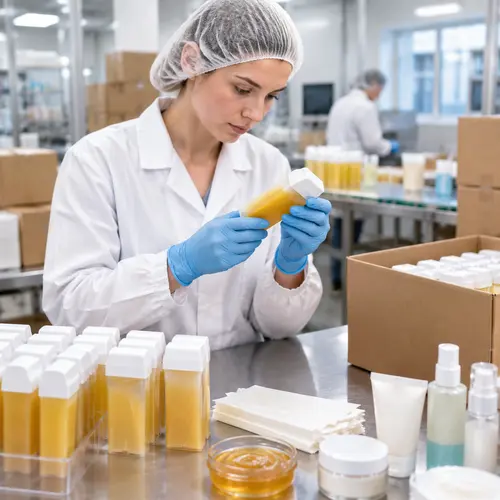
Use the following checks when comparing hair removal manufacturing partners:
- Verify the legal manufacturing entity, production site, and cosmetic product scope.
- Confirm batch traceability from incoming materials through released finished units.
- Ask whether stock, semi-custom, and custom formula options have separate fees.
- Require numerical targets for wax behavior, cream consistency, fill weight, and color tolerance.
- Review the complete commercial component list, including nominated packaging vendors.
- Read actual stability records and confirm that removal performance remains an acceptance criterion.
- Check ingredient, warning, certificate, artwork, shelf-life, and shipping document availability.
- Require written approval before formula, fragrance, component, or process changes.
- Compare MOQ, production lead time, component lead time, capacity allocation, and reorder terms.
- Request an itemized BOM and freight estimate without unexplained setup or handling charges.
- Evaluate whether the account contact can translate social media concepts into measurable sample requirements.
- Review the supplier’s documented manufacturing process, deviation handling, retain samples, and complaint workflow.
FAQ
Can a Chinese OEM take my idea or custom formula and sell it to another brand?
No contract eliminates all risk. Use an NDA plus a development agreement defining formula ownership, exclusivity, permitted reuse, confidentiality duration, file access, and remedies. Keep dated briefs and sample records, register brand assets in relevant markets, and avoid relying on verbal promises.
Can the sample deliver the dramatic texture and color I need on camera?
It can be developed toward that goal, but approval should use the actual pack, fixed lighting, raw video, and an agreed physical color reference. Test the pour, spread, wax pull, or cream coverage on camera while ensuring that the visual effect does not weaken removal performance or create misleading claims.
Can quality control guarantee that no customer will experience irritation?
No supplier can guarantee zero reactions. Risk can be reduced through ingredient screening, irritation-risk review, controlled fragrance levels, defined release limits, batch traceability, clear use directions, and a documented complaint process. The brand should also arrange the safety review and label assessment required for its destination market.
What should count as the final approved sample?
The approval set should identify the sample code, batch, formula revision, component codes, fill weight, fragrance, artwork version, and acceptance criteria. A marketing photograph or unlabeled jar is not sufficient evidence of approval.
Which documents should be ready before artwork is finalized?
Obtain the ingredient list, required warnings, directions, claim support, net-content format, responsible-company details, lot-marking method, shelf-life format, and applicable language requirements. Freight providers may also request safety information for particular formulas or shipment routes.
How should wax products be planned for seasonal shipping?
Review the route, expected warehouse dwell, container conditions, carton orientation, and pallet loading. Agree on evidence needed for freight claims, and consider a shipment trial before committing a large seasonal order. Shipment planning should reflect the specific wax format and its acceptable softening range.
References
- The FDA consumer advisory on alpha hydroxy acids provides consumer information relevant to AHA-containing aftercare directions and sun-sensitivity communication.
- Mintel global beauty market reports provide market research for beauty and personal care format, fragrance, and positioning decisions.