Direct Answer
For salon retail hair removal products, the best launch decision is rarely a single product choice. It is a coordinated review of formula performance, package fit, storage conditions, documentation, and replenishment capacity. A salon-ready range should be easy to demonstrate, consistent from sample to production, and clear enough for staff and customers to use correctly. Start with one hero SKU, such as a low-drip depilatory cream, a clean-pull wax strip, or a compact aftercare gel, then build the surrounding offer around the actual salon workflow.
For a creator-led or private-label brand, an ODM partner should convert the concept into samples quickly, explain tradeoffs in plain commercial language, and preserve the approved formula through scale-up. PZIK supports pilot runs from 1,000 units, targets sample delivery within 7 days where the brief is defined, and can coordinate documentation for the United States, European Union, and Canadian markets. Buyers should verify every claim, package specification, and shipment condition before launch.
Useful starting points include the hair removal OEM manufacturer page and the custom hair removal product development service overview.
Key Takeaways for Private Label Buyers
- Source around the use case: A salon wax, home-use cream, and post-depilation product require different application controls, pack sizes, and instructions.
- Approve texture on camera and in service: Review spread, pull, residue, scent, color, and finish under real lighting before approving a formula.
- Match packaging to the formula: Test tubes, jars, strips, cartridges, seals, and dispensing openings for leakage, clogging, separation, and heat exposure.
- Request evidence, not broad promises: Ask for stability records, package compatibility results, ingredient documentation, batch records, and labeling files.
- Plan the first order around demand signals: Confirm the MOQ, sample scope, production lead time, safety stock, and scale-up path before a creator campaign goes live.
- Keep the launch narrow: One visible hero product plus one supporting aftercare item usually creates a clearer retail story than a fragmented range.
Request a hair removal product quote with the target market, product format, initial quantity, package concept, and content deadline. This gives the ODM team enough context to compare options rather than return a generic catalog.
Buyer Context
Salon retail changes the standard for a hair-removal product. The item must work during a professional service, but it must also make sense when placed beside the reception desk or sold through a creator’s online store. A customer may see the product applied in a short video, experience it during an appointment, and later expect the same texture and result at home. Inconsistency between those moments creates avoidable returns and weakens trust.
Each format carries a different commercial logic. Depilatory cream needs controlled spread, clear contact-time instructions, and a tube or pump that limits contamination during repeated use. Wax strips need dependable adhesion after storage and a backing material that separates cleanly. Sugar wax requires a workable texture across expected room temperatures. Roll-on wax cartridges need a smooth roller path and a closure that prevents leakage during shipment. Aftercare products need a calm sensory profile, fast absorption, and a package that communicates when and how to apply them.
These decisions matter even more for creator-led brands. The founder may have a strong visual concept, but the manufacturing brief must translate that concept into measurable checks. A dramatic cream color, glossy wax surface, or satisfying strip pull can support content creation, but visual impact cannot replace irritation-risk review, package testing, or accurate labeling. Buyers can use the hair removal product solutions hub to compare formats by application and audience.
Market requirements also vary. The United States uses FDA cosmetic requirements and MoCRA obligations, while European and Canadian launches require their own ingredient, notification, and labeling review. Buyers should consult FDA cosmetics guidance, the Modernization of Cosmetics Regulation Act information, and Health Canada cosmetic ingredient guidance alongside the supplier’s document package.
Hair removal product guides can help the buying team prepare a more specific brief before sampling.
Technical or Packaging Factors
Formula behavior
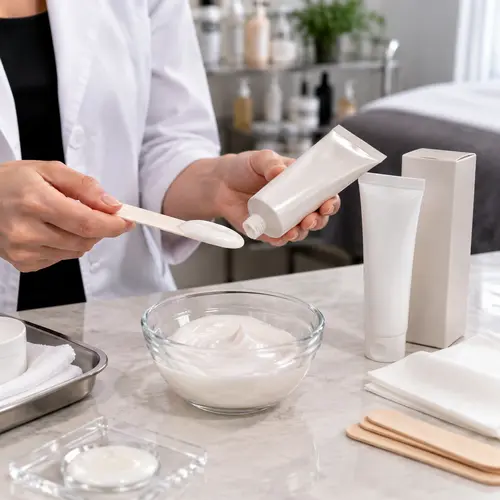
Evaluate the product at the point of use, not only in a sample jar. For cream, record spread, coverage, rinse behavior, odor, residue, and the recommended contact window. Ask whether viscosity remains consistent after storage and transport. For wax, check melting behavior, stringing, working temperature, pull strength, and residue. Sugar wax should be reviewed at both cooler and warmer room conditions because a texture that performs well in a warm salon may become difficult to spread in a cooler retail setting.
For aftercare, assess absorption time, tack, scent, and compatibility with freshly depilated skin. A soothing gel or lotion should not leave a heavy film that interferes with dressing or follow-on products. Any natural or organic positioning should be supported by a precise ingredient list and market-appropriate substantiation rather than a broad front-label claim.
Package compatibility
Packaging should be selected with the formula, shipping route, and usage pattern in mind. A tube may be efficient for cream, but the shoulder and cap must be checked for product buildup. A jar may support a premium salon presentation, but repeated finger contact creates a different use and labeling consideration. Roll-on cartridges require inspection of the roller, plug, seam, and cap after filling and after transport simulation.
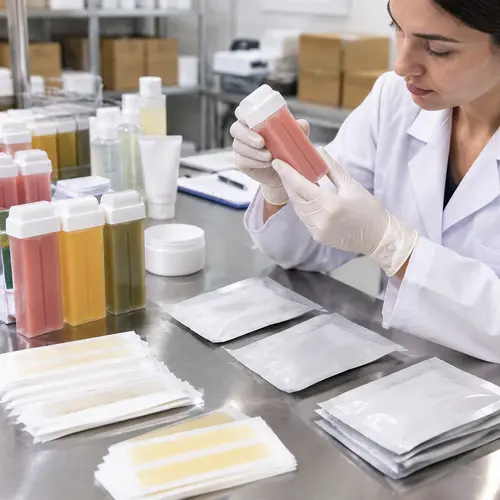
Ask the ODM team to run filled-package checks for leakage, deformation, closure torque, label adhesion, and interaction between the product and the container. Include hot and cold storage conditions that reflect the intended market. Wax strips should be checked for adhesive aging, backing separation, pouch seal integrity, and performance after temperature cycling. For cream, compare the sample package with the production package because dispensing force and remaining product can change when the tube material or nozzle changes.
Testing and launch controls
A practical review should cover formula stability, package compatibility, microbial quality where applicable, and irritation-risk assessment appropriate to the product type. It should also include transport conditions: carton compression, vibration, temperature exposure, and leakage inspection. The final label needs the correct ingredient declaration, net contents, directions, warnings, batch identification, and responsible-party information for the destination market.
Use the hair removal manufacturing process page to map sampling, filling, packaging, inspection, and shipment into one approval sequence. For product-specific work, review the custom depilatory cream formulation, custom wax strips and hot wax, and post-depilation care OEM options.
Decision Framework
| Factor | What to Check | Why It Matters | ODM Buyer Note |
|---|---|---|---|
| Formula texture | Spread, pull, residue, odor, viscosity, and temperature response | Determines salon usability, camera appeal, and repeatability | Approve against a written sample standard, not memory or screenshots |
| Packaging fit | Leakage, closure, dispensing force, seal, label adhesion, and material interaction | Prevents returns and protects the product during shipment | Test filled production-intent packs, including caps and secondary seals |
| Storage stability | Hot, cold, ambient, and temperature-cycle observations | Reveals separation, hardening, softening, discoloration, or odor change | Define the storage range and shipment limits before quoting |
| Skin-use review | Directions, contact time, warnings, ingredient list, and irritation-risk review | Reduces misuse and supports responsible retail positioning | Have destination-market labeling reviewed before artwork approval |
| Production readiness | MOQ, sample scope, batch consistency, lead time, and scale-up capacity | Connects a successful campaign to dependable replenishment | Ask whether the approved sample and production batch use the same formula and pack specification |
| Shipment condition | Carton strength, vibration, heat exposure, and leakage on arrival | Protects presentation quality at salons and fulfillment centers | Request a shipment simulation or documented inspection plan |
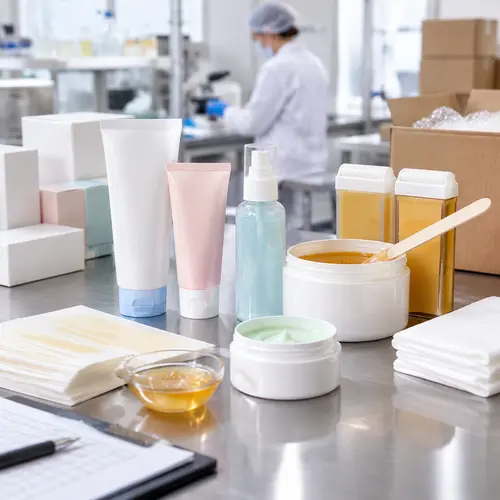
The practical next step is a structured sample brief. Include the target customer, application area, preferred format, sensory direction, package size, target market, launch quantity, retail price range, and content deadline. Add the required documents and acceptance checks before the first sample is made. For a sensitive-skin position, compare the gentle depilatory cream OEM route. For a post-use bundle, review the after hair removal serum option. This keeps the product decision commercial, testable, and ready for a creator-led launch.
ODM Manufacturing Considerations
For salon retail hair removal products, ODM approval should be based on a controlled reference sample rather than a general description such as ‘soft wax’ or ‘gentle cream.’ The signed sample should record appearance, fragrance, color, texture, application weight, removal behavior, and acceptable variation. Buyers should retain sealed reference units from the approved batch so later production can be compared against the same standard.
Formula customization begins with intended use. A depilatory cream for the face may require different application instructions and an irritation-risk review from a body product. Hard wax, sugar wax, wax strips, and aftercare also need distinct performance criteria. If a brand wants dramatic color, gloss, stretch, or texture for social content, the supplier should demonstrate the effect under the buyer’s planned lighting and application method. Camera appeal should not override removal performance, residue control, or skin-contact suitability.
Packaging should be selected alongside the formula. Ask the facility to fill production-intent jars, tubes, pouches, or roll-on cartridges and assess closure fit, dispensing, panel distortion, print resistance, and net-content consistency. For wax, confirm that the container tolerates the proposed warming conditions. For cream, verify that the product remains uniform near the end of the pack and does not react with the closure or decoration.
A stability review should include defined observations after ambient, elevated-temperature, and low-temperature storage. Relevant records include viscosity or hardness changes, color and fragrance drift, separation, sweating, pouch integrity, and container deformation. The buyer should also approve shipment conditions, carton configuration, pallet limits, and any seasonal routing precautions before commercial manufacturing.
MOQ discussions should separate formula batch minimums from packaging print minimums. A low filling quantity may still require excess printed pouches, cartons, or cartridges. Request an itemized BOM showing formula, primary pack, decoration, secondary pack, assembly, testing, freight assumptions, and expected overage. This makes hidden cost shifts easier to identify.
Labeling files should include an ingredient declaration, net contents, directions, warnings, responsible-party details, batch coding method, and market-specific records. Claims such as natural or organic should be supported by ingredient documentation rather than visual branding alone. Buyers can review relevant hair-removal product categories, OEM/ODM service scope, and the supplier’s manufacturing process before finalizing the specification.
Common Problems or Failure Cases
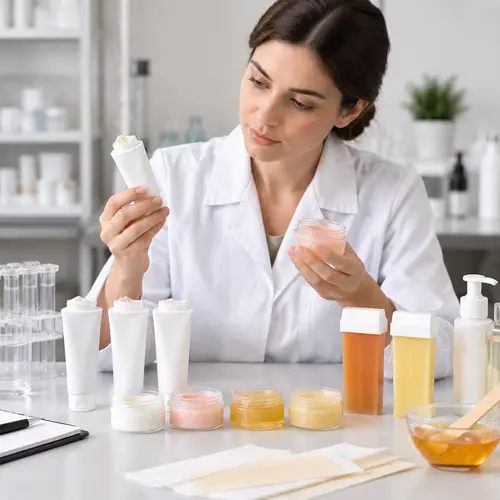
Wax becomes brittle: Hard wax that snaps instead of flexing may reflect an unsuitable formula, excessive heating, thin application, or storage exposure. Recreate the failure using the approved warmer setting and application thickness before changing the formula.
Strip adhesion declines: Wax strips may lift poorly after warm storage, lose contact at the edges, or leave excessive residue. Compare stored units with retained controls and inspect wax coating weight, backing material, and pouch closure consistency.
Cream separates: Visible liquid release, graininess, or major viscosity drift can affect dosing and removal. Check whether the issue appears only after transit, only in one package size, or throughout the bulk batch. Do not solve separation merely by changing the tube.
Cartridges leak: Leakage can result from component tolerances, closure torque, product flow at higher temperatures, or damage during distribution. Review samples from multiple component lots rather than testing a single ideal unit.
Fragrance causes complaints: A strong scent may support market differentiation but can increase sensitivity concerns or mask an undesirable base odor. Require fragrance-level options, ingredient disclosure, and a review of warnings and intended application areas.
Packaging deforms: Panels may collapse, labels may wrinkle, or caps may loosen when formula weight, storage conditions, and carton compression are not evaluated together. Cosmetic appearance matters because salons often display products under bright lighting.
Supplier Checklist
- Define the exact removal format, body area, user instructions, and target market.
- Request production-intent samples with documented texture, color, odor, viscosity or wax hardness range, and application method.
- Confirm how approved samples are sealed, coded, stored, and used for batch comparison.
- Review ingredient restrictions, irritation-risk controls, warnings, and complaint-handling responsibilities.
- Test the chosen container with the actual formula, decoration, closure, and fill weight.
- Review ambient, hot, and cold storage results plus relevant leakage, separation, adhesion, and deformation observations.
- Separate bulk MOQ, filling MOQ, and printed-packaging MOQ in the quotation.
- Request a transparent BOM, tooling or artwork charges, freight assumptions, and allowable production overage.
- Confirm ingredient lists, label copy, batch traceability, test summaries, and market-specific documents.
- Ask for realistic capacity by line, normal lead-time range, surge-order rules, and allocation during peak periods.
- Assess whether the contact person can translate a marketing brief into measurable sample criteria.
- Review shipment carton strength, pallet pattern, container loading conditions, and seasonal transport limits.

FAQ
How can I reduce the risk that a manufacturer will reuse my idea or formula?
Use a written confidentiality and development agreement that defines ownership of custom formulas, artwork, molds, samples, and test records. Distinguish a genuinely custom formula from a supplier’s existing base. Limit file access, identify approved subcontractors, and document which elements may not be offered to other customers.
Can a sample deliver an exaggerated texture or color on camera?
Often, but the effect must be converted into measurable criteria. Provide reference footage, lighting conditions, application thickness, and desired stretch, gloss, opacity, or color intensity. Approve the visual result together with removal performance, residue, package dispensing, and skin-contact considerations.
Can quality controls guarantee that nobody will have a bad skin reaction?
No responsible supplier can guarantee zero reactions. Risk can be reduced through ingredient review, defined specifications, controlled manufacturing, appropriate testing, clear directions, warnings, batch records, and complaint procedures. Brands should avoid implying that any depilatory cream, wax, strip, or aftercare formula is universally irritation-free.
What if I do not understand technical ingredient language?
A capable ODM contact should convert your salon and social-media goals into a structured brief: target body area, texture, fragrance, application time, visual appearance, removal method, pack format, claims, and market. Ask for plain-English explanations of each tradeoff and written confirmation after meetings.
How do I know whether the factory can handle a sudden viral order?
Ask for line capacity by product format, current utilization, packaging reorder times, backup component plans, and rules for reserving production. A viral forecast is not a firm order, so agree on deposit timing, material commitments, and staged releases before content goes live.
Which labeling records should I request for the United States and Canada?
Request the final ingredient declaration, warnings, responsible-party information, batch identification approach, claim support, and the documents applicable to the intended market. Requirements vary by product and claims, so use qualified local review rather than copying a competitor’s label.
References
- FDA: Modernization of Cosmetics Regulation Act of 2022 — information on current US cosmetic law responsibilities.
- FDA authority over cosmetics — explains that cosmetics generally are not preapproved by the FDA, apart from applicable color additive requirements.
- Health Canada cosmetics guidance — information on cosmetic safety, notification, labeling, and the Cosmetic Ingredient Hotlist.