Direct Answer
For summer hair removal products private label planning, the strongest launch is usually a focused system rather than a broad catalog: one visible hero product, one practical companion, and packaging built for heat, travel, and short-form content. A depilatory cream, wax strip kit, sugar wax jar, or roll-on wax cartridge can perform well when the formula texture, removal performance, pack format, and documentation are validated together.
Start with the use case and sales window. A creator-led brand may need a visually distinctive cream or peelable wax texture for video, while a salon or retail buyer may prioritize clean application, predictable removal, and low leakage during shipment. The right ODM partner should provide fast sampling, transparent BOM assumptions, pilot production from 1,000 units where available, and a clear path from approved sample to seasonal replenishment. The goal is not simply to launch quickly. It is to launch a product that remains stable, comfortable, and presentation-ready when demand rises.
For product categories and supplier selection, review private label hair removal products and compare the capabilities of a specialized hair removal OEM ODM services partner.
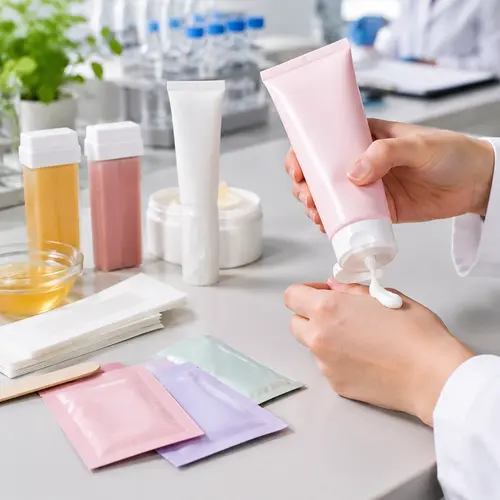
Key Takeaways for Private Label Buyers
- Choose one clear summer use case. Define whether the product is for legs, underarms, facial areas, travel, home use, or salon resale before selecting the formula and pack.
- Review texture on camera and in hand. Cream spread, wax pull, strip adhesion, and residue can affect both customer experience and social content performance.
- Match packaging to the formula. Jars, tubes, sachets, cartridges, and strip pouches each create different leakage, dosing, and heat-exposure risks.
- Request practical testing evidence. Ask for stability observations, packaging compatibility checks, storage guidance, and irritation-risk review for the intended use area.
- Plan samples around the content calendar. A sample approval target within seven days can help a creator align product testing with a scheduled campaign, but the production timeline must still include filling, labeling, and shipment preparation.
- Protect the replenishment path. Confirm that the approved sample, mass-production formula, ingredients, and packaging source remain consistent after the first order.
Buyer Context
Summer creates a concentrated demand window for hair removal. Consumers travel, wear more skin-revealing clothing, book salon appointments, and search for convenient home removal options. That timing gives private-label brands a clear opportunity, but it also compresses the margin for error. A product that arrives after the seasonal campaign, separates in storage, leaks in transit, or performs differently from the demonstration can quickly create refunds and negative creator comments.
The category includes several distinct operating models. Depilatory cream can support quick home use and compact retail packaging, but viscosity, scent, contact instructions, and tube compatibility require close review. Wax strips are convenient for travel and subscription boxes, yet adhesion may change after heat exposure or prolonged storage. Sugar wax can create a natural-positioning story, while its texture and application temperature must remain consistent across batches. Roll-on wax cartridges offer a strong visual and salon-use proposition, but the roller, cartridge seal, and filling process must be assessed as one unit. Aftercare products such as soothing gels or lotions can increase basket value, provided their packaging and positioning remain connected to the hair-removal routine.
Creators and brand operators should also separate visual novelty from product risk. A colorful wax, unusual cream texture, or satisfying strip pull can generate attention, but the product still needs predictable removal, clear use directions, and appropriate review for the intended skin area. A specialized hair removal product solutions review can help narrow the concept before expensive packaging work begins.
Technical and Packaging Factors
Formula behavior. Ask the manufacturer to define the target texture in practical terms: spreadability, set time, removal feel, residue, and behavior after temperature changes. For cream, review viscosity consistency, tube dispensing, odor, and whether the formula remains uniform after storage. For wax, review melting behavior, pull strength, working temperature, and whether the product becomes brittle or overly fluid during summer transport. A custom depilatory cream OEM discussion should connect the formula brief to the intended pack and customer routine.
Packaging compatibility. The container is part of the product experience. A jar must resist cracking and maintain a reliable closure. A tube should dispense consistently without paneling or seal failure. Wax strip pouches need an effective seal and a surface that protects the strips from contamination and loss of adhesion. Roll-on cartridges require a leakage review around the roller ball, cap, neck, and filling level. Request filled-pack samples, not only empty packaging, because formula contact can change seals, liners, adhesives, or print surfaces.
Storage and shipment. Summer goods may move through hot warehouses, delivery vehicles, and humid retail environments. Agree on storage conditions, heat and cold exposure checks, carton protection, and shipment orientation. For wax products, confirm that the formula can recover its intended texture after temperature cycling. For cream, inspect separation, color change, odor, and dispensing behavior. Ask for a written shipment condition and a receiving inspection checklist that covers leakage, dents, seal integrity, and lot identification.
Safety and documents. The product brief should identify the intended body area, directions, warnings, ingredient list, batch coding, shelf-life or period-after-opening approach, and target market. The buyer should receive label files, ingredient documentation, test summaries, and packaging specifications before artwork approval. Use the hair removal manufacturing process as a reference point for reviewing sampling, filling, packaging, quality checks, and shipment handoffs.

Decision Framework
| Factor | What to Check | Why It Matters | ODM Buyer Note |
|---|---|---|---|
| Formula texture | Spread, set time, removal feel, residue, viscosity or melting behavior | Determines usability, comfort, and video presentation | Approve against a written sensory brief and retained sample |
| Packaging fit | Seal, closure, dispensing, liner, roller, pouch adhesion, filled-pack compatibility | Reduces leakage, contamination, and customer complaints | Test the formula in the final pack before artwork lock |
| Seasonal storage | Heat and cold exposure, humidity, carton protection, recovery after temperature change | Protects texture and appearance during summer distribution | Define receiving checks and acceptable variation in advance |
| Skin-use review | Intended area, directions, warnings, irritation-risk review, removal instructions | Supports responsible positioning and reduces misuse | Keep claims matched to the reviewed use case |
| Sampling and scale | Sample scope, pilot quantity, lead time, repeatability, replenishment capacity | Connects a content launch to actual retail availability | Ask how the approved sample is transferred into production |
| Launch documents | Ingredient list, label content, lot coding, test summaries, shipment records | Prevents late artwork and market-entry delays | Build document review into the launch schedule |
ODM Manufacturing Considerations
A seasonal project should run through a short, visible decision path. First, define the audience, body area, format, retail price target, and content angle. Second, select a baseline formula and request samples in the intended packaging. Third, review texture, scent, removal performance, pack handling, and label language together. Fourth, complete stability and compatibility checks appropriate to the formula and pack. Finally, approve a pilot batch and reserve a replenishment plan before the campaign goes live.
For a creator brand, communication quality is a manufacturing requirement. The project manager should translate terms such as bold visual texture, clean strip pull, fast application, or travel-friendly into measurable sample criteria. A transparent quote should separate formula, filling, packaging, testing, artwork support, and freight assumptions. For a full turnkey path, review request a hair removal product quote with the target market, launch date, expected first order, and packaging concept included.
Build the product line around complementary use. A wax strip kit may pair with a post-use gel; a depilatory cream may pair with a calming lotion; a salon roll-on format may need a matching aftercare SKU. Explore post-depilation care OEM, sensitive skin hair removal products, and wax strips OEM when building a coherent summer assortment.

ODM Manufacturing Considerations
For summer hair removal products private label programs, sample confirmation should be treated as a written product specification rather than a simple approval message. Record the target texture, color, fragrance intensity, removal performance, application thickness, setting time, and acceptable variation. For wax, confirm melting behavior, spreadability, flexibility after cooling, and whether the finished product remains workable in the intended salon or home-use environment. For depilatory cream, document viscosity, tube dispensing behavior, contact-time directions, rinse-off feel, and the required irritation-risk review.
Formula customization should separate essential changes from cosmetic preferences. Essential changes may include a different wax blend, lower fragrance load, altered cream viscosity, sugar wax consistency, or a roll-on formula suited to a specific cartridge. Cosmetic preferences may include color, scent profile, or a visual texture designed for short-form video. Ask the supplier to identify which changes require a new sample, which ingredients affect cost, and which changes could alter testing or labeling documents. A supplier that can translate a marketing brief into measurable product requirements will reduce revisions.
Packaging compatibility must be confirmed with the filled product, not only with empty components. Check tube wall strength and cap closure for cream, pouch seals and strip alignment for wax strips, jar resistance for sugar wax, and cartridge fit, roller movement, and leakage resistance for roll-on wax. Request filled samples stored in the conditions expected during summer distribution. Include upright and horizontal storage, warehouse heat, vehicle transport, and cold exposure where relevant. Review whether labels wrinkle, adhesive fails, plastic softens, or the package deforms.
A stability review should cover appearance, odor, color, viscosity, separation, microbial quality where applicable, and package condition at defined intervals. The supplier should explain the storage conditions used, the observation schedule, and what counts as a failure. For wax products, assess brittleness, sweating, crystallization, and strip adhesion after heat exposure. For creams, check separation, thinning, hardening, and nozzle blockage. These checks do not guarantee every market outcome, but they create evidence for a realistic shelf-life and shipment decision.
MOQ should be evaluated against the launch channel, packaging format, and replenishment risk. Ask whether the minimum applies to each formula, fragrance, color, SKU, or combined order. Clarify charges for sampling, mold or artwork preparation, testing, labels, cartons, and unused components. A transparent BOM should show product contents, packaging parts, print costs, and logistics assumptions separately. You can compare an initial private-label run with a later volume tier without confusing manufacturing costs with freight.
Labeling documents should be prepared for the destination market before final artwork approval. Request the ingredient list using recognized ingredient names, net contents, batch or lot identification method, directions, warnings, storage language, responsible-party information where required, and supporting product specifications. The FDA Cosmetics Labeling Guide is a useful reference for products entering the United States. For European ingredient-name checks, buyers can review the European Commission CosIng ingredient database, while still confirming market-specific obligations with their responsible regulatory adviser.
Shipment conditions should be agreed in writing. Specify acceptable temperature exposure, carton stacking limits, orientation for cartridges, moisture protection for wax strips, and inspection steps at arrival. Ask how damaged cartons, leaked cartridges, short counts, and label defects are recorded and resolved. For seasonal launches, reserve production and freight capacity using a forecast, but keep an approved substitute plan for components that may become unavailable.
Relevant OEM and ODM services, manufacturing process information, and a structured RFQ request can help organize these details before commercial approval.

Common Problems or Failure Cases
Wax brittleness often appears when a formula is too hard for the intended application temperature or when storage conditions cause moisture loss or crystallization. The product may crack during spreading, break during removal, or leave excessive residue. Test several application temperatures and cooling times, then record the force needed to remove the wax and the amount left on the skin or strip.
Wax strip adhesion can decline when the pouch seal is weak, the strip absorbs moisture, the wax coating is uneven, or the product is stored in excessive heat. Inspect seal continuity, coating distribution, strip separation, and pull performance after transport simulation. A strip that works in a factory room but loses adhesion in a hot delivery vehicle is not ready for a summer launch.
Depilatory cream may separate, thin, harden, or develop a changed odor when the formula and tube are poorly matched. Repeatedly dispense the product from filled tubes after heat and cold storage. Look for oil or water separation, nozzle blockage, cap contamination, and inconsistent dose size. Fragrance can also become a customer risk: a strong scent may increase complaints from users who expect a mild product. Review fragrance allergens, declared ingredients, and a lower-fragrance alternative before artwork is finalized.
Roll-on wax cartridges can leak through the roller head, cap, seam, or neck when the filled package expands during heat exposure or when the cartridge is stored horizontally. Inspect every closure area, test upright and inverted storage, and check whether wax reaches the outer carton. Packaging deformation can also occur when a tube, jar, pouch, or cartridge is exposed to temperatures outside the planned shipment range. The corrective action may require a package change, a fill adjustment, or clearer storage instructions rather than a formula change alone.
Supplier Checklist
- Can the supplier convert your creative brief into measurable texture, color, fragrance, viscosity, melting, and removal requirements?
- Does the sample record identify the formula version, packaging version, date, and specific approval criteria?
- Can the facility provide filled-pack compatibility results for tubes, jars, pouches, strips, or cartridges?
- Are heat and cold storage observations documented for appearance, odor, separation, leakage, seal strength, and package deformation?
- Does the supplier explain MOQ by SKU, formula, fragrance, color, and packaging format?
- Is the BOM itemized, with product, packaging, testing, artwork, cartons, and freight assumptions shown separately?
- Are ingredient lists, warnings, directions, batch identification, and destination-market labeling documents available before printing?
- Can the supplier explain inspection sampling, release criteria, retained samples, complaint handling, and corrective action?
- Is there a written plan for seasonal capacity, component delays, rush replenishment, and priority allocation during a viral sales event?
- Will the commercial contact communicate in brand, content, and customer-experience terms as well as manufacturing terms?
FAQ
How can I protect my formula and product concept from being sold to another brand?
Use a written confidentiality and ownership agreement before sharing full specifications, and define ownership of custom formulas, artwork, samples, molds, and test records. Ask the supplier to identify whether any base formula, fragrance, or packaging component is standard across customers. Keep approval records versioned and restrict access to the people who need them. Legal protection should be reviewed for the countries involved.
Can the texture and color look dramatic enough for social media content?
Usually, but visual performance must be specified and tested. Define the desired spread, gloss, opacity, color strength, set time, and removal moment, then review samples under the lighting used for filming. Avoid changing color or texture only for camera impact if the change harms application, removal, or user comfort. Request a camera review sample and a normal-use sample when those requirements differ.
Can a factory guarantee that customers will not experience severe irritation?
No responsible supplier can guarantee a zero-reaction outcome for every user. The buyer should require an ingredient review, appropriate safety documentation, clear directions and warnings, suitable use-area limitations, and a complaint process. Test the finished product in its final package and avoid unsupported claims about sensitive skin or universal suitability.
How do I communicate with a supplier if I do not understand chemical ingredients?
Start with user outcomes: how the wax should spread, how quickly the cream should dispense, what residue is acceptable, how strong the fragrance should be, and what the customer sees on camera. Ask the supplier to convert those goals into a short technical brief with plain-language explanations. A sample comparison table with pass, revise, and reject criteria can make communication more precise.
What happens if a video creates an unexpected order surge?
Discuss capacity before launch and request a written allocation plan for components, filling, packing, and freight. Ask whether the facility serves larger scheduled accounts and how rush orders are prioritized. Keep an approved forecast, reserve critical packaging where practical, and define a replenishment quantity that can be produced without changing the approved formula or package.
Which shipment checks matter most for summer hair-removal products?
Check temperature exposure, carton compression, moisture, orientation, seal condition, leakage, strip adhesion, and product appearance at arrival. Record photographs, lot numbers, carton counts, and damaged units during receiving. These records help distinguish a formula issue from a transport or storage issue.
References
European Commission CosIng ingredient database