Direct Answer
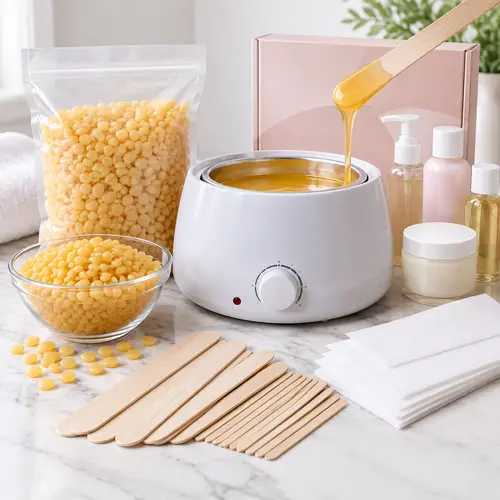
A practical private label wax kit should include the accessories that make the product easy to use, easy to demonstrate on camera, and safe to ship. For most home-use kits, that means application sticks in several sizes, pre-cut or roll-format wax strips when the formula requires them, protective gloves, a clear instruction leaflet, post-wax soothing care, and a clean storage solution. The final set depends on whether the core product is hard wax, soft wax, sugar wax, roll-on wax, wax strips, or depilatory cream.
For founders comparing wax packaging for private label, accessories should be treated as part of the product model rather than free extras. Each component affects the user experience, package volume, filling plan, stability review, and landed cost. A capable ODM partner should recommend the smallest complete kit, verify formula and material compatibility, and provide a transparent BOM before sampling.
Key Takeaways for Private Label Buyers
- Start with the hair-removal method and target body area. A facial wax kit needs smaller applicators and more controlled dosing than a leg or body kit.
- Include accessories that remove friction: suitable sticks, strips, gloves, instructions, and aftercare. Avoid adding items that increase cost without improving use.
- Review formula texture and package fit together. Wax viscosity, melting behavior, cream filling performance, and cartridge geometry all affect the final kit.
- Ask for packaging compatibility checks, leakage review, heat and cold storage checks, and adhesion aging for strips before approving bulk production.
- Request a complete sample set with finished labels, inserts, accessories, and shipping carton. A formula sample alone cannot validate the launch experience.
- Confirm labeling documents, claims support, batch identification, and shipment conditions for every market where the kit will be sold.
Private label hair removal products are easier to evaluate when the formula, accessories, packaging, and production route are reviewed as one commercial unit.
Buyer Context
Accessories matter because hair-removal products are judged in use, not only on the ingredient panel. A creator-led brand may show a wax bead melting, a strip lifting cleanly, or a soothing gel being applied immediately after treatment. If the applicator bends, the strip does not match the wax, or the aftercare tube leaks inside the pouch, the content can expose a quality problem before the brand has time to correct it.
The right kit also depends on the product category. Hard wax usually needs wooden spatulas in multiple widths and a heat-resistant tray or jar presentation. Soft wax and sugar wax may require strips, larger body applicators, and a way to prevent the product from sticking to the outer pack. Roll-on wax needs a cartridge, roller head, protective cap, and leakage-resistant secondary packaging. Depilatory cream needs a spatula, dosing guidance, and a clear removal cloth or rinse instruction. Aftercare products can include a calming gel, lotion, or hair inhibitor serum when the positioning supports a complete routine.
For an overseas creator brand, this is also a communication issue. The kit should explain what to use, where to use it, how much product to apply, and what to do after removal without forcing the customer to search for a separate tutorial. Your ODM partner should translate a social-media concept into a workable product set while protecting the claims and labeling position.
Brands developing a full range can review hair removal product solutions by application, buyer type, and product format. For a focused wax launch, custom wax strips and hot wax provide a useful starting point for comparing kit structures.
Technical or Packaging Factors
Match accessories to formula behavior
Wax should be evaluated at the temperature and application condition promised to the customer. The team should check melting time, spreadability, pull strength, and residue after removal. A stick that works with firm hot wax may be wasteful or difficult to control with a softer butter-like texture. For sugar wax, the applicator should support the intended hand technique and should not shed fibers or absorb excessive product.
Depilatory cream requires a different review. The spatula must distribute the cream evenly without scraping the skin, while the tube or jar must support clean filling and repeated opening. Viscosity should remain consistent after heat and cold exposure. The closure should resist product buildup around the thread, especially when the customer uses the kit in a bathroom.
Check package compatibility and leakage
Accessories often create the failure points. Wooden sticks can puncture a sachet if packed loosely. A roller cartridge can leak when stored on its side or exposed to elevated transport temperatures. A soothing gel tube may deform under pressure from a rigid insert. The finished kit needs a drop and compression review, seal inspection, cap torque check, and shipment simulation appropriate to the selected materials.
Ask the supplier to review the formula against the primary container, closure, label adhesive, pouch film, and accessory materials. Package compatibility should be confirmed after storage, not only on the first day. For labeling decisions, review the FDA Cosmetics Labeling Guide and ask which product, warning, ingredient, and responsible-party information belongs on the retail unit and outer carton.
Design for the customer workflow
A complete kit should follow the order of use. Put the instruction leaflet where it can be seen first, separate clean applicators from used-product surfaces, and provide enough space for the customer to remove each component without damaging the package. For a creator brand, the unboxing should also look intentional on camera. A white pouch, color-coded sticks, or a compact tray can create visual consistency, but every design feature still needs to survive filling, assembly, storage, and shipment.
For sensitive-skin positioning, the kit should support a cautious use sequence, clear patch-test language, and restrained claims. The supplier should provide an irritation-risk review and advise whether fragrance, essential oils, or strong cooling agents create an avoidable concern. Buyers evaluating mild positioning can compare low irritation hair removal products and request a sample review focused on user comfort rather than marketing language.
Decision Framework
| Factor | What to Check | Why It Matters | ODM Buyer Note |
|---|---|---|---|
| Applicators | Size, stiffness, surface finish, and count | Controls dosing, spread, hygiene, and body-area suitability | Request facial, body, and precision options before locking the kit |
| Strips | Material, cut size, wax adhesion, and aging behavior | Prevents lifting failure, tearing, and excess residue | Review strip performance after storage and shipment simulation |
| Primary pack | Jar, tube, cartridge, pouch, closure, and label fit | Protects texture and reduces leakage or contamination risk | Confirm filling method and compatibility with the selected formula |
| Aftercare | Gel, lotion, or serum format and dispensing control | Completes the routine and supports post-removal comfort | Check claims, carton space, and whether the item changes the kit category |
| Storage and shipment | Heat, cold, compression, drops, and orientation | Reveals failures before customers receive the product | Define acceptable appearance and leakage limits in the approval sample |
| Documents | Ingredient list, label copy, batch details, and market files | Supports legal sale and consistent production | Ask for the document package before approving bulk filling |
Hair removal manufacturing process reviews should cover sampling, filling, packaging, inspection, and shipment as one workflow. This is especially important when accessories are packed manually or when the kit contains more than one formula.
For a cream-led concept, review custom depilatory cream formulation. For an aftercare extension, after wax care products can help define the second step without overloading the first kit.
Hair removal OEM ODM services should include sample revisions, accessory sourcing, label review, and a clear bulk approval process. Before requesting a quote, prepare your target market, body area, formula format, kit quantity, desired launch date, and preferred visual direction. Then request a hair removal product quote with the complete accessory list rather than pricing the wax alone.
ODM Manufacturing Considerations
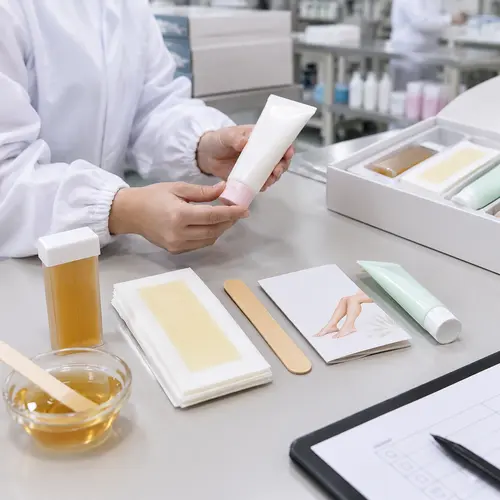
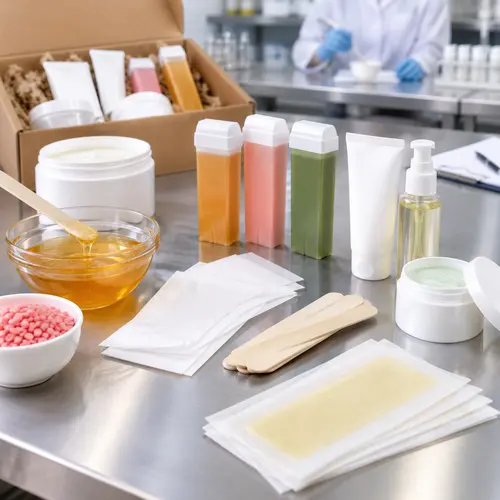
A private-label wax kit should be approved as a complete customer workflow, not as an isolated formula. During sample confirmation, request the exact wax, strip, spatula, cartridge, aftercare item, carton, insert, and label version that will be used for the first production run. Record the approved color, fragrance level, texture, application behavior, removal performance, and pack configuration. A signed sample standard or retained reference sample gives both parties a practical basis for reviewing later bulk.
Formula customization may include wax hardness, flexibility, setting speed, fragrance level, color, strip material, or the viscosity of a depilatory cream. Ask the supplier to identify which changes are standard options and which require a new development round. For hard wax, review whether the sample spreads evenly without becoming brittle. For sugar wax or cream, check scoopability, stringing, separation, and residue after use. For roll-on wax cartridges, confirm that the roller moves smoothly and delivers a consistent film.
Packaging compatibility must be reviewed with the actual formula and finished closure. A supplier should check whether oils, fragrance, solvents, or heat soften the bottle, cartridge, tube, seal, label adhesive, or inner tray. Request filled samples held in expected warehouse and shipping conditions, including warm and cold exposure where relevant. Inspect for swelling, deformation, cap loosening, leakage, label lifting, and changes in wax or cream texture. The OEM/ODM service page should explain what packaging review is included in the project scope.
Stability review should cover the formula, primary container, and full kit. Ask for defined observation points and records for appearance, odor, color, viscosity or firmness, separation, closure condition, and package weight where appropriate. This does not guarantee every market outcome, but it helps identify predictable risks before bulk filling. A buyer should also request the available ingredient information, batch records, safety documents, product specifications, and labeling support needed for the target market. The FDA Cosmetics Labeling Guide is a useful reference for checking whether the proposed label information is complete for the United States.
MOQ should be separated by formula, packaging component, artwork, and finished kit. A low formula MOQ may still require a larger carton or custom strip order. Ask for the minimum quantity for samples, pilot filling, and regular bulk, along with the cost impact of unused packaging. Confirm whether the factory can hold approved components for a repeat order and how long a production slot remains available after a purchase order.
Shipment conditions deserve the same attention as filling. Confirm carton dimensions, pallet or parcel configuration, protection against heat and freezing, maximum storage limits, and whether the product should travel by air or sea. Wax can soften in a hot container, while some creams may become unstable after repeated temperature changes. Request a packing list, batch identification method, outer-carton markings, and a process for handling damaged or leaking units on arrival. Buyers comparing suppliers can also review the company manufacturing process page and ask which steps are performed in-house.
Common Problems or Failure Cases
Wax brittleness: A hard wax sample may look attractive but crack during removal or break into small pieces when the room is cool. Check flexibility at the lower end of the intended storage range and test several application thicknesses. The supplier should record the approved working behavior instead of relying on color or appearance alone.
Loss of strip adhesion: Pre-coated strips can lose pickup performance when the wax layer is too thin, too soft, or exposed to unsuitable heat. Compare adhesion from samples stored in normal warehouse conditions with samples exposed to warmer shipping conditions. Review strip fiber, wax coverage, pouch seal, and instructions together.
Cream separation: A depilatory cream may separate, thin out, or develop an unusual odor after temperature changes. Inspect samples at the beginning and end of the review period, then repeat the check after transport simulation when available. Do not approve a large filling run based only on a freshly mixed laboratory sample.
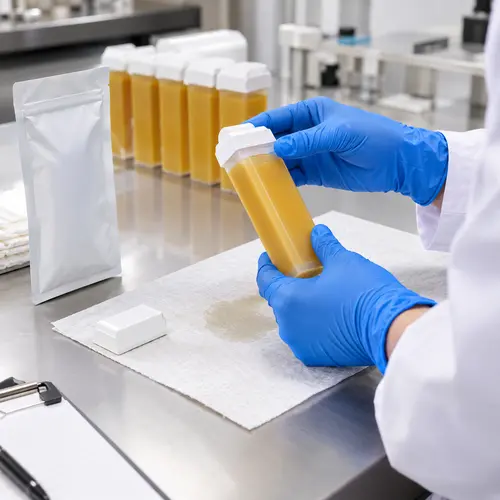
Cartridge leakage: Roll-on wax may seep around the roller, cap, neck, or cartridge seam. Store filled cartridges horizontally and vertically, then inspect the closure and outer packaging. A leakage review should include units from more than one filling batch when possible, since overfilling and assembly variation can create different results.
Fragrance sensitivity: A strong fragrance can help a kit feel distinctive, but it may be unsuitable for some users, particularly around facial areas. Ask for a fragrance-free option or a lower fragrance version, review the ingredient declaration, and test the final customer instructions. Do not let a strong scent mask changes in the formula or package.
Packaging deformation: A carton, tray, pouch, or tube can distort under heat, compression, or contact with oily formulas. Check the complete packed kit after storage and shipment handling. Deformation is not only a visual issue; it can cause seals to open, strips to crease, or accessories to shift and damage the primary container.
Supplier Checklist
- Can the supplier provide retained samples and a written approval record for formula, color, fragrance, texture, and accessories?
- Are customization limits, sample rounds, development charges, and lead times stated before the project begins?
- Has the actual formula been checked against the selected tube, pouch, jar, cartridge, strip wrapper, seal, label, and carton?
- Are warm, cold, storage, leakage, closure, and shipment checks defined with observable acceptance criteria?
- Does the MOQ apply separately to bulk formula, filling, printed packaging, and finished kits?
- Can the supplier provide ingredient declarations, product specifications, safety documents, batch information, and label review support?
- Are shipment conditions, outer-carton protection, transport timing, and damage-reporting procedures documented?
- Can the project contact translate social-media requirements such as visible texture, color contrast, application speed, and unboxing sequence into manufacturing specifications?
- What capacity is reserved for repeat orders, and how are urgent replenishment requests handled when a campaign generates unexpected demand?
- Is intellectual property ownership stated for the custom formula, artwork, fragrance brief, packaging configuration, and finished product concept?
FAQ
Could the factory reuse my custom formula or product concept for another brand?
Ask for written ownership and confidentiality terms before sharing the full brief. The agreement should identify custom formula work, artwork, packaging configuration, development files, samples, and restrictions on reuse. Also ask how the supplier separates your private-label project from standard formulas offered to other customers. Documentation and access controls matter more than a verbal promise.
Can the sample achieve a bold visual effect for video content?
Usually, the appearance can be adjusted through color, translucency, texture, ribboning, spread pattern, and packaging presentation, but the result must remain consistent with safe use and stable filling. Submit reference videos or still images, then approve a filmed sample under the lighting and camera distance used by your brand. Confirm that the same visual behavior remains after storage, not only on the first day.
How can I reduce the risk of a customer experiencing a serious skin reaction?
No supplier can promise zero reactions. Reduce risk through an ingredient review, fragrance review, clear use instructions, patch-test guidance where appropriate, warnings for sensitive areas, batch records, retained samples, and a documented complaint process. For products used near the eyes, review the FDA eye-area cosmetic safety guidance and make sure the label does not encourage unsuitable use.
What if I do not understand cosmetic ingredients or manufacturing terms?
Require the supplier to convert your marketing brief into plain specifications: target texture, color on camera, application time, removal feel, fragrance intensity, customer skin area, pack size, and expected retail price. A capable project contact should return a written summary for approval and flag tradeoffs before sampling. This reduces misunderstandings between brand language and filling instructions.
Can the supplier keep up if a campaign suddenly creates a large order?
Ask for normal monthly output, available filling lines, component lead times, reserved capacity, and the conditions for an expedited run. Confirm which parts of the kit could become the constraint, such as printed cartons, custom strips, or cartridges. A staged forecast and pre-approved backup packaging can make replenishment more practical than relying on an uncommitted promise.
What should I approve before authorizing bulk production?
Approve the complete packed kit, not just the formula jar. Compare the retained sample with the filled production reference for texture, color, odor, package condition, accessories, label details, carton fit, and shipping protection. Keep the final specification, batch documents, inspection results, and shipment records with the purchase file.
References
For United States projects, consult the FDA Cosmetics Labeling Guide for visible label information and the FDA eye-area cosmetic safety guidance when instructions or packaging may lead customers to use wax or related products near the eyes.