Direct Answer
For a private-label hair removal launch, the right hair removal OEM manufacturer is not simply the supplier with the widest catalog. The stronger partner is the one that can connect formula performance, packaging compatibility, claim evidence, stability testing, labeling documents, and repeatable sampling before your product reaches the market. Depilatory wax, wax strips, depilatory cream, sugar wax, roll-on cartridges, and post-depilation care each create different technical risks. A cream may separate or leak through an incompatible tube; a wax may soften during transit; a strip may lose adhesion after heat exposure; an aftercare gel may stain or interact with printed packaging. The commercial decision should therefore be made through a documented development workflow: define the use case, review the formula, test the pack, verify the claims, and approve a production-representative sample. Speed matters, but only when the sample and final run follow the same formula, filling method, and quality controls.
Key Takeaways for Private Label Buyers
- Choose a supplier that can show a clear hair removal manufacturing process, from sample review and filling through packaging inspection and shipment release.
- Match the formula to the application. Depilatory cream requires viscosity, irritation-risk, and tube compatibility checks; wax requires melting behavior, pull strength, and temperature control.
- Treat packaging as part of product performance. Confirm leakage, seal integrity, label adhesion, dispensing behavior, and transport stability before approving artwork.
- Separate cosmetic claims from unsupported medical or permanent-removal claims. Every statement should be traceable to formulation rationale, testing, or accepted industry evidence.
- Ask whether the pilot sample is made with the same formula and process intended for the commercial run, rather than a temporary laboratory substitute.
- Build compliance and shipment planning into the launch calendar. MoCRA, CPNP, ingredient documentation, batch records, and storage conditions should be reviewed in parallel.
Hair removal OEM ODM services are most useful when they reduce decision friction without hiding the technical tradeoffs. The buyer should still retain approval over the formula, packaging, claims, and release criteria.
Buyer Context: Why Market Readiness Is More Than a Finished Formula
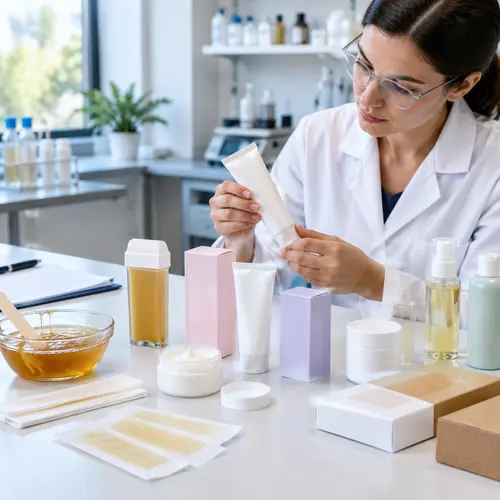
Hair removal products are often purchased through highly visual channels. A DTC customer may see a smooth wax pull, a clean cream application, or a compact travel kit on TikTok and expect the delivered product to reproduce that experience. If the texture changes between sample and shipment, the brand can face poor reviews before it has enough sales history to absorb the damage. That is why product readiness must be evaluated as a combined formula-and-packaging system.
For depilatory cream, buyers should review the application feel, spread rate, odor profile, dwell-time instructions, and removal result on the intended body area. The formula must be assessed for skin compatibility and appropriate use directions, especially for sensitive skin or facial applications. A dedicated mild hair removal formula review can help identify fragrance, alkalinity, preservative, and contact-time concerns before claims are finalized.
Wax products create a different set of variables. Hard wax, soft wax, sugar wax, and roll-on formats respond to heating, cooling, humidity, and filling conditions in different ways. A product that performs well in a controlled room may become too fluid in a warm warehouse or too brittle after cold transport. Wax strips also depend on the interaction between wax coating, backing material, release liner, adhesive behavior, and printed pouch. These are manufacturing questions, not merely design choices.
Aftercare products are often used to increase basket value and improve the overall ritual. A soothing gel or calming lotion should be checked for fast absorption, residue, fragrance sensitivity, and compatibility with the chosen tube, pump, or sachet. A coordinated post-depilation care OEM program can help brands create a coherent kit, but the aftercare claim should remain precise: calming, moisturizing, or refreshing is generally easier to support than language implying treatment or permanent hair reduction.
Technical and Packaging Factors Buyers Should Review
Formula behavior and application performance
Start with a written product brief that defines the target user, application area, package size, expected texture, fragrance direction, and use instructions. For creams, record the acceptable viscosity range, appearance, odor, spreadability, and removal performance. For wax, document the softening or melting behavior, working temperature, stringiness, pull strength, and residue after removal. For sugar wax, pay particular attention to crystallization, water activity, and consistency changes during storage.
Do not approve a formula based on a single successful sample. Request retain samples from the pilot and compare them after heat, cold, and room-temperature storage. Review color, odor, phase separation, viscosity, dispensing, and application performance. If the product is intended for the face or upper lip, include a focused irritation-risk review and conservative instructions. For products used near the eyes, the American Academy of Ophthalmology periorbital safety guidance is a useful reminder that placement and directions matter as much as the ingredient story.
Packaging compatibility and shipment risk
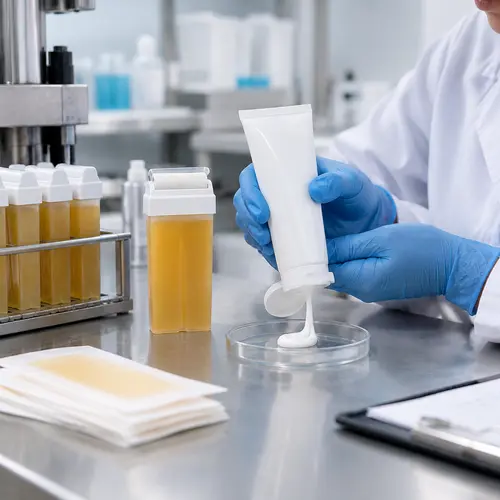
Packaging should be tested with the actual formula, not only with water or an empty component. Depilatory cream may interact with plastic walls, tube seals, caps, or printed surfaces. Roll-on wax may migrate through the cartridge, contaminate the ball assembly, or leak around the closure when stored horizontally. A tube, jar, sachet, or cartridge should be checked for seal integrity, torque, dispensing consistency, label adhesion, and external staining.
For wax strips, inspect pouch sealing, release-liner alignment, wax coverage, strip separation, and adhesion after heat exposure. For hot wax, confirm that the jar or pouch remains stable under the intended heating and handling instructions. For all formats, simulate shipment conditions that reflect the target market: temperature fluctuation, vibration, compression, and extended storage. The objective is not to create a laboratory-perfect product; it is to identify the failure modes that could appear in a fulfillment center, bathroom cabinet, salon, or subscription box.
Packaging claims also require discipline. If a component is described as recyclable, recycled, organic, or natural, request supporting documentation from the packaging or ingredient supplier. The COSMOS organic and natural cosmetics standard can provide useful context for how natural and organic positioning is evaluated, but certification language should never be implied unless the finished product and relevant components meet the applicable requirements.
Decision Framework for a Private-Label Hair Removal Launch
| Factor | What to Check | Why It Matters | ODM Buyer Note |
|---|---|---|---|
| Formula performance | Texture, viscosity, odor, spread, removal result, residue, and batch-to-batch appearance | These factors shape reviews, repeat purchase, and claim credibility | Approve against a written specification, not a visual sample alone |
| Packaging compatibility | Seal integrity, leakage, dispensing, label adhesion, staining, and closure performance | An attractive pack can still fail during filling or shipment | Test the filled component with the final formula and artwork |
| Storage stability | Heat, cold, room-temperature, vibration, and extended storage observations | Wax and cream behavior can change across warehouses and seasons | Request a stability summary and define release criteria before scale-up |
| Skin-use positioning | Body area, contact instructions, fragrance profile, irritation-risk review, and warnings | Precise directions reduce misuse and support responsible marketing | Use conservative cosmetic claims unless stronger evidence exists |
| Documentation | Ingredient list, specifications, safety files, batch records, labeling review, and market notifications | Documentation supports customs, platforms, retailers, and internal QA | Confirm who owns each compliance task and approval deadline |
| Sampling and scale-up | Sample quantity, pilot scope, production line, filling method, and retain-sample plan | A non-representative sample can hide commercial-run problems | Ask whether the approved formula will be used without re-engineering |
What an ODM Manufacturing Plan Should Include
A practical development plan should connect the brand brief to a controlled sample, packaging test, documentation review, and production release. For a new cream, that may mean comparing two or three viscosity profiles, reviewing tube options, and completing a filled-pack leakage check. For a wax strip, it may mean evaluating coating uniformity, pouch sealing, and adhesion after storage. For an aftercare kit, it may mean confirming that each product dispenses cleanly and that the combined package survives normal shipment.
Buyers should also ask about minimum pilot scope, sample turnaround, formula ownership, NDA procedures, raw-material substitutions, and change-control rules. A supplier that can support a pilot from 1,000 units and maintain the same formulation path toward larger runs may be better aligned with a DTC test-and-learn model than a supplier that requires a high initial commitment. PZIK’s operating model is built around pilot runs from 1,000 units, formulation cycles under 30 days, and ISO 22716-based controls, but these figures should still be confirmed against the specific product, component, and destination market.
Before launch, compare the final plan with the relevant hair removal product solutions, custom depilatory cream formulation, or private label waxing products workflow. For technical questions, a documented hair removal product RFQ should include product format, target market, package size, expected annual demand, launch date, claim direction, and required testing. This gives the manufacturing team enough background to identify risk before the first sample is shipped.

ODM Manufacturing Considerations
A private-label hair removal launch should move through documented confirmation points rather than relying on a single finished sample. A capable hair removal OEM manufacturer should be able to show how the formula, pack, label, and shipment plan fit together before the buyer commits to a commercial run. The process should also be clear enough for a distributor, salon group, or DTC team to verify internally.
Sample confirmation and formula customization
Start by defining the intended use: face or body, sensitive-skin positioning, salon or home application, removal format, fragrance direction, and target retail market. The initial sample should be reviewed for spread, set time, residue, removal comfort, and aftercare feel. For wax products, request the working temperature or softening behavior and confirm whether the wax remains flexible after cooling. For depilatory cream, review application thickness, dwell-time instructions, odor, rinse behavior, and visible separation after storage.
Customization should be recorded in a signed sample specification. It should identify the approved formula version, color, fragrance, fill weight, container, closure, and tolerance range. A turnkey base can reduce development time, but the buyer should ask which elements can be adjusted, such as fragrance level, wax hardness, strip substrate, cream viscosity, or aftercare texture. This creates a practical path to differentiation without assuming that every change is technically or commercially sensible.
Packaging compatibility and stability review
Packaging should be tested with the actual formula and the intended shipment configuration. Check tube shoulder and cap sealing for cream, cartridge ball movement and end seals for roll-on wax, pouch seals for wax strips, and jar or tin deformation for sugar wax or hot wax. Review whether oil-rich formulas soften printed surfaces, whether fragrance affects plastic, and whether heat changes the seal or dispensing behavior.
The buyer should receive a stability summary that identifies test conditions, sample observations, and acceptance criteria. Useful records include changes in color, odor, viscosity, crystal formation, phase separation, leakage, seal strength, and application performance. Shipment conditions also need definition: carton orientation, inner protection, temperature exposure limits, stacking restrictions, and handling instructions for products that may soften in transit. The final packaging review should use production-intent components, not only a laboratory container.
MOQ, documents, and labeling readiness
MOQ should be separated by formula, packaging component, printed artwork, and finished SKU. A lower first order may still require a larger commitment for custom tubes, molded parts, printed pouches, or special fragrances. Ask for the cost effect of unused packaging inventory, artwork changes, and a second production lot so that the launch model includes realistic CAC and reordering assumptions.
Before approval, request the ingredient declaration, allergen or fragrance information where applicable, product specification, certificate of analysis format, batch coding method, safety documentation required for the target market, and label review support. For European distribution, confirm who prepares the information needed for the responsible person and product notification process. For US distribution, confirm how the supplier supports the buyer’s cosmetic recordkeeping and labeling review. Claims such as natural, organic, sensitive, clean, or cruelty-free should be supported by a defined standard or documented sourcing position rather than informal wording.
Internal teams can compare the supplier’s process with the broader requirements described in the COSMOS organic and natural cosmetics standard when evaluating organic or natural positioning. COSMOS recognition is not automatic proof that every product or raw material qualifies, so the exact certification scope still needs verification.
Common Problems or Failure Cases
Wax brittleness and poor removal
Wax can become brittle when the formula balance, cooling profile, or storage exposure is unsuitable. A strip may crack during removal, leave excessive residue, or fail to capture shorter hair. Compare samples at the intended application temperature and after simulated shipment exposure. Record spread, cooling time, peel behavior, residue, and the amount of product needed per use. A small change in resin, oil, polymer, or strip material can alter performance enough to require a new approval.
Strip adhesion loss
Wax strips may lose adhesion when the wax layer migrates, the pouch seal allows moisture exchange, or the strip substrate is mismatched to the formula. Review adhesion on representative skin areas under controlled use conditions, then inspect pouches for seal variation and wax transfer. A strip that performs well immediately after filling may behave differently after storage, especially when exposed to heat.
Cream separation or unstable texture
Depilatory cream can separate, thin, thicken, or develop an unpleasant odor when the formula and tube are incompatible or when the product is exposed to unsuitable temperatures. Inspect the first and last portions dispensed from the package, not only the center of a laboratory sample. Compare pH, viscosity, appearance, odor, and removal performance against the approved reference. The label must also match the validated use instructions; changing the application thickness or dwell time can affect consumer experience and irritation risk.
Cartridge leakage and packaging deformation
Roll-on cartridges can leak through the ball assembly, end seal, or cap if the wax softens during shipment. Evaluate upright and horizontal storage, carton vibration, repeated rolling, and temperature exposure relevant to the destination market. Sugar wax and hot wax containers may also deform or become difficult to open when the pack material is too flexible. Ask for photographs or inspection records from filled samples, but make the final decision from physical units in the intended component set.
Fragrance sensitivity and unsupported claims
Fragrance can become a commercial risk when the scent is too strong for face use, when allergen disclosure is incomplete, or when a ‘sensitive’ position is used without adequate review. Keep fragrance level, allergen information, and intended application area consistent across the formula, artwork, and marketing copy. Avoid describing a product as clean, organic, natural, or cruelty-free unless the buyer can explain the basis of the claim to a retailer or consumer.

Supplier Checklist
Use the following checklist during technical and commercial qualification:
- Can the supplier provide a controlled sample history showing formula version, packaging version, and approval date?
- Are customization boundaries clear for wax hardness, cream viscosity, fragrance, color, strip material, aftercare texture, and fill size?
- Has packaging been evaluated with the actual formula for leakage, deformation, dispensing, seal integrity, and printed-surface compatibility?
- Are storage limits and shipment conditions defined for hot, cold, and ordinary distribution environments?
- Does the MOQ distinguish finished goods from custom packaging, printed components, and formula development?
- Are ingredient, allergen, specification, batch, safety, and labeling documents available before artwork approval?
- Can the supplier explain its review of irritation risk, fragrance suitability, and claims support for the target market?
- Are acceptance criteria agreed for appearance, odor, viscosity, melting or softening behavior, adhesion, residue, and leakage?
- Will the buyer receive a clear change-control process for raw materials, packaging, formula, and manufacturing location?
- Are confidentiality terms, ownership of custom work, sample handling, and approved competitor restrictions addressed in the NDA?
FAQ
Can an Asian supplier meet European or US clean beauty and cruelty-free expectations?
Location alone does not answer this question. Request the supplier’s raw-material policy, animal-testing statement, supplier declarations, certification scope, and claims-review process. Confirm whether the documentation covers the specific formula and market, rather than accepting a general company statement.
Will a low MOQ make the unit cost too high for customer acquisition economics?
It can, especially when custom packaging has a high minimum or when setup costs are spread across a small run. Ask for a cost model showing formula, filling, components, artwork, testing, freight assumptions, and expected reordering levels. Compare a controlled first launch with a standardized component set against a fully customized package.
Will a turnkey formula make my hair removal product look like everyone else’s?
It may if the buyer accepts the base without a clear positioning plan. Differentiation can come from application area, wax behavior, fragrance discipline, strip format, aftercare pairing, pack usability, or documented ingredient sourcing. Ask which changes are genuinely available and require written approval rather than assuming that a new color or name creates meaningful differentiation.
Can we sign a strict NDA before sharing our brand plan?
Yes, this should be addressed before detailed briefs, target pricing, artwork, or custom formula information are exchanged. The NDA should cover confidential information, permitted use, access controls, disclosure exceptions, ownership of custom development, return or destruction of materials, and the duration of obligations. It should also be reviewed for consistency with the commercial agreement.
How can we verify that environmental packaging claims are not greenwashing?
Ask for the material specification, recycled-content or recyclability evidence, supplier traceability, and any applicable third-party certification. Confirm what disposal system exists in the target market and use precise wording such as recyclable where the local infrastructure supports that claim. Avoid broad language such as eco-friendly without a defined basis.
What should be approved before the first commercial shipment?
Approve the formula reference, filled package, artwork, label documents, carton configuration, shipment conditions, inspection criteria, and deviation process. Retain signed samples and photographs of the approved pack. The commercial shipment should be traceable to the same formula and component versions that passed review.
References
For natural and organic positioning, review the COSMOS organic and natural cosmetics standard and verify the exact certification or ingredient scope used in any claim. For category and market context, consult Business of Fashion beauty intelligence, while validating all product-specific claims against the formula, packaging, and target-market documentation.