Direct Answer
Sensitive skin hair removal claims are not interchangeable. Gentle usually describes the intended user experience, such as a softer after-feel or reduced sting. Suitable for sensitive skin is a positioning statement that should be supported by an irritation-risk review and clear usage limits. Dermatologist-tested means a qualified dermatologist was involved in an assessment or supervised test, but it does not automatically mean zero irritation, hypoallergenic performance, or suitability for every user.
For a private-label buyer, the claim must match the product type, test scope, formula, packaging, and label language. A depilatory cream, wax strip, sugar wax, roll-on cartridge, and aftercare product create different exposure conditions. The safest launch decision is to request the exact test summary, define the intended body area, review the warning language, and confirm that the final commercial batch matches the evaluated sample. Sensitive skin hair removal products should be developed as a complete positioning system, not as a single marketing phrase.
Key Takeaways for Private Label Buyers
- Ask what gentle means in measurable product terms: low odor, lower pulling sensation, mild after-feel, reduced residue, or a specific irritation-screening result.
- Require a written review of the formula, intended body area, contact time, fragrance, colorants, alkaline materials, and known use restrictions before approving sensitive-skin copy.
- Check packaging compatibility under heat and cold storage. A stable cream can still leak, separate, or deform its tube, jar, sachet, strip pouch, or roll-on cartridge.
- Make sure the sample tested is representative of the planned production formula and fill weight. Texture and performance can change when the process or raw-material source changes.
- Use dermatologist-tested language with precise supporting documents. Do not convert a supervised assessment into a promise of universal tolerance.
- Build the launch around clear directions, patch-test guidance, aftercare, shipment conditions, and a realistic MOQ and sample scope.
Buyer Context
This distinction matters because hair removal products interact with the skin through different mechanisms and time periods. A depilatory cream remains on the skin for a defined contact window and depends on a controlled texture that spreads evenly without running. Wax strips create traction and can remove surface oils along with hair. Sugar wax and hot wax introduce heat, pull strength, and possible residue. Roll-on wax adds a dispensing and leakage variable. Aftercare products need to calm the post-removal feel without creating a heavy or incompatible film.
For a creator-led or DTC brand, a claim can travel faster than the supporting evidence. A short video showing a smooth cream texture or clean wax pull may create immediate demand, but customers will judge the product on sting, redness, residue, odor, and recovery after use. A product positioned for sensitive skin therefore needs more than attractive packaging. It needs a documented decision trail from sample review to production and shipment.
Buyers should also separate consumer language from technical evidence. Consumers may understand gentle as no discomfort at all. A supplier may use the word to describe a milder sensory profile compared with a standard reference. Those interpretations are not equivalent. A useful depilatory cream OEM brief defines the intended user, body area, hair type, contact time, texture, fragrance direction, and claim boundary before the first sample is approved.
Market timing remains important. PZIK supports pilot runs from 1,000 units, a formulation-to-shelf target under 30 days for suitable projects, and sample development that can begin in approximately 7 days when the base and packaging route are available. These figures do not remove the need for review. They help a brand test a sensitive-skin concept while the audience and launch window are still active.
Business of Fashion beauty intelligence can provide wider market context, while Health Canada cosmetic ingredient information is useful when evaluating ingredient restrictions and label expectations for Canada. For markets where religious suitability matters, buyers should also review the JAKIM Halal certification framework before finalizing raw materials and packaging components.
Technical or Packaging Factors
Formula and texture
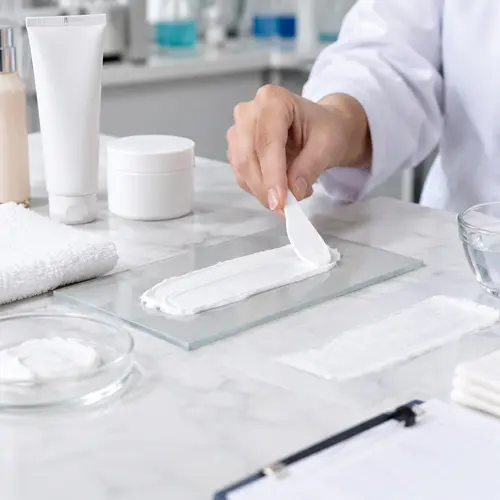
For depilatory cream, review spreadability, viscosity, contact-time control, odor, residue, and rinse behavior. A cream that is too thin may run into unintended areas or create uneven coverage. A cream that is too thick may encourage users to rub harder or leave sections untreated. The sample review should record the applied thickness, ease of removal, post-use feel, and visible redness during the defined observation period.
For wax products, assess melting behavior, working temperature, pull strength, stringing, residue, and rework after cooling. A sensitive-skin position may require a lower-friction application experience, but the wax still needs enough adhesion to remove hair effectively. For wax strips, check strip flexibility, adhesive transfer, pouch seal, and performance after aging. For sugar wax, examine crystallization, moisture sensitivity, scoopability, and fill consistency.
Packaging compatibility and storage
Packaging is part of the claim experience. A sensitive-skin cream in a tube must maintain seal integrity and dispensing control. A jar must protect the product from contamination during repeated use. A roll-on cartridge needs a leakage review after filling, storage, transport simulation, and temperature cycling. Wax strips need an airtight or moisture-resistant pouch that preserves adhesion. Aftercare gels and lotions require a closure that prevents leakage without making the first use difficult.
Ask for stability observations across heat, cold, and normal storage conditions. Review separation, color change, odor shift, viscosity drift, crystallization, pouch seal strength, label adhesion, and container deformation. Confirm whether the product is shipped by air or sea, whether temperature exposure is expected, and whether the outer carton protects the primary pack. A hair removal manufacturing process review should connect these checks to filling, sealing, inspection, and shipment release.
Safety language and evidence
Claims should be narrower than the evidence. If the product was assessed on legs, do not imply that it has been evaluated for the face, underarms, bikini area, or scalp. If a dermatologist reviewed the product under a defined test design, describe that scope accurately. Include directions, patch-test guidance, maximum contact time, rinse instructions, and contraindications where appropriate. Label documents should be reviewed for the target market before artwork is locked. PZIK can align sampling and documentation through hair removal OEM ODM services and a defined approval record.

Decision Framework Table
| Factor | What to Check | Why It Matters | ODM Buyer Note |
|---|---|---|---|
| Claim meaning | Exact wording, test scope, body area, user group, and observation period | Prevents a broad consumer promise from exceeding the available evidence | Approve the claim only after reviewing the supporting summary and final label language |
| Formula texture | Viscosity, spread, contact-time control, residue, odor, and rinse behavior | Controls coverage, comfort, performance, and user error | Compare pilot samples against a written sensory and performance brief |
| Wax performance | Melting behavior, working temperature, pull strength, stringing, and residue | Balances effective removal with a more comfortable application | Confirm the formula and applicator work together at the intended room conditions |
| Packaging fit | Seal integrity, leakage, dispensing, pouch moisture resistance, and material compatibility | Protects product stability and reduces complaints during storage and shipment | Run filled-pack checks, not only empty-container evaluations |
| Storage and shipment | Heat, cold, transport exposure, label adhesion, and carton protection | Product quality can change after leaving the factory | Define shipment conditions before setting the launch inventory plan |
| Production continuity | Batch size, raw-material source, filling settings, inspection points, and scale-up plan | Prevents the mass-production sample from behaving differently from the approved pilot | Use the same approved formula route from sample through scale-up where possible |
A practical next step is to prepare a one-page brief covering the target market, body area, product format, desired texture, fragrance direction, claim wording, packaging route, sample quantity, and launch date. Then request the supplier’s formula summary, test scope, stability plan, label documents, and filled-pack inspection record. Brands comparing hair removal product solutions should also evaluate whether the supplier can extend the line into post-depilation care OEM or a coordinated aftercare kit without changing the brand’s quality standard.
ODM Manufacturing Considerations
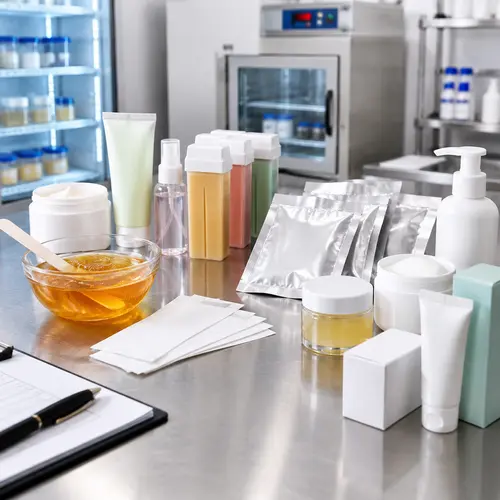
For sensitive skin hair removal claims, sample approval should be treated as a controlled manufacturing decision rather than a simple preference check. The approved sample should become the reference for color, fragrance strength, spreadability, residue, removal performance, and skin feel. Buyers should record acceptable ranges instead of relying only on comments such as ‘softer’ or ‘more premium.’ For wax, this may include a melting-point window and flexibility at room temperature. For depilatory cream, it may include viscosity, dispensing dose, and how evenly the cream covers hair.
Formula customization should begin with a written product brief covering the intended body area, target user, removal format, contact or application instructions, fragrance preference, and prohibited ingredients. A face cream, body cream, wax strip, and roll-on wax cartridge require different performance boundaries. If ‘gentle,’ ‘sensitive,’ or ‘dermatologist-tested’ will appear on the pack, ask what evidence supports each exact phrase and whether the evidence applies to the final commercial formula.
Packaging must be evaluated as part of the product. Confirm closure fit, pump or nozzle output, cartridge dimensions, crimp integrity, label adhesion, and whether the formula changes the container surface, liner, or printed decoration over time. Review samples stored under defined temperature bands and in their intended orientation. The supplier should document any changes in odor, color, viscosity, wax flexibility, net weight, or dispensing behavior.
MOQ discussions should separate the formula batch minimum from component, printing, carton, and filling minimums. Request an itemized BOM showing formula, primary pack, decoration, secondary pack, testing, and freight assumptions. This makes hidden cost changes easier to detect. Buyers comparing service models can also review the supplier’s OEM/ODM capabilities and relevant hair removal product categories.
Before production, confirm the ingredient list, directions, warnings, batch coding format, claim evidence, and market-specific artwork requirements. Shipment planning should define carton strength, pallet pattern, container orientation, temperature exposure limits, and responsibility for freight damage. Wax products may require seasonal routing decisions, while cartridges and cream tubes need protection from sustained compression and rough handling.

Common Problems or Failure Cases
- Wax brittleness: Hard wax can crack instead of flexing when the resin balance, storage temperature, or layer thickness differs from the approved use conditions. Ask for acceptance criteria at the expected salon or home-use temperature.
- Strip adhesion loss: Wax strips may grip poorly after extended storage, excessive warmth, or interaction with release liners. Evaluate hair pickup, strip separation, residue, and pack opening across the intended shelf-life period.
- Cream separation: A depilatory cream may develop liquid at the surface, uneven color, or changing viscosity. This can affect dose uniformity and the user’s ability to apply a consistent layer.
- Cartridge leakage: Leakage may originate from poor dimensional fit, roller movement, closure pressure, or wax expansion during transit. Inspect units after upright, inverted, and side storage as well as transport simulation.
- Fragrance sensitivity: A stronger scent may improve the initial video reaction but undermine a sensitive-positioned product. Compare fragranced and low-fragrance options and review the allergen declaration for the destination market.
- Packaging deformation: Warm freight conditions can soften plastic parts, distort strip pouches, or affect cartons. Component specifications should match the shipment route, season, and warehouse conditions.
Failure analysis should identify whether the cause is formula variation, component variation, filling settings, storage, or consumer instructions. Replacing the package without confirming the cause can simply move the failure to another production run.

Supplier Checklist
- Confirm experience with the exact format: wax, strips, sugar wax, cream, cartridge, or aftercare.
- Request measurable sample standards for color, odor, viscosity or melting point, removal performance, and residue.
- Ask how irritation risks, fragrance allergens, directions, and sensitive-skin wording are assessed.
- Verify that commercial ingredients and packaging match the approved reference sample.
- Review closure fit, dispensing consistency, print durability, leakage risk, and deformation risk.
- Request stability records with test conditions, observation dates, results, and responsible personnel.
- Separate formula, packaging, printing, testing, freight, and tooling costs in the BOM.
- Confirm batch traceability, incoming material controls, in-process checks, release criteria, and complaint handling.
- Check ownership terms for custom formulas, artwork, molds, samples, and confidential briefs.
- Confirm normal capacity, surge planning, component lead times, and rules for production-slot allocation.
- Review ingredient, warning, claim-support, and export documents before artwork approval.
- Agree on carton configuration, transport conditions, inspection method, and defect resolution in writing.
FAQ
Can a factory reuse my idea or custom formula for another customer?
No supplier can remove this risk through verbal promises alone. Use a signed confidentiality agreement and manufacturing contract that define ownership of briefs, custom formulas, artwork, tooling, and test results. Ask whether the base is exclusive, semi-custom, or drawn from an existing formula library. Limit access to commercially sensitive launch materials and retain dated approval records.
Can the sample deliver the dramatic texture and color I want on camera?
Potentially, but visual impact must remain compatible with safe use and stable production. Provide reference videos, lighting conditions, desired spread or pull behavior, and acceptable color range. Review the sample both on camera and during realistic hair removal. A visually impressive wax that becomes stringy, brittle, or difficult to remove is not commercially ready.
Can quality controls guarantee that nobody will have a bad skin reaction?
No responsible supplier can guarantee zero reactions. Risk can be reduced through ingredient review, controlled specifications, appropriate user evaluation, clear directions, warnings, traceable batches, and consistent release checks. Buyers should also maintain complaint and adverse-event procedures. Claims such as ‘gentle’ do not mean universally reaction-free.
How do I communicate with a manufacturer if I do not understand technical ingredients?
Use consumer and marketing language first: target body area, desired removal speed, texture, scent, residue, camera appearance, and user concerns. A capable account team should translate that brief into measurable sample targets and explain tradeoffs without expecting the buyer to speak like a chemist.
What happens if social content creates a sudden order spike?
Ask for a written capacity plan covering reserved filling time, packaging inventory, backup component options, and replenishment lead times. Confirm whether production slots are protected by forecasts or deposits and how the supplier prioritizes customers during peak periods. Do not rely on a general statement that capacity is sufficient.
Which documents should I receive before shipment?
The file should include the final ingredient declaration, artwork approval, directions and warnings, batch identification, product specifications, inspection results, packing list, and applicable export documents. Requirements vary by market. The FDA overview of its authority over cosmetics explains that cosmetics are regulated but generally are not pre-approved by the agency.