Direct Answer
For buyers sourcing facial hair removal products private label programs, packaging and direction copy should be developed as one validated system, not as separate creative tasks. The formula determines the compatible container, application method, contact time, removal steps, warnings, and storage language. A polished carton cannot compensate for a cream tube that loses its seal, wax strips that dry out, or instructions that promise use on facial areas outside the tested scope.
Start with the validated use case: upper lip, chin, cheeks, or another clearly defined face area. Then confirm formula texture, dispensing control, packaging compatibility, temperature stability, irritation-risk review, and readable directions before approving artwork. The final copy should identify what the product is, where and how it may be used, how long it stays on, how it is removed, and when use must stop. This approach supports safer launches, fewer complaints, and cleaner documentation for U.S. and European market entry.
Key Takeaways for Private Label Buyers
- Choose the package after reviewing formula chemistry, viscosity, application precision, and likely shipping temperatures.
- Write directions from validated test conditions rather than adapting generic competitor copy.
- Define facial use areas precisely; never let lifestyle imagery imply broader use than the directions support.
- Review primary packaging, seals, applicators, labels, and cartons together during compatibility testing.
- Request stability, irritation-risk, batch, labeling, and shipment documentation before releasing final artwork.
- Use pilot quantities to test customer experience and logistics before committing inventory to a new launch.
Buyer Context
Facial removal products create a narrow margin for packaging and copy errors. The consumer applies the formula to a highly visible area, often near the lips, nose, or eyes, and may expect an immediate cosmetic result. A confusing timing statement, uncontrolled dose, lifted seal, or dried wax strip can turn a minor packaging defect into redness, incomplete removal, or a public customer-service issue.
The risk differs by format. A depilatory cream requires controlled dispensing and directions aligned with its tested contact period. Facial wax strips depend on adhesive consistency, backing release, and pouch barrier performance. Sugar wax can change handling behavior if moisture migrates through the package. Roll-on wax cartridges require cap security, roller movement, and leakage review under warm storage. Aftercare formulas need dispensing that supports hygienic, low-volume application after removal.
This is why experienced operators examine the complete hair removal manufacturing process, not just a sample’s first impression. If a prior supplier has missed deadlines, changed texture between batches, or failed a leakage check, the replacement brief should preserve the approved formula and packaging assumptions during transfer. Buyers can also compare format-specific hair removal product solutions before deciding whether cream, strips, wax, or a coordinated aftercare kit best fits the brand’s channel.
Velocity still matters. A development partner built around 1,000-unit ISO 22716 pilot runs, an under-30-day formulation-to-shelf cycle, a 24-hour project plan, and initial samples in 3-5 days can help a DTC team test demand while a trend remains relevant. Speed, however, should come from validated baseline formulations and parallel compliance work, not skipped compatibility or safety review.

Technical and Packaging Factors
Direction Copy Must Mirror Formula Evidence
Directions should begin with the actual use sequence established during development. For a facial depilatory cream, that may include preparing clean, dry skin, applying an even layer without rubbing, checking removal at the validated point, rinsing completely, and avoiding immediate reapplication. The copy must use the precise timing and area limitations supported by the formula review; the brand should not insert a faster result simply because it reads better on a small carton.
Warnings and claims need the same discipline. The FDA Cosmetics Labeling Guide explains core U.S. requirements for identity, net contents, business information, ingredient declarations, and warning presentation. FDA also advises consumers to read directions and warnings and protect cosmetics from temperature extremes in its guidance on using cosmetics safely. Terms such as natural, organic, gentle, or hypoallergenic should not replace substantiation. If organic positioning is central, review the applicable standard and chain-of-custody expectations associated with Ecocert organic and natural cosmetic certification.
For sensitive-skin positioning, ask the formulator to document the irritation-risk review and explain what the test supports. The claims on a mild hair removal formula should remain narrower than the evidence. Directions should also explain whether a preliminary skin check is required, how long the consumer should wait, and which visible reactions mean the product should not be used.
Packaging Must Survive the Formula
Depilatory creams can challenge closures, tube layers, inks, adhesives, and metallic components, so compatibility should include odor, color, viscosity, paneling, seal integrity, decoration resistance, and dispensing behavior. Review the filled package rather than approving an empty component from a catalog. A custom depilatory cream formulation may need a different tube barrier or closure geometry than an ordinary face cream.
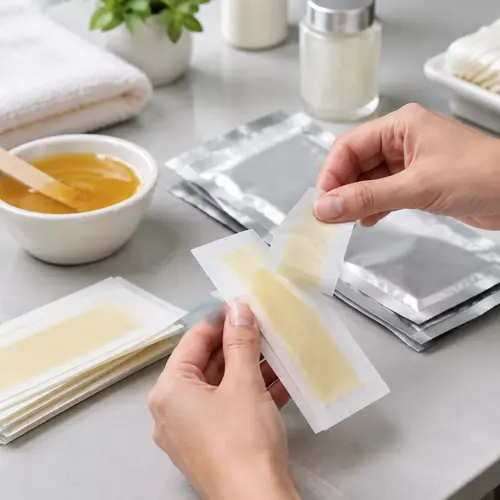
Wax formats require different controls. Pre-coated facial strips should be aged in their final pouches to monitor adhesion, clean separation, oil migration, and residue. Hot or sugar wax needs a jar or cartridge that tolerates filling conditions and expected reheating instructions without distortion or leakage. For custom wax strips and hot wax, evaluate grip tabs, strip dimensions, backing flexibility, and the consumer’s ability to separate paired strips without damaging the wax layer.
Storage and Distribution Are Part of Product Performance
A package that performs on a laboratory shelf may fail in parcel shipping, a warm fulfillment center, or cold last-mile storage. Request heat, cold, cycling, vibration, inversion, and leakage checks appropriate to the format and destination. Inspect samples at multiple points for separation, crystallization, viscosity drift, seal lifting, label wrinkling, cap loosening, pouch puncture, and applicator blockage.
Aftercare should be tested with the removal product when sold as a kit. A soothing gel or lotion may be individually stable yet migrate, leak, or damage neighboring labels inside a compact carton. Align the primary product directions with the use sequence for soothing gel after hair removal, while avoiding language that implies treatment of an injury or medical condition.
Decision Framework
| Factor | What to Check | Why It Matters | ODM Buyer Note |
|---|---|---|---|
| Validated use area | Exact facial zones, exclusions, application amount, and removal sequence | Prevents artwork and directions from expanding beyond tested use | Approve use-area language before photography and carton design |
| Formula behavior | Texture, viscosity, spread, removal efficiency, residue, odor, and irritation-risk review | Determines dispensing, timing language, and customer experience | Compare pilot samples against written acceptance criteria |
| Primary package | Barrier, closure, seals, applicator control, leakage, and decoration resistance | Protects formula stability and limits accidental over-application | Test the decorated, filled component rather than an empty sample |
| Directions and warnings | Identity, ingredients, net contents, business details, use steps, cautions, and claim support | Reduces misbranding risk and prevents avoidable misuse | Use the FDA summary of cosmetics labeling requirements as a U.S. review starting point |
| Storage and shipment | Heat, cold, cycling, inversion, vibration, pouch integrity, and carton protection | Confirms that the product reaching the consumer matches the approved sample | Define destination markets and fulfillment method before testing |
| Pilot and scale-up | Sample scope, component lead time, approved specification, batch records, and QC release criteria | Helps prevent texture or packaging changes after launch | Document the transfer through custom hair removal product development and request a traceable approval sample |
Before artwork lock, request a final package dossier containing the approved formula specification, ingredient list, packaging bill of materials, compatibility summary, stability status, directions, warnings, claim support, batch coding plan, and shipment configuration. Buyers who need an evaluation set can get a private label sample with the intended container, applicator, label stock, and secondary package rather than reviewing the formula in generic laboratory packaging.
For continuing technical review, use evidence-led depilatory product development articles to compare packaging decisions across creams, wax strips, sugar wax, roll-on systems, and aftercare. The goal is not more copy. It is direction copy that accurately describes a stable, repeatable, consumer-ready product.

ODM Manufacturing Considerations
For buyers evaluating facial hair removal products private label programs, ODM planning should connect the approved formula, package, label copy, commercial quantity, and delivery route. Treating these as separate purchasing decisions increases the chance that a market-ready cream, wax strip, sugar wax, or roll-on format will behave differently from the sample.
Sample Confirmation and Formula Customization
Sample approval should cover measurable performance rather than appearance alone. For a facial depilatory cream, record viscosity, spreadability, odor, removal time, rinse behavior, and skin-feel observations. For wax or sugar wax, document working temperature, melting or softening behavior, pickup, residue, and removal performance. Wax strips should be reviewed for liner release, adhesion, flexibility, and clean separation.
Customization can include fragrance level, color, texture, application time, aftercare pairing, or selected natural and organic ingredients. Change one group of variables at a time. Simultaneously changing fragrance, wax blend, package, and directions makes it difficult to identify the cause of a later failure. If an imported botanical oil supports the brand story, request origin records, supplier specifications, and continuity options rather than relying on a marketing description.

Packaging, Stability, and Commercial Readiness
The package review should use the intended formula and commercial components. Check cream dispensing force, cap fit, print resistance, and residue around the opening. For wax strips, assess release-liner peel and pouch sealing. For roll-on wax cartridges, confirm roller movement, seal integrity, and product flow at the specified working temperature. Jarred wax should remain dimensionally stable during expected storage and use.
A stability plan should define test conditions, checkpoints, and pass criteria before testing begins. Relevant observations may include cream pH, viscosity, separation, color, odor, and removal performance; wax hardness, brittleness, tack, and melting range; and package distortion, seepage, or decoration changes. Accelerated results are useful for identifying risk, but they do not automatically establish the full shelf life. Ask how real-time observations will continue after launch.
MOQ, Labeling Documents, and Shipment Conditions
MOQ should be stated by formula, package format, fragrance, artwork, and SKU—not only as one headline number. A lower finished-product quantity can still require larger purchases of printed pouches, cartridges, cartons, or specialty ingredients. Request a cost model showing usable inventory, setup charges, testing, excess packaging, and reorder assumptions. Buyers can review related OEM/ODM program options and the manufacturing process when comparing scope.
The supplier document pack should include the INCI list, product specification, safety assessment inputs, claims support, lot-code format, packaging specifications, and market-specific label information. The FDA Cosmetics Labeling Guide provides a useful starting point for US label elements, but the responsible brand must still confirm current MoCRA obligations. EU-bound projects should define who manages the responsible person, safety report, product information file, and CPNP notification.
Shipment planning should identify carton count, gross weight, pallet configuration, storage range, orientation, route duration, and acceptable temperature excursions. If a previous supplier has failed or capacity is constrained, also ask for raw-material lead times, component ownership, backup sourcing, and the records needed to transfer the program without changing approved performance.
Common Problems or Failure Cases
- Wax becomes brittle: Strips crack, jar wax fractures, or product loses flexibility after storage. Investigate wax blend, coating weight, storage exposure, and package seal quality rather than masking the issue with more fragrance or oil.
- Strip adhesion declines: The strip lifts poorly or leaves excess residue. Possible causes include adhesive aging, liner interaction, uneven coating, contamination, or storage outside the agreed range. Compare retained production samples with the approved benchmark.
- Cream separates: Watery discharge, graininess, or viscosity loss may indicate an unstable emulsion, ingredient interaction, or process inconsistency. Review pH, mixing records, raw-material lots, and filling temperature.
- Cartridges leak: Leakage can originate at the roller head, plug, seam, or cap. Confirm whether the failure appears during storage, warming, or distribution and whether component dimensions changed between sampling and production.
- Fragrance causes sensitivity concerns: A pleasant scent can increase irritation risk or conflict with a sensitive-face positioning. Compare fragrance-free and reduced-fragrance samples, review allergen disclosures for the target market, and keep directions consistent with the supporting safety review.
- Packaging deforms: Warped jars, loose caps, or softened cartridges can result from formula contact or temperature exposure. Cosmetic appearance alone is not the only concern; deformation may also change dosing, sealing, and user handling.

Supplier Checklist
- Confirm the manufacturing site’s cosmetic quality certifications, audit dates, scope, and issuing bodies.
- Request formula specifications covering pH or viscosity for creams and melting range or working temperature for wax-based products.
- Define sample rounds, customization limits, approval criteria, and responsibility for failed revisions.
- Review ingredient origin, allergen information, animal-testing policy, and evidence supporting natural, organic, or clean-positioning claims.
- Confirm the exact commercial package components and who owns artwork files, molds, plates, and unused inventory.
- Obtain the stability protocol, performance criteria, investigation process, and retained-sample policy.
- Verify MOQ by SKU and identify packaging or ingredient quantities that exceed the finished-product run.
- Check available US and EU labeling documents, including claims evidence and safety-assessment inputs.
- Document carton configuration, storage limits, shipment assumptions, defect handling, and recall responsibilities in the contract.
FAQ
Can an Asian manufacturing site genuinely meet Western clean-beauty and cruelty-free expectations?
Yes, but location is not proof. Ask for current audit reports, ingredient restrictions, supplier declarations, animal-testing policies, and market-specific claim controls. Because ‘clean beauty’ has no single universal definition, put the brand’s prohibited-ingredient list and evidence requirements into the written specification.
Will a low MOQ make the unit cost too high to cover customer acquisition cost?
It can if setup, testing, printed components, freight, and unused packaging are ignored. Model contribution margin at several order quantities using landed cost, expected conversion rate, returns, and CAC. A smaller first run may still be rational when it limits obsolete inventory and validates demand.
Will a turnkey or ready formula make the product identical to competing brands?
Not necessarily. Differentiation can come from texture, fragrance strategy, application time, wax working range, aftercare pairing, directions, package format, and documented ingredient sourcing. Ask which formula elements are adjustable and whether exclusivity is available for meaningful changes.
What must be approved before issuing a production purchase order?
Approve the final formula code, performance targets, package components, artwork, directions, claims, test plan, commercial quantity, acceptable tolerances, and shipment terms. Verbal approval of a sample is not enough for a controlled contract manufacturing project.
What compliance support should a supplier provide for US and EU launches?
Expect organized ingredient, specification, safety, claim, and label files, plus a transparent explanation of what the supplier handles and what remains the brand’s responsibility. MoCRA registration support and CPNP documentation assistance should be described as processes, not as blanket guarantees of legal compliance.
How should buyers evaluate environmental packaging claims?
Request material composition, recycled-content evidence, chain-of-custody records where applicable, and the certification’s exact scope. Do not treat a generic sustainability statement as proof. For organic or natural positioning, review the requirements of Ecocert certification and confirm whether the formula, facility, or finished product is actually covered.