Direct Answer
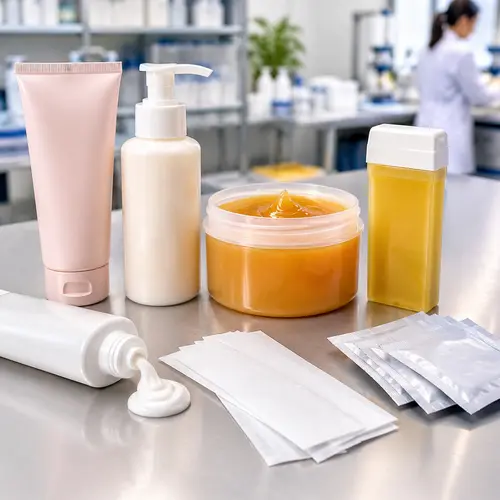
Cosmetic packaging compatibility testing determines whether a hair-removal formula and its final container can remain stable, usable, and presentable through filling, storage, shipment, and consumer use. The right package is not selected by appearance alone. A depilatory cream may deform a tube, clog a pump, weaken a seal, or react with a closure component. Heated wax can distort a jar or create leakage as it cools. Sugar wax can lose performance if the closure allows moisture exchange. Sachets may look intact while developing seal-channel leaks under compression. Private-label buyers should test the exact production formula in the exact tube, pump, jar, cartridge, or sachet planned for launch. Review leakage, weight loss, texture, odor, color, dispensing, seal strength, label condition, and package deformation across normal, hot, cold, upright, side, and inverted storage. Compatibility approval should happen before artwork lock and mass packaging purchase.
Key Takeaways for Private Label Buyers
- Approve the formula and primary package as one system; a stable bulk sample does not prove that the filled retail unit will remain stable.
- Test production-grade components, including the tube laminate, cap, liner, pump, dip tube, jar, roller head, pouch film, adhesive, and printed label.
- Match the pack to viscosity, filling temperature, moisture sensitivity, expected dose, and how customers will store and use the product.
- Request samples from the intended filling line, then review first, middle, and last filled units for dose consistency, seals, appearance, and net content.
- Do not approve mass production from photos alone. Require a written test brief, transparent packaging BOM, retained samples, and agreed acceptance limits.
- Plan for scale before launch: the approved pack must remain available if creator content produces a sudden increase in batch demand.
Buyer Context
Hair-removal products place unusual demands on packaging. Depilatory creams are commonly alkaline and may challenge certain plastics, pigments, seals, and metal-containing dispensing parts. Hot wax and sugar wax introduce temperature, cooling, and closure concerns. Wax strips rely on pouch barrier performance to protect the adhesive system. Roll-on wax cartridges must dispense evenly without leaking around the roller assembly. Aftercare gels and lotions need pumps or tubes that deliver a controlled amount without sputtering, clogging, or leaving excessive residue.
This matters because packaging failure is visible before the buyer can explain it. A creator-led brand may launch with strong video content, yet one leaking cap, separated cream, warped jar, or stained label can quickly become the dominant customer story. Packaging therefore affects more than production efficiency. It shapes unboxing, camera presentation, review quality, return rates, and trust.
Start by defining the use case through a qualified hair removal OEM manufacturer. Is the SKU a full-size bathroom product, a travel sachet, a heated salon wax, a subscription-box sample, or a roll-on cartridge shipped during summer? The answer changes the material, fill process, secondary packaging, and shipment test plan. Buyers developing alkaline creams should align the package review with the custom depilatory cream formulation. Wax buyers should evaluate jars, cartridges, strips, and pouches through the relevant private label waxing products workflow.
In the United States, most cosmetics are not preapproved by the FDA, while companies remain responsible for safety and proper market presentation. Packaging and shipping conditions can contribute to a product being considered problematic, and retail labels must carry required information. Buyers should review the FDA cosmetics overview, the agency’s explanation of FDA authority over cosmetics, and the FDA summary of cosmetics labeling requirements when preparing a U.S. launch. ([fda.gov](https://www.fda.gov/cosmetics))

Technical or Packaging Factors
Match the Formula to the Contact Materials
Every material touching the formula must be reviewed. For a tube, this includes the inner laminate, shoulder, neck, orifice, seal, and cap liner. For a pump, review the housing, gasket, dip tube, ball, spring location, and product-contact pathway. For a jar, check the body, lid, liner, inner disc, and any spatula supplied. For a sachet, assess the laminate layers, sealant surface, ink placement, and tear notch.
The fastest path is to use the final formula, fragrance, color, and active level. Small changes can alter viscosity, odor transfer, staining, or interaction with the pack. A baseline formula may already have useful compatibility history, but a new fragrance or pigment still requires confirmation. This is one reason an integrated hair removal OEM ODM services project can move faster than separately sourcing formula, packaging, and filling vendors.
Check Each Format Against Its Real Failure Mode
Tubes: Look for wall softening, paneling, cracking at folds, cap leakage, orifice blockage, print rubbing, and poor recovery after squeezing. The crimp or heat seal must remain clean and closed after hot and cold exposure.
Pumps: Confirm priming, re-priming, dose repeatability, dip-tube reach, actuator return, and residue around the nozzle. A visually premium pump is unsuitable if a thick aftercare gel creates inconsistent output. Coordinate these checks with a post-depilation care OEM sample review.
Jars: Evaluate filling temperature, cooling contraction, lid torque, liner movement, product pickup, and leakage when stored on the side. Hot wax jars must resist distortion. Sugar wax packs must limit moisture exchange and remain easy to open after storage.
Sachets: Check seal width, trapped product in the seal, pinholes, corner leaks, tear behavior, laminate separation, and print durability. Cream samples should open cleanly without uncontrolled product release. Wax-strip pouches must protect adhesive performance throughout shelf storage.
Test Storage, Dispensing, and Shipment Together
A practical plan compares retained controls with units stored under ambient, heated, cooled, and temperature-cycling conditions. Packs should be held upright, on their side, and inverted where relevant. Record package weight, appearance, odor, color, texture, seal condition, label adhesion, and dispensing performance at each review point. A minimum 24-hour inverted leakage screen can identify obvious closure problems early, but it does not replace the full stability program.
Compatibility testing also cannot prove that a formula is suitable for every user. Irritation-risk review, directions, warnings, and intended contact time must be assessed separately, especially for depilatory creams and sensitive-skin positioning. Buyers considering that market can compare the packaging brief with gentle depilatory cream OEM options.
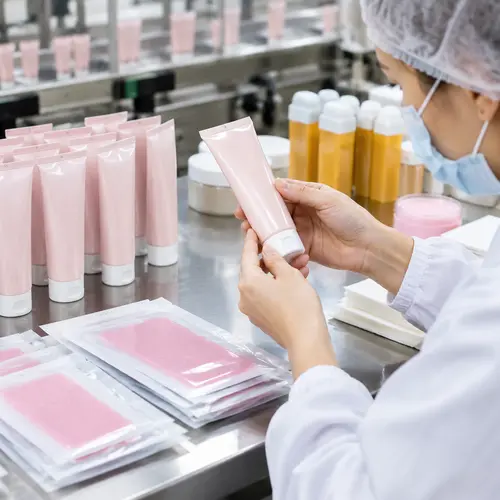
Finally, repeat the review with line-filled samples. Hand-filled prototypes may hide seal contamination, air pockets, pump variation, or hot-fill stress. Ask the supplier to document the cosmetic filling and packaging process, sample scope, acceptance criteria, and corrective action path. A seven-day prototype target is useful only when the sample represents the intended formula and pack closely enough to support a real launch decision.
Decision Framework Table
| Factor | What to Check | Why It Matters | ODM Buyer Note |
|---|---|---|---|
| Formula profile | Viscosity, alkalinity, fragrance, pigment, moisture sensitivity, fill temperature | These properties influence material interaction, staining, flow, and seals | Test the final formula rather than an unfragranced base |
| Tube | Laminate, cap liner, crimp, recovery, orifice, print durability | Prevents cracking, leakage, blockage, and shelf deformation | Review squeezed and partially used packs |
| Pump | Prime, dose, nozzle residue, dip tube, actuator return | Protects dosing consistency and customer experience | Use line-filled samples at production viscosity |
| Jar or cartridge | Heat resistance, closure torque, liner, roller fit, side leakage | Controls distortion, cooling leaks, and uneven wax delivery | Test at expected filling and shipment conditions |
| Sachet or pouch | Seal channels, pinholes, tear control, barrier, print rub | Protects single-use cream samples and wax-strip adhesion | Include compression inside the retail carton |
| Launch readiness | BOM, retained samples, labels, shipment pack, repeat availability | Avoids late substitutions and visual differences between batches | Map options through hair removal product solutions before artwork lock |
Before placing the packaging order, request the test plan, pack specifications, sample quantity, timeline, and escalation process in writing. The final RFQ should identify the exact formula version, package supplier, decoration method, fill weight, shipment market, and carton configuration. Buyers can use a structured hair removal product RFQ to align these details before the project enters an accelerated production schedule.
ODM Manufacturing Considerations
ODM planning should convert the buyer’s product brief into measurable sample, packaging, production, and delivery requirements. Cosmetic packaging compatibility testing remains central because an approved bulk formula can behave differently after filling, storage, transportation, and repeated consumer use.
Sample confirmation: Approve more than appearance. The confirmation record should identify texture, color, fragrance, application thickness, removal behavior, residue, and the intended pack. For wax, document the target working texture and relevant melting or softening range. For depilatory cream and aftercare, record a practical viscosity range or dispensing standard. Buyers should also define how samples will be judged on camera if visual stretch, shine, opacity, or peel behavior is important to the brand concept.
Formula customization: Each change can affect performance elsewhere. Adjusting fragrance, color, wax flexibility, cream thickness, or sugar-wax consistency may alter filling behavior, shelf appearance, or user comfort. Confirm which attributes are fixed and which may be adjusted during scale-up. An irritation-risk review should cover the intended application area, directions, contact time, fragrance level, and foreseeable misuse. No supplier can promise zero consumer reactions, so the project must combine suitable testing, clear directions, traceable batch controls, and a complaint-handling plan.
Packaging compatibility and stability: The supplier should test the final formula with the proposed primary pack, closure, seal, decoration, and secondary packaging. The review should look for swelling, softening, cracking, discoloration, odor transfer, product loss, blocked dispensing, and seal deterioration. Stability plans should reflect the expected shelf period and markets, with defined checkpoints under normal and accelerated conditions. Results should identify observations, acceptance limits, and any unresolved changes rather than simply state that the sample passed.
MOQ and commercial scope: Ask for separate minimums for formula production, printed components, stock packaging, customized colors, and fragrance. A low filling MOQ may still require purchasing excess decorated packs. Request a transparent bill of materials showing formula, primary packaging, printing, cartons, testing, assembly, and expected freight assumptions. Clarify ownership and storage terms for unused components.
Labeling documents and shipment: The document pack should support the destination market and normally include ingredient information, batch identification, net contents, directions, cautions, responsible-party details, and available product records. Packaging artwork must leave enough space for required statements. Shipment planning should define case packing, pallet configuration where applicable, temperature concerns, warehouse limits, and whether the finished goods may face prolonged heat or freezing in transit. Buyers can review the FDA summary of cosmetics labeling requirements when preparing products for the United States.

Common Problems or Failure Cases
- Wax becomes brittle: A hard wax may crack during removal because its flexibility, application temperature, layer thickness, or storage history differs from the approved sample. Compare retained bulk and finished packs, then verify working-temperature instructions before changing the formula.
- Wax strip adhesion declines: Heat exposure, liner interaction, adhesive migration, or an unsuitable pouch barrier can reduce grip. Check both unopened aging and performance after the consumer warms and separates the strips.
- Depilatory cream separates: Visible liquid, graininess, color drift, or viscosity loss may appear after storage. Investigate the formula, fill conditions, headspace, closure integrity, and exposure history together. Re-mixing a sample is not an acceptable substitute for determining the cause.
- Roll-on cartridges leak: Leakage can result from fit variation, damaged closures, product expansion, or viscosity that is too low at elevated temperature. Confirm component tolerances and test units from actual production tooling before approving shipment.
- Fragrance causes sensitivity concerns: A strong fragrance may support the marketing brief but increase complaints among some users. Evaluate fragrance level, application area, warnings, and an unscented or lower-fragrance option where commercially appropriate.
- Packaging deforms: Jars, tubes, caps, or pouches can warp, crease, or lose seal strength during hot storage or compressed shipment. Review formula contact, pack geometry, carton support, case loading, and realistic freight conditions.
Failure investigation should preserve affected units, matching batch records, component lot details, and storage information. Without traceability, the factory may correct the symptom while missing the actual source.
Supplier Checklist
- Provide a written brief covering product type, use area, target texture, color, fragrance, removal method, pack size, market, and expected shelf life.
- Ask the supplier to define measurable sample approval criteria rather than relying on subjective descriptions.
- Confirm the formula’s viscosity or wax working range where relevant, plus filling and consumer-use limits.
- Review compatibility and stability plans for the exact formula, component supplier, decoration, and closure combination.
- Request an irritation-risk assessment, directions, cautions, and destination-market labeling documents.
- Confirm formula MOQ, packaging MOQ, production batch size, sample scope, tooling charges, and ownership of unused stock.
- Obtain an itemized BOM quotation and freight estimate with clearly stated exclusions and validity periods.
- Check whether component lots and finished batches are traceable through production and complaint investigation.
- Ask how shipment temperature, case packing, warehousing, and seasonal routes are considered.
- Verify scale-up capacity, normal lead-time assumptions, surge options, and how production slots are allocated.
- Use confidentiality and development agreements that define ownership of the brief, custom formula, artwork, samples, and approved uses.
- Confirm that the account contact can translate social-media goals into measurable manufacturing criteria.
Related supplier capabilities can be compared through the OEM/ODM services, manufacturing process, and hair-removal product categories pages.

FAQ
How can I reduce the risk of a factory using my idea or formula for another customer?
Use a signed confidentiality and development agreement before sharing detailed files. Define ownership of custom work, restricted uses, permitted subcontractors, document access, and the handling of rejected samples. Also distinguish a genuinely custom formula from a supplier’s existing private-label base.
How do I know whether the sample will look dramatic enough on camera?
Add camera-facing criteria to the brief: color under specified lighting, opacity, shine, strand or stretch behavior, application thickness, and removal sequence. Record the approved sample in the intended pack and filming setup. Visual impact should never override safe directions or reliable product performance.
Can an OEM guarantee enough capacity if social content creates a sudden sales spike?
No supplier can guarantee unlimited immediate output. Ask for demonstrated monthly capacity, material lead times, reserved-slot options, packaging stock strategy, and realistic surge quantities. Agree on reorder signals before launch so the factory can secure components without creating excessive inventory.
Is a passed stability review enough to approve the packaging?
No. Stability observations must be considered alongside dispensing, closure security, consumer handling, decoration durability, and shipment exposure. Approval applies to the tested formula-and-pack combination; changing a resin, seal, fragrance, or component supplier may require additional review.
What documents should I review before releasing a batch?
Review the approved specification, ingredient and label files, batch identification, finished-product results, packaging inspection records, artwork approval, quantity reconciliation, and shipment details. Requirements vary by destination, product positioning, and sales channel.
Are cosmetics approved by the FDA before sale in the United States?
Generally, cosmetics are not preapproved by the FDA, although color additives have separate requirements and businesses remain responsible for product safety and lawful labeling. The FDA explains this distinction in its page on FDA authority over cosmetics.