Direct Answer
For salon retail hair removal products, packaging must perform two jobs at once: support a clean professional workflow and teach an unassisted shopper how to use the product safely. The strongest packs separate fast-scan information from detailed instructions. The front panel identifies the product format, treatment area, skin suitability, and core benefit. The side or back panel explains preparation, application, removal, timing, aftercare, storage, and essential cautions in a visible sequence.
Packaging decisions should begin before the final formula is approved. Wax temperature, cream viscosity, strip adhesive behavior, cartridge seals, and aftercare texture can each change the correct container, closure, insert, or applicator. Private-label buyers should therefore review formula samples and packaging prototypes together, ideally on camera and in a simulated salon service. A capable hair removal OEM manufacturer should help the brand turn technical requirements into a retail experience that is clear, distinctive, and ready for repeatable production.
Key Takeaways for Private Label Buyers
- Source the system, not only the formula. Review product, applicator, primary pack, carton, instructions, and shipment case as one connected unit.
- Separate professional cues from consumer education. Salon operators need speed and control; retail users need sequencing, treatment-area guidance, and visible cautions.
- Test the real filled pack. Empty packaging samples cannot confirm cream dispensing, wax leakage, label lifting, strip aging, or closure cleanliness.
- Approve texture under real content conditions. Check spread, pull, residue, color, and removal visibility under studio lighting before a creator shoot.
- Lock claims after performance review. Product copy should match the tested use method, skin-area scope, and applicable FDA cosmetics oversight and EU cosmetics requirements.
- Request a transparent launch file. Confirm sample scope, component costs, decoration limits, filling loss, MOQ, carton configuration, and shipment conditions before design sign-off.
Buyer Context
Hair removal is unusually dependent on user technique. A strong formula can still produce a poor review when the shopper applies too much depilatory cream, heats wax unevenly, pulls a strip in the wrong direction, reuses an unsuitable area, or skips aftercare. Packaging is therefore part of product performance, not a decorative layer added at the end.
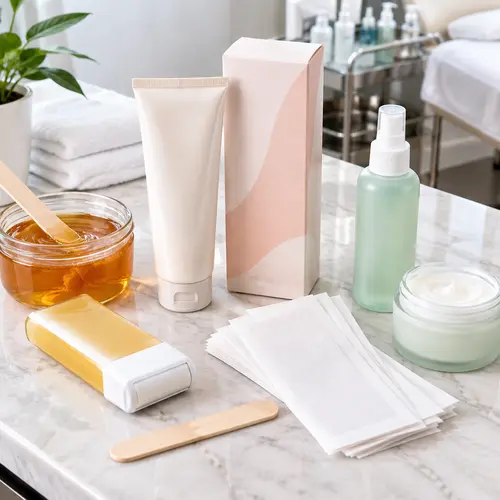
Each format creates a different education burden. A cream requires controlled dispensing, clear application thickness, treatment-area limits, timing instructions, and complete removal guidance. Sugar wax and hot wax require temperature awareness, texture recognition, and a container that remains stable during repeated opening. Wax strips need protection from heat, adhesive transfer, drying, and accidental separation. Roll-on wax cartridges depend on seal integrity, roller movement, cap fit, and clean storage between services. Aftercare products need an easy distinction from the removal step so users do not apply them too early.
For a creator-led brand, these details also shape the launch narrative. A pack should look recognizable in a short video, open cleanly on camera, and demonstrate the product without awkward handling. This is where custom hair removal product development should connect the founder’s styling direction with filling, labeling, retail education, and repeat manufacturing. The goal is not more copy. It is a clearer sequence.
Buyers comparing private label depilatory cream, private label waxing products, and after wax care products should ask suppliers to demonstrate the exact use flow with production-intent components. Ingredient and safety literature, including work published by the International Journal of Cosmetic Science, can inform review questions, but the buyer still needs pack-specific evidence from the selected formula and components.
Technical and Packaging Factors
Formula-to-pack compatibility. The primary container must tolerate direct contact with the finished product throughout storage and use. For cream, check whether the formula dispenses evenly, leaves residue around the opening, or causes panel distortion. For wax, inspect heat exposure, oil migration, lid fit, and label adhesion. For roll-on cartridges, test the filled unit upright, inverted, and on its side. The relevant cosmetic filling and packaging process should include filled-pack checks rather than component inspection alone.
Texture communication. Retail users cannot feel a sample before purchase, so packaging must set an accurate expectation. Terms describing cream density, wax flexibility, strip grip, or aftercare finish should match what the customer sees and touches. Overstated sensory language creates misuse and returns. Buyers developing mild hair removal formula options should be especially careful not to imply that gentle positioning removes the need for instructions, caution statements, or an irritation-risk review.

Storage and shipment. Heat can soften wax, shift strip adhesive, increase leakage pressure, and weaken labels. Cold conditions can thicken cream, affect flow, or change wax handling. Evaluate the filled product after heat and cold storage, transport vibration, repeated opening, and realistic parcel handling. Confirm whether master cartons require dividers, orientation marks, liners, or additional sealing for e-commerce shipment.
Shelf education. Use a strict information hierarchy. The front panel should answer what it is, where it is used, and who it is for. The back panel should present preparation, application, removal, aftercare, storage, and cautions in use order. Keep professional tips visually separate from mandatory consumer instructions. A QR code may support video education, but it should not replace essential on-pack information.
Prototype review. Ask for camera-ready samples with the intended fill weight, color, decoration, applicator, and carton structure. Record the opening sequence, dispensing behavior, application control, removal moment, and pack condition afterward. This review is often more useful than approving components from a catalog. A complete depilatory product development solution should connect these observations to the BOM, sample revisions, production tolerances, and final artwork.
Decision Framework
| Factor | What to Check | Why It Matters | ODM Buyer Note |
|---|---|---|---|
| Use environment | Gloves, wet hands, treatment bed, bathroom shelf, or travel bag | Changes grip, closure, dispensing, and instruction visibility | Test in both salon and home-use settings when the SKU serves both channels |
| Formula behavior | Viscosity, spread, wax flexibility, residue, strip grip, and aftercare absorption | Determines pack type, applicator control, and customer expectations | Approve the formula and production-intent pack as a combined sample |
| Component compatibility | Leakage, swelling, cracking, staining, odor transfer, and label lifting | Prevents shelf damage, returns, and content-shoot failures | Request filled-pack stability and compatibility observations |
| Education hierarchy | Front-panel promise, treatment area, use sequence, cautions, and storage | Reduces misuse without creating a crowded design | Keep essential directions on pack even when video support is available |
| Shipment readiness | Orientation, sealing, dividers, carton strength, heat and cold exposure | Protects the retail pack through parcel and wholesale distribution | Review samples after transit simulation, not only at the facility |
| Launch scope | MOQ, sample rounds, decoration setup, lead time, and replenishment capacity | Aligns production with creator content and retail dates | Use a documented BOM and request a hair removal product RFQ before artwork lock |

ODM Manufacturing Considerations
For salon retail hair removal products, sample approval should define what the factory must reproduce in mass production. Confirm color, fragrance strength, texture, spreadability, residue, application time, removal performance, and the appearance of the product on camera. A wax sample should include an agreed melting behavior and working texture. A depilatory cream should have a recorded viscosity target, consistent dispensing, and clear timing instructions. Sugar wax and aftercare products also need measurable acceptance points rather than approval based only on a buyer saying the sample feels good.
Formula customization should begin with the intended user, body area, salon workflow, climate, and retail positioning. Changes to fragrance, pigment, wax firmness, cream thickness, or aftercare finish can affect user experience and production consistency. Buyers should request a written sample brief, revision history, approved ingredient list, and signed reference sample. If social media presentation matters, the brief should also state how the cream ribbon, wax pull, strip peel, or aftercare finish should appear under normal studio lighting.
Packaging selection must be reviewed with the actual product. Ask the supplier to document container material, closure type, liner, fill weight, dispensing performance, and acceptable headspace. Temperature cycling should show whether wax becomes brittle, cream changes consistency, a roll-on cartridge seeps, or labels and containers distort. The final stability review should use the selected formula, fragrance, pigment, package, and decoration rather than generic stock components.
MOQ discussions should separate formula batch minimums from printed packaging minimums. A factory may accept a modest cream or wax batch while the decorated tube, carton, cartridge, or strip pouch requires a larger order. Request a transparent bill of materials showing formula, primary package, carton, printing, assembly, testing, and freight assumptions. This makes it easier to compare an initial retail launch with later volume pricing without hidden additions.
Before production, confirm the labeling document set for the destination market, including the ingredient declaration, net contents, use instructions, warnings, batch identification, shelf-life presentation, and responsible business details. FDA notes that most cosmetics do not receive premarket approval, except applicable color additives, while companies remain responsible for product safety and proper labeling. ([fda.gov](https://www.fda.gov/cosmetics/cosmetics-laws-regulations/fda-authority-over-cosmetics-how-cosmetics-are-not-fda-approved-are-fda-regulated)) For EU sales, the European Commission states that cosmetics placed on the market must be safe, receive an expert safety assessment, and be notified through the relevant portal before sale. ([single-market-economy.ec.europa.eu](https://single-market-economy.ec.europa.eu/sectors/cosmetics_en))
Shipment terms should identify carton quantity, case dimensions, gross weight, pallet format, loading method, route, expected temperature exposure, and responsibility for freight damage. Ask for both a product BOM and a logistics estimate before signing the manufacturing contract. Buyers can also review the supplier’s OEM/ODM services and manufacturing process to see whether sampling, documentation, production, and shipment responsibilities are clearly connected.

Common Problems or Failure Cases
Hair-removal failures often appear only after the sample moves into decorated packaging or commercial quantities. Buyers should investigate the cause rather than approving a cosmetic adjustment that hides the problem.
- Wax brittleness: Hard or film wax may crack instead of flexing when its wax balance, working temperature, or cooling behavior is unsuitable. Compare the approved sample and production batch at the same application thickness.
- Strip adhesion loss: Wax strips can lose grip, transfer unevenly, or leave excessive residue after aging. Check pouch sealing, strip alignment, adhesive distribution, and performance after realistic storage.
- Cream separation: Visible liquid, graininess, or uneven color may indicate that the filled product is not remaining uniform. Review batch records, filling temperature, fragrance addition, and package interaction before release.
- Cartridge leakage: Roll-on wax can escape around the roller, neck, or cap during storage and shipping. Inspect closure dimensions, fill level, wax flow at elevated temperatures, and case orientation.
- Fragrance sensitivity: A strong scent may support retail positioning but increase consumer complaints. Ask for fragrance options, allergen-related labeling information where applicable, and an irritation-risk review based on intended use.
- Packaging deformation: Tubes, tubs, cartridges, or caps may soften, warp, or lose their seal after temperature exposure. Confirm that the commercial component matches the approved package specification.
Supplier Checklist
Use this checklist when comparing a hair-removal manufacturing facility:
- Does the supplier manufacture the required cream, wax, strip, sugar wax, cartridge, or aftercare format in-house or through disclosed partners?
- Are sample scope, revision limits, timing, charges, and ownership stated in writing?
- Can the facility record viscosity, wax melting or working range, fill weight, appearance, fragrance, and removal performance against approved limits?
- Will the factory test the selected formula in the final retail package and decoration?
- Are irritation-risk review, ingredient documents, use directions, warnings, and destination-market labeling support available?
- Are formula MOQ, packaging MOQ, pilot quantity, and reorder quantity separated clearly?
- Does the quotation show formula, components, printing, assembly, testing, packing, and freight assumptions?
- Can the supplier provide batch traceability, retained samples, inspection records, and a process for handling complaints?
- Are production capacity, lead times, peak-season limits, and backup scheduling explained before launch?
- Can the account contact translate salon use and social media styling goals into a practical sample brief?
Buyers should compare these answers with the supplier’s hair-removal product categories rather than assuming every cosmetics factory has equal experience with removal products.

FAQ
How can I reduce the risk of a Chinese factory copying my idea or formula?
Use a mutual confidentiality agreement, a development contract defining formula and artwork ownership, controlled file access, and written limits on sample use. Ask whether the formula is exclusive, semi-custom, or based on a shared stock base. Contract terms matter more than verbal assurances.
Can the sample deliver the dramatic texture and color I need on camera?
Yes, but camera appearance should be an approval criterion. Give the supplier reference footage, lighting conditions, desired wax pull or cream ribbon, color target, and acceptable residue. Approve both the live-use performance and recorded appearance without weakening safe use or removal performance.
Can quality controls guarantee that no customer will experience irritation?
No responsible supplier can guarantee zero reactions. Risk can be reduced through ingredient review, controlled manufacturing, documented inspections, clear warnings, use instructions, traceability, retained samples, and a complaint-response process. Buyers should avoid claims suggesting that a depilatory cream, wax, or aftercare formula is risk-free.
What if I do not understand ingredients or manufacturing language?
Choose a contact who can convert marketing goals into measurable product requirements. A capable account manager should explain tradeoffs in plain English, document decisions, and distinguish visual styling requests from changes that could affect application, removal, fragrance sensitivity, or package performance.
What happens if a video goes viral and demand rises suddenly?
Ask for normal monthly capacity, surge capacity, material lead times, reserved production options, and reorder triggers before launch. Confirm whether larger clients receive scheduling priority and whether packaging inventory can be held against a forecast. A smaller first order should have a documented scale-up path.
Should professional-use and retail packaging carry the same information?
Not automatically. Salon operators may need workflow details, service timing, and bulk-use instructions, while retail consumers need clear at-home directions, warnings, net contents, ingredient information, and understandable use limits. Confirm the intended channel before artwork approval.