Direct Answer
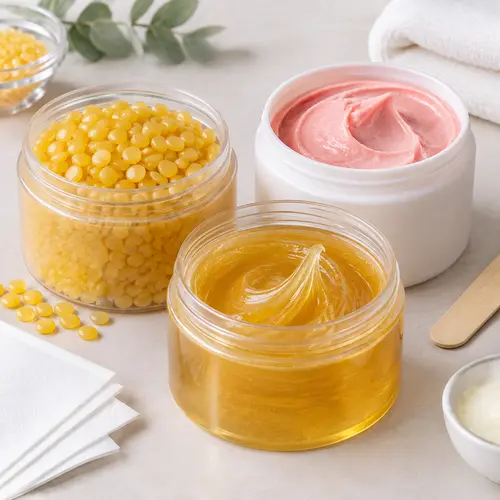
The right wax jar packaging is the jar, closure, liner, decoration system, and shipping configuration that remain compatible with your wax from filling through consumer use. Start with the formula, not the mood board. Hard wax, soft wax, sugar wax, and butter-like blends differ in softening behavior, oil migration, viscosity, and filling temperature. Those differences determine which jar resin, neck size, seal, and label system should move forward.
For most private label projects, buyers should compare packaging against six practical criteria: formula contact, temperature exposure, closure integrity, filling efficiency, user handling, and retail presentation. Approve the final combination only after compatibility, stability, leakage, and shipment testing with the intended bulk formula. A visually strong jar that sweats oil, loosens in transit, or deforms during filling is not launch-ready. Your ODM should provide a documented comparison of stock and custom options before artwork approval.
Key Takeaways for Private Label Buyers
- Match the jar to the formula. Resin, liner, and decoration decisions should follow actual wax texture, oil content, and filling conditions.
- Test the complete pack. Review the production jar, closure, label, seal, and formula together rather than approving empty packaging samples.
- Separate visual sampling from production approval. A seven-day appearance sample can confirm camera presence, but compatibility and stability work still determines launch readiness.
- Protect the customer experience. Opening diameter, grip, spatula access, lid torque, and residue control influence repeat use as much as exterior design.
- Request a transparent BOM. Compare jar, lid, liner, decoration, filling, assembly, carton, and freight assumptions before choosing a custom model.
- Plan scale before launch. Confirm whether the same packaging system can support a 1,000-unit pilot and later bulk production without changing the approved formula.
Buyer Context
Wax packaging sits at the intersection of product performance and content performance. A creator-led brand may want a translucent color, oversized lid, tactile finish, or highly visible butter texture for TikTok and Instagram. The package still has to survive warm storage, cold storage, parcel delivery, and repeated opening with sticky hands. This is why the jar cannot be selected as a standalone design object.
The risk profile also changes by product. Hard wax may be shipped as beads or as a filled solid format. Soft wax can place more pressure on closure and liner compatibility. Sugar wax may pull moisture from the environment and change handling if the seal is weak. Roll-on wax cartridges require a different leakage review, while wax strips depend on sachet barrier performance and adhesion aging. Depilatory cream and aftercare products should be assessed through their own package-contact and dispensing requirements. Buyers comparing formats can review broader hair removal product solutions, custom wax strips and hot wax, and custom depilatory cream formulation.
Packaging also carries the brand promise into retail. Claims, warnings, directions, identity statements, and net contents need sufficient panel space and legibility. The FDA Cosmetics Labeling Guide is a useful starting point for US label review. Marketing language should also be assessed against the FTC advertising substantiation guidelines. If the concept uses organic or natural positioning, determine early whether Ecocert organic and natural cosmetic certification affects ingredient, artwork, or documentation choices. General US oversight information is available through the FDA cosmetics overview.
Technical and Packaging Factors
Formula-to-Jar Fit
Ask the ODM to identify the expected texture at room temperature, softening behavior in heat, oil separation risk, and production filling condition. A wax that looks dense and sculptural in the first sample may settle, shrink, or develop surface oil after accelerated storage. Sugar wax may become firmer or looser depending on water balance and closure performance. These changes affect both visual quality and removal from the jar.
Do not approve PP, PET, glass, aluminum, or other packaging by appearance alone. Material suitability depends on the actual formula and process. The supplier should expose production-equivalent packs to the intended wax, then review deformation, staining, odor transfer, stress cracking, label lift, print damage, and seal integrity. The same discipline applies to mild hair removal formula projects, where packaging cleanliness and clear use directions support a careful irritation-risk review.
Closure, Filling, and Shipment
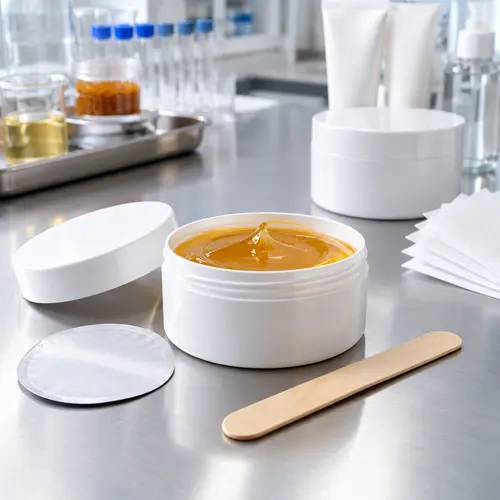
The closure system should be evaluated as a set: lid, thread, liner, tamper feature, and application torque. A liner can reduce leakage and protect the lid interior, but only if it remains compatible with the wax. Induction seals, pressure-sensitive seals, or inner discs should be selected through testing rather than habit. If the jar is filled warm, confirm that the container retains its shape and that cooling does not create excessive paneling, sink marks, or lid vacuum.
Opening diameter matters. It should allow clean spatula access without forcing the user to touch the product. The base should remain stable during scooping, and the lid should be easy to handle when hands are oily. If the product is intended for a warmer, clearly define whether the retail jar itself is approved for heating or whether wax must be transferred into separate equipment.
Shipment review should include sealed packs stored upright, inverted, and on their sides under relevant heat and cold conditions. Carton fit, dividers, cap protection, vibration, and drop exposure should reflect the actual fulfillment model. Parcel shipping for DTC orders can create different stress than case-packed distributor shipments. The cosmetic filling and packaging process should show where torque checks, weight checks, coding, visual inspection, and final packing occur.
Launch Readiness
A fast development timeline works when decisions run in parallel. While the formula team prepares a visual sample, packaging teams can shortlist stock jars, confirm decoration limits, estimate freight, and reserve components. Ask whether the supplier can target a seven-day visual sample and an under-30-day development path without skipping required package review. Qualified hair removal OEM ODM services should distinguish prototype speed from production release.
Before committing to a custom mold, test a stock package with the final formula and validate the market response. Custom tooling can strengthen brand recognition, but it adds development time, ownership questions, and higher component commitments. For launch planning, request samples, unit-level BOM options, tooling terms, lead times, shipment conditions, and scale assumptions through a structured hair removal product RFQ. Related waxing and depilatory guides, after wax care products, and after hair removal serum resources can help define a coherent kit rather than isolated SKUs.

Decision Framework
| Factor | What to Check | Why It Matters | ODM Buyer Note |
|---|---|---|---|
| Formula behavior | Texture, softening, oil migration, shrinkage | Changes appearance and scoop performance | Test production-equivalent bulk, not a generic wax |
| Jar material | Contact compatibility, heat response, staining | Prevents deformation and visible package damage | Request results for the exact resin and colorant |
| Closure system | Threads, torque, liner, tamper feature | Controls leakage and first-open quality | Approve the lid and liner as one system |
| Decoration | Label lift, ink rub, oil resistance, color match | Protects camera-ready and retail presentation | Review aged filled samples before mass printing |
| User handling | Opening, grip, stability, spatula access | Shapes cleanliness and repeat-use experience | Test with the intended applicator and wax state |
| Storage and freight | Heat, cold, orientation, vibration, drop exposure | Reduces leakage and transit damage | Match testing to DTC or distributor shipment conditions |
| Scale | MOQ, component availability, filling speed | Supports pilot launch and replenishment | Confirm continuity with a specialist hair removal OEM manufacturer |
ODM Manufacturing Considerations
Choosing wax jar packaging is only one part of moving a private-label hair-removal product into production. Buyers should confirm the approved sample, formula specifications, container components, labeling files, and shipping conditions as one connected package. A change to the wax texture, fragrance level, jar resin, lid, or fill weight can affect the finished product, so the final approval should identify every component rather than relying on a sample name alone.
Sample Confirmation and Formula Customization
The confirmation sample should represent the intended retail product as closely as possible. Record its color, fragrance, texture, melting behavior, application thickness, removal performance, and appearance before approving bulk production. For hard wax, compare flexibility and break pattern at the expected working temperature. For sugar wax, confirm consistency across the intended room-temperature range. For depilatory cream, review spreadability, odor, rinse behavior, and visible separation.
Customization should begin with a written brief that separates required features from optional preferences. Required points may include hair type, target body area, fragrance restrictions, color intensity, vegan positioning, or a specific cosmetic certification goal. Optional points may include decorative particles, stronger scent, or an unusual butter-like texture. This distinction helps the ODM team preserve product function when a visual request conflicts with filling, stability, or removal performance.
Packaging Compatibility and Stability Review
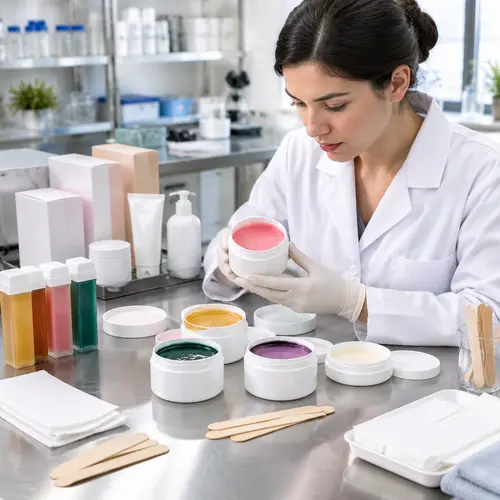
Request a component list covering the jar, lid, seal, label stock, ink, adhesive, spatula, carton, and protective shipping materials. The supplier should test the actual production-intent components rather than visually similar substitutes. Buyers should verify closure consistency, label attachment, odor transfer, staining, panel distortion, and product loss around the rim after storage.
A stability plan should include normal storage plus accelerated heat and cold exposure appropriate to the product and target market. Evaluation points should cover color drift, fragrance change, wax brittleness, oil movement, cream separation, viscosity shift, container distortion, and closure performance. Results do not guarantee every future condition, but they reveal avoidable weaknesses before retail distribution.
MOQ, Documents, and Shipment Conditions
Ask for separate minimum quantities for bulk formula, decorated jars, cartons, accessories, and assembled finished goods. These quantities may differ because each component has its own production model. A transparent BOM comparison should show unit costs, setup charges, testing costs, packaging waste allowance, freight assumptions, and any price change at higher volumes.
Labeling support should include the ingredient declaration, net contents, responsible-party details, batch identification approach, usage directions, warnings, and country-of-origin information where applicable. Buyers selling in the United States should compare artwork against the FDA Cosmetics Labeling Guide. Marketing statements used on cartons, retail pages, and social content should also be supportable under the FTC’s advertising substantiation guidelines.
Shipment planning should define acceptable warehouse temperature, carton orientation, pallet limits, parcel protection, and inspection steps on arrival. Buyers can review a supplier’s broader manufacturing process and OEM/ODM services to understand how approved specifications move into filling, packing, and dispatch.
Common Problems or Failure Cases
Wax becomes brittle: Hard wax may crack during handling or break into small pieces during removal when the formula, working temperature, or storage history is unsuitable. Compare retained samples from different batches and record the temperature used during application.
Wax strips lose adhesion: Strip performance can decline when wax coating, backing material, release paper, storage heat, or aging is inconsistent. Buyers should compare peel behavior before and after storage and confirm that the strip remains protected inside its retail pouch.
Depilatory cream separates: Visible liquid, graininess, or uneven viscosity may indicate that the product or package is not holding up under storage. Review samples from upright and side-position storage, and check whether the product returns to a uniform appearance without excessive mixing.
Roll-on cartridges leak: Leakage can result from poor fit among the body, roller head, cap, and product viscosity. Inspect the neck and cap after transport simulation, then compare dispensing force at cool, normal, and warm room conditions.
Fragrance causes complaints: A strong fragrance may suit short-form video content but create sensitivity concerns or reduce salon acceptance. Request fragrance options at controlled levels, complete an irritation-risk review, and keep an unscented comparison sample before approval.
Packaging changes shape: Jars, lids, or cartridges may distort after heat exposure, stacking pressure, or prolonged contact with the product. Distortion can weaken seals, affect label appearance, and make units look defective at retail even when the contents remain usable.
Supplier Checklist
- Confirm experience with depilatory wax, sugar wax, wax strips, roll-on cartridges, depilatory cream, and aftercare products relevant to your range.
- Request written specifications for texture, color, fragrance, fill weight, viscosity or melting range, and removal performance where relevant.
- Approve production-intent formula and packaging components together, including closures, labels, cartons, and application accessories.
- Review normal, accelerated, heat, and cold storage findings with dated photographs and defined acceptance criteria.
- Ask how the supplier evaluates irritation risk, raw-material identity, batch consistency, filling accuracy, and finished-product release.
- Compare MOQ by component and obtain an itemized BOM, decoration charges, testing fees, freight estimate, and lead-time assumptions.
- Verify ingredient, warning, batch, usage, net-content, and responsible-party documents before artwork is released.
- Ask for available capacity, surge-order rules, component reorder times, and scheduling priority during peak demand.
- Define ownership of custom artwork, product briefs, samples, molds, and formula information in the manufacturing agreement.
- Inspect pre-shipment samples and confirm carton protection, storage limits, lot traceability, and arrival inspection procedures.

FAQ
How can I reduce the risk of a factory copying my idea or formula?
Use a written confidentiality and manufacturing agreement that defines ownership, permitted use, subcontracting limits, sample disposal, and remedies. Share information in stages, mark approved files clearly, and document which custom elements belong to your brand.
Can a sample deliver the dramatic texture and color needed for video?
Yes, but camera appearance should be evaluated alongside application and removal performance. Review the product under your actual lighting, background, lens, and demonstration style. Approve physical color standards and texture references instead of relying only on edited images.
How do I know quality controls are strong enough for my audience?
No supplier can promise zero complaints. Ask for batch records, raw-material checks, retained samples, release criteria, irritation-risk review, traceability, and a documented complaint process. Confirm that results cover the finished formula in its intended retail package.
Will communication be difficult if I do not understand ingredients?
A suitable account team should translate marketing goals into measurable product requirements. Provide references for texture, removal style, fragrance, color, audience, and content format, then require the supplier to return a written brief with technical limits and tradeoffs.
What happens if a social video creates a sudden order spike?
Ask the supplier to model normal and surge demand before launch. Confirm available filling capacity, component inventory options, reorder lead times, priority rules, and whether approved backup packaging can be used without changing the product experience.
Should I choose custom or standard packaging for the first launch?
Standard components usually reduce tooling exposure and simplify replenishment, while custom packaging can improve brand distinction. Compare total landed cost, decoration quality, lead time, replacement availability, and compatibility evidence before deciding.
References
- FDA Cosmetics Labeling Guide for U.S. cosmetic label presentation and required information.
- FTC Advertising FAQs for principles governing substantiation of advertising claims.
- Ecocert organic and natural cosmetic certification for brands evaluating applicable natural or organic positioning.