Direct Answer
New brands should discuss MOQ as an operating plan, not as a single quantity to negotiate downward. Good cosmetic MOQ planning begins by separating formula MOQ, packaging component MOQ, filling MOQ, and printed-material MOQ. Then ask the ODM to model a pilot batch, expected reorder cadence, and scale-up path together. For a hair-removal launch, that means defining the product format, target market, pack size, claims, compliance file, testing scope, and forecast before discussing unit price.
A 1,000-unit pilot can be commercially sensible when the supplier uses validated base formulas, compatible stock packaging, and an ISO 22716 process that can scale without reformulation. It becomes expensive when custom molds, low-volume decoration, untested components, or repeated sample revisions are added. The objective is not simply a lower MOQ. It is a launch quantity that protects cash, product quality, regulatory readiness, and the ability to replenish quickly if demand rises.

Key Takeaways for Private Label Buyers
- Break MOQ into formula, filling, packaging, printing, and shipping layers before comparing proposals.
- Use the pilot batch to validate consumer response and operating assumptions, not to skip compatibility or stability work.
- Choose stock components selectively; a standard jar or tube can reduce costs without making the formula or brand identity generic.
- Confirm that samples and commercial runs use the same formula, raw-material specifications, and manufacturing controls.
- Approve packaging only after leakage, dispensing, heat and cold storage, and label-space reviews.
- Negotiate the reorder pathway alongside the first launch so a successful SKU can scale without weeks of redevelopment.
Buyer Context
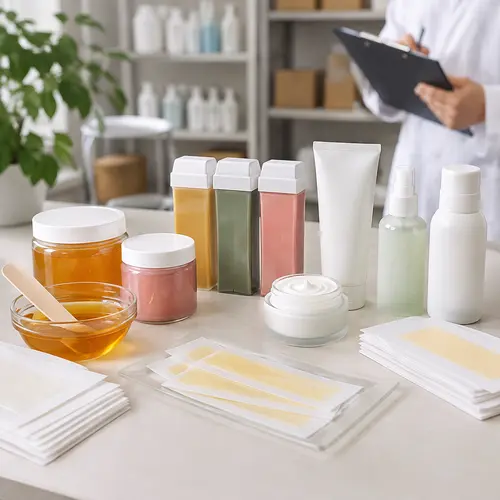
MOQ matters differently across hair-removal formats. A depilatory cream may use a relatively accessible tube, but its formula can create compatibility concerns around seals, liners, pumps, and printed surfaces. Sugar wax may appear simple, yet fill temperature, viscosity, jar strength, and closure torque influence whether the pack survives storage and shipment. Roll-on wax requires a close fit between cartridge dimensions, roller movement, cap retention, and the behavior of warm product. Wax strips introduce other variables: fabric or film selection, wax loading, liner release, pouch sealing, and adhesion after aging.
This is why founders should avoid opening with only one question: how low can the quantity go? A better conversation starts with the product architecture. Review relevant formats through hair removal product solutions, then compare the development scope described in custom hair removal product development. If the concept is cream-based, the details on custom depilatory cream formulation help clarify which decisions belong to formula development and which belong to packaging.
Low opening volume also changes risk allocation. A highly custom component may require a higher supplier commitment than the product fill itself. Conversely, choosing an available tube, jar, pouch, or cartridge can make a smaller batch workable while preserving differentiation through texture, fragrance, color, application experience, claims, artwork, and an aftercare pairing. Buyers evaluating wax formats should review custom wax strips and hot wax, while brands serving irritation-conscious users should define their screening criteria through mild hair removal formula development.
Compliance should enter the MOQ discussion before artwork is finalized. The U.S. label must accommodate product identity, net contents, business information, ingredients, directions, and relevant warnings in a readable layout; the FDA Cosmetics Labeling Guide is a useful primary checkpoint. ([fda.gov](https://www.fda.gov/cosmetics/cosmetics-labeling-regulations/cosmetics-labeling-guide)) For brands making cruelty-free commitments, evidence expectations should be defined against a recognized framework such as the Leaping Bunny cruelty-free certification standard, rather than treated as an informal supplier statement.
Technical and Packaging Factors
Formula readiness: Ask whether the quoted MOQ applies to a validated base formula, a semi-custom variation, or a fully custom development. A validated base may support an under-30-day pathway when changes remain inside an established ingredient and stability matrix. A major change to active system, fragrance load, wax blend, or preservative strategy can create new testing needs. Confirm the sample-to-batch transfer protocol and request the agreed specification for appearance, odor, viscosity or consistency, fill weight, and application performance.
Performance review: Each format needs a buyer-observable acceptance test. Depilatory cream should spread evenly, remain where applied, rinse as intended, and deliver consistent removal within the approved directions. Sugar wax should be reviewed for scoopability, stringing, reheating behavior, and crystallization. Hot wax should be assessed for melting behavior, pickup, flexibility, breakage, and residue. Wax strips should be tested for liner release, grip, adhesion, removal, and wax migration. Aftercare products should dispense cleanly and sit comfortably within the product story. Related options can be reviewed through post-depilation care OEM.
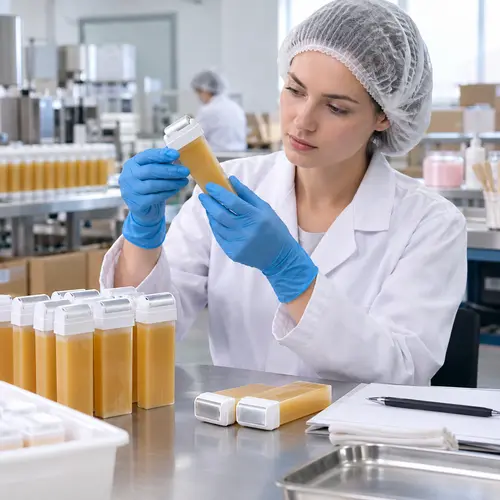
Packaging compatibility: Do not approve a component from appearance alone. Ask the ODM to test the filled pack, including the actual cap, plug, seal, liner, pump, roller, pouch film, label, and decoration. Review leakage in upright, inverted, and side positions where appropriate. Check whether heat softens the pack, whether cold changes dispensing, and whether the formula affects adhesives, ink, coating, or seal integrity. The documented hair removal manufacturing process should show where compatibility, filling, assembly, inspection, and release checks occur.
Storage and shipment: Ask for the stability protocol, test conditions, checkpoints, acceptance criteria, and current status. Accelerated testing can identify likely problems earlier, but it does not remove the need for real-time observation. Shipment simulation should reflect the chosen format: jar leakage for sugar wax, roller seepage for cartridges, pouch seal stress for strips, tube crimp or seal integrity for cream, and closure security for aftercare. If the launch market includes hot or cold routes, make those conditions part of the brief before the final packaging order.
Safety and claims: Hair-removal products need a clear irritation-risk review, directions, warnings, and claims boundary. Ask who reviews ingredient restrictions, fragrance documentation, safety substantiation, and label language for each destination market. Independent laboratories and assurance providers such as Intertek regulatory testing and certification services can support defined testing needs. ([intertek.com](https://www.intertek.com/cosmetics/)) The supplier should also explain which compliance documents are included, which require third-party work, and which remain the responsible person’s or brand owner’s obligation.
Commercial structure: Request a transparent cost model at the pilot quantity and at two realistic reorder levels. Separate recurring unit costs from one-time items such as artwork setup, special tooling, testing, or registration support. Confirm whether unused printed components must be purchased, stored, or scrapped. Finally, map the replenishment lead time and reserved capacity. The most useful partner is not merely willing to start lower; it can explain how the first batch moves into a higher-volume run without formula re-engineering or a supplier handoff. Buyers can review broader capabilities through a hair removal OEM manufacturer overview and structure the initial brief through a hair removal product RFQ.
Decision Framework
| Factor | What to Check | Why It Matters | ODM Buyer Note |
|---|---|---|---|
| Formula scope | Validated base, semi-custom, or fully custom pathway | Determines development work, testing, costs, and timing | Ask which changes remain inside the existing validation matrix |
| Packaging MOQ | Stock availability, printing minimum, decoration minimum, and spare quantity | The component may set the real MOQ even when filling is flexible | Compare a stock pack with custom artwork against a custom mold |
| Compatibility | Leakage, dispensing, seal integrity, label adhesion, and formula contact | Prevents failures that appear only after filling or storage | Require testing with the final pack, not a visually similar substitute |
| Stability | Conditions, checkpoints, acceptance criteria, and available results | Shows whether texture, odor, color, and performance remain controlled | Ask what evidence exists before launch and what continues afterward |
| Compliance file | Ingredient list, specifications, safety support, claims review, and label documents | Reduces customs, listing, and marketplace risk | Define deliverables and ownership by market in writing |
| Scale-up | Reorder lead time, capacity, raw-material planning, and formula transfer controls | Protects stock availability when a campaign performs above forecast | Negotiate the successful-launch scenario before approving the pilot |
ODM Manufacturing Considerations
Effective cosmetic MOQ planning should connect the requested quantity to a clearly defined product specification. Before discussing the first commercial batch, the buyer and supplier should agree on what the approved sample represents: formula texture, color, fragrance level, application behavior, removal performance, packaging components, fill weight, and acceptable appearance. A reference sample should be identified by version number and approval date so that later revisions do not create confusion.
Formula customization can affect both minimum quantity and development risk. A stock base with a modified fragrance or color may require fewer raw-material commitments than a fully custom formula. However, founders should not assume that a familiar base will behave identically after adding botanical oils, fragrance, pigments, or performance modifiers. For depilatory cream, confirm viscosity, spreadability, odor control, and separation risk. For sugar wax or hot wax, review working texture, temperature behavior, flexibility, and residue. For wax strips, define the expected grip, removal force, and performance across the intended storage period.
Packaging should be evaluated as a complete component system rather than as a visual choice. The supplier should confirm the exact container, closure, applicator, liner, label material, and secondary pack included in the sample scope. A roll-on cartridge may look acceptable when empty but leak or develop poor roller rotation after filling and transport. A cream pack may deform, lose seal integrity, or dispense inconsistently if the formula interacts with the component. Buyers can review related formats through the hair-removal product categories and compare the available level of customization through the OEM and ODM development process.
Stability review should reflect the intended market and shipment route. The written plan should define storage conditions, review intervals, acceptance criteria, and responsibility for testing. Relevant observations include viscosity change, oil separation, wax brittleness, fragrance shift, color change, seal failure, adhesive migration, and pack deformation. Accelerated observations can support decisions, but they do not guarantee every possible long-term outcome. The supplier should explain what has been completed before launch and what monitoring continues after the first batch.
MOQ discussions should separate formula quantity from component quantity. A filling run may support a lower quantity while a decorated cartridge, printed pouch, carton, or custom liner requires a higher commitment. Ask whether excess components will be stored, invoiced, returned, or used in a reorder. This distinction gives founders a more accurate view of costs and prevents unused stock from being overlooked.
Before approving production, request the labeling document set applicable to the destination market. This may include the ingredient declaration, product specifications, batch coding format, net-content details, caution statements, responsible-party information, and supporting compliance records. Shipment conditions should also be documented, especially for wax products that may soften in heat or become brittle in cold environments. Carton strength, pallet configuration, transit temperature exposure, and destination handling can influence whether an acceptable batch arrives in saleable condition.

Common Problems or Failure Cases
Wax becomes brittle after storage. A wax sample may perform well during initial approval but crack, crumble, or lose flexibility after temperature cycling. Buyers should compare retained samples from different dates and confirm the expected storage range before accepting the formula.
Wax strips lose adhesion. Adhesive can migrate, dry out, or release unevenly from the backing. Common warning signs include weak grip, residue on the skin, difficult separation, or inconsistent performance between pouches. The specification should define strip dimensions, wax loading, backing material, pouch barrier, and practical removal expectations.
Depilatory cream separates or changes viscosity. Separation may appear as a watery layer, graininess, or uneven dispensing. Changes can result from temperature exposure, ingredient interaction, or unsuitable packaging. Confirm that samples are assessed from multiple storage conditions rather than only from a freshly prepared lab sample.
Roll-on cartridges leak during transit. Leakage can result from the formula, roller fit, closure tolerance, fill level, or carton orientation. A supplier should be able to show how filled units are checked and how shipping cartons control movement. Buyers should also inspect whether the roller still moves smoothly after storage.
Fragrance creates unexpected sensitivity concerns. A stronger fragrance may improve odor masking but can increase irritation concerns for sensitive users. Review the fragrance level, allergen documentation where applicable, intended use instructions, and any claims planned for the label. Claims should remain consistent with the evidence available for the finished product.
Packaging deforms before reaching the market. Pouches, cartridges, tubs, and cream packs can warp or lose presentation quality under compression or temperature stress. Shipment testing should reflect the actual case pack, route, season, and warehouse conditions rather than an idealized laboratory setting.

Supplier Checklist
- Confirm the legal manufacturing entity, production location, quality certifications, audit scope, and certificate validity.
- Request a written sample brief covering formula version, fragrance, color, fill weight, component codes, and acceptance criteria.
- Ask which changes are permitted after sample approval and how revisions affect timing, costs, and quantity commitments.
- Separate minimum requirements for formula preparation, filling, printed components, cartons, and custom accessories.
- Review texture, viscosity or melting behavior where relevant, removal performance, residue, and irritation-risk documentation.
- Verify stability scope, storage conditions, review intervals, retained samples, and responsibility for investigating deviations.
- Inspect filled components for leakage, dispensing consistency, roller movement, seal integrity, and visible deformation.
- Request ingredient, specification, batch, labeling, and destination-market compliance documents before artwork approval.
- Confirm carton configuration, shipment orientation, temperature considerations, inspection standards, and release procedures.
- Clarify ownership of custom formula work, artwork, molds, unused components, testing records, and confidential project information.
- Evaluate the supplier response plan for capacity disruption or replacement of a failed previous source.
- Ask for transparent MoCRA or CPNP workflow guidance when the target market requires it, rather than relying on broad assurances.
FAQ
Can an Asian supplier meet European or American clean beauty and cruelty-free expectations?
Location alone does not prove or disprove compliance. Request ingredient policies, animal-testing declarations, supply-chain records, audit evidence, and claim-specific documentation. If certified cruelty-free positioning is important, compare the project requirements with the Leaping Bunny cruelty-free certification standard. Define what ‘clean beauty’ means for your brand because it is not a single universal regulatory standard.
Will a lower MOQ make unit costs too high to support customer acquisition costs?
Unit costs are normally higher at lower quantities because setup, testing, decoration, and component expenses are spread across fewer units. Model landed cost, fulfillment, returns, channel margin, promotional allowance, and CAC before choosing the quantity. A higher MOQ is not automatically safer if sell-through is uncertain or stock may expire.
Will a turnkey or existing base formula make the product look identical to competing brands?
It can if differentiation relies only on the label. Meaningful customization may come from texture, fragrance profile, wax working properties, strip format, aftercare pairing, packaging usability, or a documented specialty ingredient source. Ask which elements are exclusive, which are shared, and which require additional validation.
Can we sign a strict NDA before sharing the brand plan?
Yes, an NDA can be signed before detailed commercial or formula discussions. It should identify confidential information, permitted recipients, use restrictions, duration, return or destruction obligations, and governing law. An NDA does not replace clear ownership terms for custom formulas, artwork, testing data, or components.
How can we verify that environmental packaging claims are not greenwashing?
Request material specifications, supplier declarations, recycled-content evidence, chain-of-custody records where relevant, and copies of any claimed certification. Confirm whether the claim applies to the entire pack or only one component. Avoid broad language such as ‘eco-friendly’ unless the supporting scope and disposal pathway are clear.
Which labeling checks should be completed before artwork is printed?
Confirm product identity, net contents, ingredient presentation, responsible-party details, caution statements, directions, batch coding, and claim support for the destination market. The FDA Cosmetics Labeling Guide provides relevant guidance for products marketed in the United States.
Should independent testing be included in the MOQ discussion?
Yes. Clarify whether regulatory, safety, compatibility, stability, or claim-support work is included, optional, or handled by an outside laboratory. Services such as Intertek’s regulatory testing and certification services illustrate the types of third-party support that may be considered, depending on the formula, claims, and market.