Direct Answer
Travel size hair removal products are retail-ready when the smaller pack preserves safe product performance, gives unambiguous directions, and carries claims that match the tested use case. The pack is not simply a reduced version of a full-size SKU. A private-label buyer should confirm the formula remains stable in its final-pack tube, sachet, strip pouch, jar, cartridge, or aftercare bottle; that consumers can understand area, timing, patch-test, removal, and storage directions; and that the label can support required product, batch, net contents, responsible party, and market-specific information. For a cream, this means checking viscosity, closure cleanliness, and contact-time instructions. For wax or strips, it means verifying heat behavior, adhesion, tear strength, and residue control. Ask the ODM for final-pack samples, accelerated and real-time stability evidence, transport leakage checks, and a claims review before artwork approval. This keeps a compact SKU convenient without making it fragile, confusing, or difficult to list across retail channels.
Key Takeaways for Private Label Buyers
- Match format to use. Pack the expected dose and body area, not simply a smaller version of the full-size SKU.
- Sample final materials. Review the formula in its actual tube, sachet, jar, pouch, cartridge, or bottle.
- Write format-specific directions. Cream, wax, strips, and aftercare need distinct preparation, timing, removal, and storage language.
- Keep claims observable. Support travel-ready, clean dispensing, or controlled spread with product evidence.
- Approve the retail file. Lock label copy, pack-out, storage language, and shipping checks before a larger run.
Buyer Context
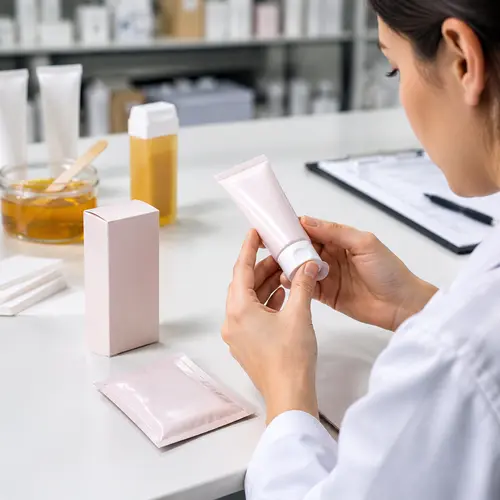
For a creator-led brand, a travel size is both a content prop and a low-risk trial SKU. It must survive a close-up unboxing, fit a carry-on routine, and give a first-time user clear directions without a support thread. That matters when views convert quickly and a retail buyer sees the sample before the full line. Compact units also fit subscription boxes, salon checkout, and marketplace cosmetics bundles, making the opening experience part of the brand promise.
Each format has a different failure point. A wax strips OEM project must protect adhesion, backing, and clean separation inside the pouch. Sugar wax needs a residue-resistant closure and workable texture. A depilatory cream tube or sachet must dispense consistently without contaminating the seal. A roll-on wax cartridge needs secure fit, smooth roller movement, and a leakage review. Aftercare should complement removal without implying a treatment promise.
Name target area, format, pack size, sales channel, storage conditions, and launch date in the brief. A specialized hair removal OEM manufacturer can compare cream, strip, wax, and aftercare routes against the on-camera experience. The private label hair removal solutions page is useful when a hero SKU may become a travel kit. For a cream concept, review the sample scope of a depilatory cream OEM partner before artwork.
Technical and Packaging Factors
Directions and Claims
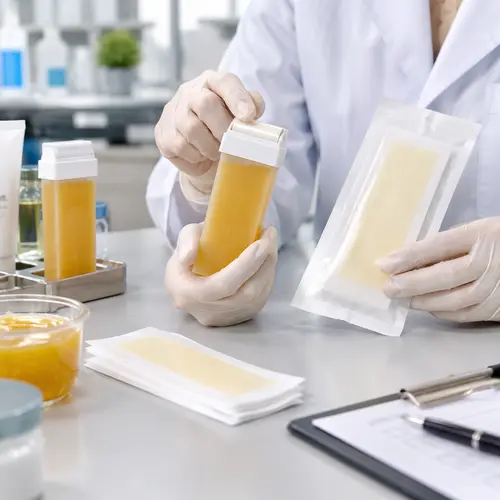
Directions should mirror the consumer sequence: prepare the specified area, apply the stated amount, observe contact or warming instructions, remove correctly, clean the skin, then follow aftercare and storage guidance. Include a patch-test instruction where the market and product review require it. For strips, state which side touches skin and how it opens and lifts. For roll-on wax, state cartridge loading, application direction, and handling. If the pack is short on space, use a carton or insert instead of removing safety-critical steps.
Claims should describe demonstrable attributes: compact format, ready-to-use strips, controlled spread, easy dispensing, or a comfortable aftercare feel when supported by review. Treat natural, organic, vegan, sensitive-skin, hypoallergenic, pain-free, and all-skin claims cautiously. Compare ingredient naming with the European Commission’s CosIng ingredient database. For sugar wax or natural positioning, align evidence with Ecocert organic and natural cosmetic certification requirements. When wording sounds therapeutic rather than cosmetic, obtain market review and consult the FDA product classification database as a boundary check. Do not borrow language from another category.
Formula and Pack Compatibility
For depilatory cream, record the target viscosity range, spread, odor, color, dispense force, and closure cleanliness in the final tube or sachet. Confirm warm storage does not thin it excessively and cool storage does not block dispensing. For hard wax, soft wax, and sugar wax, review softening or melting point, set time, residue, and jar or cartridge compatibility. For strips, age the adhesive and test release film, backing, pouch seal, and peel behavior. For roll-on wax, check ball movement, flow, cap fit, and upright or inverted leakage. Aftercare needs bottle, pump or nozzle, and closure checks.
Ask for heat and cold storage checks, orientation-based leakage review, shipment handling, and fresh-versus-aged comparison. Define the conditions under which texture, seal, appearance, and directions remain dependable.
ODM Manufacturing Considerations
An ODM should turn the creative brief into a dated sample plan covering formula options, final-pack samples, artwork inputs, testing scope, and filling and shipment handoff. Use the hair removal manufacturing process to map sampling, filling, packaging, quality checks, and shipment conditions. A partner offering hair removal OEM ODM services should explain what changes between pilot and larger run. For contract manufacturing, ask for a quote separating formula work, components, filling, testing, tooling, assembly, and freight. This protects the launch date while preserving the visual texture that earns views. A custom hair removal product development discussion should use the same pack and formula intended for scale, not a prototype that will later be re-engineered.
Decision Framework
| Factor | What to Check | Why It Matters | ODM Buyer Note |
|---|---|---|---|
| Directions and claims | Area, timing, patch-test, removal, storage, and supported wording | Small packs leave little room for ambiguity | Match copy to the actual sample and target market |
| Formula texture | Viscosity, spread, melting, adhesion, residue, or flow | Performance is judged at first use | Retain a written target and reference sample |
| Pack compatibility | Materials, seal, cap, and applicator contact | Interaction can cause leaks, odor change, or poor dispensing | Test the intended component from the intended vendor |
| Storage and shipment | Heat, cold, orientation, vibration, leakage, and aged appearance | Travel can change texture and seal performance | Define pass or fail observations before shipment |
| Sample and pilot scope | Formula, final pack, artwork, filling quantity, and scale plan | A prototype does not prove repeatable production | Confirm the same formula and pack can scale |
| Retail file | Ingredients, net contents, batch marking, responsible party, directions, and claim support | Missing files delay a cosmetics listing | Request documents before final artwork approval |
Supplier Checklist
Before release, request a complete pack-out sample, approved directions, a claim summary, irritation-risk review, compatibility and stability results, leakage observations, storage language, and a shipment plan. For a recovery bundle, compare a post-depilation care OEM option with the core removal SKU. If mild positioning is central, review sensitive skin hair removal products without an unverified low-irritation promise. A later kit may include a hair inhibitor serum OEM product, but keep its directions and pack checks separate. Use a request a hair removal product quote submission to align samples, MOQ, packaging, documents, and delivery conditions.
ODM Manufacturing Considerations: Sample to Shipment
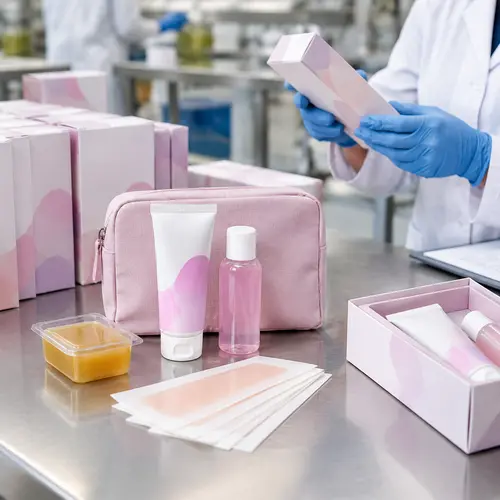
For travel size hair removal products, an ODM project should finish with a documented retail sample, not only a promising lab jar. Define the removal area, pack size, application method, texture, fragrance, color, working time, and sales market before requesting a quote. A supplier that can target a seven-day sample window may fit a fixed content calendar, but every revision must be recorded. Review the supplier’s hair-removal product categories and OEM/ODM services to confirm that its stated scope covers depilatory cream, wax strips, sugar wax, roll-on cartridges, and aftercare.
Sample confirmation and formula customization
Start with a written sample brief that translates marketing language into observable checks: creamy or elastic texture, target color, fragrance intensity, spreadability, residue, working time, and intended use on the face or body. For depilatory cream, state an acceptable viscosity range at filling and after storage; for wax, record the working and softening or melting range. Complete an irritation-risk review for the intended area and fragrance before approval. Sign off a master sample with tolerances for texture, color, odor, fill weight, closure fit, and label placement. Keep one physical reference and photographs under neutral and retail lighting. A sample in a beaker or jar is not final confirmation when production uses a tube, pouch, cartridge, or bottle.
Packaging, stability, and documents
Packaging compatibility must be checked with the exact contact components. Confirm fill accuracy, headspace, liner and closure fit, cap or valve retention, label adhesion, and resistance to formula contact. For roll-on wax, inspect the roller and cap after filling; for cream, confirm that the tube shoulder and nozzle do not clog or deform; for aftercare, confirm that the bottle dispenses the intended dose. Use representative filled packs in transport simulation and record leaks, stains, swelling, or loss of closure force.
A stability review should track separation, odor, color drift, texture, net content, and pack condition at scheduled time points across the expected storage and transit range. Ask for retained samples and a clear result format. Label documents should include the ingredient list, net contents, directions, warnings, lot coding, and claim support required for the sales market. For organic or natural positioning, ask which certification documents apply; Ecocert is one useful reference point, not a substitute for market-specific review.
Ask the quote to separate formula work, sample quantities, component minimums, filling, print setup, and freight. MOQ should be stated per SKU and per fragrance or color variant. Shipment terms should identify carton limits, stacking, expected transit time, temperature limits, and the carrier handoff. This detail makes a fast sample useful without hiding the cost or risk of the first production order.

Common Problems or Failure Cases
Travel packs magnify small formula and component variations. Before approval, ask the supplier to explain the likely cause, immediate containment, and corrective action for each risk:
- Wax brittleness. Sugar wax or strip wax that cracks, flakes, or becomes difficult to spread may not match its working range. Compare actual application behavior with the approved sample before changing directions or claims.
- Strip adhesion loss. If strips leave wax behind or lift unevenly, check coating uniformity, liner release, pouch protection, and storage age. Production-representative samples should still pick up hair consistently after storage.
- Cream separation. A watery layer, grainy texture, or uneven dose can appear after filling or storage. Hold reserve packs and compare appearance, odor, viscosity, and dispensing before release.
- Cartridge leakage. Wax around the roller, cap, or cartridge seam points to dimensional, sealing, or retention problems. Check filled cartridges after handling and transport simulation, not only immediately after filling.
- Fragrance sensitivity. A strong scent can increase complaints even when removal works. Consider a lower-fragrance route, review allergen labeling, and include a small-area test where appropriate. Avoid unsupported hypoallergenic claims.
- Packaging deformation. Small pouches, tubes, or cartons may wrinkle, swell, or lose shape under temperature or compression. Confirm material selection, headspace, seal quality, and carton support with filled retail packs.
Supplier Checklist for Travel Size Hair Removal Products
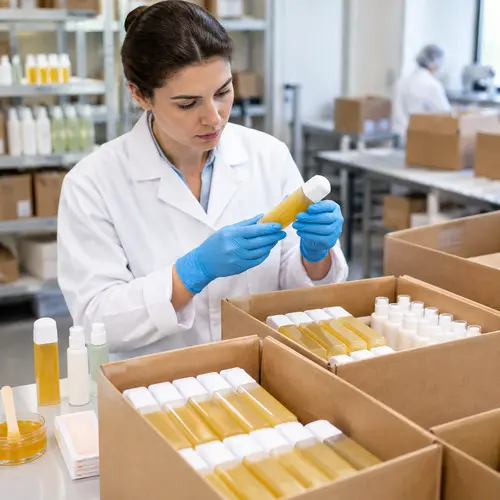
Use this checklist when comparing a supplier’s manufacturing process and preparing an RFQ or contact request:
- Product fit: Ask for relevant experience with depilatory cream, wax strips, sugar wax, roll-on cartridges, and aftercare.
- Sample control: Confirm sample quantity, revision scope, master-sample approval, target ranges, and change records.
- Formula review: Request the ingredient list, viscosity or softening targets, fragrance information, irritation-risk review, and change-notification terms.
- Pack compatibility: Check component drawings, fill range, closure or valve fit, label performance, and deformation risks.
- Stability and shipment: Request time-point records, retained-sample policy, transport conditions, and carton handling limits.
- Label documents: Confirm INCI names, net contents, directions, warnings, lot coding, and market-specific claim files.
- Transparent pricing: Require a BOM that separates formula work, samples, components, filling, print setup, freight, and other charges.
- Ownership and capacity: Put NDA, custom formula, artwork, tooling, permitted reuse, MOQ, reorder lead time, and capacity planning in writing.
FAQ
What must be approved before the first production run?
Approve the master formula sample, final container, net fill, color and fragrance tolerance, directions, warnings, label artwork, lot format, carton configuration, and shipment conditions. A sample is incomplete if the formula is approved separately from its retail pack.
How can I protect my concept and formula from being reused?
Use an NDA before sharing the full brief, then define background materials, buyer-owned custom work, artwork, tooling, formula access, market or SKU exclusivity, and permitted reuse in the contract. Require written approval for ingredient, component, or supplier substitutions. Verbal assurances are not enough.
Can the texture and color deliver strong visuals on camera?
They can, provided the brief defines the intended look and the supplier tests the final pack under neutral and retail lighting. Approve texture, color tolerance, spread, and removal performance from the actual tube, pouch, or cartridge. A dramatic appearance should not depend on unstable color, excessive fragrance, or directions that create unnecessary irritation risk.
How do I reduce the risk of customer reactions and quality failures?
No supplier can promise zero reactions. Ask for an ingredient and fragrance review, intended-area restrictions, warnings, small-area test directions, batch release checks, retained samples, and a complaint escalation process. Review cream separation, wax consistency, closure condition, and label accuracy on production-representative packs.
How should MOQ and the quote be structured?
Request MOQ by SKU, fragrance, color, and packaging variant. The quote should separate development, samples, components, filling, print setup, freight, and any storage charge. Also ask for reorder lead time and a capacity plan if views or a product launch create a sudden demand increase.
Which label and shipment documents should accompany a travel-size SKU?
Request final label artwork, ingredient list, net contents, directions, warnings, lot or batch coding, applicable date information, packing list, carton dimensions, and temperature limits. If organic or natural claims are used, request the relevant certification records before printing the claim.
References
- Ecocert organic and natural cosmetic certification – a reference for evaluating organic or natural positioning for hair-removal and aftercare formulas.
- The European Commission’s CosIng ingredient database – a reference for cosmetic ingredient names and listed functions when preparing labels and claim files.