Direct Answer
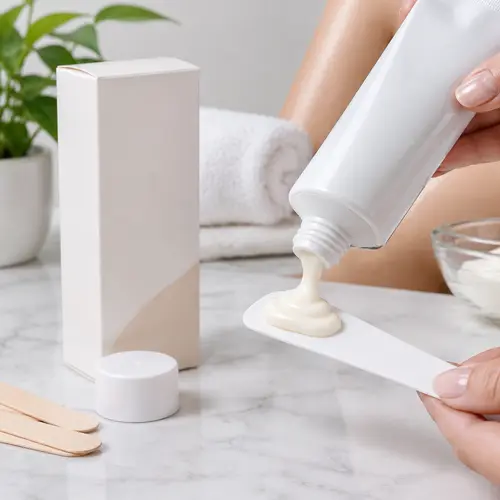
For most private-label hair removal brands, start with a high-barrier squeeze tube and pair it with a simple spatula or precision applicator. This format protects a depilatory cream from repeated hand contact, meters the dose, travels well, and creates a clear visual moment for creator-led content. Choose a jar when the brand story depends on a premium ritual and the formula remains uniform after repeated opening. Choose sachets for sampling, subscription boxes, travel kits, and low-risk market tests. Choose roll-on or brush applicators only when the product needs controlled placement and the package can pass closure, leakage, and parcel-handling checks.
The right answer is not the prettiest container. It is the format that keeps the cream stable, makes application intuitive, and protects the launch across heat, cold, vibration, and last-mile shipping. A strong depilatory cream OEM partner should validate formula-to-pack compatibility, filling accuracy, seal integrity, label documents, and sample scope before final artwork is locked. For a founder working toward an under-30-day launch, packaging should be selected with the formula sample, not added after production planning begins.
Key Takeaways for Private Label Buyers
- Start with the use moment. Tubes are usually easiest for clean, controlled home application; jars feel more premium but create more exposure to air and repeated hand contact.
- Match the pack to texture. A thick cream needs a shoulder, orifice, and cap that release product without clogging, stringing, or sudden bursts.
- Test the full shipping path. Heat, cold, vibration, compression, and leakage checks matter more than a good-looking sample on a studio table.
- Use sachets strategically. They are efficient for trial, travel, and subscription programs, but seal quality and single-use instructions must be clear.
- Keep the pilot commercial. Ask whether a 1,000-unit sample-to-market run can use the same pack, filling method, and inspection standards planned for scale.
Buyer Context
Packaging is part of the product promise in hair removal. A creator-led brand may have only a few seconds to show the cream coming out, spreading evenly, and wiping away cleanly. The container therefore affects both conversion and perceived quality. A lumpy extrusion, leaking cap, weak sachet seal, or applicator that drags across the skin can turn a strong formula into a poor review.
The decision also changes by product family. Depilatory wax and sugar wax need heat and flow control. Wax strips need adhesive protection and aging checks. Roll-on wax needs cartridge fit and leakage review. Aftercare needs a closure that supports clean dosing after hair removal. For buyers building a focused line, a hair removal OEM manufacturer or hair removal OEM ODM services partner should map these differences before proposing a single packaging system for every SKU.
That is especially important for overseas creator brands. You may know the look, color, and camera angle you want, but the supplier must translate that idea into viscosity targets, fill weight, opening force, storage conditions, and documents for the target market. The best hair removal product solutions keep the creative brief visible while making the operating details testable.
Technical or Packaging Factors
Formula-to-pack compatibility
Depilatory creams can contain reactive active systems and alkaline ingredients that place extra demands on seals, closures, liners, and barrier layers. The supplier should test the filled pack rather than reviewing the empty component alone. Look for changes in odor, color, viscosity, separation, swelling, paneling, cap stress, and seal performance after storage. If the cream uses a narrow application window, confirm that the opening dispenses a consistent ribbon from the first use to the last.
For sensitive-skin positioning, ask for an irritation-risk review, ingredient rationale, and clear use instructions. A program built around sensitive skin hair removal products should not rely on a gentle-sounding label while ignoring contact time, removal technique, or post-use care. Packaging copy, warnings, batch coding, and ingredient listings should be reviewed together with the formula sample.
Texture, dose, and applicator control
Tube packaging is usually the most forgiving starting point because it supports controlled dosing and low product exposure. Use a wider orifice for dense cream, a narrower one for lighter textures, and a cap that closes without trapping residue around the thread. Jars can work for a rich, mask-like cream, but the buyer should define the pickup experience: fingertip, spatula, or included brush. That decision affects hygiene, perceived value, and how much product remains in the pack.
Sachets are useful when the goal is a single application, trial conversion, or travel convenience. Ask for seal-width checks, burst resistance, fill consistency, and clear tearing behavior. If the product is paired with a spatula, confirm that the sachet, tool, insert, and outer carton stay aligned during packing. For roll-on or brush formats, test the applicator after storage, not only when new. The first pass should feel controlled, not dry, sticky, or over-loaded. Do not force a spray format onto a cream designed for controlled spread; dispensing behavior should match the application zone and contact-time instructions.
Storage, shipping, and launch readiness
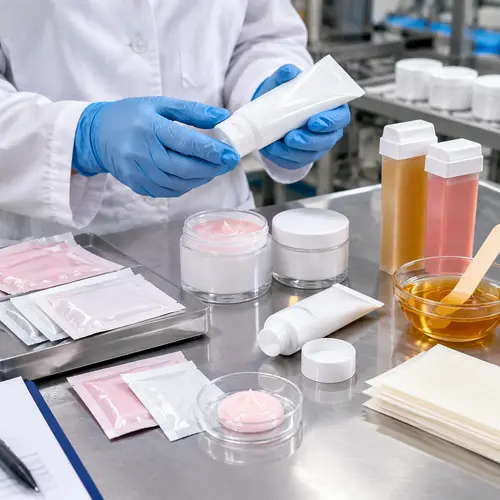
Packaging compatibility is only one part of the decision. Ask the supplier to review heat and cold storage, carton compression, vibration, drop exposure, and leakage risk under the actual shipment conditions. A tube that performs in a warehouse may still fail after air freight or a summer delivery route. Request retained samples from the filled batch and define what counts as an acceptable change in texture, odor, appearance, or closure function.
For a fast launch, the most useful manufacturing question is whether the supplier can move from sample to pilot without changing the material stack or filling method. A partner with a hair removal manufacturing process should show how sampling, filling, packaging, inspection, and shipment connect. Ask whether the pilot can start at 1,000 units, whether the sample can be prepared in 7 days when the brief is approved, and whether the same line can scale without reworking the pack.
Label documents and market fit
Before artwork approval, confirm the ingredient list, net contents, directions, warnings, responsible-party details, batch coding, and language needs for each target market. For United States launches, review the FDA summary of cosmetics labeling requirements and the broader FDA cosmetics guidance. For Canada, check Health Canada’s cosmetic ingredient hotlist and related submission expectations. These references do not replace supplier review, but they help the buyer catch missing information before print and shipment.
Packaging should also support the post-use story. A tube, jar, or sachet can be paired with a calming product or kit if the brand wants a complete routine. A post-depilation care OEM partner can help align the aftercare texture, cap, and carton language with the hair removal SKU rather than treating it as a separate project. If you need to compare sample scope, BOM, MOQ, and shipment timing, use request a hair removal product quote before approving artwork.
Decision Framework
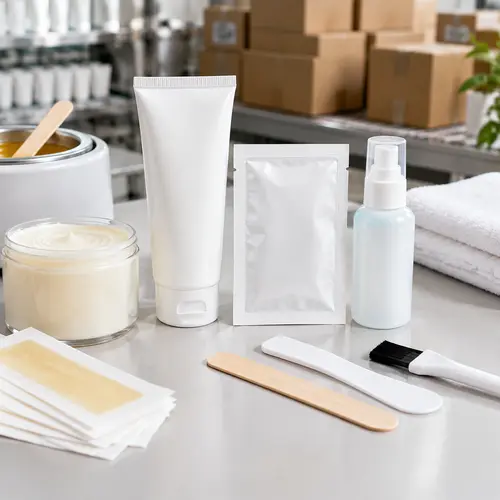
| Factor | What to Check | Why It Matters | ODM Buyer Note |
|---|---|---|---|
| Tube | Barrier layer, orifice size, cap closure, fill accuracy, residue around the thread | Supports clean dosing and repeat use with lower exposure | Best default for a creator-led cream launch and easy on-camera demonstrations |
| Jar | Inner seal, pickup tool, headspace, repeated-opening stability | Creates a premium ritual but increases contact with air and hands | Use when the texture and brand story justify the added handling steps |
| Sachet | Seal width, tear behavior, burst resistance, single-use fill | Efficient for sampling, travel, and subscription distribution | Confirm carton packing and instructions before committing to a large run |
| Applicator | Brush or spatula fit, dose control, drag, cleaning, pack-out alignment | Turns formula texture into a visible user experience | Test the tool after storage and shipment, not only at sample review |
| Launch control | Compatibility data, storage checks, label documents, MOQ, sample timing | Prevents late artwork changes, leakage claims, and missed launch windows | Ask for a clear BOM, sample plan, and shipment estimate before approval |
ODM Manufacturing Considerations
For depilatory cream packaging, begin sampling with a written brief that connects the formula, pack, and intended use. Specify the target hair-removal area, texture, fragrance direction, color, fill size, tube or jar format, and whether a spatula or other applicator is part of the set. Ask the supplier to define what each sample includes and what remains provisional. A lab sample can confirm direction, but it does not by itself prove that a production batch or final decorated pack will perform identically.
Formula customization should be tied to a defined product brief rather than a visual reference alone. Agree on measurable acceptance points such as appearance, odor, viscosity range, spread, and how easily the cream dispenses from the selected tube. Review the ingredient list and intended-use directions together, including fragrance and other ingredients that may raise sensitivity concerns. Keep the claims, use instructions, and proposed formula aligned for the markets where the product will be sold.
Packaging compatibility includes more than selecting a container that looks right. For tubes, check the material, cap, opening, and dispensing force with the actual cream. For jars, consider closure fit, user access, and whether the included spatula has a practical place in the pack. Sachets need a fill quantity and opening method that suit a single use. If an applicator is included, confirm that it reaches the intended area, releases the right amount, and can be kept with the product without damaging the closure. A supplier’s depilatory cream range can help buyers compare available formats, but the selected pack still needs to be evaluated with the intended formula.
Request a written stability summary covering appearance, odor, consistency, and package function over the supplier’s stated evaluation period. Ask what conditions were used, what acceptance limits apply, and whether the commercial package was included. These records help identify limits; they do not justify claims of indefinite shelf life. Confirm the proposed shelf life and storage instructions before approving artwork or making a launch commitment.
Clarify MOQ by formula, fill size, packaging format, and decoration. Printed tubes, custom colors, and separately sourced applicators can have different minimums and lead times from the cream itself. Request a line-item BOM estimate that separates formula, primary pack, decoration, assembly, and freight assumptions. Discuss how additional production capacity can be scheduled if demand rises, including which materials need advance reservation and how order allocation is handled. A defined sampling and approval calendar is more useful than a verbal promise of fast production. For an overview of the supplier’s OEM/ODM manufacturing process, confirm each stage directly with the team responsible for your project.
Before shipment, approve the final label text, ingredient declaration, net contents, directions, warnings, batch identification, and country-specific documents with qualified market support. Agree on the shipping method, temperature exposure limits where relevant, carton configuration, and who pays for any required freight handling. Keep approved samples, specifications, artwork, and change approvals together so that a later production run can be compared with the agreed version.

Common Problems or Failure Cases
Packaging and product failures often appear only after the formula, pack, and distribution route meet. Wax that becomes brittle may be difficult to spread or remove as intended; wax strips can lose adhesion if their protective packaging or storage conditions are unsuitable. For roll-on wax cartridges, a closure that does not seat consistently can lead to residue or leakage during transit. Each case calls for a review of the affected lot, pack components, storage history, and shipment conditions before changing the product specification.
Depilatory cream can show separation, an unexpected change in consistency, or poor dispensing when the formula and container are not well matched. A tube that is too rigid may make controlled use difficult, while a weak or incompatible pack can deform or leak. Fragrance sensitivity is another practical concern: a scent that works in a sample may be perceived differently by end users, so ingredient review and clear directions matter. Do not treat a visual match or a successful sample as proof that every user will tolerate the product.
For each complaint, record the batch identifier, pack type, storage and shipping history, reported use, and photographs when available. Ask the supplier for a documented investigation and a decision on whether the issue is isolated, linked to a component, or requires a broader hold. Avoid changing the formula, packaging, and instructions at the same time; controlled changes make it easier to identify the cause.

Supplier Checklist
- Can the supplier provide a defined sample scope, approval record, and written specifications for appearance, odor, viscosity, fill, and dispensing?
- Will the proposed formula be assessed in the selected tube, jar, sachet, or applicator, with documented findings and clear limitations?
- Are ingredient and fragrance concerns reviewed, and can the supplier provide the ingredient declaration and relevant market documents for label review?
- Are MOQ, decoration minimums, BOM line items, freight assumptions, and shipment conditions stated in writing?
- Can the supplier explain its batch identification, complaint handling, change approval, and investigation process?
- Does the production schedule identify material lead times, capacity commitments, and how extra volume would be planned?
- Will the agreement state who owns custom formula work, artwork, samples, and other project materials, and how confidential information is handled?
Use the answers to compare suppliers on evidence and defined responsibilities, not only sample appearance or quoted unit cost. Project questions and document requests can be consolidated through the supplier’s contact or RFQ page.
FAQ
Can an OEM/ODM supplier reuse my custom formula or product idea?
Do not rely on a verbal assurance. Before sharing confidential details, use a written confidentiality agreement and define formula ownership, permitted use, access to project files, and any exclusivity in the manufacturing contract. Ask whether the formula is bespoke or based on an existing supplier base, and have local counsel review terms that matter to your brand. No supplier can make a contract substitute for clear ownership language and controlled access.
Can the cream match an exaggerated color or texture for social video?
Ask for a sample against a reference and review it under the lighting and camera conditions you expect to use. Agree on acceptable color and texture limits in writing, then check that the look remains acceptable in the final pack and over the stated evaluation period. A dramatic appearance may need to be moderated if it conflicts with stability, dispensing, or ingredient constraints; do not approve a visual effect without reviewing those tradeoffs.
Can quality control guarantee that no customer will have a reaction?
No quality system can guarantee zero individual sensitivity. Ask how ingredients are reviewed, how batch consistency is checked, what release records are supplied, and how complaints are escalated. Ensure the directions and warnings are reviewed for the target market and avoid unsupported safety claims. Keep a clear process for assessing reports and pausing distribution if a pattern appears.
What should I approve before paying for a larger order?
Approve a documented formula and pack specification, the final label copy, the sample version, MOQ and cost breakdown, and the expected shipment conditions. Also confirm which changes require written approval. This creates a reference for production and makes it easier to resolve differences if the delivered goods do not match the agreed requirements.
Which documents should I request for a US or Canadian launch?
Request the full ingredient declaration, net contents and directions for the label, product specifications, batch records available to the buyer, and any supplier documents relevant to the intended market. The exact duties depend on product claims and local rules. The FDA explains its role in cosmetics oversight, while Health Canada maintains a cosmetic ingredient Hotlist; review both with qualified market support before finalizing claims or labels.
How should MOQ and shipping be compared between suppliers?
Compare the minimums for the formula, primary packaging, decoration, and accessories separately. Ask for a freight estimate that states the shipping mode, carton assumptions, delivery terms, and any temperature or handling limits. A low unit quote can be misleading if it excludes custom-pack minimums, assembly, freight, or costs for holding components ahead of a larger order.
References
- FDA: Cosmetics, for US cosmetics oversight and manufacturer responsibilities.
- FDA: Summary of Cosmetics Labeling Requirements, for US label information.
- Health Canada: Cosmetics, including the cosmetic ingredient Hotlist and Canadian market information.