Direct Answer
Depilatory cream packaging compatibility should be validated as a complete product system, not approved from an empty tube or jar. The formula, primary container, closure, seal, decoration, storage conditions, and filling process can interact over time. For buyers, the essential checks are formula stability, package material resistance, leakage, seal integrity, dispensing behavior, label durability, and product performance after heat, cold, and transport simulation.
Ask the ODM to fill production-intent packaging with the final cream, then test it upright, inverted, and on its side. Review samples at defined intervals for swelling, paneling, cracking, discoloration, odor change, viscosity drift, blocked openings, and loss of closure torque. The same pack should also be assessed for application control and camera presentation. A package that survives storage but releases an uncontrolled amount of cream is not launch-ready. Final approval should be based on recorded results from the intended formula, components, artwork, fill weight, and shipment configuration.
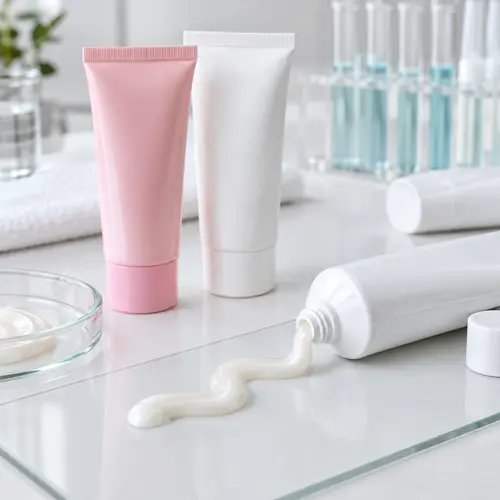
Key Takeaways for Private Label Buyers
- Match the final formula to the actual tube, bottle, pump, seal, cap, decoration, and applicator. Resin names alone do not establish compatibility.
- Request filled samples from the intended component supplier and filling line. Hand-filled mockups may not reproduce production sealing, headspace, or torque.
- Approve texture twice: first for stable manufacturing and dispensing, then for controlled application and clear results on camera.
- Test heat, cold, repeated temperature change, orientation, leakage, and transport conditions before committing to printed packaging.
- Keep packaging specifications, formula version, approved sample, BOM, test records, and artwork revision under one controlled approval set.
- Confirm MOQ, sample scope, component lead time, and replacement terms before scheduling content or accepting retail orders.
Buyer Context
Hair-removal products place different demands on packaging. An alkaline depilatory cream may challenge a tube laminate, cap liner, colorant, printed decoration, or metal-bearing component. Sugar wax can become difficult to dispense after cool storage or leak when heat lowers its viscosity. Roll-on wax cartridges depend on roller fit and controlled flow. Wax strips require stable adhesion and a pouch that limits drying or oil migration. Aftercare products add pumps, sprays, or kit configurations to the same launch calendar.
This matters most when the package is part of the content concept. A creator-led brand may need a clean ribbon of cream, a recognizable custom applicator, and consistent before-and-after views. Those visual requirements must survive filling, warehousing, fulfillment, and consumer use. Buyers can compare format options through [hair removal product solutions](https://wxmo.com/solutions/) and review category-specific choices with a [hair removal cream manufacturer](https://wxmo.com/depilatory-cream-oem-odm/). For wax formats, the [custom wax strips and hot wax](https://wxmo.com/wax-strips-hot-wax-oem/) page provides a useful adjacent reference.
Package approval also affects market access and fulfillment. US artwork should be checked against the [FDA summary of cosmetics labeling requirements](https://www.fda.gov/cosmetics/cosmetics-labeling-regulations/summary-cosmetics-labeling-requirements), while claims should reflect the [FDA explanation of its authority over cosmetics](https://www.fda.gov/cosmetics/cosmetics-laws-regulations/fda-authority-over-cosmetics-how-cosmetics-are-not-fda-approved-are-fda-regulated). Gulf-bound products require destination-specific review against information published by [the Gulf Standardization Organization framework](https://www.gso.org.sa). Brands using fulfillment services should also check shipment preparation against [the Amazon FBA fulfillment program guidelines](https://sell.amazon.com/programs/fba). None of these sources replaces a market-specific label assessment.
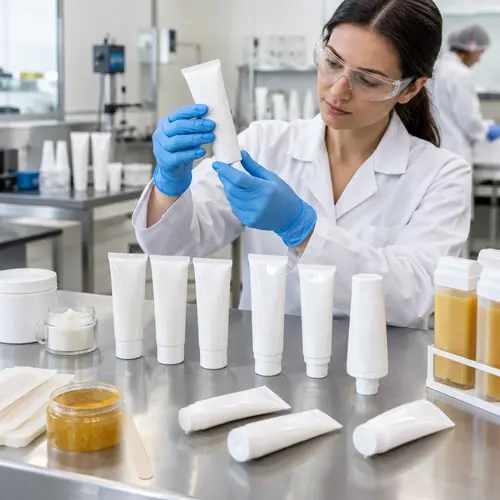
Technical and Packaging Factors
Formula-to-Material Contact
Start with every surface the cream can touch: tube wall, bottle resin, shoulder, neck, liner, seal, gasket, pump path, applicator, and closure. HDPE, PP, and laminate tubes are common candidates, but grade, color masterbatch, barrier construction, recycled content, and supplier processing can change performance. An ODM should therefore screen the exact commercial component, not approve a package from a generic material declaration.
Depilatory creams commonly operate in an alkaline range, and the final release specification should be recorded for the chosen formula. Compatibility review should track pH, appearance, odor, viscosity, net weight, and removal performance over time. Any trend matters, even when the package still looks acceptable. For mild positioning, align packaging work with the irritation-risk review used for [sensitive skin hair removal products](https://wxmo.com/sensitive-skin-hair-removal/).
Texture, Dispensing, and Fill Conditions
Viscosity is both a stability measure and a user-interface decision. A cream must remain stationary enough for controlled application while moving through the selected opening without excessive force. The ODM should state the viscosity test method, temperature, spindle or geometry, speed, and acceptance range. A number without its method cannot be compared reliably.
Review fill temperature, deaeration, headspace, crimp or seal settings, closure torque, and cooling time. These settings can influence trapped air, tube shape, leakage, and first-use dispensing. Ask whether the sample was produced on representative equipment within the documented [cosmetic filling and packaging process](https://wxmo.com/manufacturing-process/). The broader [hair removal OEM ODM services](https://wxmo.com/oem-odm-services/) scope should identify who owns component sourcing, line trials, rejected parts, and corrective samples.
Stability and Distribution Stress
A practical test plan usually combines controlled room storage with elevated heat, cool storage, freeze-thaw cycling where appropriate, light exposure when the pack is translucent, and transport simulation. Example screening points may include 4 C, 25 C, 40 C, and 45 C, with three to five freeze-thaw cycles. These are planning examples, not universal pass criteria. The ODM should set conditions from the formula, package, destination climate, expected shelf life, and shipping route.
Filled units should be stored upright, inverted, and horizontally. Inspect for leakage, cap loosening, seal lifting, stress cracking, tube delamination, bottle paneling, print transfer, label edge lift, corrosion, weight loss, and pump or nozzle blockage. Secondary cartons and shippers also need review because compression and heat can expose failures missed by shelf testing. Aftercare kits should be assessed as assembled sets; references such as [post-depilation care OEM](https://wxmo.com/post-depilation-care-oem/) help define companion formats without mixing incompatible pack assumptions.
Approval Evidence and Launch Control
Before ordering decorated components, request a plain-pack compatibility run using the final formula. Decoration can follow once the component structure passes initial screening. Then repeat relevant checks with printed, coated, foiled, or labeled production-intent packs. This staged approach limits exposure to unusable custom inventory.
The buyer approval file should identify the formula code and version, component drawings, resin or laminate specification, supplier and mold reference, fill weight, batch reference, artwork revision, test conditions, observations, photos, and signatures. Ask for a transparent BOM separating formula, primary pack, decoration, secondary pack, assembly, testing, and freight assumptions. Use a [hair removal product RFQ](https://wxmo.com/contact-get-a-quote/) to request those fields before approving a launch date, and verify the supplier context through the [hair removal OEM manufacturer](https://wxmo.com/) overview.
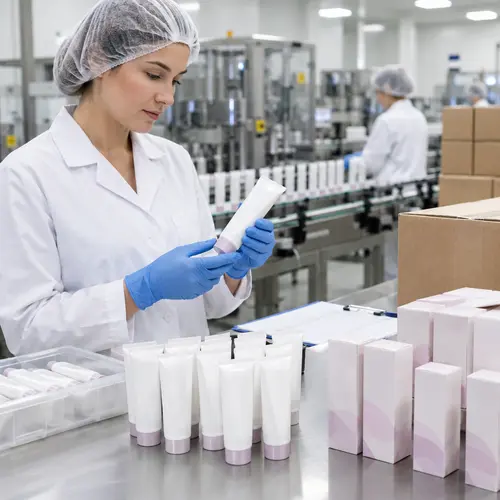
Decision Framework Table
| Factor | What to Check | Why It Matters | ODM Buyer Note |
|---|---|---|---|
| Formula identity | Final version, pH specification, viscosity method, color, odor, and active system | A sample formula cannot qualify a changed commercial formula | Lock the formula code before the main compatibility run |
| Primary pack | Exact resin or laminate, supplier, mold, colorant, liner, seal, and closure | Small component changes can alter contact behavior and sealing | Require written approval for substitutions |
| Dispensing | Opening size, squeeze force, dose control, cutoff, blockage, and first-use behavior | Application quality affects safety, waste, and filmed product views | Evaluate with multiple filled units, not one showcase sample |
| Storage | Heat, cold, cycling, light, orientation, weight loss, and appearance | Warehouse and consumer conditions can reveal delayed failures | Define checkpoints and pass criteria before testing begins |
| Distribution | Closure retention, leakage, carton compression, scuffing, and label adhesion | A stable shelf sample may still fail during shipment | Test the intended retail and shipper configuration |
| Commercial readiness | MOQ, sample timing, component lead time, BOM, artwork, and replacement responsibility | Packaging decisions control both launch speed and financial exposure | Connect technical approval to the purchase contract and content calendar |
ODM Manufacturing Considerations
ODM planning should begin with a written sample brief that defines the intended removal performance, application area, texture, color, fragrance level, use time, rinse behavior, and pack format. Buyers should also explain how the product will appear in photos and short-form video. A cream that looks smooth in person may appear flat under studio lighting, while a highly glossy formula may show unwanted reflections. Sample approval should therefore cover both functional use and content-production views.
Keep an approved reference sample from the final sampling round and record its batch number, appearance, odor, viscosity range, fill weight, packaging components, and application behavior. The supply contract should state whether this reference controls bulk production and how substitutions to ingredients, fragrance, color, tube material, cap, cartridge, pouch, or applicator will be approved. Confidentiality terms should identify who owns the custom brief, formula modifications, artwork, tooling, and test results.
Customization must be evaluated as a complete product rather than as an isolated formula. Changes to fragrance, color, active system, or cream thickness can affect dispensing, residue, irritation risk, and package contact. For wax products, confirm the target softening or melting range and application behavior. For depilatory creams, define an acceptable viscosity range and whether the product must dispense consistently throughout the pack’s intended shelf life.
Ask the manufacturer to review the final commercial package with the final formula and decoration. The review should include storage across justified hot and cold conditions, closure performance, net-content consistency, odor retention, visible separation, paneling or swelling, and dispensing after storage. Agree on review intervals and acceptance criteria before testing begins. A pass should be supported by recorded observations, photographs, and sample identification, not a brief email stating that the pack is compatible.
MOQ discussions should distinguish among formula batch MOQ, printed-component MOQ, assembly MOQ, and finished-goods MOQ. Buyers should request a transparent BOM showing formula, primary packaging, decoration, cartons, testing, freight preparation, and any one-time charges. This makes it easier to compare a stock package with a custom option and to understand whether excess tubes, caps, pouches, or labels will remain after the first manufacturing run.
Before production, confirm the documents needed for the destination market: ingredient declaration, product specifications, batch coding format, safety support, packaging specifications, and label artwork approval. Shipment planning should define case quantity, pallet configuration, storage limits, container conditions, and responsibility for heat-sensitive routes. Brands using fulfillment services should also compare carton and preparation details with the Amazon FBA fulfillment program guidelines.

Common Problems or Failure Cases
Wax brittleness: Hard or strip wax may crack when flexed after cool storage or shipping. This can result from an unsuitable formula target, temperature exposure, or insufficient protection inside the retail and shipping packs. Buyers should assess removal performance after realistic storage and handling, not only with freshly produced samples.
Strip adhesion loss: Pre-coated wax strips can lose grip when wax migrates, backing materials absorb components, or storage heat changes the coating. Verify that paired strips separate cleanly, retain an even wax layer, and remove hair as intended near the end of the proposed shelf-life review.
Cream separation: Depilatory cream may develop liquid pockets, graininess, discoloration, or odor change. Even when the tube remains sealed, these changes can undermine consumer confidence and alter application coverage. Investigation should compare retained bulk, filled samples, and packaging-contact samples to identify whether the issue is formula-related, process-related, or pack-related.
Cartridge leakage: Roll-on wax can escape around the roller, neck, or cap when the wax becomes more fluid in transit. Leakage can also contaminate labels and outer cartons. Check multiple production-representative cartridges, including units from different molding cavities where that information is available.
Fragrance sensitivity: A stronger scent may support social-media positioning but can also increase consumer complaints or interact poorly with the base odor. Evaluate fragrance at the lowest level that meets the brand brief, document any known fragrance allergens required on the destination label, and include a clearly written patch-test and use direction where appropriate.
Packaging deformation: Tubes, caps, pouches, and cartridge bodies may warp, soften, crease, or lose seal integrity during storage and shipment. Cosmetic appearance matters, but function is the primary acceptance point: the package must remain closed, legible, clean, and usable.

Supplier Checklist
- Confirm experience with depilatory cream, wax strips, sugar wax, roll-on cartridges, and aftercare products relevant to the proposed range.
- Request a written sample brief, revision log, sample lead time, sample fees, and the number of revisions included.
- Define measurable targets for texture, viscosity or melting behavior, color, odor, application, removal, rinse-off, and dispensing.
- Ask how ingredient changes, fragrance changes, and packaging substitutions are controlled after sample approval.
- Review irritation-risk screening, consumer use directions, warnings, complaint handling, and batch traceability.
- Require evidence that the commercial formula and commercial pack were assessed together under justified storage and handling conditions.
- Verify closure, seal, leakage, fill-weight, code-legibility, and package-appearance acceptance criteria.
- Separate formula, packaging, printing, assembly, and finished-product MOQs in the quotation.
- Request an itemized BOM, tooling charges, testing charges, estimated freight assumptions, and treatment of unused packaging inventory.
- Confirm label-document responsibilities for each sales market and identify who gives final artwork approval.
- Review normal capacity, surge capacity, material lead times, and production-slot rules before tying inventory to a campaign date.
- Check whether the supplier can discuss visual content goals in practical sample terms, including color rendering, texture movement, spread, and pack presentation.
- Use the supplier’s OEM/ODM service scope and manufacturing process as starting points, then record project-specific commitments in the quotation and contract.
FAQ
How can I reduce the risk that a factory will reuse my idea or formula?
Use a signed confidentiality agreement before sharing detailed briefs. The manufacturing contract should define ownership of custom formula work, artwork, tooling, samples, and test records; restrict disclosure to subcontractors; and require written approval before substitutions. Ask whether the base is stock, semi-custom, or exclusive, because those models provide different ownership rights.
Can quality controls guarantee that no customer will experience irritation?
No supplier can promise zero reactions. Risk can be reduced through ingredient review, controlled manufacturing, suitable packaging, clear directions, warnings, patch-test guidance, traceable batches, and documented complaint escalation. Buyers should reject absolute safety claims and ask what evidence supports the intended application area and contact time.
What should I approve before bulk manufacturing?
Approve the reference sample, formula specification, packaging components, artwork, fill weight, coding position, finished-product criteria, BOM, MOQ, shipment plan, and destination documents. Approval should be version-controlled so an earlier tube, fragrance, or label cannot be used accidentally.
Can a supplier scale quickly if a video creates sudden demand?
Ask for output by product format, available filling lines, critical material lead times, and rules for reserving production. Also request a surge scenario showing what can ship from existing components and what depends on new printed packaging. Capacity claims are more useful when tied to quantities, dates, and confirmed component availability.
How should a buyer compare a seven-day sample offer?
Confirm what the seven days cover. A rapid appearance sample may be useful for content planning, but it is not equivalent to a fully reviewed commercial sample. Ask whether the proposed packaging, fragrance, color, removal performance, documentation, and storage observations are included or will follow later.
Which label checks matter for a depilatory cream?
Confirm product identity, net contents, ingredient declaration, responsible-party details, directions, warnings, batch code, and any market-specific language. For the United States, review the FDA summary of cosmetics labeling requirements. Destination requirements should be checked before artwork is printed.