Direct Answer
To build a credible range of private label hair removal products, start with the skin area and use occasion, then match each product to a formula, package, test plan, and channel promise. A face wax strip should not share the same adhesion profile or claim language as a leg depilatory cream; a salon roll-on wax needs different heat and leakage controls from a travel-ready sugar wax kit. The practical sequence is to define the target area, set the removal experience, select a validated baseline formula, test its primary package under heat and cold stress, and confirm the label file before sampling. For DTC brands, this approach protects launch speed without turning a small pilot into a quality gamble. An experienced ODM partner should provide traceable raw-material information, irritation-risk review, stability evidence, packaging compatibility results, and a clear path from sample to repeatable production.
For a broader category map, review the private label hair removal products range before narrowing the first launch to one or two high-confidence use cases.
Key Takeaways for Private Label Buyers
- Source by skin area and channel: facial, body, bikini, salon, travel, and subscription formats have different performance and packaging requirements.
- Ask for formula evidence, not only a sample. Review texture, odor, removal time, residue, irritation risk, and the defined viscosity or melting behavior relevant to the product.
- Treat packaging as part of the formula. Check seal integrity, dispensing control, adhesive aging, cartridge compatibility, and leakage after heat and cold exposure.
- Keep claims proportional to evidence. Clean, vegan, cruelty-free, soothing, or slow-regrowth positioning needs ingredient records and substantiation that match the finished SKU.
- Use sampling to test the actual launch system: filled package, artwork, label copy, shipping configuration, and storage instructions, rather than an unfilled laboratory beaker.
- Plan the pilot around channel economics. A 1,000-unit test, a salon refill format, and a subscription-size kit should not be evaluated by the same cost or replenishment logic.
These decisions can be structured through hair removal OEM ODM services, where formulation, packaging, documentation, and sampling are reviewed as one development brief.
Buyer Context
Hair removal is a deceptively sensitive category. The user notices the result immediately, but also notices drag, sting, residue, scent, mess, and whether the package feels controlled. That makes the product experience unusually visible in reviews and short-form video. A DTC brand may acquire attention with a clean visual identity, yet repeat purchase depends on whether a wax strip removes hair evenly, whether a cream spreads without running, or whether an aftercare gel calms the expected post-removal feel without making unsupported medical claims.
Channel changes the brief. A facial strip sold through a Shopify store may need compact dimensions, clear patch testing language, and premium unboxing. A body cream sold through Amazon needs robust secondary containment and a label that remains legible through fulfillment handling. A salon may prefer a roll-on wax cartridge or sugar wax format that supports predictable operator workflow. A subscription box may prioritize a small aftercare lotion or a complete trial kit with enough perceived value to survive parcel shipping. The hair removal product solutions framework is useful at this stage because it forces the buyer to define application, audience, and operating conditions before choosing a formula.
Compliance is also part of commercial planning. In the United States, the intended use and claims determine whether a product is treated as a cosmetic or falls into a different regulatory pathway. In Europe, the finished product needs the appropriate responsible-person, safety, product-information, and notification workflow. The label, ingredient list, batch coding, warnings, and substantiation file should be reviewed before artwork is locked. The FTC’s advertising substantiation guidelines are a useful reference for claim discipline, while the EU Cosmetics Regulation framework provides the wider European context. Compliance support is most valuable when it runs alongside formulation and packaging review, not after the sample has already been approved.
For teams building a focused launch, a cream-led body range can be compared with a wax-led facial or salon range through depilatory cream OEM and the related technical brief. The objective is not to add every format at once. It is to select a small architecture that can be explained clearly, tested honestly, and replenished without changing the user experience.

Technical or Packaging Factors
Formula behavior. Depilatory cream requires controlled spread, consistent active distribution, acceptable odor, and a removal window that is clear on the label. The buyer should request the target viscosity range, pH specification, preservative approach, raw-material traceability, and a defined maximum application time supported by testing. A face or sensitive-area formula needs a separate irritation-risk review; a body formula should not be assumed suitable for every area. For wax and sugar wax, evaluate melting or softening behavior, pull strength, stringiness, residue, and performance across realistic room temperatures. For roll-on formats, confirm that the wax wets the roller evenly and does not clog, separate, or become difficult to dispense after storage.
Package compatibility. Packaging must be tested with the actual formula, fill level, closure, and decoration. Creams can stress seals or interact with liners; oils and fragrance components can affect plastics, labels, and adhesive systems. Wax cartridges need a leakage review after heat exposure, inversion, vibration, and cooling. Wax strips need adhesion aging and release-liner checks so the strip remains usable after transit. Aftercare gels and lotions should be evaluated for pump priming, cap cleanliness, and leakage in a parcel environment. The hair removal manufacturing process should show where these checks occur, who records them, and how an approved sample is matched during filling and packing.
Storage and shipment. Request a stability matrix that reflects the intended market and route. Heat can soften wax, increase cream separation risk, deform closures, or change label adhesion; cold can make a formula too viscous to dispense. Review appearance, odor, pH where applicable, viscosity, net contents, seal integrity, microbial results, and package function at each planned checkpoint. Shipment trials should include the chosen carton, inserts, tamper evidence, and the highest likely transit temperature. These controls are especially important when a launch is built around a short social trend and the first replenishment must match the pilot.
Aftercare and claims. A post-removal product can raise average order value and make the routine feel complete, but it should be positioned around cosmetic comfort and barrier-support language that the evidence can support. A post-depilation care OEM brief should identify whether the product is a soothing gel, calming lotion, or compact kit, then define texture, absorbency, fragrance level, and package hygiene. If slow-regrowth positioning is considered, separate the claim review from the formula concept and assess whether the evidence supports the intended wording. A hair inhibitor serum OEM brief can help distinguish a cosmetic aftercare proposition from an overextended performance claim.
For the wax route, compare wax strips OEM options with hot wax, sugar wax, and roll-on cartridges using the same scorecard. For sensitive positioning, review sensitive skin hair removal products separately, including fragrance, colorants, patch-test instructions, and the evidence behind every low-irritation statement.

Decision Framework Table
| Factor | What to Check | Why It Matters | ODM Buyer Note |
|---|---|---|---|
| Skin area and use | Face, body, bikini, salon, travel, or subscription use; intended frequency and user skill | Determines removal strength, comfort expectations, size, and warnings | Write one primary use case into the sample brief before adding extensions |
| Formula performance | Viscosity, spread, odor, residue, melting or softening behavior, and removal consistency | Controls user experience and repeat-purchase risk | Request a retained sample and measurable release specifications |
| Package compatibility | Seal, liner, roller, pump, adhesive, closure, and decoration after heat, cold, inversion, and vibration | Prevents leakage, clogging, separation, and damaged presentation | Test the filled commercial pack, not only an empty component |
| Safety and claims | Ingredient records, patch-test language, warnings, irritation review, and claim substantiation | Reduces regulatory and reputational exposure | Lock claims only after the formula and evidence file are aligned |
| Launch readiness | Sample scope, pilot quantity, lead time, label files, batch coding, carton, and shipment conditions | Connects a successful sample to a repeatable first launch | Ask how the approved sample is controlled through filling and packing |
A practical next step is to put the chosen format, skin area, channel, formula target, package, evidence request, and pilot assumptions into one brief. The request a hair removal product quote page can be used for that project discussion, while the hair removal product guides provide supporting buyer education as the range develops.
ODM Manufacturing Considerations
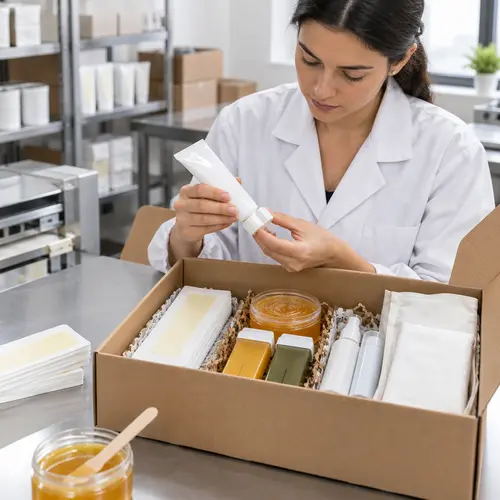
For private label hair removal products, the safest ODM process starts with a written product brief rather than a logo or packaging concept alone. Define the target skin area, hair type, usage method, channel, pack size, scent profile, claims, and acceptable cost range before sampling. A face wax strip, body depilatory cream, sugar wax jar, roll-on wax cartridge, and aftercare gel each require different confirmation points.
Sample confirmation. Approve one signed master sample for formula, color, fragrance, texture, fill weight, label position, and instructions. For wax, record spreadability, tack, pull behavior, softening temperature, and performance after storage. For cream, confirm viscosity, pH, contact-time instructions, rinse-off behavior, and skin-feel. For sugar wax, check firmness, workability, and whether the product becomes overly brittle or runny under normal handling. The approved sample should remain the reference for future batches.
Formula customization. A standard formula can be a starting point, but the brief should identify the variables that make the product meaningfully different. These may include fragrance-free positioning, a lower-scent profile, a softer wax texture for facial use, a firmer body wax, a more controlled cream viscosity, or an aftercare formula designed for quick absorption without a heavy residue. Ask the supplier to document which changes are formula-level changes and which are only packaging or fragrance changes.
Packaging compatibility. Test the finished formula in the exact primary package, not only in a laboratory beaker. Check jar liners, tube seals, pump priming, cartridge valves, roll-on balls, release liners, and closure fit. A wax can migrate into a liner, a cream can weaken a tube seal, and an aftercare gel can cause pump hesitation if the viscosity and dip-tube design do not match. The hair-removal product categories should be evaluated by formula and package together.
Stability review. Request a documented review covering ambient storage, elevated heat, cold exposure, and repeated temperature changes relevant to the intended sales region. Look for separation, color drift, fragrance change, viscosity movement, wax cracking, label lifting, and package deformation. The review should state the sample code, storage conditions, observation dates, and acceptance criteria. Do not rely on a general statement that the product is stable.
MOQ and cost control. Confirm whether the minimum applies per formula, fragrance, color, size, or finished artwork. Low-volume launches can become expensive when every variant requires separate components, plates, cartons, or printed labels. A practical approach is to reduce early complexity: use one core formula, one or two sizes, and a small number of scent options, then add variants after sales data supports them. Ask for a cost ladder showing how changes in fill size, material, decoration, and shipment method affect unit economics and CAC coverage.
Labeling documents and shipment conditions. Before approval, request the INCI list, ingredient specifications, batch or lot coding method, directions, warnings, net-content data, claim support, and any applicable safety or transport documents. For EU sales, cosmetic products require a safety assessment and CPNP notification before market placement. ([single-market-economy.ec.europa.eu](https://single-market-economy.ec.europa.eu/sectors/cosmetics_en)) For the United States, cosmetics are not generally preapproved by FDA, so the responsible business must still ensure that the product and labeling comply with applicable requirements. ([fda.gov](https://www.fda.gov/cosmetics/cosmetics-laws-regulations/fda-authority-over-cosmetics-how-cosmetics-are-not-fda-approved-are-fda-regulated)) Shipment instructions should define temperature limits, carton orientation, seal protection, palletization, and whether air or ocean transit creates a meaningful risk of leakage or deformation.
A responsive supplier may promise a 24-hour plan or a 3-5-day sample, but ask what that timing includes: formula selection, artwork review, lab preparation, filling, dispatch, and tracking. Speed is useful only when the sample is traceable and the approval record is complete. Review the packaging and manufacturing process before approving the final specification.

Common Problems or Failure Cases
Wax brittleness. A wax that looks acceptable in the jar may crack, snap, or drag during use after exposure to cold storage. Check the texture at the expected application temperature and after a cold-to-ambient transition. Record whether the wax spreads evenly and lifts hair without excessive breakage.
Strip adhesion loss. Wax strips can lose performance when the substrate, adhesive layer, or release liner is mismatched. Review adhesion after aging and after exposure to heat. Confirm that the strip still separates cleanly, carries a consistent wax layer, and does not leave excessive residue on the skin.
Cream separation. Depilatory cream may separate, thin out, or develop an uneven appearance when the emulsion system is not compatible with the formula or package. Inspect samples after heat and cold storage, then compare viscosity, odor, color, and spreadability with the approved master sample.
Cartridge leakage. Roll-on wax cartridges often fail at the neck, valve, cap, or seam rather than in the main body. Test upright, inverted, and side storage, then add vibration or parcel-handling simulation. Check both the cartridge and the secondary carton for residue.
Fragrance sensitivity. A strong fragrance can narrow the addressable market and create avoidable complaints. Ask for fragrance documentation, allergen information where applicable, and a fragrance-free or low-fragrance comparison sample. Claims such as gentle, sensitive, or clean should be reviewed against the actual formula and evidence. The custom formulation process should record every approved fragrance decision.
Packaging deformation. Thin jars, tubes, caps, and cartons can warp during hot transit or lose their fit after repeated temperature changes. Check headspace, closure torque, label adhesion, and stacking performance before finalizing the pack.
Supplier Checklist
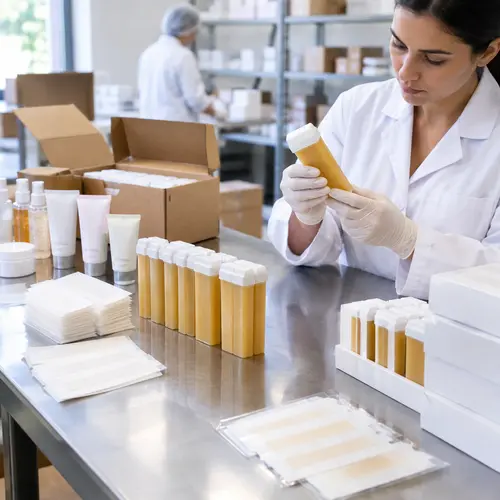
- Can the supplier provide a signed master sample and a clear change-control process?
- Are formula targets documented for texture, viscosity, pH, melting or softening behavior, fragrance, and skin-area use?
- Has the finished formula been tested in the exact jar, tube, cartridge, pump, liner, or strip construction?
- Does the stability review cover heat, cold, ambient storage, leakage, separation, deformation, and label performance?
- Is MOQ defined by formula, scent, size, artwork, and packaging component rather than only by finished units?
- Are INCI, warnings, directions, batch coding, claims support, safety documents, and market-specific label files available?
- Can the supplier explain its MoCRA and CPNP support workflow without presenting compliance as automatic?
- Are ISO 22716, GMPC, BSCI, cruelty-free, or clean-ingredient claims supported by current documents and a verifiable scope?
- For sustainability claims, can the supplier trace the material source and provide certification or chain-of-custody evidence?
- Does the shipment plan specify temperature control, orientation, carton protection, and responsibility for transit damage?
FAQ
Can an Asian supplier meet strict Clean Beauty and cruelty-free requirements?
Yes, but location alone does not prove compliance. Require an ingredient restriction list, supplier declarations, fragrance documentation, animal-testing policy, batch traceability, and a written claims review. Treat Clean Beauty as a defined brand standard with evidence, not as a vague label.
Will a low MOQ make the unit cost too high to cover CAC?
It can if the launch uses too many formulas, scents, sizes, or custom printed components. Ask for a cost model that separates setup costs, formula costs, packaging costs, testing, and freight. A focused launch with fewer variants usually gives a clearer path to repeat orders and healthier CAC payback.
Will a turnkey or existing formula make my range look generic?
Not necessarily. Differentiation can come from texture targets, fragrance strategy, skin-area positioning, pack format, aftercare pairing, usage instructions, and documented performance criteria. Require written confirmation of which formula elements are customizable and whether any exclusivity or non-use terms apply.
Can we sign a strict NDA before sharing the product brief?
Yes. The NDA should cover formulas, ingredient lists, artwork, target pricing, launch timing, customer data, samples, and derivative concepts. It should also define permitted access, return or destruction of materials, breach remedies, and ownership of any custom formulation work.
How can we verify that eco packaging claims are not greenwashing?
Ask for the exact material specification, recycled or bio-based content percentage, supplier identity, certification scope, and any chain-of-custody or test documentation. Confirm that the claim applies to the whole pack or only one component, and make sure the wording matches the evidence. The RFQ preparation page should list these documents as required inputs.
What should be approved before the first commercial shipment?
Approve the formula master sample, packaging compatibility result, stability summary, label artwork, INCI and warning text, batch coding, carton configuration, shipment conditions, and an agreed inspection standard. Keep one retained sample from the approved batch for future comparisons.
References
- The FTC’s advertising substantiation guidelines for performance, environmental, and other consumer-facing claims. ([ftc.gov](https://www.ftc.gov/business-guidance/advertising-faqs-guide))
- The EU Cosmetics Regulation framework for product safety, scientific assessment, CPNP notification, and market surveillance. ([single-market-economy.ec.europa.eu](https://single-market-economy.ec.europa.eu/sectors/cosmetics_en))
- FDA guidance on how cosmetics are regulated in the United States. ([fda.gov](https://www.fda.gov/cosmetics/cosmetics-laws-regulations/fda-authority-over-cosmetics-how-cosmetics-are-not-fda-approved-are-fda-regulated))