Direct Answer
For hair removal products US EU compliance should be discussed as a controlled document system, not as a single certificate. A qualified OEM should provide evidence covering the formula, manufacturing site, packaging, testing, labeling, shipment conditions, and post-market accountability. For depilatory cream, wax strips, sugar wax, roll-on wax, and aftercare, buyers should request the current ingredient list, specifications, Certificate of Analysis, stability and compatibility results, irritation-risk review, batch records, ISO 22716 evidence, and shipment controls. US-bound products should also be reviewed against MoCRA obligations and applicable FDA cosmetic requirements; EU-bound products generally require a Product Information File, Cosmetic Product Safety Report, responsible person, compliant labeling, and CPNP notification. The buyer should define which party owns each filing, who controls formula changes, and what happens after a complaint or recall. A document is decision-useful only when it is traceable to the approved formula, production batch, packaging configuration, and intended market.
Key Takeaways for Private Label Buyers
- Source documentation: Verify the manufacturing site, ISO 22716 scope, batch traceability, subcontractor controls, and current business-continuity arrangements before approving an OEM.
- Review the formulation: Match the INCI list, raw-material specifications, allergen or sensitizer review, pH or viscosity targets where relevant, and product claims to the intended market.
- Qualify packaging: Require compatibility, leakage, seal-integrity, heat, cold, and transport testing for jars, tubes, sachets, wax cartridges, and strip packs.
- Separate testing from marketing: Stability, microbial or preservative testing where applicable, irritation assessment, and performance evidence should be linked to the production formula rather than a laboratory sample.
- Control launch risk: Agree on sample scope, pilot-batch acceptance criteria, change notification, artwork approval, shipment conditions, and release documentation before issuing a purchase order.
Buyer Context
Hair-removal products expose buyers to several connected compliance risks because the customer applies the product directly to skin, often over a relatively large area and for a defined contact time. A depilatory cream must perform consistently while avoiding unacceptable irritation under its labeled use conditions. Wax and sugar wax must maintain workable texture, adhesion, and removal performance across storage and transport conditions. Wax strips require stable substrate, coating weight, fold, and adhesion. Roll-on wax cartridges add a mechanical dispensing and leakage risk. Aftercare products must remain compatible with the post-depilation use case and must not create claims that move the product into a regulated medical category.
This matters most when a mature brand is qualifying replacement capacity after a quality event, an unexpected plant interruption, or a new category launch. The supplier may present a polished sample while the supporting record remains incomplete. That gap becomes material when the same product is manufactured at scale, packed in a different component, shipped through warmer routes, or sold under different regional labeling rules. Procurement, R&D, QA, regulatory, legal, and ESG teams should therefore review one evidence package rather than separate assurances from sales and technical contacts.
For US and EU distribution, the buyer should confirm market ownership early. In the US, determine who is responsible for MoCRA facility registration, product listing where applicable, serious adverse event reporting, and access to safety and manufacturing records. In the EU, establish the responsible person and confirm that the Product Information File, Cosmetic Product Safety Report, notification, claims support, and label review are complete before placing the product on the market. The FDA MoCRA requirements and the FDA cosmetics framework should be treated as operating requirements, not approval badges. EU ingredient and naming checks can be cross-referenced against the European Commission CosIng database.
A structured hair removal OEM ODM services review should be supported by the supplier’s site records, not substituted by a general product brochure. Buyers can also compare the supplier’s stated hair removal manufacturing process with the actual sampling, filling, inspection, release, and shipment controls.

Technical or Packaging Factors
Formula and performance evidence
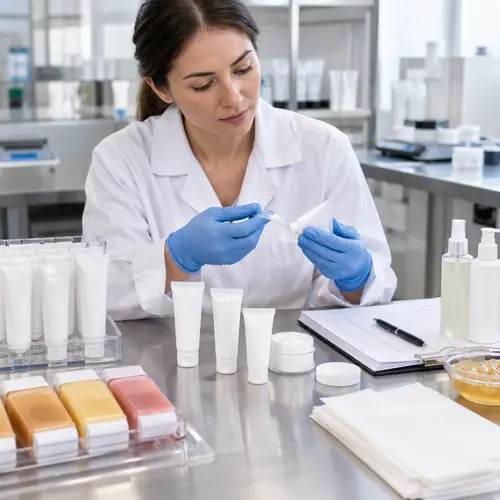
For depilatory cream, request the approved formula version, raw-material specifications, target pH, viscosity range, appearance, odor profile, fill weight, and use-time instructions. The exact parameters depend on the formulation, so the OEM should provide product-specific acceptance limits rather than generic claims. Ask whether the formula has been reviewed for irritation risk under the proposed exposure conditions and whether the review covers intended body areas. A depilatory cream OEM should also explain how the pilot sample is bridged to the commercial batch without unapproved reformulation.
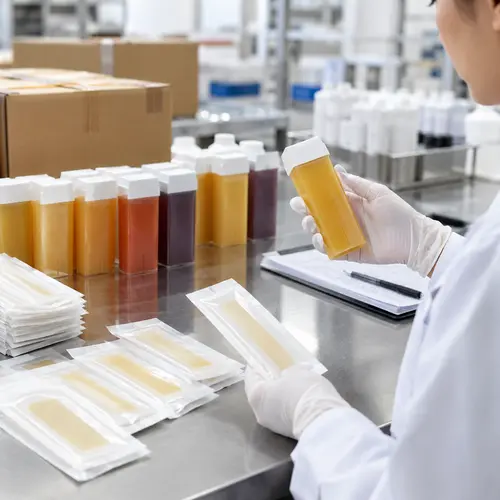
For wax and sugar wax, confirm melting or softening behavior, application temperature guidance, viscosity or flow behavior, adhesion, pull strength, and residue profile. Hot wax, roll-on wax, and strip systems should be assessed at realistic storage and application temperatures. If the product is sold as a kit, all components should be approved as one configuration. A wax strips OEM review should cover strip substrate, wax coating, release liner, seal, and aging performance.
Packaging, storage, and shipment
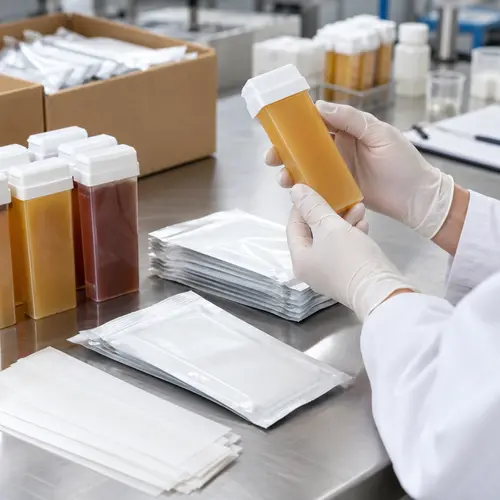
Packaging compatibility is a core compliance document topic. Request evidence that the formula does not swell, crack, soften, discolor, or extract material from the container or closure. For creams, review tube or jar compatibility, closure torque, seal integrity, and leakage after filling. For roll-on wax cartridges, inspect ball fit, valve or applicator performance, orientation testing, and leakage after thermal cycling. For strips, verify pouch seal strength, adhesive migration, and protection from humidity. Record the approved packaging code so a component substitution cannot occur without written change control.
Stability protocols should reflect the intended market and distribution route. Ask for heat and cold exposure, freeze-thaw where relevant, accelerated stability, real-time stability status, microbial results where applicable, and packaging observations. The release package should define storage conditions, pallet or carton protection, maximum transport exposure, and temperature-sensitive shipment limits. A supplier’s sensitive skin hair removal products program should include a clear irritation-risk review rather than rely solely on positioning language.
For post-depilation assortments, confirm that the aftercare formula, dispenser, label claims, and use instructions remain within the agreed cosmetic scope. A post-depilation care OEM file should identify the formula version and packaging combination used in testing. Buyers evaluating a broader system can compare documentation for hair inhibitor serum OEM products separately because their claims and evidence requirements may differ.
Decision Framework Table
| Factor | What to Check | Why It Matters | ODM Buyer Note |
|---|---|---|---|
| Regulatory file | INCI list, market label review, MoCRA responsibilities, EU safety file and notification ownership | Prevents unclear accountability and launch delays | Assign the responsible party in the quality agreement |
| Formula control | Approved formula code, specifications, target viscosity or melting behavior, irritation-risk review | Ensures the commercial batch matches the qualified sample | Require written approval for active, fragrance, wax, or preservative changes |
| Packaging compatibility | Leakage, seal, closure, thermal, aging, and component-substitution records | Reduces returns, contamination risk, and transport failures | Test the final formula and final pack together |
| Stability and shipment | Heat, cold, real-time status, storage limits, carton protection, shipment conditions | Connects laboratory evidence with actual distribution exposure | Define release criteria for each destination market |
| Quality release | Batch record, COA, retained sample, deviation log, complaint and recall process | Supports traceability and controlled response to a quality event | Set document delivery timing before shipment |
| Pilot and scale-up | Sample quantity, pilot scope, MOQ, line qualification, filling and packing acceptance criteria | Shows whether sampling evidence can support production decisions | Use the same formula and packaging specification for pilot approval |
Before commercial approval, buyers should request a consolidated data room containing certificates, test reports, specifications, artwork approvals, and change-control records. The supplier’s hair removal OEM manufacturer profile should be tested against production evidence, while hair removal product solutions can help structure category-specific requirements. For the next sampling step, define the product, market, packaging, test scope, and shipment conditions in the RFQ rather than leaving them to informal correspondence.

ODM Manufacturing Considerations
ODM discussions should begin with a controlled sample-confirmation process. A buyer should define the target hair-removal experience before requesting a production quotation: application thickness, working time, removal feel, residue level, fragrance profile, skin-contact instructions, and intended market. For depilatory wax or sugar wax, review the texture at room temperature and after warming. For depilatory cream, inspect spreadability, rinse-off behavior, and the consistency of each sample. For wax strips, confirm that the strip removes the selected wax cleanly without excessive tearing or adhesive transfer.
Every approved sample should receive an identifiable revision code. The commercial quotation, formula brief, artwork, and test records should refer to that same revision. Buyers should also ask which changes require written approval. A fragrance substitution, wax-resin adjustment, preservative change, or modification to the container can affect user experience and compliance review. A supplier that cannot explain its change-control process creates uncertainty between sampling and commercial manufacturing.
Formula customization should be discussed with evidence rather than broad claims. Ask the OEM to explain the function of material groups, known sensitivity concerns, and the limits of customization. The buyer should receive a clear ingredient declaration for label review and a statement identifying fragrance components or other substances that may require market-specific disclosure. The European Commission’s CosIng ingredient database can support an initial ingredient-name check, but it does not replace a complete regulatory assessment for the finished product.
Packaging compatibility requires product-specific sampling. A depilatory cream tube should be stored in the proposed carton and tested for odor transfer, swelling, cracking, cap fit, and dispensing consistency. A roll-on wax cartridge should be checked after standing, inversion, repeated rolling, and shipment simulation. Wax strips require review of pouch sealing, strip alignment, coating uniformity, and resistance to heat exposure during transport. Aftercare products should be checked for dispenser function and interaction with the selected bottle or tube. These checks should use production-intent components whenever possible, because laboratory containers may conceal problems that appear with the final package.
The stability review should cover the conditions expected in the sales region and distribution route. Ask for observations at defined intervals, including changes in appearance, odor, texture, dispensing, adhesion, or separation. Shipment conditions should be written into the purchase specification: temperature limits, pallet configuration, orientation requirements, protection from crushing, and whether the product can remain in a non-climate-controlled container. A buyer replacing an incumbent supplier after a serious quality incident should require a documented transition sample and an agreed release process before the first full shipment.
MOQ should be evaluated together with sampling scope, component minimums, and forecast flexibility. The finished-product quantity may be acceptable while printed pouches, cartons, or custom cartridges require a separate minimum. Ask whether unused components can be held for a later order, how artwork changes affect them, and what happens when a product is discontinued. For a brand expanding from cream into spray-format removal products or another new line, confirm that the facility has the appropriate filling, ventilation, and quality controls rather than assuming an existing wax line can support the project.
Labeling documents should be provided before artwork approval. Request the ingredient list, directions, warnings, net contents, batch identification method, responsible-party information where required, country-of-origin details, and any supporting statements used on the pack. For organic or natural positioning, the COSMOS organic and natural cosmetics standard may be relevant, but certification claims must be supported by the applicable certification route and finished-product evidence.
Common Problems or Failure Cases
Wax brittleness is often discovered when a formula performs acceptably in a warm factory but cracks during cooler storage. The buyer should compare samples at the expected application temperature and record whether the wax spreads, flexes, and removes in a continuous layer. A brittle product can create uneven removal and excessive reapplication.
Strip adhesion loss may result from coating variation, pouch moisture exposure, unsuitable backing material, or prolonged heat. Review the coating pattern across multiple strips, then inspect samples from different positions in the production run. A strip that leaves substantial wax behind or loses grip before removal is a product and packaging problem, not simply a user-training issue.
Depilatory cream separation can appear as liquid release, graininess, color change, or a different spreading pattern after storage. The buyer should compare retained samples with the approved reference and check whether separation occurs only after transport exposure or also under ordinary warehouse conditions. Any reformulation should restart the relevant review instead of relying on the earlier sample history.
Roll-on cartridge leakage commonly occurs around the roller assembly, cap, shoulder, or seal. Test cartridges after storage on their side, upside down, and under shipment vibration. Inspect both visible leakage and gradual loss of product that changes the application rate. Packaging deformation can also prevent a cap from closing correctly or make a pouch difficult to open without contaminating the strip.
Fragrance sensitivity is another frequent source of complaints. A scent that seems mild during approval may become stronger after heat exposure or may be unacceptable in a close-contact product. Buyers should request the fragrance specification and review market labeling obligations before approving promotional language. Complaint handling should identify the batch, product revision, fragrance version, and storage history.
Supplier Checklist
- Confirm that the supplier can provide traceable sample revisions and written approval records.
- Review the formula brief, ingredient declaration, directions, warnings, and market-specific labeling documents.
- Compare cream texture, wax application, strip adhesion, or cartridge rolling performance against agreed acceptance criteria.
- Inspect proposed containers, closures, pouches, cartons, and dispensing parts with production-intent samples.
- Request evidence of storage review under the temperatures and shipment conditions relevant to the destination market.
- Define checks for leakage, deformation, separation, odor change, coating variation, and dispensing failure.
- Confirm the finished-product MOQ, component minimums, sample quantity, artwork limits, and forecast flexibility.
- Document shipment orientation, pallet protection, temperature exposure limits, and receiving inspection requirements.
- Check whether the supplier can support a second source or priority allocation if a major plant disruption occurs.
- Verify worker-welfare policies, age verification, wage records, working-hour controls, and independent audit access.
- Ask how formula files, artwork, test reports, and customer data are isolated from other customers.
- For environmental commitments, request discharge records, waste-handling evidence, emissions data, and an audit protocol that permits independent verification.
FAQ
How can a buyer protect a proprietary depilatory formula?
Use a written confidentiality and ownership agreement before sending the full formula brief. Ask how electronic files are access-controlled, how production records are physically separated, and who can approve formula changes. The agreement should address employee access, subcontracting, samples, retained materials, and document destruction. No system can promise absolute secrecy, so the buyer should combine contractual protection with limited disclosure and audit rights.
Can a private-label buyer obtain priority supply during a raw-material shortage?
Priority should be discussed as a documented allocation arrangement, not an informal promise. Define forecast commitments, reserved production capacity, approved substitute rules, notification timing, and escalation contacts. Ask whether the supplier maintains qualified alternatives for critical wax, strip, cream, or cartridge components. The commercial agreement should explain how strategic customers are prioritized during shortages and what evidence supports that allocation.
What should buyers request after a major quality complaint?
Request the affected batch history, retained sample comparison, complaint investigation, distribution review, corrective action, and a decision on shipment hold or recall. The supplier should identify whether the cause relates to formula revision, packaging, filling, storage, or transport. Agree on response timing and cost responsibility before the first order, including access to relevant insurance information.
How can a buyer evaluate labor and environmental compliance?
Request recent audit reports, worker age-verification procedures, wage and hour records, grievance channels, and policies covering recruitment and overtime. For environmental review, ask for wastewater or discharge records, waste-transfer documentation, energy and emissions data, and permission for independent verification. A supplier should be able to explain data ownership, reporting frequency, and corrective-action deadlines rather than provide only a general policy statement.
Are supplier certificates enough to approve a hair-removal product?
No. Certificates can support qualification, but they do not confirm that the approved depilatory cream, wax strip, sugar wax, cartridge, or aftercare package will perform as intended. Buyers still need product-specific samples, label documents, packaging checks, shipment review, and defined release criteria. Evidence should relate to the actual formula and components planned for commercial supply.
How should shipment conditions appear in the purchase documents?
Specify temperature limits, loading orientation, pallet protection, maximum transit exposure, handling restrictions, and receiving checks. Include the required condition of cartons, pouches, tubes, and cartridges on arrival. For wax and cream products, define what changes require quarantine and investigation, such as leakage, separation, odor change, or altered application behavior.
References
European Commission CosIng ingredient database, used as an ingredient-name reference for European market review.
COSMOS organic and natural cosmetics standard, relevant when a buyer evaluates organic or natural positioning and certification requirements.
Gulf Standardization Organization framework, relevant for buyers reviewing Gulf-market conformity requirements.
FDA Authority Over Cosmetics, supporting the distinction between cosmetic regulation and premarket approval in the United States.