Direct Answer
Cosmetic packaging compatibility testing should begin before artwork approval and use the final formula, production-intent packaging, and expected shipment conditions. For hair removal creams, the review must confirm that the formula does not weaken seals, discolor components, distort the pack, lose viscosity, or react with internal coatings. For hair inhibitor serums and aftercare products, it should also verify pump output, tube recovery, evaporation, and ingredient absorption into gaskets or dip tubes.
A practical plan combines accelerated storage, cold storage, room-temperature controls, orientation testing, dispensing checks, and transport simulation. Set pass or fail criteria before testing starts. Then document observations at scheduled checkpoints using retained controls from the same batch. Packaging should not be released because it looks acceptable after a few days. It should be released when the filled pack continues to protect, dispense, and present the product as intended through production, shipment, consumer use, and the declared shelf-life.

Key Takeaways for Private Label Buyers
- Test the final formula in the exact bottle, tube, pump, cap, liner, label, and decoration intended for launch.
- Approve packaging by SKU. A pack that works for an after hair removal serum may fail with an alkaline depilatory cream.
- Include upright, inverted, and side storage to expose seal, cap, and pump weaknesses.
- Define measurable acceptance limits for leakage, weight loss, dispensing, appearance, odor, viscosity, and pH where relevant.
- Run compatibility work beside formula stability and artwork review so packaging decisions do not add unnecessary weeks.
- Keep an approved control sample and signed specification for the pilot batch and later production.
Buyer Context
Hair-removal products create packaging risks that are easy to miss during a visual sample review. Depilatory creams may contain alkaline systems and reducing agents that can challenge metal springs, foil seals, printed surfaces, or unsuitable internal coatings. The formula may appear stable in a laboratory jar while changing color, odor, or texture inside the selected retail tube. Buyers evaluating a custom depilatory cream formulation therefore need filled-pack evidence, not an empty packaging sample and a separate bulk sample.
Serums and aftercare products introduce different failure modes. Low-viscosity liquids can leak through closures that hold thicker creams. Oils, fragrances, or solvents may soften elastomer parts, affect adhesive labels, or cause pump inconsistency. A soothing gel after hair removal may trap air in a pump, while a light serum may drip after dispensing. Each formula-pack pairing is its own test unit.
Wax formats widen the review further. Heated wax can deform jars or affect closure torque. Roll-on wax cartridges require leakage checks at storage and use temperatures. Sugar wax can lose water, crystallize, or become difficult to dispense if the closure barrier is inadequate. Pre-coated strips need aging review for adhesive migration, backing separation, and pouch seal integrity. These formats can be scoped through a supplier experienced with private label waxing products.
For creator-led brands, compatibility also protects the launch asset itself. A high-contrast cream, glossy serum, or clean pump shot must look consistent across samples and production. Seven-day samples can support early content evaluation, but they are not a substitute for the longer compatibility decision. The buyer brief should separate camera-facing texture approval from safety, stability, and package-function approval.
Technical and Packaging Factors
Start With a Controlled Test Matrix
Use a production-intent formula batch and packaging sourced from the nominated vendor. Include every product-contact component: container wall, shoulder, cap liner, pump spring, gasket, dip tube, wiper, foil seal, and internal coating. Decoration matters too. Screen printing, metallic finishes, soft-touch coatings, and pressure-sensitive labels can react differently to formula residue, heat, or condensation.
Store filled units upright, inverted, and on their side. A useful initial matrix includes room-temperature controls, cold storage near 4 C, and accelerated warm storage near 40 C. Add freeze-thaw exposure only when the formula and shipment route make it relevant. Inspect samples after filling, after 24 to 48 hours, and at agreed checkpoints during the stability program. The exact duration should reflect shelf-life targets, material risk, and launch timing rather than a generic one-size schedule.
The cosmetic filling and packaging process should identify who fills samples, records net weight, applies torque, photographs units, and signs each checkpoint. This prevents a packaging vendor, formula team, and buyer from using different definitions of acceptable performance.
Measure Function, Not Just Appearance
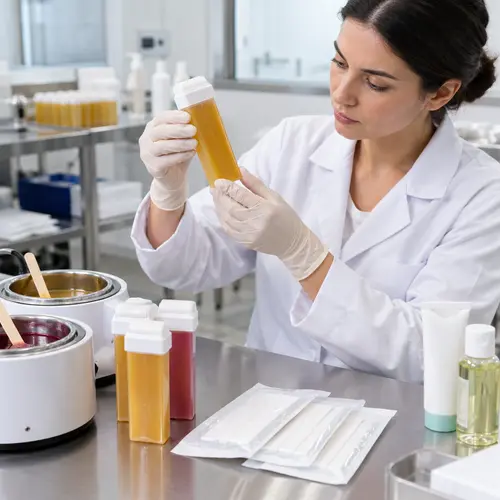
Visual inspection should cover swelling, paneling, cracking, stress whitening, corrosion, staining, print transfer, label lift, and formula discoloration. Functional checks should record leakage, closure torque, pump priming, dose consistency, tube recovery, cap contamination, and product evacuation. Weighing filled packs over time can reveal moisture or volatile loss before the change is obvious to the eye.
Formula measurements depend on format. For creams and gels, compare viscosity, pH, odor, color, and application spread against a retained control. For serums, review clarity, separation, pump output, and residue around the actuator. For wax, check flow or melting behavior at the intended use condition, then confirm that the container remains stable. Buyers developing low irritation hair removal products should also ask whether packaging-driven changes could alter exposure, application thickness, or removal time.
Connect Compatibility to Compliance and Scale
Packaging review should feed the product information file, batch specification, artwork file, and supplier change-control record. The responsible company still owns product safety and labeling decisions. The FDA explanation of its authority over cosmetics clarifies that cosmetics are regulated but generally not preapproved. Buyers selling in the United States should also review the FDA overview of MoCRA requirements. Brands making organic or natural positioning claims can consult the COSMOS organic and natural cosmetics standard while confirming that inks, adhesives, and packaging claims align with their certification plan.
For an ODM project, request one consolidated BOM showing formula, primary pack, decoration, secondary carton, inserts, and shipper. Confirm which parts are stock, modified stock, or custom. This gives founders a clearer view of cost, lead time, replacement risk, and MOQ before artwork is locked. A capable custom hair removal product development team should be able to connect sample findings to purchasing specifications without changing the approved formula between pilot and scale-up.
Decision Framework
| Factor | What to Check | Why It Matters | ODM Buyer Note |
|---|---|---|---|
| Formula contact | Wall, liner, gasket, spring, dip tube, coating | One incompatible part can contaminate or disable the full pack | Request the material specification for every contact component |
| Storage | Room, cold, warm, upright, inverted, side | Orientation and temperature expose different failure paths | Match the matrix to warehouse and shipment conditions |
| Dispensing | Prime, dose, drip, clogging, evacuation | Good stability does not guarantee usable delivery | Approve performance with the intended viscosity range |
| Appearance | Color, odor, separation, label, print, pack shape | Small changes become visible in close-up launch content | Compare against a retained batch control |
| Scale-up | Filling speed, torque, seal settings, component lot | Pilot handling may differ from production equipment | Include line-trial units in final approval |
| Release evidence | Signed criteria, images, weights, observations, deviations | A documented decision is easier to repeat and audit | Attach the report to the approved SKU specification |
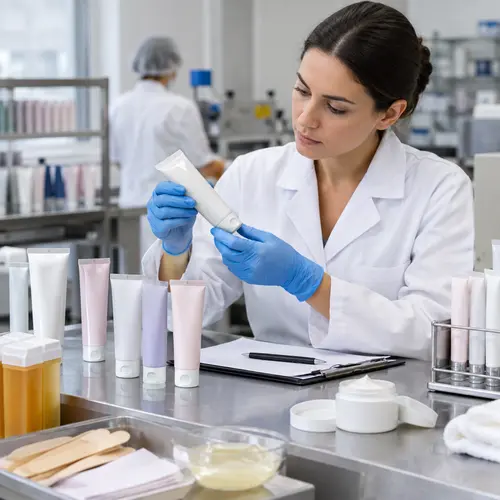
Before committing to tooling or a large packaging order, align the test scope through the supplier’s depilatory product development solutions. For a pilot from 1,000 units, confirm that the same approved pack, filling method, and QC limits can continue into higher-volume manufacturing. The final RFQ should state formula format, target markets, pack concept, sample quantity, decoration, shipment route, and launch date. These inputs allow buyers to request a hair removal product quote with fewer hidden assumptions and a more credible path to launch.
ODM Manufacturing Considerations
Sample confirmation should be treated as a controlled approval stage, not an informal exchange of jars. The buyer and supplier should record the approved formula code, color, fragrance level, texture, application method, removal performance, net weight, and packaging components. For wax, the record should include the acceptable melting or softening range and the texture at normal use temperatures. For depilatory cream and aftercare products, define an acceptable viscosity range and pump or tube dispensing behavior. Signed samples, dated photos, and a retained reference reduce disputes when production begins.
Formula customization should start from a written product brief that translates marketing goals into measurable requirements. A request for a dramatic texture on camera, for example, should specify whether the product must form visible strings, spread in a thick opaque layer, or maintain a glossy surface under studio lights. The supplier should also document fragrance limits, target use time, intended body area, and known ingredient exclusions. Any customization that could change removal performance, irritation risk, viscosity, or package contact should trigger another sample and review.
Cosmetic packaging compatibility testing must use the final formula and production-intent components. A similar bottle, cap, liner, pouch film, or cartridge is not an adequate substitute. Buyers should ask for a written stability plan covering appearance, odor, weight change, viscosity, wax texture, dispensing, seal condition, leakage, and visible package distortion across defined storage conditions and review dates. The plan should distinguish acceptable cosmetic variation from a result that blocks production.
MOQ discussions should separate the minimum formula batch from the minimum quantity for decorated packaging. Custom printing, molds, cartons, and pouches may each have different order thresholds. Request a transparent bill of materials showing formula, primary pack, secondary pack, decoration, assembly, testing, freight preparation, and expected overage. This helps a private-label buyer compare the cost of a stock package with the stronger brand impact of a custom pack.
Before artwork approval, obtain the ingredient list, net-content format, use directions, warnings, batch coding plan, shelf-life basis, and available test summaries. Claims involving natural or organic positioning may also need alignment with the COSMOS organic and natural cosmetics standard when certification is part of the launch brief. For the United States, buyers should understand the FDA position that cosmetics generally are regulated rather than approved before sale, as explained in its overview of FDA authority over cosmetics.
Shipment conditions should cover carton strength, pallet pattern, container loading, temperature exposure, and protection from crushing or prolonged heat. Agree in writing on release inspection, acceptable leakage limits, lot traceability, and the party responsible for freight damage evidence.

Common Problems or Failure Cases
Wax becomes brittle or excessively soft. A hard wax that performs well during sampling may crack in cooler markets or slump during hot transit. Review the expected use and shipment temperatures, confirm the texture after conditioning, and check whether the container remains easy to open without wax contaminating the closure.
Wax strips lose adhesion. Common signs include dry edges, uneven wax transfer, difficult separation, or weak hair pickup. Potential contributors include wax-coating variation, liner interaction, pouch sealing, and storage exposure. Buyers should compare multiple strips from the beginning, middle, and end of a production batch.
Depilatory cream separates or changes dispensing behavior. Water release, graininess, thinning, or a strong odor shift can indicate that the formula or pack is unsuitable for the intended shelf life. Evaluation should include retained samples and units taken from normal production, not only laboratory-filled samples.
Roll-on cartridges leak. Leakage can appear around the roller, neck, or cap after filling, transit vibration, or heat exposure. Confirm fill weight, headspace, roller movement, cap fit, and carton contamination before approving shipment.
Fragrance creates sensitivity concerns. A stronger scent may support social content but can also increase consumer complaints. Ask the supplier to review fragrance concentration, intended application area, warning language, and the irritation-risk assessment. No quality system can guarantee that every user will tolerate a cosmetic product, so clear directions, patch-test language where appropriate, complaint handling, and batch traceability remain important.
Packaging deforms. Warped jars, softened caps, collapsed tubes, or distorted pouches can affect presentation and sealing. Investigate formula contact, storage temperature, wall thickness, closure fit, and freight compression before changing only the outer carton.
Supplier Checklist
- Confirm the supplier has relevant experience with depilatory creams, waxes, strips, cartridges, and aftercare products.
- Request a written sample brief with formula code, texture, color, fragrance, viscosity or wax consistency, and removal-performance criteria.
- Verify that compatibility work uses the final formula, decoration, closure, liner, and production-intent packaging.
- Review the stability schedule, test conditions, acceptance limits, retained-sample policy, and reporting format.
- Ask how irritation risks, ingredient restrictions, complaints, and batch traceability are managed.
- Compare formula MOQ, packaging MOQ, decoration MOQ, expected overage, and reorder lead time.
- Obtain an itemized bill of materials and a freight estimate with stated assumptions.
- Check ingredient, labeling, warning, batch-code, shelf-life, and market-specific document availability.
- Review scale-up capacity, surge-order rules, reserved production options, and treatment of smaller brands during peak periods.
- Confirm confidentiality terms, ownership of custom work, approved subcontractors, and restrictions on showing samples to other buyers.
- Audit shipment specifications, release inspection records, carton configuration, and damage-claim procedures.

FAQ
How can I reduce the risk that a factory will reuse my idea or formula?
Use a mutual confidentiality agreement before disclosing the complete brief. The manufacturing agreement should define ownership of buyer-provided materials, custom formula work, packaging artwork, molds, and production records. Ask who can access the project and whether development or filling is subcontracted. Contract language cannot replace supplier due diligence, so also review references, access controls, and the factory’s history with private brands.
How do I know whether the sample will look strong on camera?
Provide reference footage and measurable visual criteria instead of terms such as dramatic or luxurious. Review the depilatory cream, sugar wax, or aftercare texture under the lighting, background, application thickness, and filming distance used for content. Record the approved result in photos and video, but confirm that the visual effect does not compromise application, removal, stability, or consumer safety.
Can quality control guarantee that nobody will have a bad skin reaction?
No. Manufacturing controls can reduce contamination, inconsistency, labeling errors, and out-of-specification batches, but individual sensitivity remains possible. Buyers should review ingredient and fragrance risks, intended-use warnings, suitable safety support, complaint escalation, and product traceability. Marketing should not promise universal tolerance.
What if I do not understand technical ingredient language?
Ask the supplier to maintain two connected documents: a technical specification and a plain-language brand brief. A capable account team should translate goals such as clean removal, low drip, visible texture, or reduced fragrance into testable criteria, then explain the tradeoffs without requiring the buyer to interpret raw technical files.
What should I verify before approving mass production?
Approve the formula reference, final components, artwork, fill weight, coding location, acceptance limits, master carton, and shipment plan. Confirm that the production specification matches the approved sample and that any later substitution requires written buyer approval.
How can I prepare for a sudden order increase after a video performs well?
Ask for monthly capacity by product format, realistic reorder timing, packaging-material constraints, and peak-season allocation rules. Discuss forecast sharing, component reservations, and staged orders before launch. A credible supplier should state capacity limits and cost assumptions clearly rather than promise unlimited immediate production.