Direct Answer
A reliable hair removal factory audit checklist should assess more than an ISO certificate or an attractive quotation. A B2B buyer must verify five control layers: formulation governance, production quality, packaging compatibility, regulatory documentation, and business continuity. For depilatory cream, wax strips, sugar wax, roll-on wax, and aftercare, the audit should connect laboratory evidence to actual commercial performance: stable texture, predictable removal, controlled irritation risk, secure filling, accurate labeling, and shipment readiness.
The most credible audit combines document review, facility observation, batch-record sampling, operator interviews, and product testing. It should also examine worker conditions, environmental controls, information security, insurance, and contingency capacity. A supplier that passes only a visual factory tour remains unqualified until it can demonstrate traceability from approved raw material and formula through filling, release, complaint handling, and corrective action.
Key Takeaways for Private Label Buyers
- Source against evidence, not presentation: Request current certifications, audit reports, batch records, supplier approvals, and corrective-action history before commercial negotiations.
- Qualify the formula at production scale: Confirm that the approved cream, wax, or sugar wax formula is the same formula used for the pilot and mass-production batch, with defined release criteria.
- Audit packaging as part of the product: Check tube, jar, sachet, strip, cartridge, cap, seal, and label compatibility under heat, cold, vibration, and normal dispensing conditions.
- Test claims and user risk: Review removal performance, residue, odor, skin-feel, irritation-risk rationale, warnings, and market-specific labeling support.
- Separate capacity from resilience: Verify qualified backup suppliers, critical raw-material coverage, maintenance plans, staffing depth, and escalation procedures for disruption.
- Make launch approval conditional: Define objective gates for sample approval, stability, packaging validation, regulatory documents, first-article inspection, and shipment release.
Buyer Context
Factory qualification matters because hair-removal products sit at the intersection of chemistry, consumer safety, packaging performance, and high-volume execution. A depilatory cream may appear simple, yet its alkaline formula, fragrance system, preservative strategy, viscosity, and dispensing package must remain controlled across the full shelf-life. A wax product may require consistent melting behavior and spreadability, while wax strips depend on coating uniformity, adhesion, release liner performance, and resistance to blocking during storage.
For procurement leaders, the risk is rarely limited to one failed sample. A supplier that cannot maintain batch consistency can create retailer deductions, delayed launches, customer complaints, or a multi-market withdrawal. The exposure increases when a group is replacing a core factory after a quality incident or building a second source because of geopolitical or raw-material disruption. Qualification must therefore examine both product capability and operating resilience.
ESG scrutiny is equally material. A factory may provide a polished compliance folder but fail a social audit because of excessive working hours, incomplete wage records, inadequate grievance channels, or unauthorized subcontracting. Environmental claims also require evidence: waste handling, wastewater controls where applicable, energy records, packaging-waste practices, and a documented improvement plan. For international brands, these findings can affect supplier approval, public disclosures, and launch timing.
Begin with the supplier’s hair removal OEM manufacturer profile, then require a formal evidence pack rather than relying on a sales summary. The same standard should apply whether the project involves a cream, wax strips, sugar wax, roll-on cartridge, or post-depilation care OEM program.

Technical or Packaging Factors
Formula control and performance
Ask for the master formula, approved raw-material specifications, formula version history, and change-control procedure. For depilatory cream, the review should cover active-system control, pH monitoring, viscosity range, emulsion stability, fragrance compatibility, preservative rationale, and irritation-risk assessment. The supplier should explain which parameters are checked during blending and which are verified before release. A certificate of analysis is useful only when its test methods, acceptance criteria, and sampling plan are defined.
For wax and sugar wax, review melting behavior, spreadability, stringing, set time, residue, fragrance stability, and compatibility with the intended application method. For roll-on wax cartridges, assess flow through the roller head, blockage risk, cartridge fill accuracy, cap sealing, and leakage after storage and shipment. Product testing should reflect the target consumer use case without converting cosmetic performance claims into unsupported medical claims. The International Journal of Cosmetic Science provides useful context for evaluating cosmetic performance and skin-tolerance evidence.
Packaging compatibility and shipment readiness
Packaging must be tested with the final formula, not with water or an unrelated reference product. Review tube wall integrity, cap torque, induction seal or closure performance, sachet seal strength, jar liner compatibility, wax-strip release liner behavior, and label adhesion. For aggressive or alkaline cream systems, inspect for discoloration, swelling, brittleness, odor transfer, leakage, and changes in dispensing force. For wax, verify that the container remains stable during heat exposure and does not deform or allow oil migration.
Request packaging samples from the intended production vendor and confirm that artwork, ingredient declarations, warnings, batch coding, net contents, responsible-person information, and market language are controlled. Regulatory review should include applicable ingredient restrictions and labeling rules, including the Health Canada cosmetic ingredient hotlist where Canada is a target market. For US projects, align the document set with current FDA cosmetic expectations and applicable MoCRA responsibilities. The supplier should also provide compatibility and stability records that support the proposed claims and storage conditions.
Storage, testing, and release
Define a written stability protocol covering the intended container, orientation, fill level, temperature exposure, appearance, odor, color, viscosity, phase separation, pH where relevant, microbial quality, closure integrity, and dispensing performance. Include heat and cold conditions representative of warehouse and transport risk. Shipment testing should address vibration, compression, carton integrity, leakage, and pallet configuration. A product that passes laboratory storage but leaks in a mixed-temperature container has not passed commercial qualification.
Audit how samples are selected. The factory should identify the batch, line, date, operator, raw-material lots, packaging lots, and test results for every retained sample. Ask to see an example deviation, out-of-specification investigation, complaint investigation, and corrective-action record with confidential information appropriately redacted. The FDA cosmetics GMP inspection checklist is a useful external reference for structuring this review.
For a structured evaluation, compare the supplier’s production controls with its documented hair removal manufacturing process. A buyer should also review the scope of hair removal OEM ODM services, especially where the program requires formulation transfer, packaging procurement, filling, inspection, and multi-market documentation.
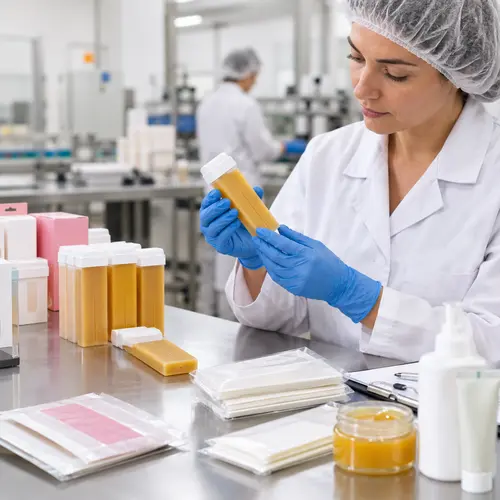
Decision Framework Table
| Factor | What to Check | Why It Matters | ODM Buyer Note |
|---|---|---|---|
| Formula governance | Master formula, version control, raw-material approval, in-process checks, release criteria | Prevents unapproved substitutions and batch drift | Require written change notification and approval before implementation |
| Product performance | Viscosity, spreadability, removal efficiency, residue, odor, melting or set behavior | Connects laboratory quality with consumer experience | Approve a retained reference sample and defined acceptance range |
| Packaging compatibility | Seal, closure, tube, jar, sachet, strip liner, cartridge, label, and leakage testing | Reduces returns, contamination risk, and shipment loss | Test the final formula in the final commercial pack |
| Stability and transport | Heat, cold, vibration, compression, appearance, viscosity, microbial quality, and dispensing | Reveals failures that may occur after factory release | Match the protocol to destination climate and distribution route |
| Compliance and claims | Ingredient review, safety rationale, labels, warnings, batch coding, MoCRA or CPNP documentation where applicable | Supports lawful market entry and controlled claims | Use regulatory sign-off as a launch gate, not a post-production correction |
| Resilience and ESG | Backup materials, maintenance, workforce records, environmental controls, insurance, business continuity | Protects supply during disruption and supports group governance | Request evidence, site interviews, and corrective-action closure dates |
For product-specific qualification, compare the supplier’s capabilities with depilatory cream OEM, wax strips OEM, and sensitive skin hair removal products. The audit should conclude with a documented risk register: critical findings that block approval, major findings requiring corrective action, and minor findings that can be monitored. If the project requires a controlled pilot, specify the sample scope, pilot quantity, packaging source, testing responsibility, and decision owner before the first purchase order. A capable manufacturer should be able to support pilot runs beginning at 1,000 units under ISO 22716 controls while preserving formula and process continuity for scale-up.

ODM Manufacturing Considerations
A hair removal factory audit checklist should examine how an ODM converts an approved concept into a repeatable commercial specification. Buyers should connect sample approval, formula ownership, component selection, label files, and logistics requirements rather than reviewing each item separately.
Confirm samples against measurable specifications
Do not approve a sample from appearance alone. The confirmation sheet should identify the formula code, sample date, target hair type, application time, texture, odor, color, fill weight, removal performance, and acceptable skin-feel observations. For wax and sugar wax, record the working temperature or consistency window. For cream, define application uniformity and relevant analytical limits. Keep sealed approval samples under buyer and factory control so production sampling can be compared with an agreed reference.
Control formula customization and irritation risk
Customization may involve fragrance level, color, working time, residue, aftercare pairing, or market-specific ingredient restrictions. Every modification should receive a new revision code and written approval. Ask who owns the target formula, who can access it, and whether substitutions require buyer authorization. Fragrance allergens, depilatory actives, botanical extracts, and claims such as sensitive skin require a documented irritation-risk review and suitable substantiation rather than a sales assumption.
Match the formula to the final pack
Compatibility work should use the intended commercial materials, closures, liners, applicators, and decoration. Review cream tubes for seal integrity and panel distortion, wax tubs for cracking or odor transfer, strip sachets for seal continuity, and roll-on cartridges for cap fit and product migration. Compare filled packs after upright, inverted, and side storage. Buyers can review relevant formats through the hair removal product categories before locking specifications.
Define stability and release criteria
The protocol should state storage durations, elevated and low-temperature conditions, light exposure where relevant, inspection intervals, and pass or fail limits. Typical observations include odor, color, texture, phase uniformity, package mass change, closure function, microbiological status, and active-content results where applicable. A stability summary is not enough; audit raw observations, photographs, deviations, and the identity of the tested sample.
Clarify MOQ, documents, and shipment conditions
Separate the minimums for bulk formula, printed components, filling campaigns, and finished stock. Ask whether OEM/ODM sampling uses production-grade materials and whether unused custom components create a future purchase obligation. Required labeling documents may include an ingredient declaration, certificate of analysis, safety data, fragrance or allergen statement, directions, warnings, batch-code format, net-content confirmation, and claims support for each target market. Shipment specifications should define case count, pallet pattern, container loading, maximum storage exposure, orientation, and acceptance rules for leakage or deformation. The supplier’s OEM and ODM scope and manufacturing process should align with these responsibilities.

Common Problems or Failure Cases
- Wax brittleness: Wax cracks during removal or breaks in the tub because the production blend, cooling profile, or storage exposure differs from the approved sample. Review retained batches, ingredient lots, and temperature records.
- Strip adhesion loss: Wax strips lift poorly after storage because wax coat weight, nonwoven material, liner release, or sachet sealing changed. Compare initial and aged samples from multiple carton positions.
- Cream separation: Liquid weeping, graininess, or uneven dispensing may indicate processing inconsistency, raw-material variation, or an unsuitable pack. Quarantine the lot and examine manufacturing records before reworking it.
- Cartridge leakage: Product can migrate around the roller or cap during transit. Check fill level, roller dimensions, closure torque, product temperature at filling, and carton orientation.
- Fragrance sensitivity: A fragrance accepted for odor may increase consumer complaints or conflict with target-market disclosures. Require the exact fragrance code, allergen information, and controlled use level.
- Package deformation: Wax tubs, cream tubes, or aftercare containers may panel, soften, or lose seals in warehouse and freight conditions. Confirm that the tested pack matches the purchased resin, laminate, closure, and decoration.
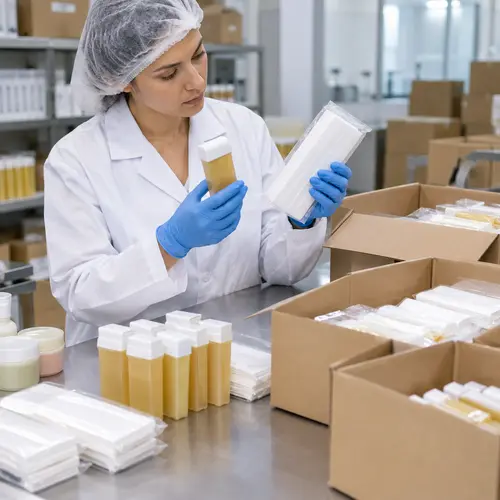
Supplier Checklist
Use the following checks during document review, floor inspection, and follow-up sampling:
- Confirm the legal manufacturer, production address, product scope, and any subcontracted operations.
- Trace one finished hair-removal lot from incoming ingredients through weighing, filling, packing, release, and shipment.
- Compare the approved formula revision with current production instructions and system access permissions.
- Verify supplier qualification, incoming sampling rules, lot identification, and substitution controls for critical waxes, actives, fabrics, liners, fragrances, and closures.
- Inspect line clearance, cleaning status, personnel practices, equipment calibration, and segregation of rejected material.
- Review in-process limits for fill quantity, coat weight, working consistency, seal quality, and functional performance as applicable.
- Match stability samples and packaging components to the actual commercial bill of materials.
- Check complaint escalation, root-cause analysis, recall traceability, and retention-sample availability.
- Review label approval controls, ingredient documents, warnings, coding, claims files, and target-market responsibilities.
- Document MOQ assumptions, lead-time capacity, backup sourcing, shipment limits, and change-notification periods in the quality agreement.
FAQ
Can a factory guarantee that our core formula will never be leaked?
No supplier can credibly promise absolute protection. Audit role-based system access, separate storage for formula files, download and printing logs, removable-media controls, restricted weighing access, confidentiality terms, and access removal when employees leave. Confirm that subcontractors receive only the information needed for their work.
How can a strategic buyer secure supply during a global raw-material shortage?
Verbal priority promises are insufficient. Review approved secondary sources, reserved inventory rules, allocation clauses, forecast commitments, safety-stock ownership, and the escalation process. Any alternate wax, active, fragrance, fabric, or liner should undergo comparability review and buyer approval before use.
How do we verify environmental and labor claims?
Request permits, wastewater and emissions records, waste-transfer manifests, energy data, payroll samples, time records, age-verification files, and worker grievance procedures. Cross-check documents with confidential worker interviews and floor observations. Independent or unannounced audits are useful when the current supplier has faced serious compliance findings or headquarters has imposed carbon-reduction targets.
What insurance evidence should cover a major quality complaint?
Obtain current certificates and policy summaries for product liability, recall costs where available, geographic coverage, exclusions, deductibles, and per-event and aggregate limits. Verify the insured legal entity and covered sales markets. Insurance does not replace traceability, complaint control, or a written responsibility matrix.
Should we approve a formula before selecting packaging?
Only provisionally. Final approval should be based on the formula in the intended commercial pack because the container, seal, liner, applicator, and decoration can affect odor, dispensing, leakage, and appearance.
What should be included in an ODM sample approval?
Include the coded formula, component specification, target performance, application instructions, acceptance limits, signed date, and retained sample. Record all differences between a hand-made laboratory sample and a line-produced sample.
How should buyers assess a new supplier after a capacity interruption?
Start with document screening, then perform an on-site audit and controlled sampling. Verify available lines, trained labor, critical-material coverage, maintenance status, release authority, and realistic output by product format. Do not transfer demand until repeatability and shipment readiness are demonstrated.
References
- FDA Good Manufacturing Practice Guidelines and Inspection Checklist for Cosmetics, a regulatory reference for reviewing facilities, equipment, controls, records, and labeling practices.
- Health Canada cosmetics guidance and cosmetic ingredient hotlist resources, relevant when screening formulas and labels for the Canadian market.
- The International Journal of Cosmetic Science, a research source for cosmetic formulation, testing, and skin-related performance considerations.