Direct Answer
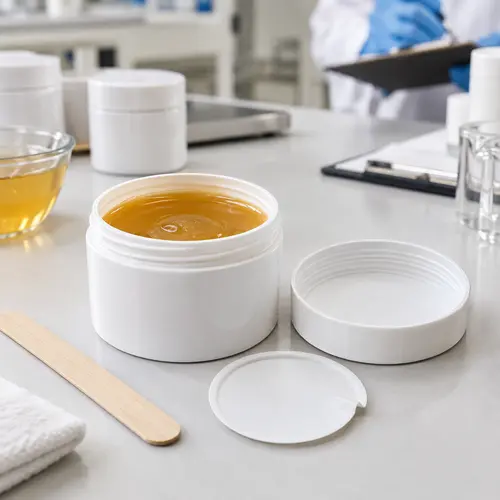
Successful wax jar packaging development starts by matching the jar, closure, liner, label, and shipper to the wax formula before artwork is finalized. A jar that looks right on camera can still leak in summer freight, distort during filling, absorb fragrance, or leave oily marks around the thread. Production approval should therefore depend on one complete pack test: filled units from the intended production materials, exposed to agreed heat and cold conditions, checked for leakage and weight loss, reviewed for label movement, and tested in the final shipping carton.
For a creator-led brand, the practical sequence is simple: define the visual brief, shortlist stock components, test formula-pack compatibility, approve a decorated sample, and lock a signed master sample with the bill of materials. Custom molding should begin only when a stock jar cannot deliver the required identity or user experience. This keeps development fast without treating packaging as an afterthought.
Key Takeaways for Private Label Buyers
- Choose around the formula. Hard wax, sugar wax, and cream-based aftercare place different demands on heat resistance, barrier performance, opening diameter, and closure design.
- Approve the complete pack. Test the jar, cap, liner, decoration, label, fill weight, and carton together rather than approving isolated supplier samples.
- Separate visual approval from technical approval. Camera appearance matters, but it does not replace leakage, storage, transport, and dispensing checks.
- Prefer stock tooling for trend-led launches. Decoration and color customization can create a distinctive result with lower cost and fewer tooling weeks.
- Lock measurable specifications. Record component resin, dimensions, color reference, closure torque, fill level, label position, and accepted defect limits in the production file.
- Reserve scale before launch. Confirm the pilot batch, reorder lead time, component availability, and surge capacity before publishing a fixed content calendar.
Buyer Context
Hair-removal packs work harder than their shelf appearance suggests. A hot wax jar may encounter elevated filling temperatures and repeated reheating. Sugar wax can expose weak seals through slow seepage. A roll-on cartridge must maintain fit between the body, roller head, and cap. Wax strips need barrier packaging that protects adhesion through storage. Depilatory cream and after wax care products introduce different viscosity, dispensing, and ingredient-compatibility questions.
These differences matter when a founder is choosing one hero SKU for a short-form video launch. Wide openings show texture and make spatula access easy, while clear walls reveal color and fill consistency. Both choices can strengthen content, but they also expose surface changes, trapped air, and fill variation. The sample review should therefore include footage under the lighting, background, application method, and heating routine planned for launch content. A useful custom hair removal product development brief translates that visual goal into testable requirements rather than relying on adjectives such as glossy or premium.
Timing should be equally explicit. A 7-day first-sample target may be realistic with a validated baseline formula and available components; a new mold, metallic decoration, or uncommon resin can add several weeks. Ask the ODM to show stock and custom paths on the same quotation, with separate tooling, decoration, testing, and freight costs. Buyers considering a 1,000-unit pilot should also verify whether the same approved formula and component sources can continue into larger runs without a silent substitution. The broader hair removal manufacturing process should identify who approves each gate from sampling through shipment.
Technical and Packaging Factors
Jar Material and Geometry
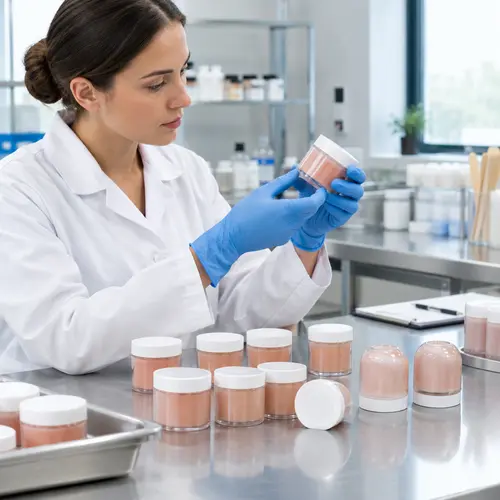
Glass provides weight, clarity, and strong barrier performance, but increases breakage risk and freight cost. PET can deliver high clarity at lower weight, although its heat limits must be checked against the actual filling and consumer-heating method. PP is commonly considered where heat tolerance and toughness are priorities, but clarity and decoration results differ. Do not approve material by resin name alone. Request the component specification, molding tolerance, intended fill temperature, and evidence from the filled-product test.
Geometry affects use as much as appearance. The opening must suit fingers or a spatula without creating an oversized exposed surface. A heavy base can improve stability during wax application. Internal shoulders can trap product and make the stated fill appear low. For a coordinated jar, spatula, strip, and aftercare set, review the complete waxing product solutions rather than sizing every item independently.
Closure, Liner, and Leakage
The cap and jar neck are a matched system. Thread fit, closure torque, liner compression, and cooling behavior determine whether the package remains sealed. A liner can reduce seepage and protect the cap, but it must peel cleanly and remain compatible with oils, fragrance, and heat. Induction seals require a compatible container and controlled sealing process; they should not be added as a decorative assumption.
Leakage review should include upright, side, and inverted storage, followed by opening and reclosing. Inspect the thread, cap interior, label edge, and carton for residue. Roll-on formats require a separate roller and cap assessment; the custom wax strips and hot wax development scope should state whether the supplier tests the assembled cartridge or only its empty components.
Formula Behavior and Storage
Record the wax melting point or working temperature range, viscosity at the agreed check point, cooling behavior, fragrance load, and visible texture standard. These values become packaging inputs. A formula that flows more easily when warm may migrate through a closure that passed an empty-pack inspection. A hard wax that contracts during cooling can also change the visible surface or pull away from the wall without being defective.
A practical screen can include ambient storage, cold storage at 5°C, and elevated storage at 40°C, provided those conditions match the ODM test plan and target market. Check odor, color, separation, cracking, container distortion, closure movement, label lift, leakage, and weight change at defined intervals. For irritation-prone positioning, align claims and usage directions with the formula review described for sensitive skin hair removal products. Certification goals such as Ecocert organic and natural cosmetic certification should be declared before component and ink selection.
Decoration, Labeling, and Market Readiness
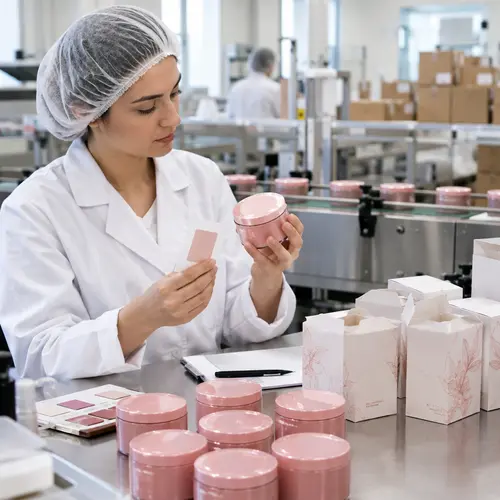
Screen printing, hot stamping, sprayed color, in-mold color, and pressure-sensitive labels create different lead times and failure modes. Test decorated packs after storage because oils, heat, and handling can soften ink or shift labels. Approve color against a physical reference under controlled light, not a phone screen. Metallic finishes should be checked for fingerprints, abrasion, and batch variation on video.
Artwork review must cover product identity, net contents, ingredient presentation, responsible-party details, warnings, directions, batch coding, and market language. Requirements depend on product classification and destination. Brands entering the UAE should confirm the Dubai Municipality Montaji registration system; US projects should determine whether any claim changes classification before relying on FDA guidance on tamper-resistant packaging for certain OTC products. A cosmetic wax should not inherit OTC packaging statements without classification review.
Decision Framework
| Factor | What to Check | Why It Matters | ODM Buyer Note |
|---|---|---|---|
| Formula profile | Melting or working range, viscosity, oils, fragrance, cooling behavior | Determines material, liner, filling, and leakage risk | Approve values from the intended bulk, not a texture-only prototype |
| Jar and cap | Resin, neck fit, dimensions, torque, liner, fill headspace | Controls seal performance and repeatable use | Require one component code and supplier for the approved batch |
| Storage screen | Ambient, 5°C cold, 40°C heat, orientation, weight change | Reveals distortion, seepage, separation, and label failure | Agree intervals and acceptance criteria before testing starts |
| Decoration | Color reference, adhesion, abrasion, oil resistance, label position | Protects the camera-ready appearance through fulfillment | Sign a decorated master sample rather than approving a digital render |
| Shipping pack | Dividers, carton strength, packed drop review, hot-route exposure | Prevents glass breakage, cap loosening, and stained cartons | Test the final case count and pallet configuration |
| Launch plan | MOQ, component stock, reorder lead time, scale path, full BOM | Connects content timing to available production capacity | Use a documented hair removal product RFQ to compare like-for-like offers |
The final approval pack should contain the signed formula specification, component drawings or data sheets, decorated master sample, approved artwork, test results, defect criteria, BOM, production schedule, and shipment conditions. Use a supplier with a defined depilatory products OEM scope, then continue only when every production-critical item has an owner and an approval record. This is the shortest reliable path from a visually strong jar concept to a repeatable launch unit.
ODM Manufacturing Considerations
ODM development should convert the approved concept into a repeatable product specification, not simply produce an attractive sample. Before approval, the buyer should receive representative samples in the intended wax jar packaging or other final-format component. Confirmation should cover appearance, color, fragrance, application feel, set time, hair-removal performance, residue, fill weight, and aftercare use where applicable. The supplier and buyer should sign the specification, identify an approved master sample, and retain matching control samples.
Formula customization must be tied to measurable use conditions. For hard wax, define flexibility, break behavior, working time, and removal characteristics. For sugar wax, define consistency at expected salon or home temperatures. Depilatory cream development should specify spreadability, odor, removal interval, rinse behavior, and skin-feel targets. Requested actives, fragrance, and color should be reviewed for irritation risk and for their effect on product performance over several weeks. Buyers seeking a strong social-media appearance should request prototype footage under their actual lighting and camera settings rather than approving color from a digital rendering.
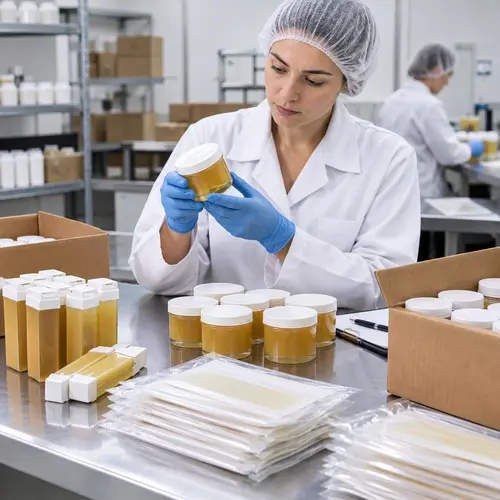
Packaging compatibility should use production-representative components. Check that jar walls remain stable after filling, threads engage consistently, caps do not loosen during distribution, and printed surfaces remain presentable after normal handling. Cream containers should dispense the expected dose without clogging. Wax strip pouches should protect the strip surface from humidity and contamination. Cartridge bodies, rollers, and plugs must stay aligned when stored in different orientations.
Stability review should monitor odor, color drift, sweating, separation, crystallization, loss of flexibility, container distortion, and net-content changes under anticipated storage conditions. Results should be documented by interval and linked to the exact formula and component lot. Shipment planning should also define case quantity, dividers, pallet pattern, maximum stacking load, warehouse expectations, and exposure risks for ocean or air freight.
MOQ discussions should separate finished-product quantity from component, decoration, fragrance, and carton minimums. Ask whether unused custom components must be purchased, stored, or scrapped. A useful quotation shows formula cost, primary packaging, decoration, secondary packaging, testing, setup charges, expected overage, and estimated logistics separately. Buyers can compare formats through the hair-removal product categories and review typical project stages under OEM and ODM services.

Common Problems or Failure Cases
- Brittle wax: The wax cracks during lifting or removal because its flexibility, layer thickness, or cooling behavior differs from the approved sample. Confirm performance with the intended application method and normal user timing.
- Wax strip adhesion loss: Moisture entry, adhesive migration, excessive warehouse heat, or weak pouch sealing can reduce grip. Examine strips from aged, unopened retail packs rather than relying only on freshly made samples.
- Depilatory cream separation: A watery layer, graininess, or viscosity drop may appear after storage. The factory should identify whether the cause is the formula, processing sequence, fill conditions, or interaction with the container.
- Cartridge leakage: Wax may escape around the roller or plug when component tolerances vary or the contents expand in transit. Production checks should include cartridges from multiple component cavities and finished batches.
- Fragrance sensitivity: A stronger scent may improve camera appeal but increase consumer complaints. Review fragrance level, declared allergens, intended body area, warnings, and fragrance-free alternatives.
- Packaging deformation: Thin jars or cartridges can warp from filling conditions, warehouse heat, or stacked pressure. Component weight and resin consistency should be controlled rather than judged from appearance alone.
Supplier Checklist
Use the following checks before approving a hair-removal OEM or ODM supplier:
- Confirm experience with the exact format: hard wax, sugar wax, strips, cream, cartridges, or aftercare.
- Request a written sample scope, revision limits, lead-time assumptions, and charges.
- Approve a master sample and product specification with objective acceptance limits.
- Review batch traceability, incoming component inspection, in-process records, and finished-goods release criteria.
- Ask for stability summaries and packaging observations tied to the proposed formula and pack.
- Verify MOQ by formula, fragrance, color, jar, decoration, and carton rather than accepting one blended number.
- Request ingredient lists, specifications, safety documentation, label copy support, batch coding format, and market-specific files.
- Compare the bill of materials, setup charges, expected overage, freight basis, and storage fees.
- Document shipment temperature concerns, pallet configuration, export cartons, and handling instructions.
- Review confidentiality terms, formula ownership, artwork control, and restrictions on displaying or reselling the concept.
A factory walkthrough or documented review of the manufacturing process can help verify whether these controls are routine or prepared only for an audit.
FAQ
Can a Chinese OEM use my formula or concept for another customer?
No contract can remove all risk, but clear ownership terms reduce exposure. Use a confidentiality agreement covering formulas, artwork, samples, molds, and marketing concepts. Define who may access files, prohibit unauthorized display or resale, and keep dated records of every approved version.
How can I confirm that the wax will look dramatic enough on camera?
Ask for production-style samples filmed in the final jar under your lighting, background, and application thickness. Approve both direct viewing and recorded appearance because pigments and translucent wax can shift on camera. Recheck the visual effect after storage, not only when the sample is fresh.
Can quality controls guarantee that no customer will have a skin reaction?
No responsible supplier can guarantee zero reactions. Risk can be reduced through ingredient review, controlled manufacturing, microbial limits where relevant, appropriate warnings, traceable batches, and a documented complaint process. Depilatory cream instructions must clearly state use area, timing, and preliminary skin-check directions.
Will communication be difficult if I do not understand technical ingredients?
A capable project manager should translate marketing language into measurable targets such as texture, color intensity, working time, residue, scent strength, and packaging finish. Request written recaps, comparison samples, and approval tables so decisions do not depend on informal chat messages.
What happens if social content creates a sudden order spike?
Ask for normal and peak monthly capacity, component lead times, reserved-production terms, and the order forecast needed to hold materials. Confirm whether smaller brands retain agreed production slots during busy periods. Capacity claims are meaningful only when packaging availability and staffing are included.
Which documents should be ready before production approval?
The approval file should include the signed specification, ingredient declaration, artwork, label text, packaging specifications, batch-code plan, testing summary, commercial quotation, approved sample record, and shipment instructions. Additional documents depend on the destination market and product claims.
References
- Ecocert organic and natural cosmetic certification provides information for brands considering certified natural or organic positioning.
- The Dubai Municipality Montaji registration system is an official starting point for product registration requirements in Dubai.